
Big Scooter Buying Guide: Tips and Top Recommendations
 PopScooter Team
January 31, 2026 5:52 am
.
13 min read
PopScooter Team
January 31, 2026 5:52 am
.
13 min read
Can a commuter swap a motorcycle for a comfortable, highway-capable ride without losing storage or safety?
This guide defines what a big scooter means for U.S. buyers who want comfort, real-world performance, and useful storage without moving up to a full motorcycle. It explains how modern machines blend automatic transmissions, longer wheelbases, and light weight distribution to make two-up touring practical.
Readers will get a clear class definition, a concise feature checklist, and a shortlist of top models they can compare side-by-side. The guide also notes why the category changed: advanced rider aids, premium dash tech, heated grips, and highway-capable power are now common.
It previews the difference between engine-size maxi models and large-wheel designs so buyers avoid mixing categories. U.S. availability and trims vary by year and region, so buyers should confirm local inventory and dealer support before committing.
Key Takeaways
- Defines the class and what to expect from modern big machines.
- Lists must-have features: ABS, traction control, storage, and comfort.
- Explains how tech and power made scooters highway-capable.
- Highlights the difference between engine-size and wheel-size categories.
- Encourages verifying local trims, dealer support, and service access.
What Counts as a Big Scooter Today?
Today’s larger automatic two-wheelers aim to match motorcycle utility with scooter ease.
Definition U.S. shoppers use: In the United States this class usually means a maxi-style machine with enough displacement and chassis presence for faster roads and longer rides. Think generous underseat storage, a roomy seat, and wind protection built for touring.
Where scooter-style motorcycles fit
The Honda Integra 750 is a useful example: it combined motorcycle-grade 17-inch wheels, a 320mm front disc, chain drive and DCT with scooter-like bodywork and automatic feel. That mix blurred boundaries and showed how a motorcycle drivetrain can live in an automatic package.
Practical benchmarks
- Engine: 400cc+ is a common cutoff for highway-capable models.
- Chassis: longer wheelbases and bigger frames for two-up comfort.
- Wheels: larger diameter wheels give steadier tracking and confidence on rough pavement.
Not the same as big-wheel kick designs
Note that big-wheel kick devices emphasise large-diameter tires for urban stability. They are a different product category than maxi machines. Buyers should pick the class that matches commute and touring needs so their shopping checklist focuses on the features that matter most.
big scooter Shopping Checklist: Features That Matter Most
Picking the right features makes a long commute or weekend ride far more enjoyable.
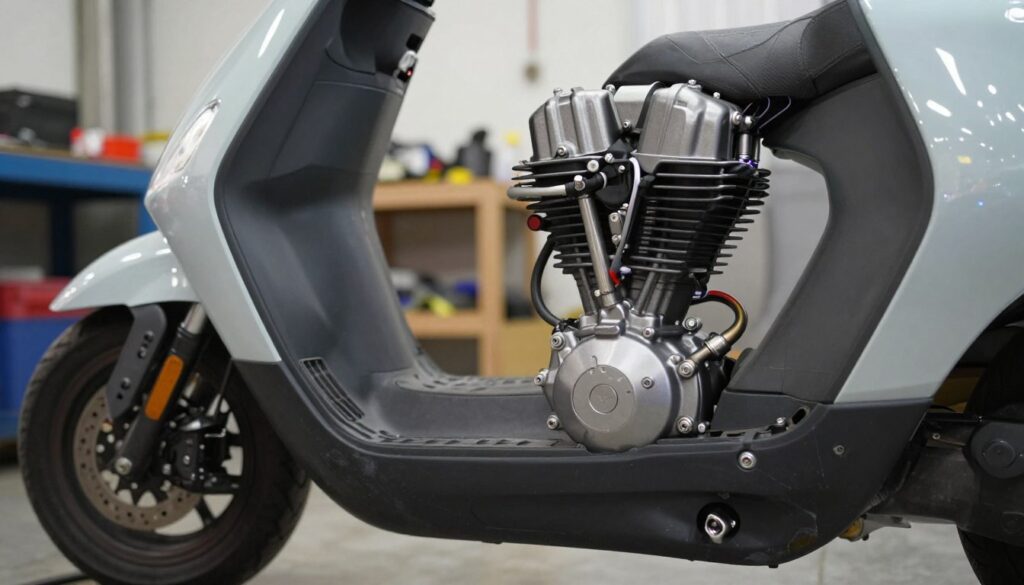
Engine and performance: Buyers should weigh a single-cylinder engine for lighter urban use against twin-cylinder setups for smoother highway power. Look for usable roll-on acceleration and steady cruising; weight distribution often defines how a machine feels more than its headline output.
Handling and braking
Test the front-end feedback over bumps and stability through sweepers. Check rear wheel traction when exiting corners and insist on ABS as a baseline for wet conditions.
Rider aids and convenience
Traction control, keyless ignition, and stop-start tech change daily life. Models like the XMAX and Burgman 400 show how these systems improve safety and fuel use in traffic.
Comfort, lighting, storage, and connectivity
Heated grips and heated seat matter for shoulder-season rides. Adjustable screens and a supportive seat reduce fatigue on longer trips.
- Lighting: full LED lighting and a clear screen/dash are essential for visibility and quick reads.
- Storage: confirm underseat storage volume, helmet fit, and glovebox charging for phones.
- Connectivity: smartphone pairing, navigation-ready screens, and USB/12V points keep devices useful on the road.
Top Big Scooter Recommendations for the U.S. Market
These recommendations focus on real-world fit: who each model serves and which features matter most.
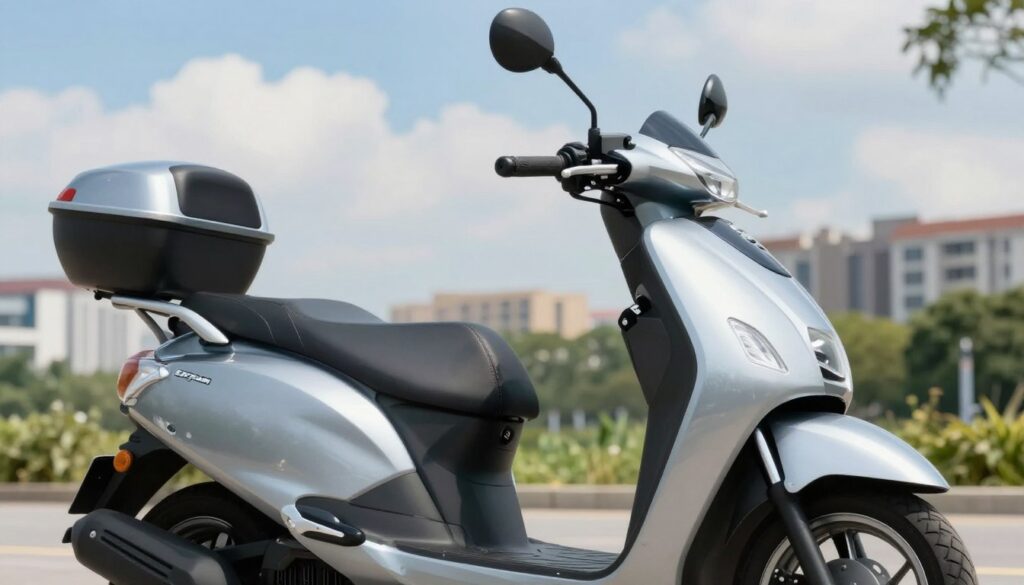
Suzuki Burgman 400 — The best all-around 400-class pick for comfort and commuter practicality. The suzuki burgman 400 uses stop-start and keyless ignition to save fuel and simplify daily use. It’s a proven maxi formula at a reasonable price.
Yamaha XMAX — A sporty commuter balance with sharp styling, traction control, ABS, and LED lights. The yamaha xmax feels agile in traffic and confident on faster roads.
Yamaha TMAX Tech Max — The premium sport choice. The yamaha tmax rewards riders who want a more motorcycle-like ride, heated controls, an electric screen, and nav-capable TFT on top trims.
Kymco AK550 — Value performance: strong output, full LED, an electric windshield, and modern connectivity. The ak550 offers solid equipment for the money; check local dealer support before buying.
Honda Forza 750 — For riders wanting motorcycle-level power with twist-and-go convenience. The honda forza 750 blends touring ability and usable performance in one package.
Piaggio MP3 — For extra confidence in urban riding. The two-front-wheel layout adds grip, and flagship trims add cruise control, reverse gear, and blind-spot tech. The piaggio mp3 is ideal for cautious riders.
BMW CE 04 — The tech-forward electric alternative. It delivers roughly a ~80-mile range, a fast-charge option, and a standout digital dash for city-focused use.
- Availability note: U.S. trims and model years vary; confirm current configurations and pricing locally. For related small-vehicle options, see best moped picks.
Model Spotlights: Who Each Scooter Is Best For
Choosing the right model often comes down to how someone plans to ride day to day.
Suzuki Burgman 400 vs Burgman 650
The suzuki burgman family splits into a handy commuter and a touring-focused machine. The burgman 400 is light, economical, and easy around town with solid underseat storage for daily gear.
By contrast, the 650 leans into touring comfort with twin-cylinder power, heated grips and seat, an adjustable screen, and enormous underseat storage. That extra convenience comes with weight; at about 277 kg it can feel heavy in tight parking or slow maneuvers.
Yamaha XMAX vs Yamaha TMAX
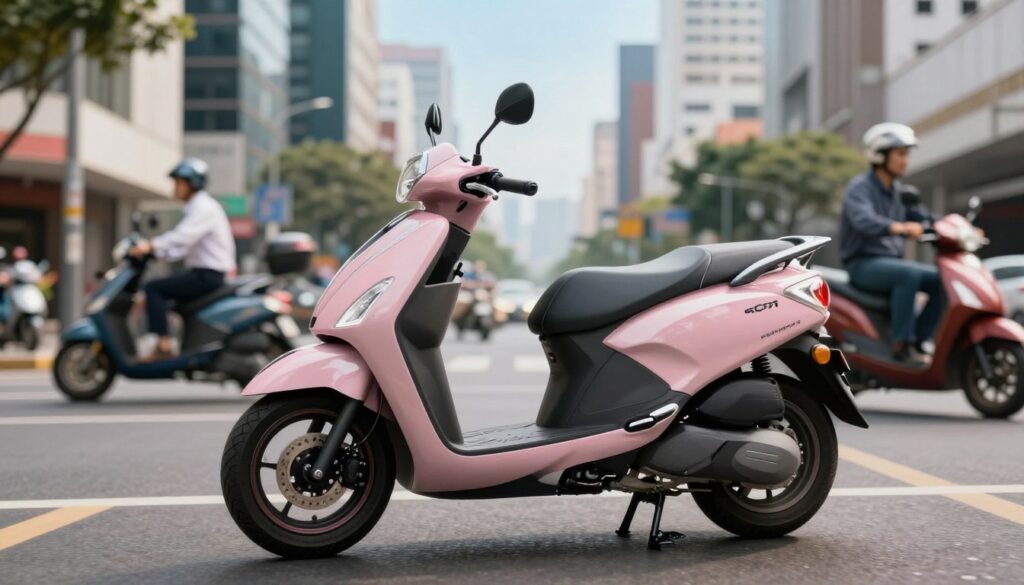
The yamaha xmax hits a sweeter price point and serves riders who want nimble urban performance and decent storage. It costs less and is easier to live with daily.
The TMAX aims for a more motorcycle-like feel. Riders notice a bit more chassis stiffness, smoother acceleration, and premium screens and controls that improve usability on longer rides.
Kymco AK550 vs Honda Forza 750
The ak550 often wins on spec-per-dollar, with a color dash and Bluetooth connectivity that punch above its price. It feels lively in corners and shows strong performance for the cost.
The honda forza and honda forza 750 tilt toward refinement and larger power for touring. Honda’s dealer network and parts access make ownership simpler for daily riders who value support.
- Which model fits: commuter-first look for lighter weight and practical storage; touring-first prioritize wind protection, seat comfort, and cargo space.
- Dealer filter: warranty, parts, and local service matter as much as price or features when someone relies on a model every day.
Real-World Ownership Costs: Price, MPG/Range, and Day-to-Day Value
Ownership costs often steer a buyer more than top speed or tech when choosing a larger automatic two-wheeler.
How shoppers feel the cost: Upfront price is only one part of the story. Insurance, routine maintenance, tires, and brake pads add predictable yearly bills. Riders should estimate how many commute miles they will log versus weekend trips to judge true value.
Pricing tiers and typical features
- Entry: value-focused models with basic comfort and useful storage.
- Mid: better brakes, improved seats, and added connectivity like basic smartphone pairing.
- Premium: advanced dashboards, heated equipment, higher-output engines, and premium components that can raise replacement costs.
Dealer service and OEM accessories are a long-term part of ownership. Premium parts improve performance but can cost more to replace.
Fuel economy, battery range, and what changes with electric
Real-world MPG varies with speed, load, and wind protection. For example, Burgman 400 claims about 66mpg and the 650 about 59mpg in mixed use. Fuel range is tank size multiplied by expected MPG.
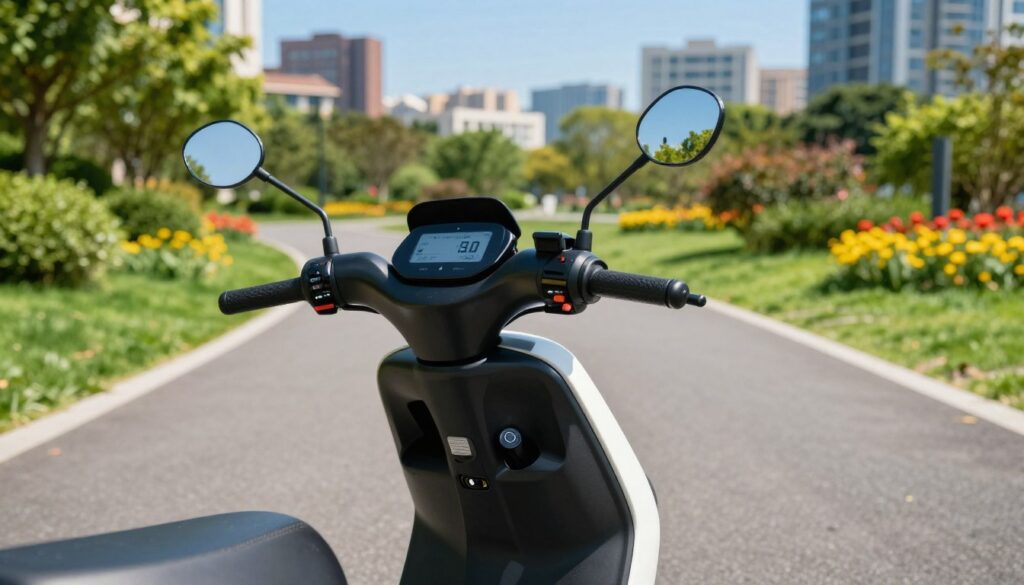
Electric ownership shifts planning to charging. The BMW CE 04 uses an 8.9kWh pack for roughly an ~80-mile range and about ~74mph top speed. A quick charger option can reach full in ~1h40m. Higher purchase price can be offset by lower day-to-day energy costs; riders should check home charging options and local rates. For an in-depth look at electric operating costs see the electric cost breakdown.
Used-market smart buys
The Honda Silver Wing is a strong used pick. Its 582cc twin and plenty of underseat storage make it durable and practical. Active owner communities help with maintenance tips and parts sourcing, boosting long-term value.
Bottom line: The best value model fits daily miles and needs without forcing expensive add-ons. Price out the accessories and service you will actually use before deciding.
Picking the Right Scooter Class for How They Ride
Choosing the right class starts by matching riding habits to real roads and loads.
Urban commuting: maneuverability, storage, and weather protection
City riders need nimble handling, useful underseat storage, and easy access to a phone or charging point.
Maneuverability matters: smooth throttle response and predictable braking reduce stress in traffic.
Heavier wind protection and a clear screen cut fatigue in rain and cold, so commuting stays comfortable.
Highway and two-up touring: wind protection, seat space, and engine size
For sustained speeds and two-up rides, look for a larger engine, a stable chassis, and roomy seating.
Strong wind protection and an ergonomic seat keep a passenger comfortable on long miles.
Also check lighting and a readable dash so riders can stay focused at dusk or on long runs.
Extra stability options: three-wheel designs and big-wheel setups
Three-front-wheel layouts, like the Piaggio MP3, give extra grip and feel planted in sketchy conditions.
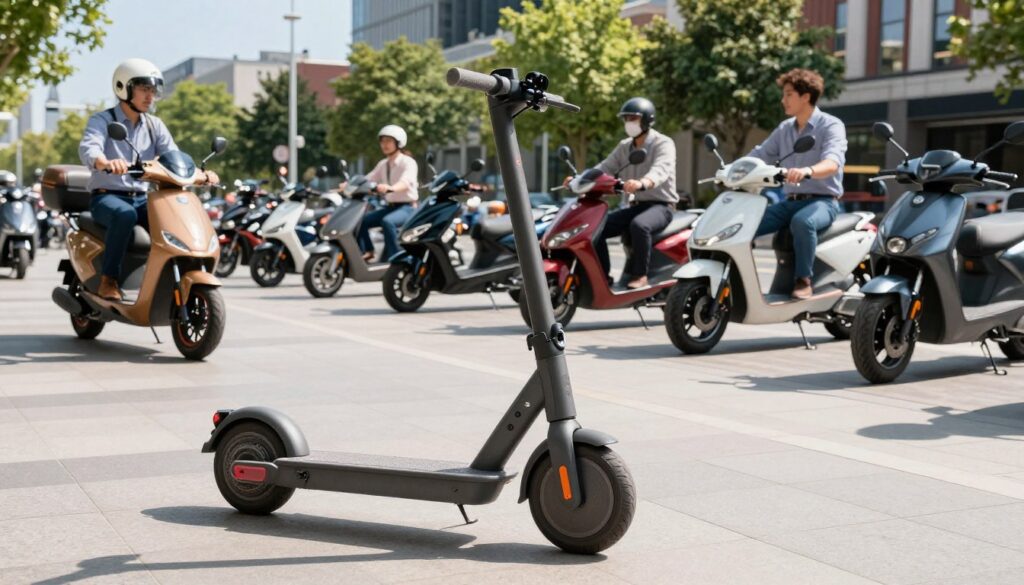
Large-diameter wheels smooth rough pavement and track straighter, but remember they refer to two different categories: maxi-class wheel sizes versus big-wheel kick designs.
- Match riding reality: where they ride, who rides with them, and what they carry.
- Traction and control: electronic aids and mechanical stability build confidence for year-round commuters.
- Compare options: consider three-wheel models for extra stability or a maxi-style model for touring comfort.
For riders who want compact commuting options and dealer support, see compact commuting options for related models and availability.
Ready to Choose a Big Scooter That Fits Their Life?
A quick plan helps buyers move from browsing to test-riding with purpose.
Pick the class first: 400-class, 750-class, three-wheel, or electric. Then shortlist by the features they will actually use — brakes, ergonomics, and storage top the list.
Try a top-three test: one comfort-focused scooter, one sportier model, and one alternative like the Piaggio MP3 or an EV. That contrast makes differences clear.
Confirm fit: seat height, reach to controls, windshield coverage, and whether underseat space fits a helmet and daily gear. A honda forza-style machine suits longer commutes; a Piaggio MP3 helps riders who want extra confidence.
Check dealer support, service intervals, tire costs, and accessory availability. Once they lock the right model and features, they are a bit of research away from a ride they’ll enjoy every day.
FAQ
What defines a big scooter today?
A big scooter typically has an engine displacement of 400cc or more, longer wheelbase, larger wheels, and features aimed at touring comfort like a generous seat, wind protection, and substantial underseat storage. Models such as the Honda Integra 750 blur lines between maxi-scooters and scooter-style motorcycles, offering motorcycle-like chassis and higher sustained-speed ability.
How do maxi-scooters differ from big-wheel scooters?
Maxi-scooters focus on comfort and long-distance capability — bigger fairings, twin-cylinder or larger single-cylinder engines, and more touring amenities. Big-wheel scooters trade some storage and wind protection for improved stability and roll-over feel from larger front and rear wheels, which helps urban handling and highway stability.
Which engine layout is better: single-cylinder or twin-cylinder?
Single-cylinder engines are lighter, simpler, and tend to be more fuel-efficient for urban use. Twin-cylinder units deliver smoother power, better high-speed refinement, and stronger overtaking performance for two-up or touring roles. Choice depends on intended use: commuting favors single-cylinder feel; long-distance or sporty riding benefits from twins.
Are traction control and ABS essential on a big scooter?
Traction control and ABS significantly improve safety, especially in wet or variable traction conditions. ABS is now common and recommended for any bike that sees highway speeds. Traction control adds confidence when accelerating out of corners or on slippery surfaces and is a valuable feature on higher-powered models like the Yamaha TMAX or Kymco AK550.
How important are heated grips and seats?
Heated grips and seats make cold-weather commuting more comfortable and extend usable riding seasons. They’re especially beneficial for riders who do long-distance or frequent early-morning trips. Many premium models and accessory packages include these comfort upgrades.
What should riders look for in lighting and visibility?
Full LED lighting improves night visibility and daytime conspicuity while consuming less power. A clear, readable dash or TFT screen with adjustable brightness helps in changing light conditions. Look for DRLs, LED turn signals, and good reflector placement to enhance visibility to other road users.
How much underseat storage should one expect on models like the Suzuki Burgman 400?
The Burgman 400 offers generous underseat volume that fits a full-face helmet and extra gear. Expect 20–40 liters on many 400-class maxi-scooters; larger Burgman 650s and heavyweight models often provide still more space. Check actual liters and shape, since usable capacity varies by model.
Are smartphone connectivity and navigation necessary?
Smartphone pairing and built-in navigation enhance convenience and safety by allowing turn-by-turn directions and ride data without handling a phone. Many modern models offer Bluetooth, dedicated apps, and USB charging. These features are most useful for commuters and touring riders who rely on navigation and hands-free communication.
Which big scooter models are best for commuting vs. touring?
For daily commuting, models like the Yamaha XMAX and Suzuki Burgman 400 balance agility, economy, and storage. For sportier or higher-speed touring, the Yamaha TMAX and Honda Forza 750 provide more power, stability, and comfort. Three-wheel options like the Piaggio MP3 boost low-speed confidence and wet-weather stability for urban commuters.
How do maintenance and ownership costs compare across classes?
Entry-level large-displacement models generally have lower purchase prices and cheaper parts, while premium scooters with twin engines, advanced electronics, and premium brakes demand higher maintenance and insurance. Fuel economy varies; single-cylinder machines are often more frugal. Used-market choices like older maxi-scooters can offer lower upfront cost but check service history and wear items.
Is a three-wheel design worth considering?
Three-wheel scooters such as the Piaggio MP3 provide extra stability, easier low-speed balance, and confidence in wet conditions. They suit riders who want less physical effort at stops or have limited mobility. Downsides include added weight and sometimes higher purchase and servicing costs.
Can a big scooter handle highway speeds and two-up riding?
Many 400-class and larger models are designed for highway use and two-up touring. Look for adequate engine power, a comfortable two-up seat, wind protection, and suspension tuned for load. Models like the Honda Forza 750 and Yamaha TMAX excel at sustained highway cruising with passenger comfort in mind.
What are the benefits of top-box and glovebox charging options?
A top box increases secure storage for a second helmet or cargo, while glovebox charging and USB outlets keep phones and navigation devices powered. These practical features improve daily usability and make longer rides more convenient, especially when paired with smartphone connectivity for navigation.
How should one choose between the Burgman 400 and Burgman 650?
The Burgman 400 is lighter, more urban-friendly, and fuel-efficient, while the Burgman 650 delivers more comfort, larger storage, and better highway stability for long-distance touring. Consider weight, parking ease, and how much long-haul riding they plan to do when choosing between the two.
Are electric alternatives like the BMW CE 04 practical?
Electric models such as the BMW CE 04 offer near-silent operation, instant torque, and lower running costs, plus high-tech dashboards and connectivity. Range and charging infrastructure are primary considerations; they suit urban and short-range commuters best, while long-distance touring still favors combustion models for refueling speed and range.