
Buy Xiaomi Electric Scooter 1S: Price, Reviews, and Features
 PopScooter Team
December 19, 2025 1:49 pm
.
9 min read
PopScooter Team
December 19, 2025 1:49 pm
.
9 min read
Could a single commuter model replace a car trip and a bulky bike rack?
They looked at the Xiaomi Mi Electric Scooter 1S as a compact, commuter-friendly choice that balanced price and practical upgrades. Key perks include a 250W brushless motor (500W peak), a top speed near 25 km/h, and a claimed range up to 30 km from a 275Wh battery.
The design focused on portability: it weighed about 12.5 kg and folded in roughly three seconds. Riders noted the 8.5-inch pneumatic tires and a stem-mounted display that shows speed, mode, power, and lock status.
Safety and night use were improved with front E-ABS, rear disc brake, a 2W headlight, and upgraded tail light plus reflectors. Connectivity via the Mi Home app brought ride data, remote locking, firmware updates, and adjustable KERS.
For a quick spec list and related details, see the concise guide on model specs and info.
Quick take: Price, who it’s for, and how it rides
This mid-range model arrived as a pragmatic refresh: a clearer dash, brighter lights, and the same reliable motor riders already trusted. It targeted commuters, students, and first-time buyers who wanted sensible upgrades without a big jump in price.
Who will love it
They made it for people who need portability and predictability. The light weight and fast fold make daily carry simple.
- Commuters who hop between transit and sidewalks.
- Students who bring a compact ride into classes.
- First-time users wanting an approachable model with helpful tech.
Value snapshot
Performance and features are balanced for urban use. The quoted top speed near 25 km/h and up to 30 km range suit short trips and errands.
- Weight ~12.5 kg and a 3-second fold for easy stowage.
- Clear dashboard, improved lighting, and app tweaks for firmware and settings.
- Modes like Pedestrian, D, and Sport let users tailor pace and response on mixed road surfaces.
Xiaomi Electric Scooter 1S specs and design at a glance
The design centers on low weight and fast folding, so city users can stash it in tight spaces.
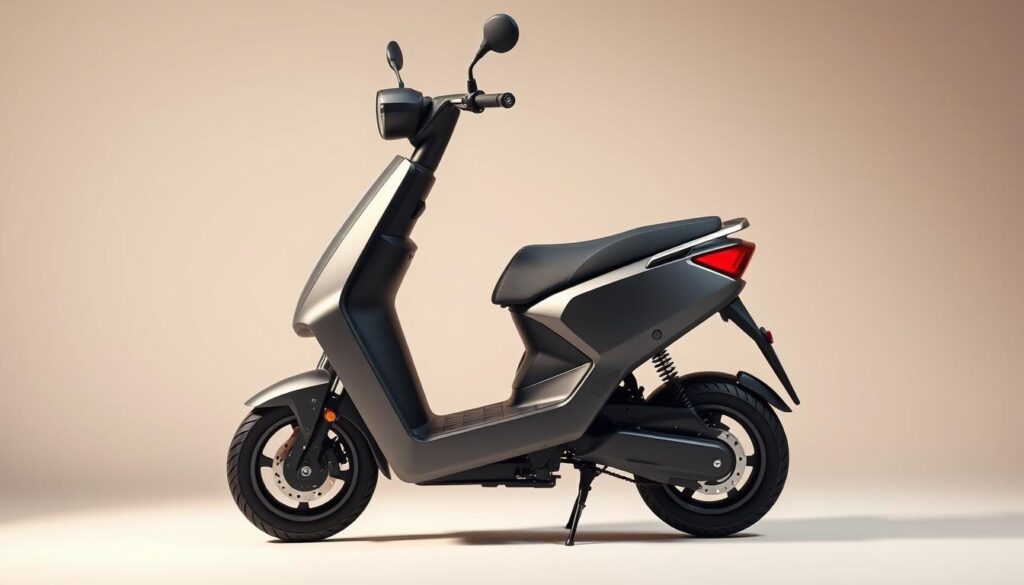
Build and weight: A low-density, aerospace-grade aluminum frame keeps the net weight at 12.5 kg. The folding latch works in about 3 seconds, and the folded footprint suits trunks and office nooks.
Power, speed, and battery
The brushless motor rates 250W with a 500W peak for steady power on starts and small hills. Riders will see a top speed near 25 km/h and mode limits at 5 / 20 / 25 km/h.
Battery: A 275Wh (36V, 7650 mAh) pack targets up to 30 km of range and takes about 5 to 5.5 hours to charge. The BMS aims for roughly 500 cycles to 70% capacity, conserving energy over time.
Wheels, brakes, and size
Front and rear 8.5-inch pneumatic tires smooth everyday roads and light gravel. Braking pairs a front E-ABS regenerative system with a rear perforated disc for controlled stops.
- Unfolded size: 108 x 43 x 114 cm
- IP54 water resistance; max load 100 kg; gradeability ~14%
- Dashboard and Bluetooth connect to the app for speed, mode, and lock status
Riding experience and performance on real roads
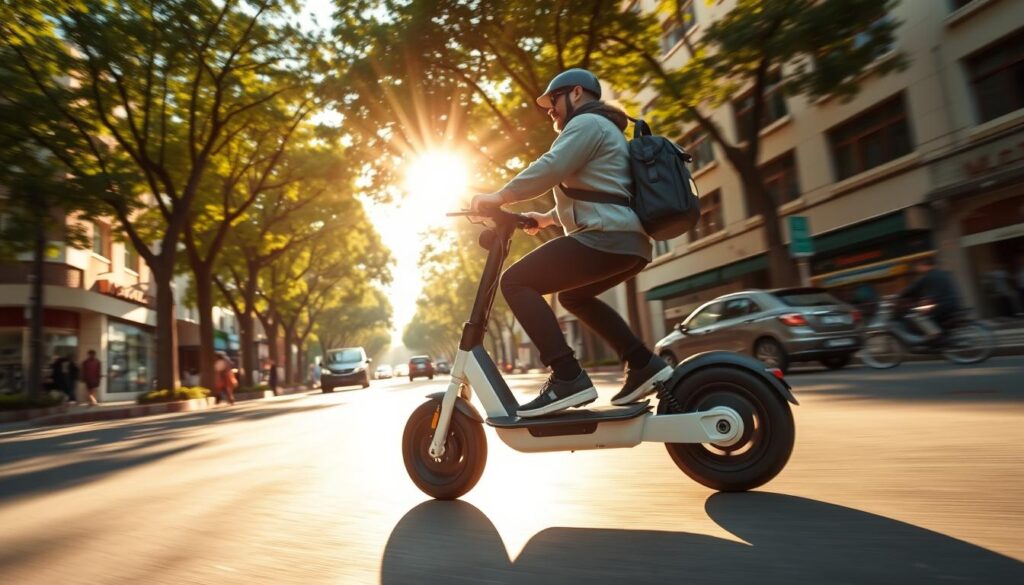
In everyday traffic, the platform delivered calm handling and consistent pace holding. Testers said the ride felt balanced and easy to control, much like earlier commuter models. Acceleration from the 250W nominal motor was steady and predictable.
Acceleration, hill climbs, and cruise control
The unit handled short climbs up to about 14% when given momentum. Cruise control helped hold a steady speed on long straights and cut rider fatigue.
Handling and comfort
Pneumatic 8.5-inch tires smoothed typical city pavement and bike lanes. Lack of suspension meant riders still scanned for big potholes to avoid scrapes under the deck — a minor problem reported by some.
Modes that matter
Pedestrian keeps speeds low for dense paths. D acts as a balanced daily mode, while Sport unlocks quicker throttle response. Energy recovery from regenerative braking showed benefits in stop-and-go use.
- Smooth launches and stable cruising for neighborhood streets.
- Predictable power delivery; real-world top speed matched posted caps in open areas.
- Comfort depends on tires; lift over sharp curbs avoids undercarriage contact.
Safety first: braking system, lighting, and visibility
Safety comes first for urban riders, and this model combines deliberate stopping and clear illumination to help riders feel secure on busy streets.
E-ABS plus rear disc: stopping power and stability
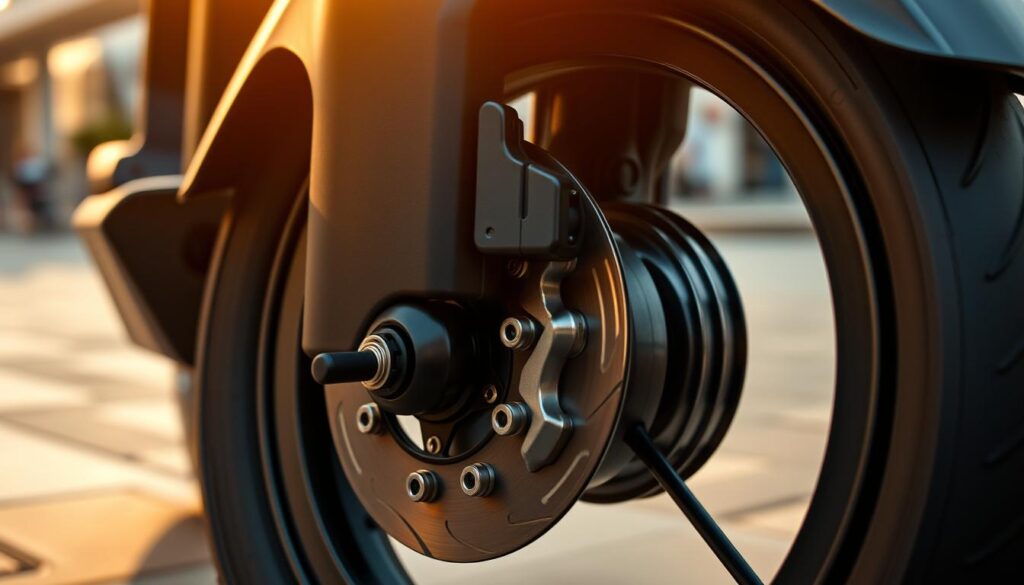
The front wheel uses an E-ABS regenerative anti-lock braking setup that works with a large perforated rear disc to shorten stopping distance.
A left-hand lever gives familiar, progressive feel so riders can modulate force and keep weight balanced over the deck during quick deceleration.
2W headlight, upgraded tail light, and added reflectors
The 2W headlight projects a brighter, cleaner beam and uses a cut-off angle to reduce glare for oncoming traffic.
The upgraded tail light turns on with the headlight and flashes under braking, improving visibility for traffic approaching from behind.
- Combined braking: front E-ABS regeneration plus rear disc for controlled stops on dry and lightly wet surfaces.
- Predictable lever feel: smooth inputs help maintain stability during hard stops.
- Energy and health: firmware and the BMS manage regen and battery health while braking.
- Night visibility: headlight, tail light, and front/side/rear reflectors boost conspicuity before dawn or after dusk.
- Caveat: stopping distance still varies with rider weight, tire pressure, speed, and surface—pre-ride checks matter.
In short, the combined braking and lighting hardware make this scooter ready for real-world city riding where visibility and reliable stops are non-negotiable.
Smart features and app connectivity
Owners see eight key readouts on the stem display, making in-ride choices fast and simple.
Multifunctional dashboard: the clean dash shows speed, speed mode, battery level, power output, and lock status at a glance. A short press toggles the light; a double press of the power button cycles Pedestrian, D, and S modes in seconds.
Mi Home app and connected system
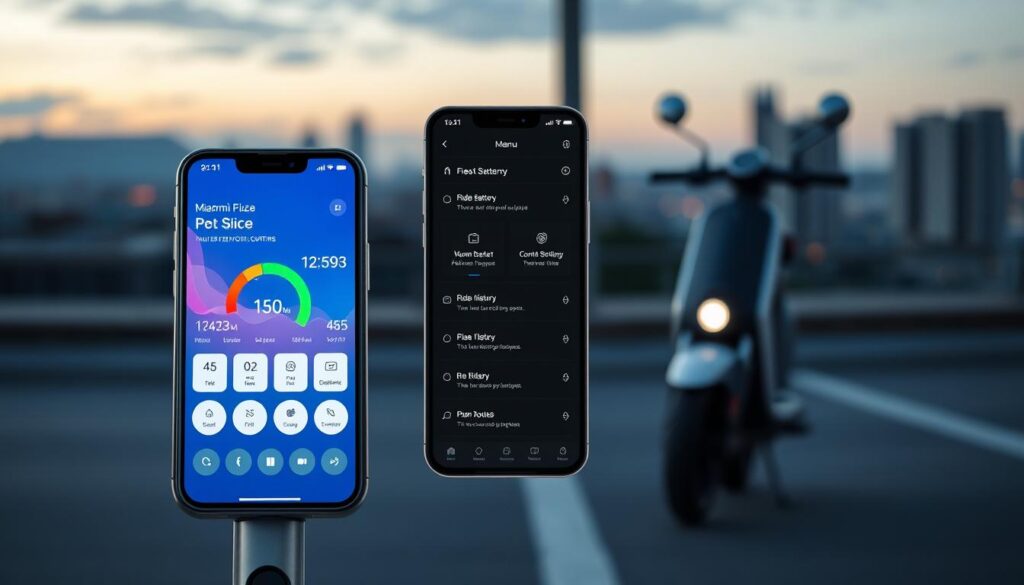
The Mi Home app pairs over Bluetooth to surface live ride data like speed, mileage, and remaining battery. Remote locking adds a theft deterrent while firmware updates arrive over the same channel.
- Live information: real-time speed and range estimates keep planning simple.
- Adjustable KERS: tune kinetic energy recovery to favor smoother coasts or stronger regen.
- Quick setup: pairing and ownership confirmation usually complete in seconds.
For troubleshooting or specs, consult the official FAQ to get precise system information and support.
Should you buy the Xiaomi Electric Scooter 1S today?
It delivered a lightweight build with sensible systems that matched daily city needs.
Pros: The 12.5 kg weight, 3‑second fold, and 275Wh battery made storage and nightly charging easy. Top speed near 25 km/h, a claimed 30 km range, and cruise control suited short commutes and errands.
Safety and usability: Front E‑ABS plus a rear disc brake gave predictable braking feel. A 2W headlight, upgraded tail light, and reflectors helped visibility. Bluetooth pairing to the home app added lock and KERS tuning for energy control.
For a balanced, reliable urban ride the model earned a strong, clear recommendation. See the full review and specs for detailed data before buying.
FAQ
What is the top speed and motor power of the scooter?
It has a 250W rated motor (500W peak) with a top speed of about 25 km/h (15.5 mph), giving confident city commutes and quick acceleration from stops.
How far can it go on a single charge and how long to recharge?
The 275Wh battery usually reaches up to 30 km (18 miles) under mixed urban riding. Expect a full recharge in roughly 5 to 5.5 hours with the standard charger.
How heavy is the model and is it easy to carry?
The frame weighs about 12.5 kg thanks to aerospace‑grade aluminum. It folds in roughly three seconds for short carries and storage, though two hands are helpful for longer carries.
What braking system does it use and is it safe in wet conditions?
It pairs an E‑ABS front system with a rear disc brake for stable, progressive stopping. The build has an IP54 rating for splash resistance, but riders should slow down in heavy rain.
Are the lights bright enough for night riding?
Yes. A 2W headlight illuminates the path ahead while an upgraded tail light and reflectors boost visibility to other road users for safer night rides.
What wheel and tire setup does it have for city roads?
It uses 8.5‑inch pneumatic tires that balance comfort and agility on pavement, absorbing small bumps while keeping handling responsive.
Does it support ride modes and cruise control?
Riders can switch between Pedestrian, D, and Sport modes to match speed and responsiveness. Cruise control helps maintain steady speed on longer stretches.
Can the scooter connect to an app and what features are available?
It links with the Mi Home app to show speed, battery, lock status and ride data. Users can apply firmware updates, remotely lock the unit, and tune kinetic energy recovery settings.
What are the dimensions and maximum rider weight?
The platform measures about 108 x 43 x 114 cm when unfolded. The rated maximum load is 100 kg, suitable for most commuters and students.
How long does braking from speed to stop take in real conditions?
Stopping distance varies with surface and speed, but the combined E‑ABS and disc setup provides predictable deceleration for typical urban stops; riders should allow extra room on wet or loose surfaces.
Is maintenance difficult and are spare parts available?
Routine maintenance is straightforward: tire pressure checks, brake adjustments, and firmware updates via the app. Authorized retailers and service centers offer replacement parts like tires, brake pads, and chargers.
How does it perform on small hills and inclines?
The motor handles gentle to moderate inclines well in D or Sport mode. Very steep hills may reduce range and require lower speeds, so plan routes accordingly.
What safety features help prevent theft or unauthorized use?
The app supports remote locking and shows basic ride data. A solid mechanical lock and common-sense parking in visible, well-lit areas add protection against theft.
What user feedback is common about comfort and ride quality?
Many users praise the stable stance and pneumatic tires for daily commutes. Some request improved suspension for very rough roads, but most find the balance of weight, comfort, and portability strong for city use.
You might also like