Xiaomi Electric Scooter 3 Lite: Price, Specs, and Reviews
 PopScooter Team
December 24, 2025 2:43 am
.
17 min read
PopScooter Team
December 24, 2025 2:43 am
.
17 min read
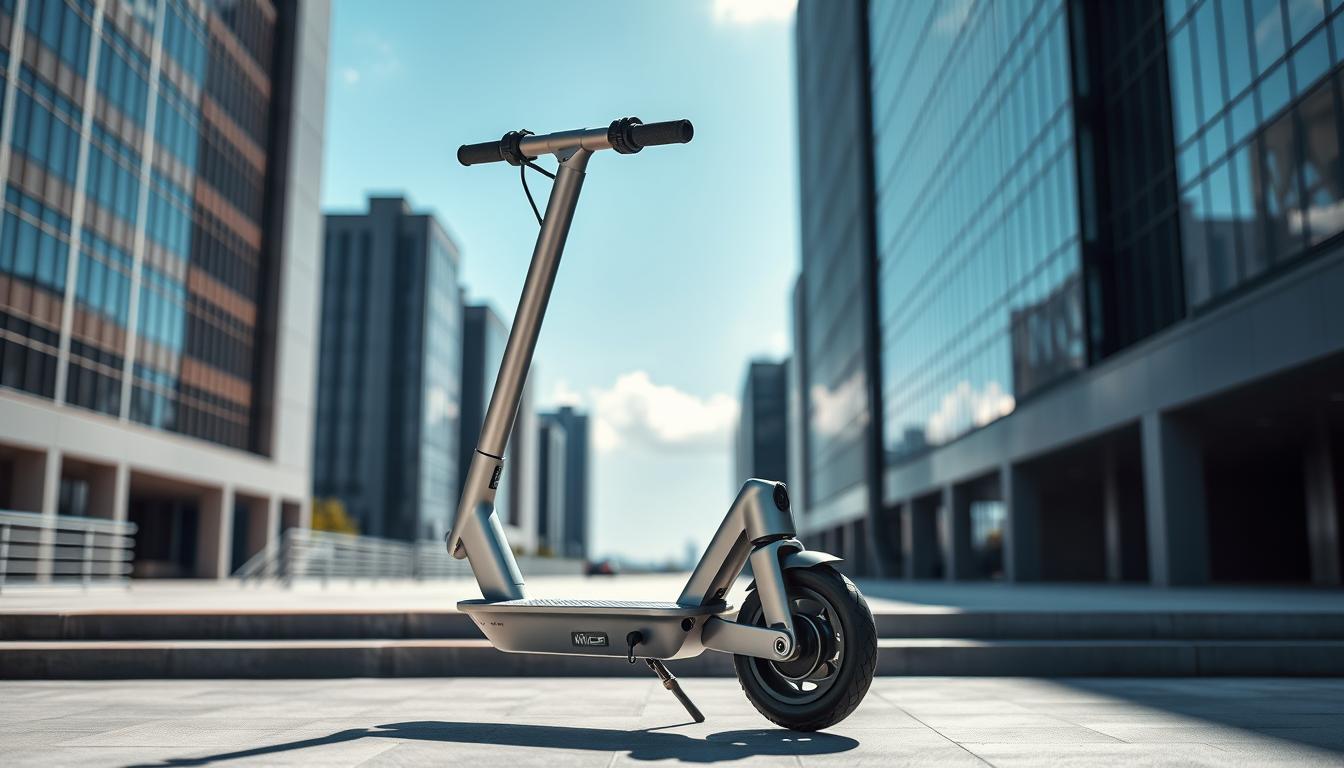
Can a lightweight urban ride give you the range and stopping power you need without costing a fortune?
The introduction lays out what to expect from this popular product. It highlights a 300W rated motor (600W peak), a top speed of 25 km/h, and a practical 20 km range. Riders will note the compact 5200mAh lithium battery with smart BMS and a 4.5-hour charge time.
Key safety and comfort features are mentioned up front: front E‑ABS plus a rear drum brake, regenerative braking, and 8.5‑inch pneumatic tires for a smoother ride. The aluminum alloy frame and tidy fold make it easy to store.
The integrated color display shows speed and battery level at a glance, while the companion app adds ride stats, remote lock, and cruise control. This section frames the ride as a budget-friendly, minimalist choice for short commutes and first-time riders.
Quick take: who should consider the Xiaomi Electric Scooter 3 Lite right now
This compact ride suits riders who need something light, safe, and easy to carry.
Who it’s best for: Short-range commuters, students, and first-time users who want a simple vehicle to get around town. It is approachable for those who value portability over long range or heavy power.
At-a-glance pros and cons
- Pros: sleek design, easy-to-read display, budget-friendly, about 13 kg weight, dual braking with E‑ABS, wide handlebars, pneumatic tires, quick three-step folding, bright lights, and a user-friendly mobile app.
- Cons: no suspension and a lower IPX4 water resistance rating than higher-end models.
Everyday wins include a wider deck for stability and clear readouts that reduce distraction. The braking pair (E‑ABS plus a rear drum) and good lighting help build confidence in busy city streets.
The trade-offs are honest: pneumatic tires soften bumps but won’t replace full suspension. Riders in consistently wet climates may prefer a higher IP-rated option.
Price and value for money in the United States
For many buyers, a lower sticker price can make a compact urban ride an obvious first choice.
The lower price positions this electric scooter lite as a clear starter option for U.S. shoppers. It keeps core commuting features — a 25 km/h top speed and about 20 km range — while staying light at roughly 13 kg. That balance makes daily storage and multi-modal use easier.

Why it appeals to beginners: the simple folding design and modest weight cut ownership friction. New riders can learn basics without a big investment. The product supports up to 100 kg maximum weight, which suits most city users.
- Solid commute performance for short hops and errands at a lower price.
- Better portability and storage compared with heavier alternatives.
- Compare trade-offs: a Turboant with a 350 motor and ~52 km range adds heft and cost.
In short, the scooter lite works best for those who primarily use short trips and value ease of use over long range. It gives beginners a cost-effective way to test the category before upgrading.
Specs at a glance: speed, range, weight capacity, and more
These core figures show how the model balances portability, power, and everyday range.

Core performance specs
The power profile centers on a 300 motor rated output with a 600W peak for bursts. It reaches a regulated top speed of 25 km/h, and the on-board display shows speed km/h clearly.
Range is up to 20 km, enough for short commutes and errands. The 5200mAh/187Wh lithium battery keeps charge times reasonable and weight down.
Build and dimensions
The chassis uses an aluminium alloy frame to keep curb weight near 13 kg while staying durable. Maximum weight is 100 kg, matching the stated weight capacity and maximum weight capacity for most adult riders.
- IPX4 water resistance for light splashes (not heavy rain).
- 8.5-inch pneumatic tyres for better traction and comfort on rough pavement.
- Compact footprint: folded and unfolded dimensions suit tight storage.
Bottom line: the electric scooter lite delivers a balanced power speed setup, practical range, and easy portability. For a complete parts and spec breakdown, see the full spec list.
Performance test: power, top speed, and climbing ability
Real-world runs reveal how steady acceleration and hill work feel in daily use.
Real-world power and acceleration
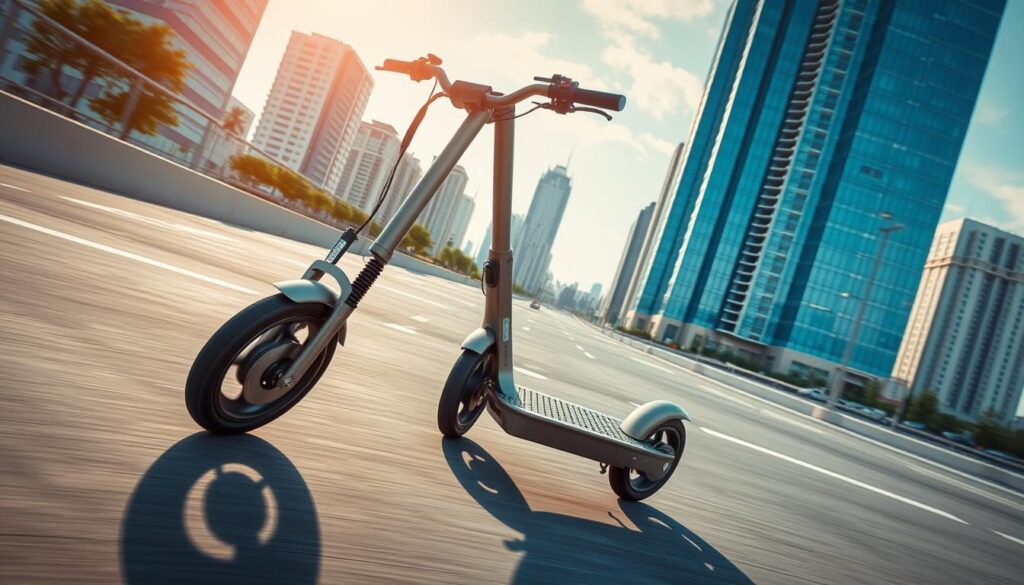
The ride uses a rated 300 motor with a 600W peak. That setup gives steady bursts and helps the unit hold pace on flat city streets.
Top speed sits near 25 km/h in tests, though headwinds and rider weight can trim a few km. The balance of power and control avoids sudden surges, so new riders feel confident.
Hills, traction, and energy recovery
Climbing tests show roughly a 14% climbing angle on short slopes. It won’t conquer long steep grades, but it handles typical urban inclines without stalling.
8.5-inch pneumatic tyres keep traction predictable on painted crosswalks and rough patches. That helps the motor transmit torque with fewer wheel slips.
- The performance rundown centers on consistent acceleration from the 300 motor, with the 600W peak offering extra headroom.
- Real-world speed km/h and range depend on rider weight, terrain, and temperature; switching modes helps manage the battery.
- Kinetic energy recovery during braking adds useful range in stop-and-go commutes.
Bottom line: this electric scooter lite favors predictable control over raw torque, making it a smart choice for dense urban traffic and short daily rides.
Battery and charging: lithium battery, BMS, and charge time
Daily usefulness often rests on predictable charging and a smart battery management system.
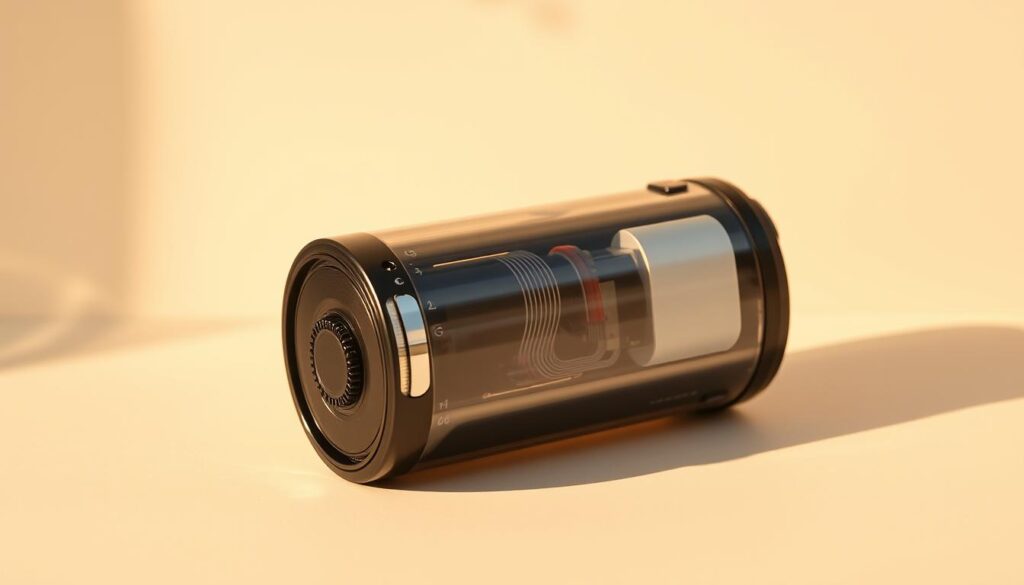
The ride uses a 5200mAh / 187Wh lithium battery paired with a smart BMS that protects the pack from overcharge, over-discharge, and short circuits.
Owners see a practical range up to 20 km when riding in gentler modes and on flat routes. Typical charge time from near empty is about 4.5 hours, which fits an overnight or office-day routine.
Tips to maximize battery life
- Avoid full drains; partial top-ups keep overall battery life healthier.
- Store the product at a partial charge if unused for weeks and keep it away from extreme heat or cold.
- Use gentler throttle and ride modes to extend range during daily trips.
- Check BMS diagnostics via the app to spot unusual drain patterns early.
Bottom line: the system’s protections and a predictable 4.5-hour charge window make the electric scooter reliable for commute cycles. Plug in after work and it’s usually ready by morning.
Braking and safety: dual braking system with E-ABS and rear drum brake
Reliable stopping is a key safety feature for any urban ride, and this model pairs electronic control with a mechanical rear brake.
Stopping power and stability under different speeds
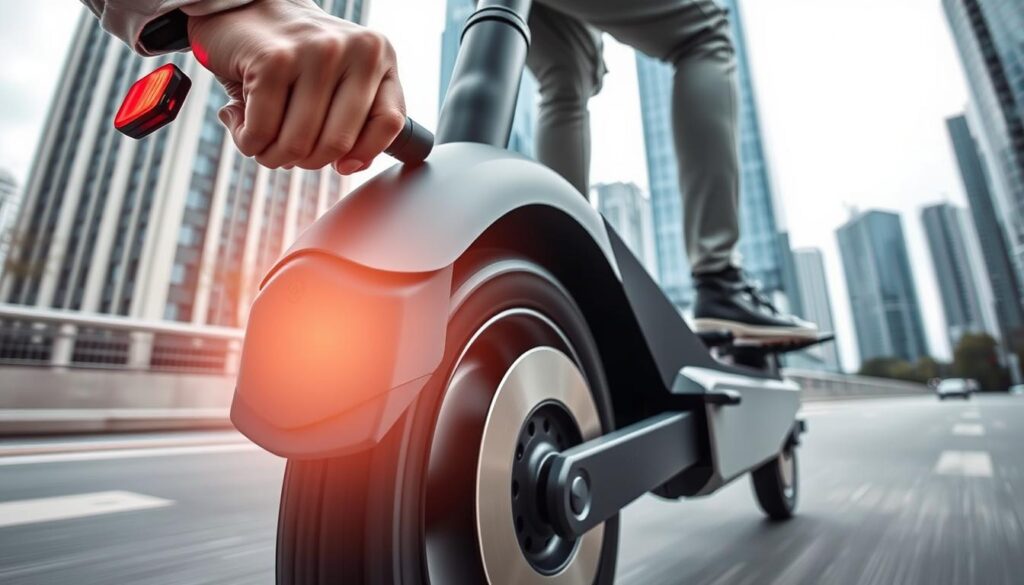
The front E‑ABS and rear drum brake form a true dual braking system. Together they give stable, predictable stops in traffic and help manage forward weight transfer at common city speeds.
The E‑ABS smooths front deceleration and lowers the chance of the front tire locking on slick surfaces. The mechanical drum brake at the rear delivers fade-resistant bite for controlled emergency use.
Regenerative braking and kinetic energy recovery explained
Regenerative braking harvests kinetic energy during slowdowns and returns a small amount of charge to the battery. In stop-and-go routes this extends effective range and eases wear on the brake pads.
- The combined setup reduces harshness and shortens stopping distances without pitching the rider forward.
- Bright front and rear lights plus reflectors make the vehicle more visible at night.
- Lever feel is progressive, which helps new riders build confidence before harder stops are needed.
Handling and ride quality: deck, handlebars, and comfort without suspension
Urban rides demand balance; this model prioritizes a steady platform and forgiving steering for everyday streets.
The widened deck—about 10mm extra—gives riders a little more stance room. That added width helps stability during turns and when shifting weight over rough patches. New users notice less wobble at neighborhood speeds.
Wide handlebars improve steering feel and control. They make small inputs smoother and help riders steer precisely through traffic. For casual commutes, the result is confident handling and easier maneuvering.

Pneumatic tyres and comfort
There is no suspension system, so the 8.5-inch pneumatic tyres do the heavy lifting. They absorb bumps better than solid tires and soften pothole lips and cracks.
- The deck and bar layout encourage a relaxed posture for longer urban use.
- Sturdy frame geometry keeps the ride composed under braking and during cornering.
- The setup favors control and confidence over plush isolation on very rough roads.
Bottom line: this scooter lite trades a suspension system for smart geometry and pneumatic tyres, delivering a predictable, user-friendly ride tuned to city streets.
Tires and traction: 8.5-inch pneumatic tires for everyday riding
Good rubber makes a bigger difference than riders expect — these 8.5-inch pneumatic tyres boost grip and comfort on daily routes.
Skid-resistant and shock-absorbing, the 8.5-inch pneumatic tyres add a larger contact patch and natural flex. That improves traction during cornering, accelerating, and braking on busy city streets.
The added compliance also cuts vibration through the deck and handlebars. Riders feel fewer jolts over expansion joints and pavers, which raises comfort and control at typical commute speeds.
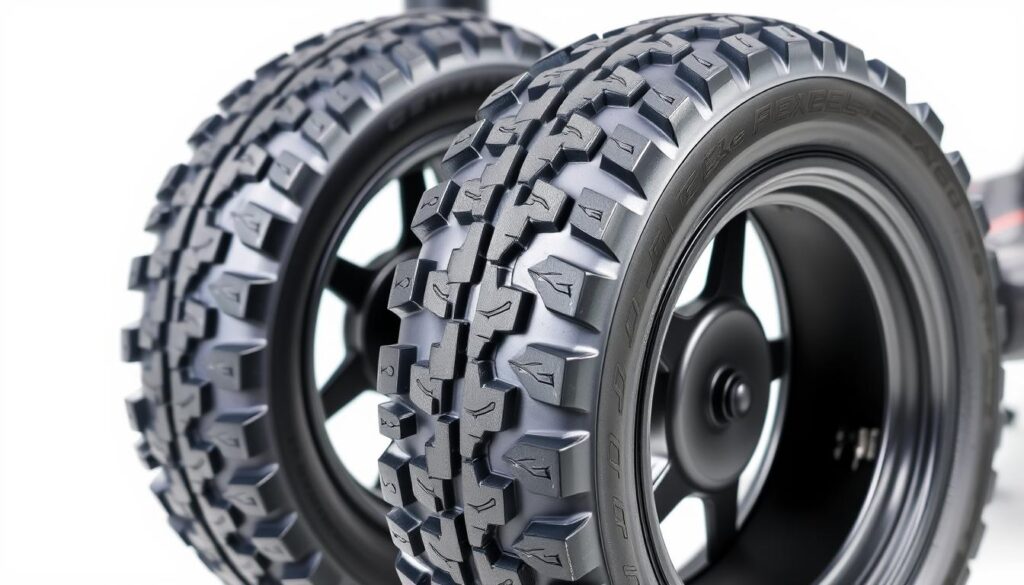
- Better grip shortens stopping distances and complements the drum brake and E‑ABS braking setup.
- Rear traction matters: it aids stability under braking and when rolling over shallow potholes mid-turn.
- Compared with 10-inch options, 8.5-inch tires keep steering nimble while still softening bumps.
The scooter lite configuration pairs these tyres with modest power well. Even models with a 350 motor and larger wheels trade some agility for extra cushioning. For everyday urban use, this tire choice hits a practical level of comfort and grip.
Design and build: minimalist look, sturdy aluminum alloy frame
The design balances a pared-down silhouette with rugged build choices for everyday city use.
Its minimalist T-shaped handlebar creates a clean, modern profile that fits narrow bike racks and tight storage. The repositioned front light lowers visual bulk near the clamp and frees room for a larger instrument panel.

The high-strength aluminium alloy frame keeps weight down while staying stout under braking and cornering. Thoughtful cable routing and refined latch details give the product a tidy, premium fit and finish.
- The enlarged display area makes speed and battery readouts easy to scan at a glance.
- A practical deck surface and robust hinges invite frequent folding without fuss.
- Bold color options and subtle trim details help the scooter stand out without shouting.
Bottom line: form and function work together. The xiaomi electric scooter keeps a friendly look while remaining durable enough for daily commutes.
Portability and folding: lightweight scooter you can carry
Carrying a compact urban ride should feel effortless, and this model focuses on that ease.
The three-step folding workflow is straightforward and fast. First, lift the connecting buckle. Next, lift again and press down. Finally, fold the stem into place for a compact package.
Three-step folding mechanism for commute convenience
Quick to collapse: the fold takes seconds, which saves time when boarding transit or entering a classroom.

At about 13 kg, it’s light enough to carry up stairs or tuck into a car trunk without strain. The aluminium alloy frame gives the latch a positive, secure feel when locked upright.
- The fold-and-go routine fits daily use: fold, grab, and move—no extra straps needed.
- Compact size when folded lets commuters stash it under a desk or beside a café table.
- Its light weight helps when walking the unit through crowds or across crosswalks.
- Design choices from lite xiaomi thinking reduce friction so riders bring it along more often.
Display, app, and user interface: riding data at a glance
A bright, consolidated screen plus an upgraded mobile app keeps ride info straightforward and useful.
The integrated color-coded display shows speed and battery level on a single, glanceable screen. Icons are color-coded so riders can read mode, charge, and warnings without pausing.
Integrated color-coded display
The display is brighter and clearer than older split layouts. The layout puts speed and remaining charge in the most visible spot. That reduces distraction and helps decision-making while riding.
Mobile app features
The companion app brings useful tools off the bars. It shows ride stats, recent history, and estimated mileage so a rider can track trips and energy use.
- Error alerts notify owners of faults early to avoid surprises.
- Remote lock and cruise control tweaks extend control when the vehicle is parked or on longer runs.
- Estimated mileage tools help plan multi-stop errands by balancing speed and charge.
Bottom line: the screen and app work together to give a clean user interface that supports commuting. The setup keeps features practical and easy to use for everyday riders.
Water resistance, lights, and visibility
Seeing and being seen, plus a sensible IP rating, matter most when roads get damp.
IPX4 water resistance gives the product modest protection from light splashes and drizzle. This level is fine for short wet commutes but not for heavy downpours or standing water. Riders should avoid deep puddles to prevent damage.
Lights, reflectors, and wet-weather grip
Bright front and rear lamps plus an active brake light help signal deceleration to following traffic. Side reflectors boost off-axis visibility at intersections and in multi-lane roads after dusk.
Pneumatic tyres provide better wet-weather grip than solids. That added traction supports more confident steering and controlled stops on damp pavement.
- IPX4 caveat: OK for light rain, not for heavy showers.
- Braking setup: front E‑ABS pairs with a rear drum brake to keep stops stable on slick surfaces.
- Dry and store the unit indoors after wet rides to protect components and finish.
Bottom line: sensible lighting, reflectors, and the braking kit help riders stay seen and stop reliably in light wet conditions. Still, reduce speed and increase following distance when traction is poor.
xiaomi electric scooter 3 lite vs alternatives: 3, 4 Lite, and Turboant X7 Max
Comparing nearby rivals makes it easier to see where portability or power matter most for city commutes.
Electric Scooter 3 vs 3 Lite: range, incline, and IP rating
The standard model keeps the same top speed but boosts range to about 30 km and improves hill climb to roughly a 16% climbing angle.
It also moves to an IP54 rating for better wet-weather protection. The 3 Lite trades those gains for lower weight and a smaller price tag.
Electric Scooter 4 Lite: heavier, higher IP54, more motor power
The 4 Lite ups the motor figures and raises the maximum weight capacity to about 120 kg.
That model is heavier but offers stronger torque and better sealing at IP54. Some spec sheets differ on braking details; regenerative features vary by revision.
Similar-price option: Turboant X7 Max range and tire size
The Turboant X7 Max stands out for long range and larger wheels. It uses a 350 motor, 10-inch tires, and roughly 52 km of range.
It is heavier, but the extra range and bigger tyres suit longer commutes. For a direct comparison, see the Turboant X7 Pro vs Xiaomi comparison.
- Trade-offs: the 3 Lite wins on portability and simple folding, while others trade weight for range, power, or weather sealing.
- Braking: the dual braking system on the 3 Lite remains predictable and friendly for new riders.
- Pick based on route: steeper slopes and frequent wet weather favor the higher-torque or IP54 models.
Final verdict: is this electric scooter the right fit today?
Putting specs into real-world context shows which riders get the most value from this model.
The product is a strong, practical pick for short commutes, campus runs, and quick errands. With a 25 km/h top speed, up to 20 km range, and a compact 300 motor (600W peak), it balances power and portability.
Pros: about 13 kg weight, 100 kg maximum weight capacity, a reliable dual braking system (front E‑ABS plus rear drum), regenerative braking, and a clear display plus app with remote lock and cruise.
Battery life and a 4.5-hour charge time fit daily use. For wetter climates, steep hills, or heavier loads, consider higher-spec alternatives. For most urban riders, this product keeps life simple and useful.
FAQ
What are the key specs and who is the scooter best for?
The model offers a 25 km/h top speed, around 20 km real-world range, a 300W rated motor (peaks higher), and an aluminum-alloy frame. It suits city commuters and beginners who want a lightweight, affordable ride for short trips and flat routes.
How does the price compare and is it good value in the United States?
It sits at a lower price point than many full‑power options, making it a strong value for first-time riders and budget-conscious commuters. For those who prioritize long range or steep-climb ability, midrange or premium models may offer better long-term value.
What is the motor power and how does it perform uphill?
The scooter uses a 300W rated hub motor with higher peak output for short bursts. It handles modest slopes well and can manage inclines up to about 14% under ideal conditions for a single rider at moderate weight.
How long does the battery last and how long to charge?
The onboard lithium battery is roughly 187Wh (about 5200mAh). Expect around 20 km of mixed-use range per charge. Typical charging takes roughly 4–5 hours with the stock charger; using recommended charging habits and avoiding full deep discharges will extend battery life.
What braking systems are included and are they safe?
It features a dual-braking setup: electronic E-ABS plus a rear drum brake. Together they provide dependable stopping power for urban speeds. Riders should allow extra distance in wet or slick conditions and keep brakes properly maintained.
Does it have regenerative braking and does that extend range a lot?
It includes regenerative braking that recovers some kinetic energy during deceleration. While it helps slightly with efficiency and brake wear, it won’t dramatically increase real-world range on its own.
How does it ride without suspension?
The design relies on an 8.5‑inch pneumatic tire setup and a wider deck to smooth bumps. That combination improves comfort on city pavements, though riders will still feel larger potholes more than on suspended models.
What is the maximum rider weight capacity?
The frame supports typical urban weight limits around 100–120 kg (220–265 lbs) depending on terrain and riding style. Staying within limits helps maintain performance and component longevity.
Is it portable for commuting and how does the folding work?
At roughly 13 kg, it’s among the lighter models and easy to lift for short carries. The simple three-step folding mechanism secures the stem for storage on trains, in lockers, or in car trunks.
What display and app features are available?
The scooter has an integrated color‑coded display showing speed, battery level, and mode. The companion mobile app offers ride stats, remote lock, firmware updates, and cruise control options for convenience and security.
Is it water resistant and safe in light rain?
The IPX4 rating means the electronics resist splashes and light rain, but it isn’t designed for heavy downpours or riding through deep puddles. Riders should avoid prolonged wet exposure and dry the unit after wet rides.
How are the lights and visibility at night?
It includes a front headlight, rear brake light, and side reflectors to improve visibility. For night commuting, riders should add personal lights or reflective gear for added safety.
How does it compare to higher‑end or alternative models like the 4 Lite or Turboant X7 Max?
Compared with heavier, more powerful alternatives, this model prioritizes weight savings and affordability. Upgrades such as larger battery capacity, stronger motors, higher IP ratings, or bigger tires are found on pricier rivals like the 4 Lite or Turboant X7 Max.
What maintenance tips will keep it running well?
Regularly check tire pressure, brake adjustment, and fasteners. Keep the battery charged between 20–80% for long-term health, and store the unit in a dry place. Follow manufacturer service intervals for best results.
Are replacement parts and service widely available?
Common consumables like inner tubes, tires, brake pads, and chargers are broadly available from third-party suppliers. For firmware and warranty service, authorized dealers and the official support channels provide parts and repairs.