TVS Battery Scooty: Everything You Need to Know
 PopScooter Team
December 9, 2025 1:28 pm
.
16 min read
PopScooter Team
December 9, 2025 1:28 pm
.
16 min read

Could a practical, tech‑rich electric scooter replace your daily ride without surprises? This introduction frames a friendly review of the TVS iQube family and sets expectations for real‑world practicality, tech highlights, and value for money.
The guide covers six iqube variants with IDC ranges from 94 km to 212 km, 0–80% charging windows between 2 h 45 min and 4 h 18 min, and top speeds up to 82 km/h. Readers will see how a 4.4 kW peak hub motor delivers responsive city performance and near‑silent operation.
It also previews SmartXonnect connected features like navigation, alerts, and OTA updates, plus warranty and support details — a 3‑year/50,000‑km battery warranty and RSA assistance that matter to buyers.
Shortcuts on storage, braking hardware, and price positions help shoppers match a variant to their commute. This is a product review framework to guide readers through design, performance, charging, ownership costs, and rivals.
tvs battery scooty
The iQube family is built around city use, offering familiar scooter ergonomics with electric ease.
Key hardware and ergonomics: the tvs iqube uses a hub-mounted BLDC motor with a 4.4 kW peak output. It delivers brisk launches — 0–40 km/h in about 4.2 seconds — which helps when pulling away from traffic lights.
Comfort and practicality are clear priorities. A 770 mm seat height and roomy footboard make stop-and-go riding easier. Under-seat storage runs 30–32 liters, enough for a helmet and daily items.
- Two ride modes (Eco and Power) let riders trade range for responsiveness.
- 12-inch wheels, front disc brakes on most variants, and a combined brake setup aid stability and stopping.
- Kerb weights vary from 115 kg to 129.7 kg, so handling shifts slightly by model.
Who it suits: the iqube series is a daily vehicle from an established company that blends scooter comfort with simple electric operation.
What’s New in the TVS iQube Electric Lineup right now
The lineup now spans from a compact 2.2 kWh pack to a long-range 5.3 kWh ST model, so buyers can match capacity to commute length. This clearer separation of variants makes choosing easier for city riders and occasional longer trips.
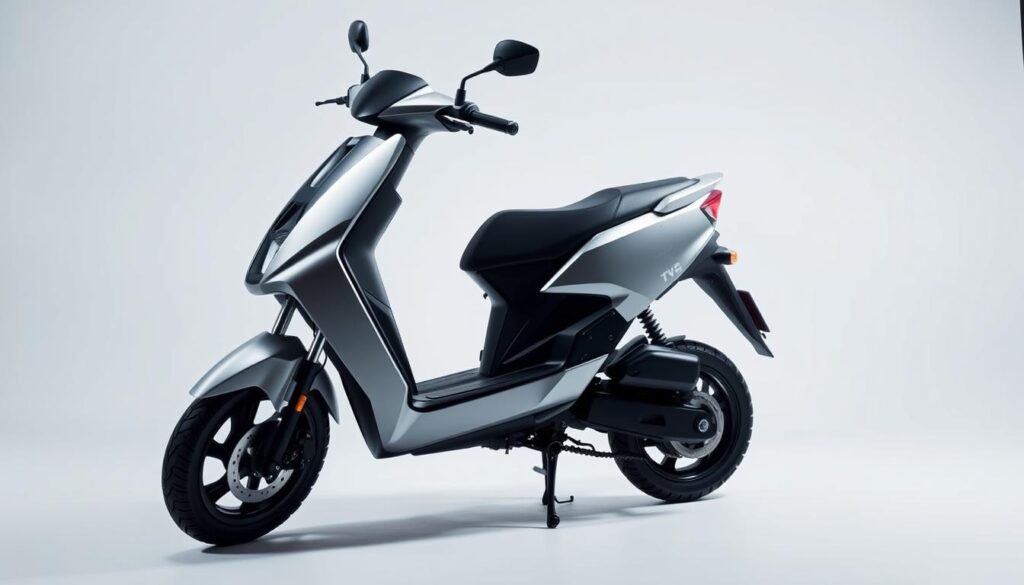
The newest tvs iqube electric range adds tangible tech and convenience upgrades. TFT dash options come in 5‑inch and 7‑inch sizes with improved themes and visibility. The SmartXonnect suite brings navigation, alerts, document storage, and OTA updates to keep the UX fresh.
Standout changes:
- ST 5.3 kWh model claims up to 212 km IDC and a 0–80% time of 4 h 18 min with a 950W portable charger.
- Portable 950W charging works on a standard 15A outlet, so owners avoid special home installs.
- Design tweaks and practical upgrades — storage, brakes, and road manners — keep the iqube familiar yet modern.
The focus is on giving buyers clear options, smarter connected features, and a refreshed design that fits daily urban life.
Variants and Core Specs: iQube 2.2 kWh, 3.1 kWh, 3.5 kWh, and 5.3 kWh
This section lays out each iQube variant so readers can match range and charging to their commute. It maps capacity to claimed IDC figures, charge times, and core hardware so buyers compare easily.
Battery packs and IDC range
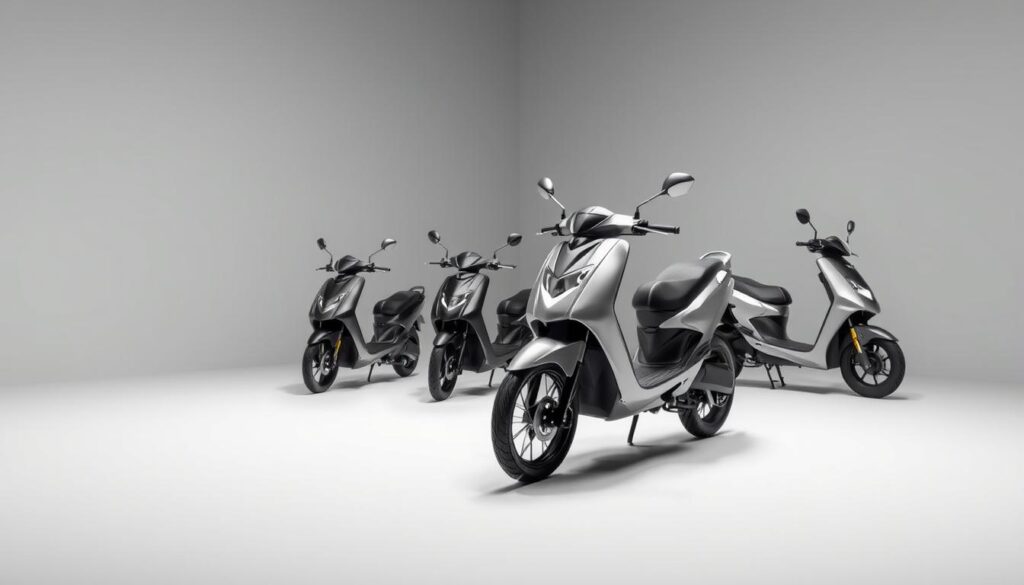
The lineup spans four main capacities: iqube 2.2 kwh (94 km IDC), iqube 3.1 (123 km), iqube 3.5 kwh (145 km) and the ST 5.3 kWh (212 km). These ranges help match pack size to daily miles.
Charging times (0-80%)
Charge windows vary: 2 h 45 min for the 2.2 kWh, about 4 h 03 min for 3.1 kWh, and a split for 3.5 kWh — standard ~4 h 40 min or a faster 3 h on S/ST trims. The 5.3 kWh ST takes roughly 4 h 18 min.
Top speed and acceleration
Performance is city-focused: top speed reaches up to 82 km/h and 0–40 km/h in a brisk 4.2 seconds. The hub-mounted motor with 4.4 kW peak keeps power delivery direct and responsive.
Kerb weight, storage, and braking setup
Kerb weights range from 115 to 129.7 kg, so heavier packs add stability while lighter trims feel more nimble. Under-seat storage sits at 30–32 liters — enough for a helmet and daily items.
- Brakes: front disc and rear drum on most variants, with SBT linked feel on select trims.
- Clear trade-offs: more kWh gives longer range and added weight; smaller packs charge faster and handle lighter.
Design and Build Quality: Everyday practicality meets modern EV styling
The iQube’s exterior shows a careful balance of commuter practicality and subtle EV styling. It keeps a familiar scooter silhouette while adding clean, purposeful cues.
Fit, finish, and materials
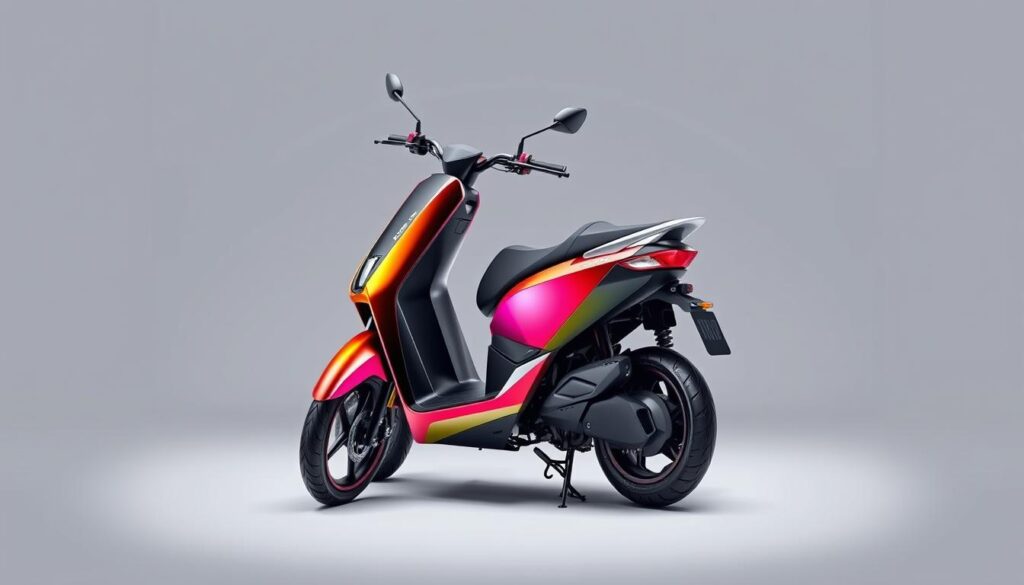
Paint depth and switchgear feel upscale for the class. Controls offer positive tactile feedback during daily use.
Plastics and panel textures look durable. That gives a sense of long-term quality for regular commuting.
Noted concerns and inspection tips
Some units have shown minor panel-gap inconsistencies near the front apron and visor. This is a small but visible issue worth checking at a dealership.
- Styling balance: the iqube leans conservative, so riders who like timeless looks will approve.
- EV cues: LED lighting, tidy cluster fitment, and subtle branding keep the theme modern.
- Comfort-led proportions: a wide seat, roomy footboard, and an ergonomic rider triangle favor daily comfort.
Overall build quality reads as commuter-first and practical. Buyers should do a quick walkaround to confirm fit and finish before purchase.
Performance and Ride Experience in the City
On urban streets, the right blend of motor torque and chassis feel decides if a ride is confident or tiring. The iqube pairs a hub‑mounted BLDC unit with calm, usable tuning for real traffic situations.
Power delivery and ride modes
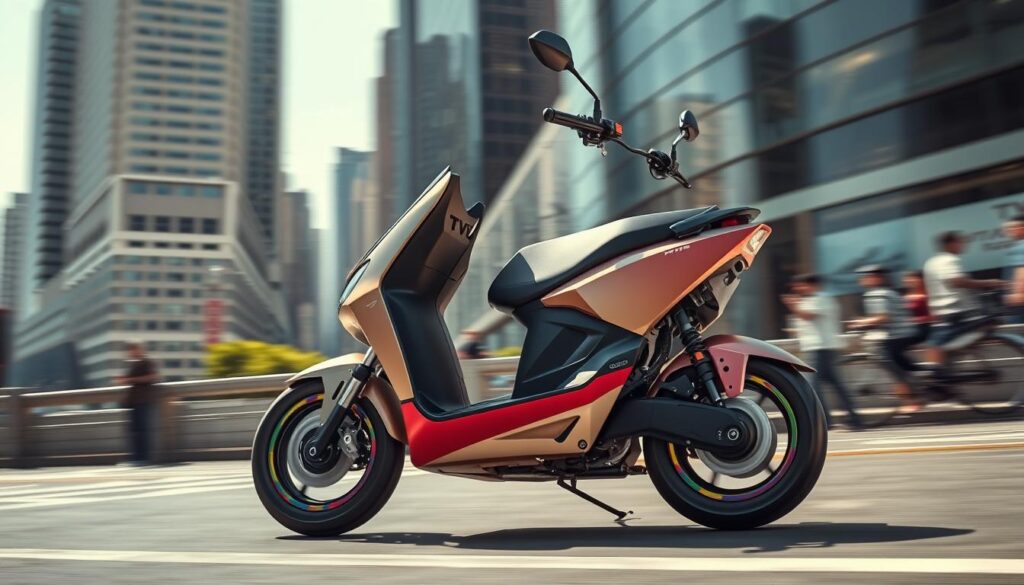
The hub‑mounted 4.4 kW peak motor gives a smooth surge that takes 0–40 km/h in about 4.2 seconds. Eco mode eases responsiveness to save energy, while Power mode sharpens throttle for quicker overtakes and short climbs.
Handling, regen, and comfort
Telescopic forks and twin shocks with 12‑inch wheels keep steering light and precise. Regenerative braking activates on throttle roll‑off and helps control speed while returning energy to the pack.
- Eco: relaxed yet capable for longer daily runs.
- Power: brisk response for slicing through traffic.
- Suspension soaks bumps well; only severe potholes unsettle the rear occasionally.
Overall, the tvs iqube delivers balanced performance for city riding — calm where needed, and confident when pace matters.
Range and Charging in the real world
Range claims meet real streets and routines in this practical look at charging and daily reach.
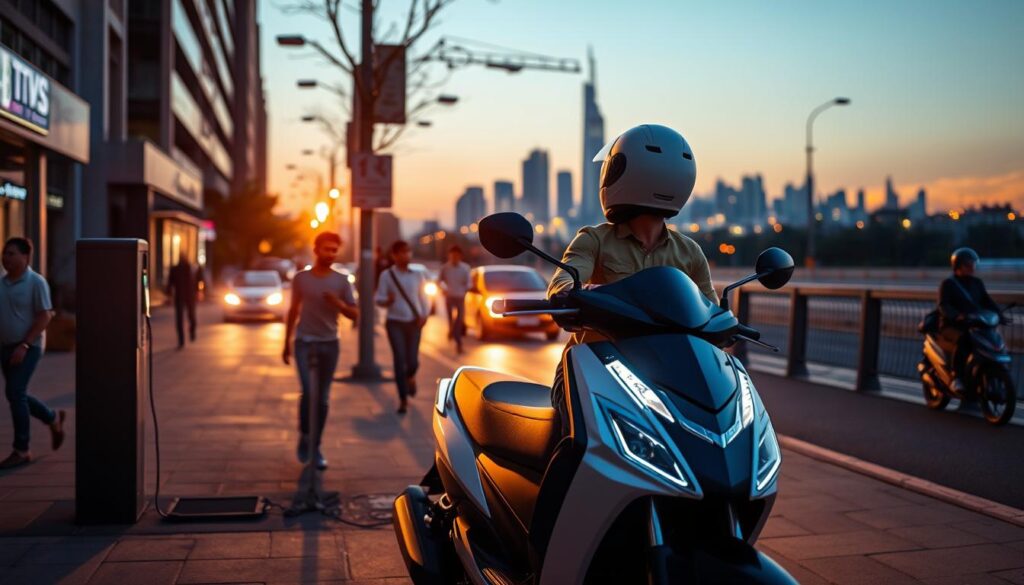
iQube 2.2 kWh: short loops, fast top-ups
The iqube 2.2 kwh targets short city runs with a 94 km IDC claim and a quick 0–80% time of 2 h 45 min. This makes same‑day top‑ups simple and low‑hassle.
iQube 3.1 and 3.5 kWh: balanced daily use
The iqube 3.1 reaches about 123 km IDC with ~4 h 03 min to 0–80%. The iqube 3.5 kwh sits near 145 km IDC and needs ~4 h 40 min, or ~3 h on S/ST trims.
iQube ST 5.3 kWh: multi‑day capability
The ST 5.3 kwh claims up to 212 km IDC. With the 950W portable charger it hits 0–80% in roughly 4 h 18 min, so many riders can go multiple days between charges.
- Home vs public: a standard 15A plug supports overnight charging with automatic cut‑off at 100%.
- Public network: 2000+ chargers help top up on the go.
- Practical gains: the dash DTE readout and modest charge times mean riders plan fewer stops and less worry about time.
Features and Smart Tech: SmartXonnect, TFT displays, and connected riding
Modern connectivity should make commuting easier, not louder. The iqube electric puts clear screens and useful alerts at the center of its user experience. Riders get quick access to navigation, status, and safety without clutter.
Dash sizes and UI
The line offers a 5‑inch TFT on base trims and a 7‑inch display on S and ST variants. Both are legible in daylight and show trip info, battery state, and turn prompts.
Higher trims add an HMI joystick for easy menu navigation without touching the screen while riding.
Connected suite
SmartXonnect links the scooter to a phone for turn‑by‑turn navigation, call and SMS alerts, live status, and trip stats. OTA updates push improvements to the dash and systems so the vehicle stays current.
Geo‑fencing and anti‑theft alerts help protect the scooter when parked in public or shared spaces.
Parking aids and safety
Q‑Park Assist gives a low‑speed reverse to ease tight parking. Crash/fall alerts and anti‑theft notifications add layers of safety and peace of mind.
RSA and a Relationship Manager are part of ownership support, so owners get help quickly when they need it.
- The 5″ and 7″ TFTs keep the dash uncluttered.
- SmartXonnect adds navigation, alerts, and OTA updates.
- Geo‑fencing, anti‑theft alerts, and Q‑Park Assist boost security and convenience.
Comfort, Ergonomics, and Storage for daily rides
From seat padding to storage volume, small details shape the everyday experience on the iqube.

Seat height, rider triangle, and suspension tuning
The 770 mm seat height and upright bar position let a wide range of riders plant their feet easily. This helps at stops and in slow traffic so the ride feels secure.
The broad, supportive seat cushions longer city stretches. The rider triangle mirrors familiar scooter ergonomics, so reaching controls feels natural.
Telescopic front forks and twin rear shocks tune the suspension toward comfort. It soaks common bumps while staying composed over bridge joints and rough patches. Ground clearance of 157 mm clears speed breakers and uneven surfaces on urban roads.
Under-seat storage: 30–32 liters and everyday carry
Under-seat storage ranges from 30 L on base trims to 32 L on other variants. It swallows a helmet and daily items like a laptop bag, rain gear, or the portable charger.
- A flat floorboard makes small-package carrying easy.
- Pillion footrests and a grab rail improve two-up practicality.
- Overall comfort quality meets office commutes, school runs, and quick grocery loops without fatigue.
In short, the iqube is easy to live with from the first ride. It balances practical storage and ergonomic fit to keep city errands simple and pleasant.
Ownership Costs, Warranty, and Service Support
The long view on ownership is about steady savings and clear support. Over months, owners usually see lower energy bills and fewer surprise repairs compared with petrol scooters.
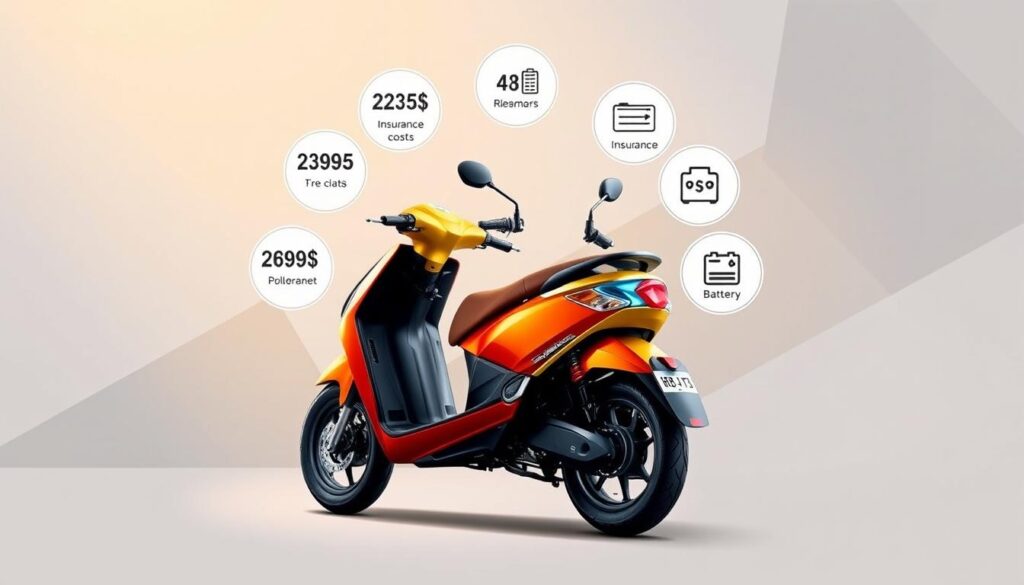
Running cost advantage vs petrol scooters
Typical running cost works out to roughly ₹0.23 per km under normal electricity tariffs. That makes daily commuting far cheaper than fuel, and there is no need for engine oil or frequent filter changes.
Battery and motor warranty: 3 years/50,000 km coverage
Peace of mind comes from a 3-year/50,000 km battery warranty and a 3-year motor warranty. This shows the company backs the core powertrain for real-world use.
Relationship Manager and Roadside Assistance
Owners get a dedicated Relationship Manager for quick answers about the app, charging, or service scheduling.
- Portable charger (950W) is included, so there’s no extra purchase to start home charging.
- RSA covers one year to handle breakdowns, flat tires, or unexpected charging needs.
- Transparent service schedules and app-based monitoring make it easier to plan visits and reduce uncertainty.
In short, lower running costs, a solid warranty package, and direct support channels make ownership simple and predictable for new electric riders.
Pricing and Offers: Where each iQube variant sits
Price and promotions shape the final decision more than headline specs for many city riders.
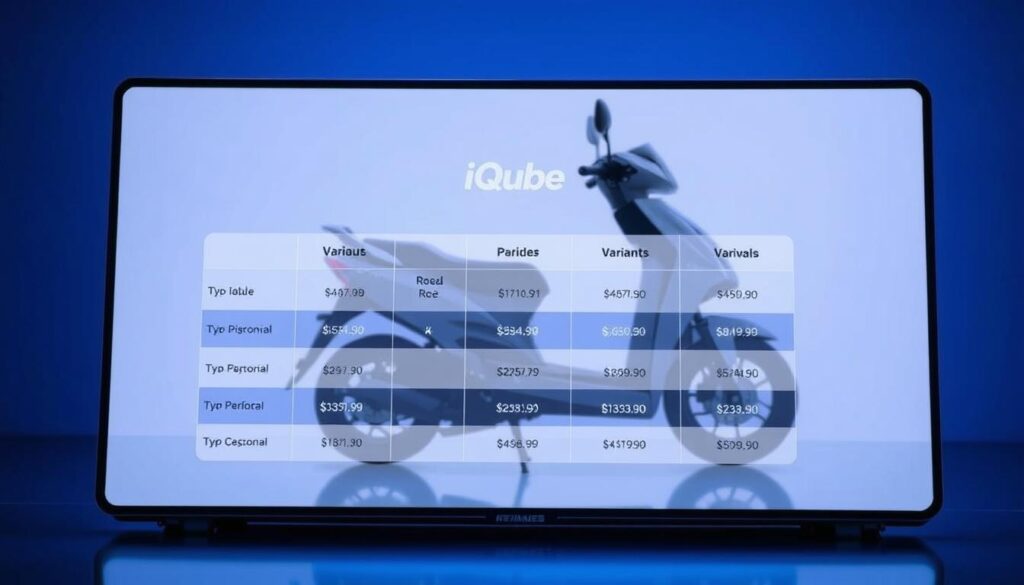
The indicative ex‑showroom price list helps buyers compare quickly: iQube 2.2 kWh ~₹1,09,319; 3.1 kWh ~₹1,24,918; 3.5 kWh ~₹1,32,308; iQube S 3.5 kWh ~₹1,40,193; ST 3.5 kWh ~₹1,52,412; ST 5.3 kWh ~₹1,62,314. Prices vary by city and regional incentives.
Key buying notes:
- Select offers include HDFC 5% discount (up to ₹7,500) on credit EMI and limited‑time cashback deals.
- Payment via UPI, wallets, cards, and bank transfers is accepted at dealerships.
- Financing tools make it simple to estimate monthly EMIs over months and compare total cost of ownership.
- S and ST trims command higher price for faster charging, larger displays, and added connectivity.
Bottom line: verify local on‑road pricing, factor in state incentives and dealer add‑ons, and weigh the sticker against months of lower running cost to judge true value.
How iQube stacks up against rivals
When shoppers compare city EVs side-by-side, practical habits often decide the winner more than headline specs. This short view highlights where the iqube stands versus common rivals and what buyers notice on the road.
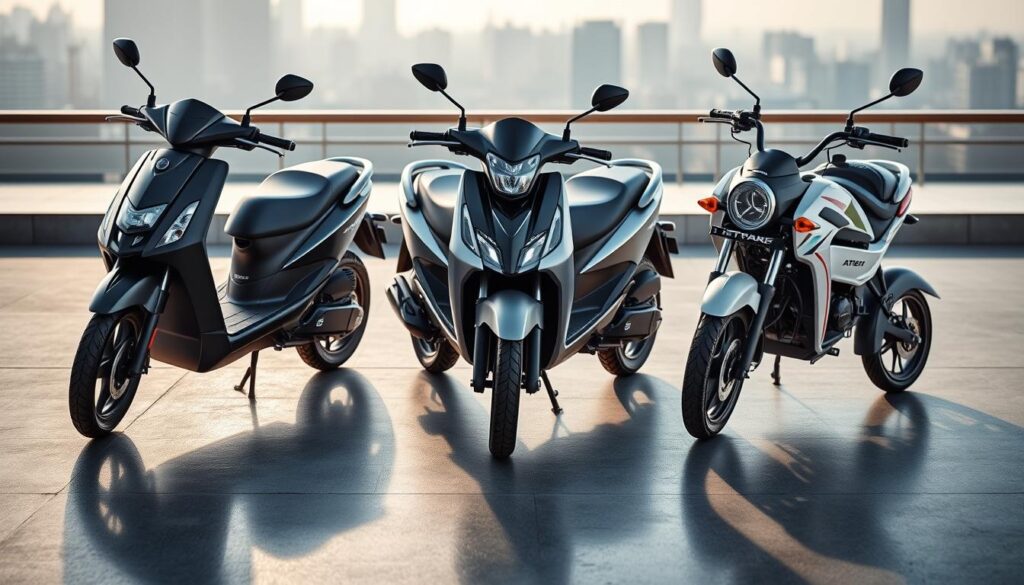
Ola S1 series and Ather 450 lineup
Against the Ola and Ather, the tvs iqube leans toward a family-friendly, easy-to-live-with package. It favors roomy ergonomics, 30–32 L storage, and calm regen rather than sporty handling.
Bajaj Chetak
Bajaj’s neo-retro Chetak trades contemporary looks for style. The iqube answers with a more understated modern design and a focus on everyday comfort and storage.
Practical ownership differences
Strengths: quiet hub-motor feel, broad dealer and service reach, connected tech, and the ST model’s competitive range.
Trade-offs: some rivals feel sportier or offer different fast-charge approaches. Test rides remain the best way to form a final view on comfort, braking feel, and UI.
- Family-friendly ergonomics over aggressive dynamics.
- Strong service network can sway buyers used to petrol ownership.
- Competitive range with practical daily usability.
Who should buy the TVS iQube: Use cases and best-fit scenarios
Here are the real-world rider profiles that match the iQube’s strengths and features.
City commuters who travel 20–40 km a day get the clearest benefit. The 94–212 km IDC range covers typical urban runs of about 30–45 km, so nightly home charging is simple and predictable.
Families sharing one vehicle will like the roomy seat, practical under‑seat storage, and stable ride for mixed rider sizes. The vehicle’s ergonomics keep short errands and school runs easy without fuss.
First‑time EV buyers will find the onboarding gentle and clear. A distance‑to‑empty readout, two riding modes, and a readable TFT make riding and range feel familiar and reliable.
- Small pack: best for daily 20–40 km commutes and low running costs per day.
- Mid pack (3.5 kWh): for mixed routes and fewer recharge days.
- ST 5.3 kWh: for riders who want multi‑day range and relaxed weekend plans.
The overall experience rewards smooth throttle control and relaxed riding, making the iqube a practical switch from conventional scooters for many urban users.
Your next step: Choosing the right iQube variant with confidence
Deciding which iQube fits comes down to range needs and charging habits. Start by matching daily miles to pack size: the iqube 2.2 (94 km IDC) and iqube 3.1 (123 km) suit regular city commutes, while the iqube 3.5 kwh (145 km) or ST 5.3 kwh (212 km) help when weekend detours add distance.
Consider 0–80% charging time and how often one wants to plug in. Faster 3.5 trims cut charging time, and the 950W portable charger keeps home charging simple on a 15A plug.
Test rides matter: check seat comfort, under‑seat storage (30–32 L), and how the motor and power delivery feel in traffic. Factor in price, service reach, and the 3‑year/50,000‑km battery warranty when weighing offers.
Shortlist two variants close in price, try both back‑to‑back, and pick the one that fits daily life—and traffic—best.
FAQ
What are the available iQube variants and their battery sizes?
The lineup includes multiple variants featuring battery packs such as 2.2 kWh, 3.1 kWh, 3.5 kWh, and a larger 5.3 kWh option. Each variant targets different range and daily-use needs, from short city errands to longer commutes.
How far can each iQube variant realistically go on a single charge?
IDC figures range roughly from 94 km for the 2.2 kWh pack up to about 212 km for the 5.3 kWh version. Real-world range depends on riding style, traffic, load, and use of features like Eco or Power modes.
What are typical charging times for the different packs?
Charging 0–80% times vary by battery size and charger: expect between about 2 hours 45 minutes and 4 hours 18 minutes for most packs. The larger pack benefits from a portable 950W charger for convenient top-ups.
What performance can riders expect—top speed and acceleration?
Peak motor output is around 4.4 kW for hub-mounted units, delivering brisk city performance. Top speed can reach up to about 82 km/h, and 0–40 km/h acceleration is roughly 4.2 seconds in the sportier tune.
How good is the build quality and fit-and-finish?
Build quality focuses on everyday practicality with modern styling. Materials and fit are generally solid, though some owners note minor panel gap issues. Overall, the quality is competitive in the urban EV scooter segment.
What smart tech and connected features are included?
The iQube offers the SmartXonnect suite with navigation, alerts, geo-fencing, and OTA updates. Dash options include 5-inch and 7-inch TFT displays with themes and good visibility, plus parking aids and anti-theft features.
Is under-seat storage and ergonomics suitable for daily use?
Under-seat storage typically measures about 30–32 liters, enough for everyday carry and a helmet in many cases. Seat height and suspension tuning prioritize city comfort for typical rider triangles and short commutes.
How does ownership cost compare to petrol scooters?
Running costs are lower than petrol scooters due to cheaper electricity vs fuel and reduced maintenance on the motor. Warranty covers the battery and motor for around 3 years or 50,000 km, which helps total cost of ownership.
What service and support can owners expect?
Owners get access to a dealer network with service support, roadside assistance, and a relationship manager for certain programs. Availability varies by city, and public charger networks now exceed 2,000 locations in many regions.
What chargers can be used at home and on the go?
The scooter supports convenient 15A plug charging for home use and the supplied portable charger for the larger pack. Public AC chargers are widely usable, and the portable 950W option speeds up charging for the biggest battery.
How does the iQube compare with competitors like Ola, Ather, and Bajaj?
The iQube competes on comfort, connected features, and practical range. Compared to Ola S1 series, Ather 450, and Bajaj Chetak, it emphasizes balanced ride quality, service support, and variants that suit different daily needs.
Who is the ideal buyer for these electric scooters?
City commuters, family riders seeking an economical second vehicle, and first-time EV buyers find the iQube lineup well suited to their needs. It works best for urban traffic, short-to-medium runs, and riders who value connectivity and low running costs.
Are there any common issues owners report during the first months?
Early owners sometimes report software tweaks, minor fit-and-finish concerns, or requests for feature additions. The company typically addresses these through OTA updates and dealer support to improve the riding experience.
What safety and parking aids come standard?
Safety features include regenerative braking, reliable braking setup, and parking aids like Q‑Park Assist. Anti-theft measures and roadside assistance add another layer of ownership confidence.
How should a buyer choose the right variant for their needs?
Pick the smaller battery if daily runs are short and quick charging is available at home. Choose the 3.1–3.5 kWh options for balanced range and cost. Opt for the 5.3 kWh pack if longer daily range and lower charging frequency are priorities.
What should riders know about motor power and ride modes?
The hub-mounted motor provides smooth city acceleration with selectable Eco and Power modes to balance range and performance. Riders can switch modes to prioritize efficiency or brisk overtakes in traffic.