Ninebot ES1 Electric Scooter Review and Features
 PopScooter Team
November 15, 2025 7:27 pm
.
21 min read
PopScooter Team
November 15, 2025 7:27 pm
.
21 min read
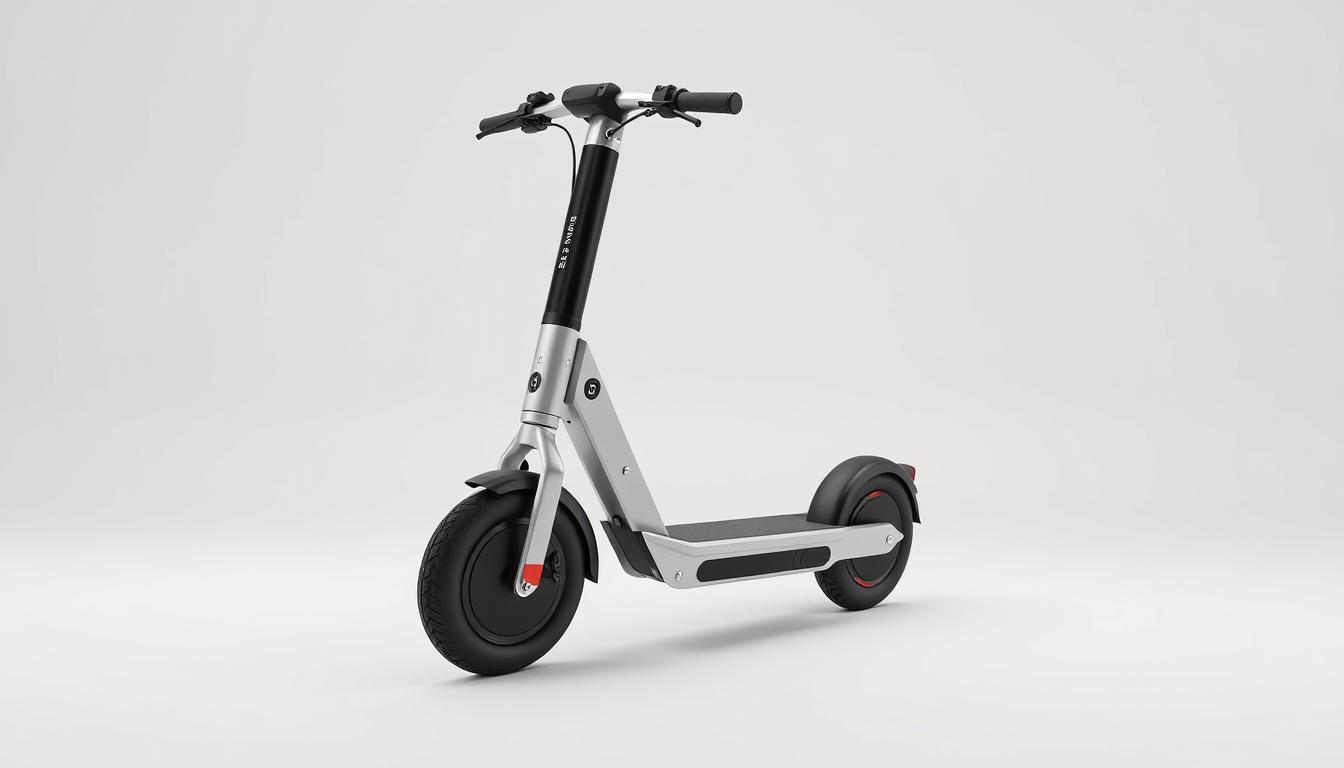
Could a compact kick scooter change the way people commute in tight city spaces? This introduction looks at a lightweight electric model that aims to blend portability with everyday function.
The product weighs about 24.9 lbs, folds for easy transit, and shows key info on an LED dashboard. It reaches roughly 12.5 mph and delivers a practical range near 12.4–15.5 miles on a charge.
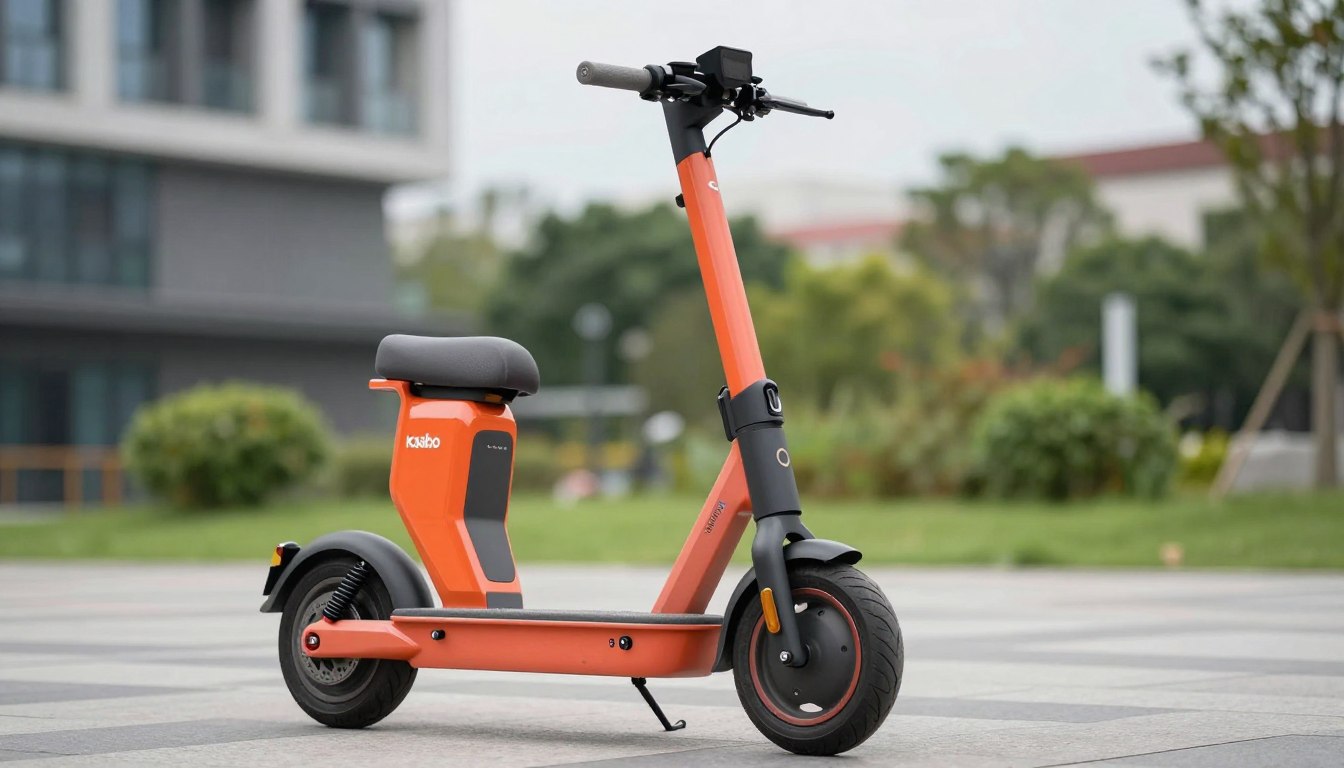
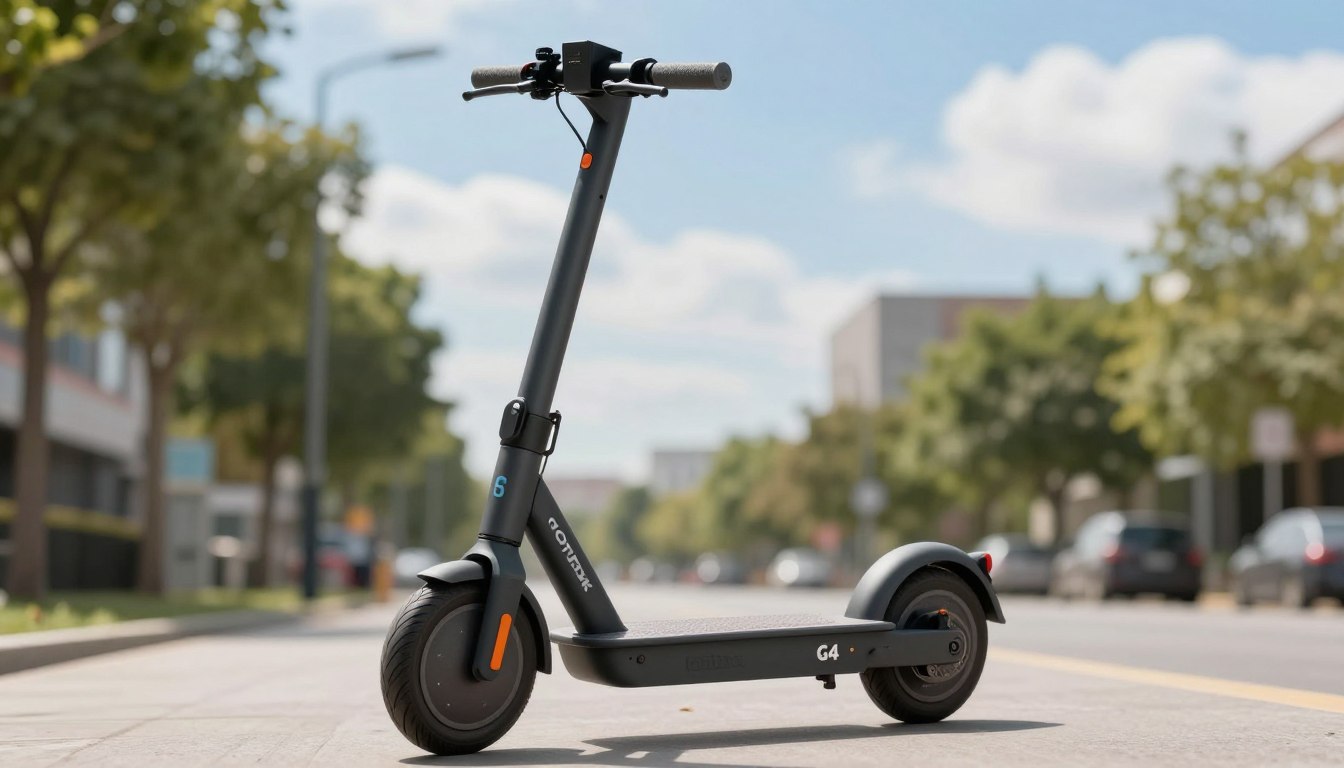
Under the deck sits a 250 W front-wheel motor and a 184–187 Wh battery managed by smart firmware. Riders get front shock suspension and solid tires that cut maintenance, though they soften bumps less than air-filled tires.
Safety basics include a 1.5W front light, dual braking, Bluetooth connectivity, and an IP54 rating for light wet-weather use. This short overview sets the stage for a hands-on review that links specs to daily commuting needs.
Quick take: Is the Ninebot ES1 right for your commute today?
For riders who favor convenience over raw power, this product offers a dependable, no-frills commute. It hits a modest top speed—around 12.4 mph in normal tune—and can stretch to roughly 15.5 mph only with added battery options.
The typical range sits between about 12.4 and 15.5 miles, which suits short to mid-range routes and daily errands. The deck supports up to 220 lbs, so a variety of riders can share it with confidence.
- Three modes: Eco, Standard, Sport—pick economy or extra kick when needed.
- Brakes: electronic regenerative front brake plus a rear foot brake for predictable stops.
- Comfort: front shock cushions bumps; solid tires cut flats at the cost of plushness.
Bottom line: This compact commuter works best for people who want light weight, easy folding, and low upkeep rather than high performance on fast routes.
ninebot es1 specifications at a glance
This quick spec snapshot helps a buyer check core numbers at a glance.
Top speed: up to 20 km/h (about 12.4–12.5 mph). Typical range runs near 20–25 km (12.4–15.5 miles), and an optional external pack can add roughly +20 km or more.
Motor & power: a 250 W nominal motor sits in the front wheel for steady acceleration on flat city routes.
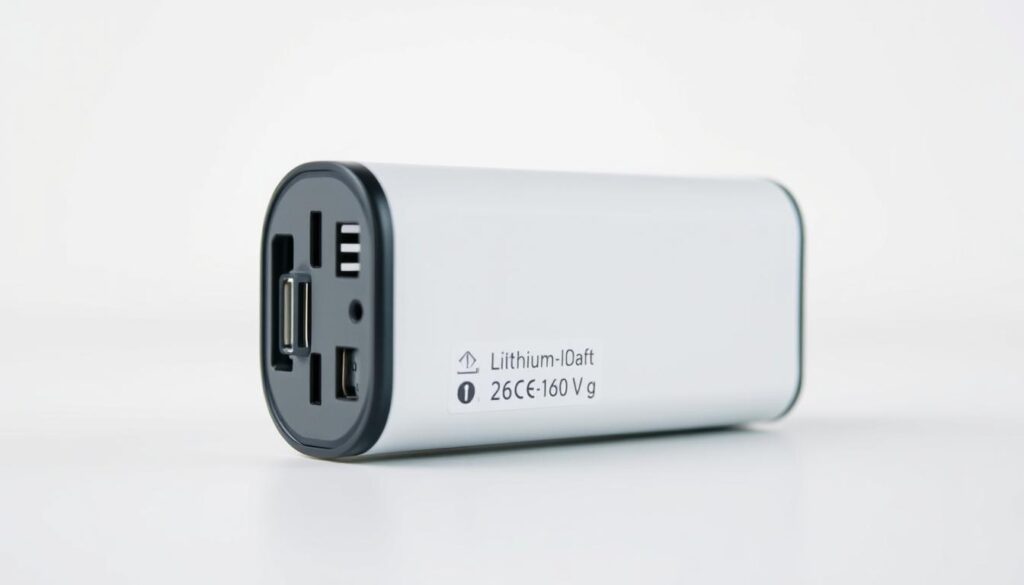
Battery: 184–187 Wh (≈5100–5200 mAh) with a smart BMS that guards temperature, current, and charging safety.
Weight & size: unit weight is about 11.3 kg (24.9 lbs). Unfolded dimensions are 1020 × 430 × 1130 mm (approx. 40.2 × 16.3 × 44.5 in); folded it measures roughly 1130 × 430 × 400 mm (44.5 × 16.3 × 12.6 in).
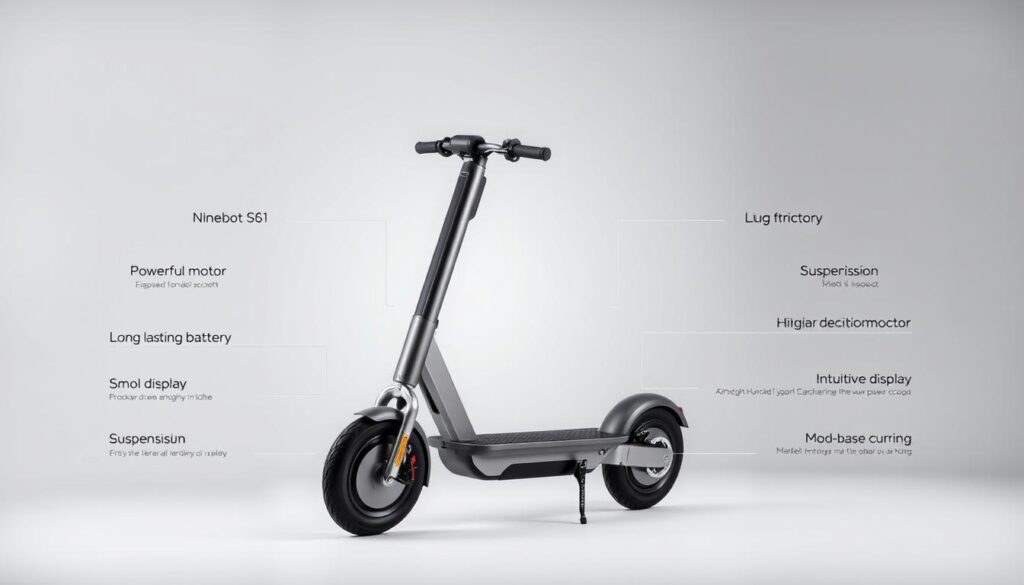
- Tires & wheel: solid 8 inch front and ~7.5 inch rear for low maintenance.
- Payload: supports riders from about 55–220 lbs (25–100 kg range).
- Charger & charge time: 42 VDC, 1A typical; full charge around 3.5 hours depending on charger and battery state.
The product balances light weight, compact dimensions, and practical range for short urban commutes.
Real-world speed and range performance
How fast and far this compact commuter goes depends on mode, weight, and the route.
Top speed in Standard vs. Sport modes
Standard mode keeps the unit conservative to save energy and improve control. Sport opens up the throttle and lets the product approach its stock max of roughly 12.4 mph (about 20 km/h) on flat pavement.
Real-world top speed drops on climbs, in headwinds, or when a heavier rider pedals a start. Temperatures and traffic also change peak numbers, so expect variation rather than a fixed figure.

Range on a single charge runs near 12.4–15.5 miles depending on conditions. Lighter riders on smooth asphalt often see closer to 15.5 miles, while hills and heavier loads cut that number.
The 250 W motor favors steady cruise over explosive bursts, which helps preserve energy. Gentle starts, steady throttle, and softer braking let the regen system recapture power and extend overall distance.
- Solid tires add low maintenance but raise rolling resistance slightly, which can affect range.
- Frequent hard stops and stop-and-go traffic reduce miles per charge more than steady cruising.
- Balancing desired speed with safe stopping distances keeps daily performance consistent.
Battery and charging explained
Battery care and charging habits shape how this compact commuter performs day to day. The product uses a compact pack rated about 184–187 Wh, roughly 5,100–5,200 mAh, managed by a smart system that protects each cycle.
Charging time, charger specs, and best practices
Typical charge time is near 3.5 hours with the standard charger. Using a 42 VDC, 1A unit can stretch that to around 6 hours for some models.
For longest life, charge at room temperature, avoid full discharges, and store the scooter at a partial charge if unused for weeks.
Smart Battery Management System and protections
The built-in BMS watches temperature, voltage, and current. It blocks over-heating, over-current, short circuits, and over-charge to keep the pack safe.
Regenerative braking gives small top-ups but cannot replace a full plug-in charge.
Optional external battery: added range and speed considerations
Adding the external pack can add up to +20 km range and boosts top speed by about +5 km/h, bringing the unit closer to 15.5 mph.
Riders should weigh the extra mass against fewer charging stops and longer rides.
- Tip: Check firmware updates to optimize charging behavior.
- Tip: Avoid leaving the battery at 0% or 100% for long periods.
Motor, hill climbs, and ride modes
The ride feel starts with the drive unit and how riders select power delivery for different routes.
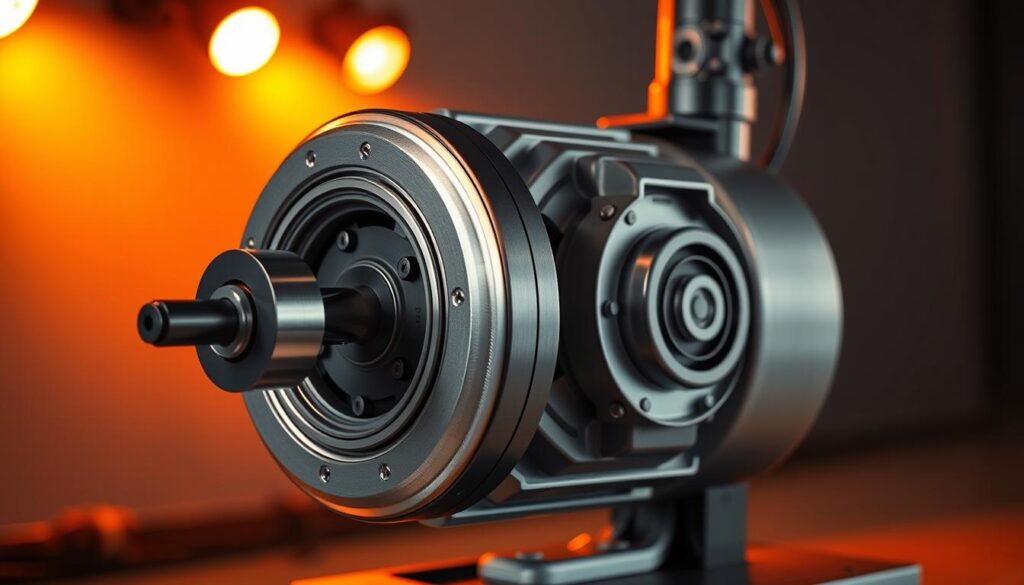
The scooter relies on a 250 W motor in the front wheel to favor smooth, predictable acceleration. It delivers steady torque for city starts rather than sudden bursts. That setup helps keep handling intuitive when pulling away from traffic.
On moderate hills up to about a 10% grade the product maintains a measured pace. Very steep inclines will slow it down because of limited power reserves. Riders should expect gradual climbs instead of aggressive surges.
Choosing Eco, Standard, or Sport
Three modes tune throttle response and top speed to match needs. Eco maximizes range for errands and long days. Standard balances pep and battery life for daily commutes.
Sport opens the throttle toward the product’s top speed near 20 km/h and suits open paths where maintaining momentum is safe. Switching modes gives riders practical control over pace, battery use, and comfort.
- Traction note: with the motor in the front wheel, cautious throttle helps on slick surfaces.
- Max slope: climbs near 10% are doable; expect reduced speed on steeper hills.
- Control: pick a mode based on weather, route, and time needs for predictable performance.
Ride comfort: front suspension and solid tires
City pavements are seldom smooth, so the scooter’s front suspension and solid wheels shape how comfortable each ride feels.
Front shock absorption takes the edge off seams and small bumps. It reduces arm and back fatigue on short commutes. Riders notice smoother starts and steadier handling over joints that would jolt a rigid deck.
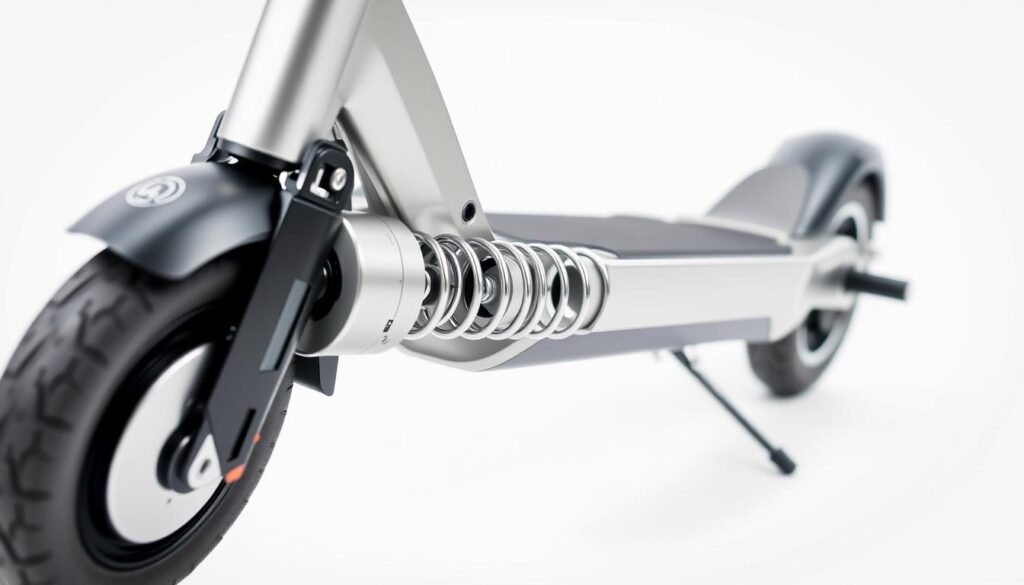
8-inch front / 7.5-inch rear solid tire trade-offs
The setup uses an 8 inch front and roughly 7.5 inch rear solid tire. That mix keeps maintenance low and prevents flats. On clean pavement the wheels roll predictably and feel stable.
Cruise control for steady pacing
Cruise control helps keep a steady speed on longer straights. It reduces throttle hand strain and can improve range by avoiding frequent speed swings.
- Low-upkeep ride: suspension + solid tires = fewer service stops and reliable daily use.
- Firm but predictable: 8 inch front and ~7.5 inch rear wheels feel firmer than air-filled options.
- Surface notes: avoid fast runs over gaps >3 cm or bumps >1 cm; slow and choose smoother lines for comfort and control.
Braking system and safety
Control during a stop comes from balanced braking and attention to surface grip. This product pairs an electronic regenerative front brake with a simple mechanical backup so riders get smooth deceleration plus extra stopping force when needed.
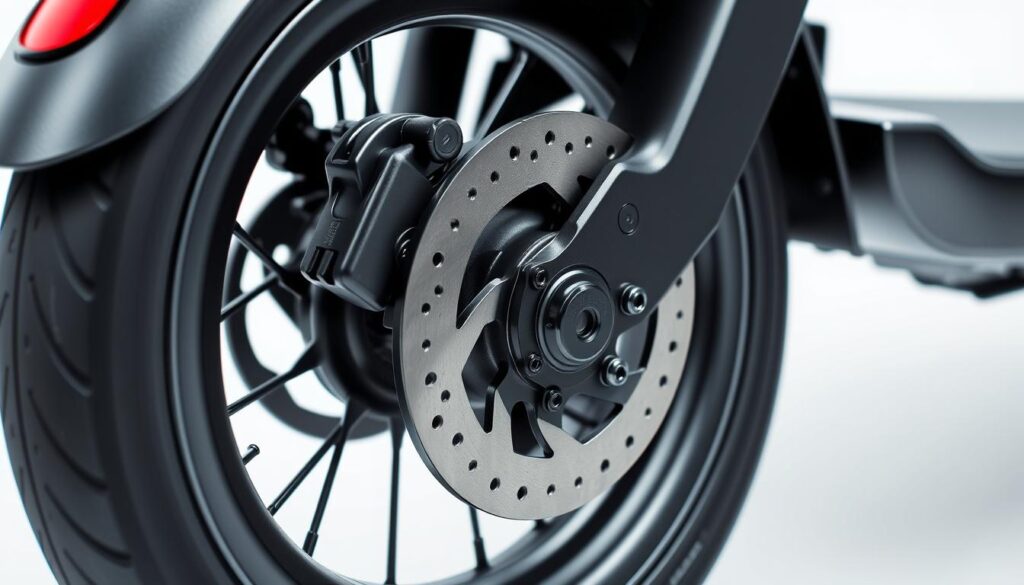
Electronic front and rear mechanical backup
The electronic front unit recaptures a bit of energy while giving a consistent feel. Riders should also use the rear foot fender to add stopping power on demand.
Stopping distance: dry vs. wet surfaces
Stopping distances are shortest on clean, dry pavement and grow longer on wet or dusty roads. With an 8 inch front and ~7.5 inch rear solid tire setup, aggressive inputs can cut traction, so smooth braking maintains better control.
- Tip: Feather the electronic front while progressively applying the rear foot brake for stable stops.
- Visibility: many units lack a dedicated rear brake light, so add reflectors or lights for night safety.
- Maintenance: check brake surfaces and calibration regularly to keep the system responsive for daily commutes.
Lighting and visibility for night rides
Nighttime visibility changes how confidently someone rides in mixed traffic and on shared paths.
The product ships with a built-in 1.5W front LED headlight that gives useful forward illumination for low-speed rides. It works well on well-lit streets and short trips after dusk.
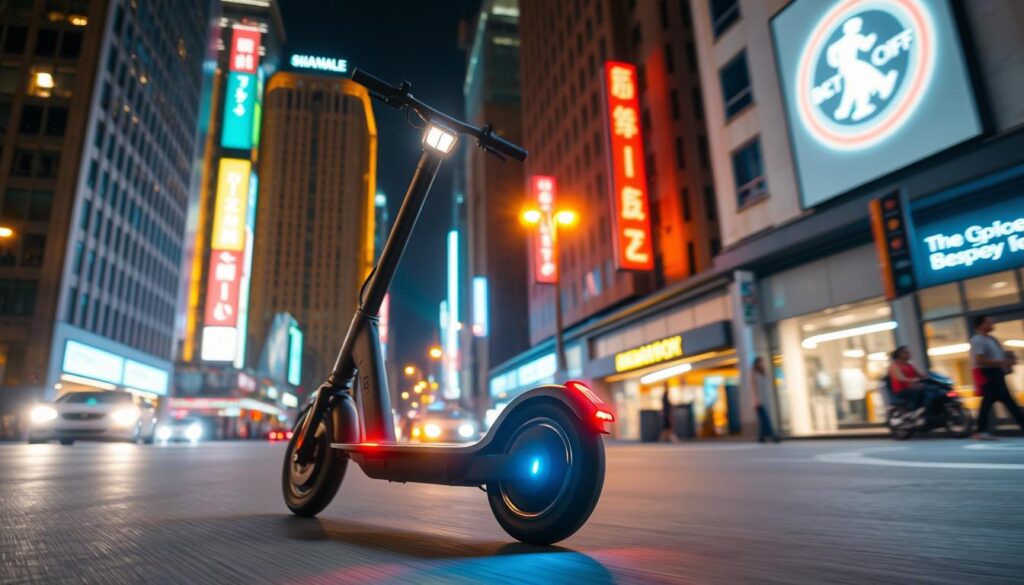
Front light aiming and upgrades
Aim the headlight slightly down to avoid blinding pedestrians and cyclists. This improves beam throw on sidewalks and shared paths.
For darker routes, add a bar-mounted lamp. A brighter aftermarket led light boosts confidence on long stretches.
Rear visibility and side reflectors
Many variants lack a dedicated rear brake light, so a clip-on LED tail light helps drivers see braking intent. Reflective decals or strap-on reflectors add side visibility at intersections.
- Helmet-mounted light: use one to scan turns at typical commuting mph and spot potholes early.
- Affordable add-ons: tail light, reflectors, and a small bar lamp keep the cockpit tidy and folding function intact.
Design, folding, and portability
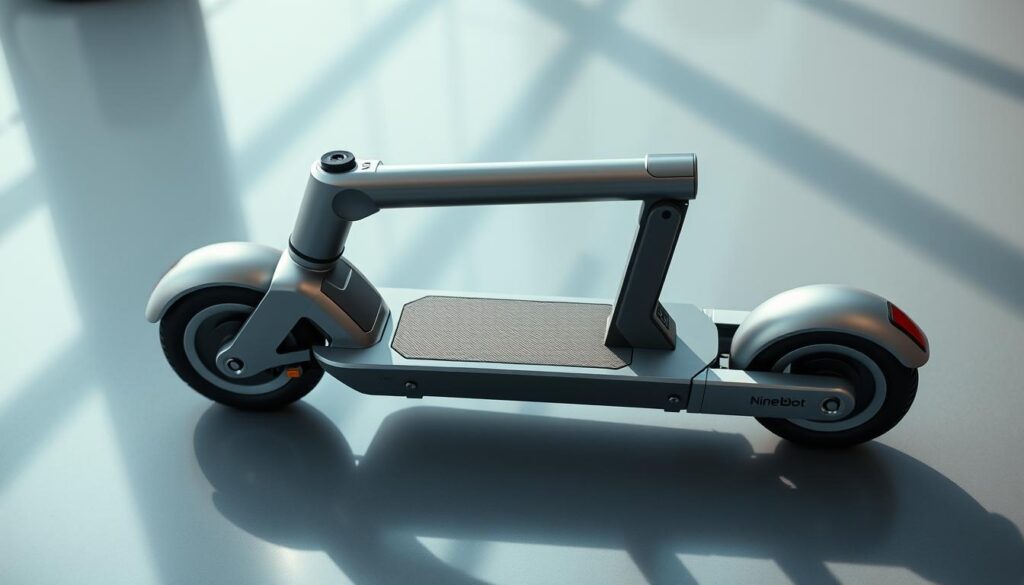
A one-motion fold-and-lock system is built to simplify short trips and multi-modal commutes. The product uses a hands-free quick fold so riders can collapse the deck and lift it with one smooth motion. That design speeds transitions at train platforms, elevators, and office entries.
Light but solid: the unit weighs about 11.3 kg, roughly 24.9 lbs, which balances durability with carry comfort. At this weight most users can shoulder it for short flights of stairs or carry it onto buses without strain.
The folded and unfolded dimensions help plan storage. Unfolded it measures 1020 × 430 × 1130 mm; folded it becomes 1130 × 430 × 400 mm. The compact size fits many trunks and narrow closets, and the handle and cockpit keep controls from snagging when stowed.
The small LED dashboard remains easy to read while locking or lifting, so riders can confirm battery and mode before they move. Clean cable routing and sturdy hinges make repeated folds feel reliable day after day.
- Quick fold: one action folding for fast transitions.
- Carry-friendly: manageable weight for short carries and public transit.
- Stow-ready: folded dimensions fit tight trunks and compact closets.
- Accessories: a simple carry strap or protective sleeve keeps the product looking fresh.
Dashboard, controls, and app connectivity
The cockpit puts essential ride data front and center so riders stay informed without distraction.
LED display: a clear led readout shows speed, remaining battery, the selected mode, and maintenance alerts. The visual layout uses large numerals and simple icons so riders can scan information at a stop or mid-ride.
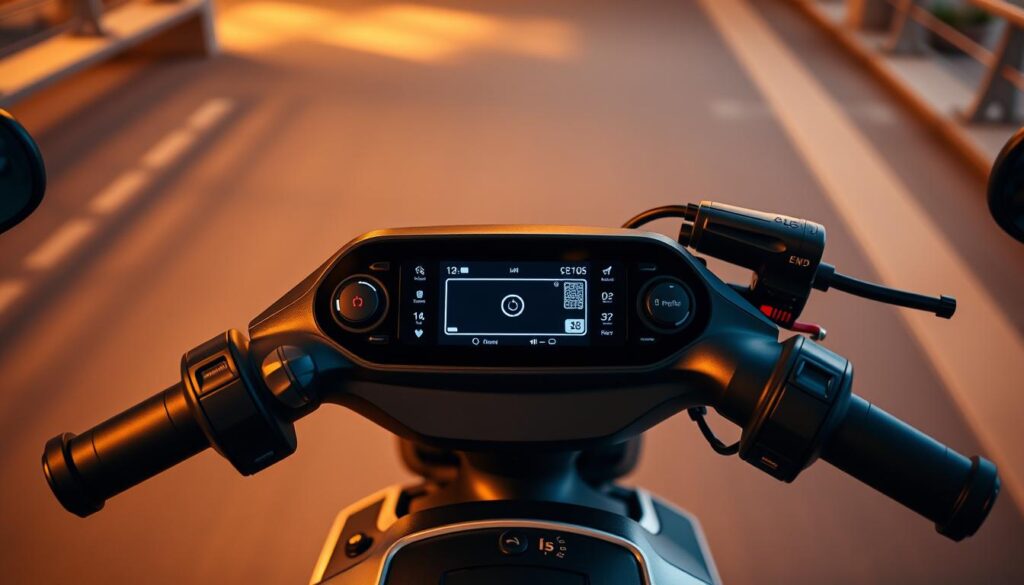
Bluetooth and app monitoring
Bluetooth pairing unlocks an app monitor that adds lock settings, ride stats, and firmware updates. Users can set reminders, track distance, and personalize alerts for routine checks.
Handlebar ergonomics and controls
The handle groups throttle, electronic brake, and a mode toggle within thumb reach. This control layout gives tactile feedback so riders feel confident when switching pace or stopping quickly.
Practical tips and cruise
Three riding modes—Eco, Standard, and Sport—are easy to toggle on the fly to match route needs. Cruise support keeps a steady speed on long paths, cutting wrist strain and helping preserve range.
- Tip: Check display visibility in bright sun; tilt the handle to reduce glare.
- Tip: Keep Bluetooth on only when needed to avoid extra phone battery drain.
- Tip: Use the app to set routine maintenance reminders for a smoother daily product experience.
Durability and water resistance
Everyday commuting throws a mix of dust, splashes, and temperature swings at a compact electric scooter. Knowing how the product handles those conditions helps riders plan safe use and simple care routines.
IP rating context
The ES1 lists an IP54 rating, which means protection against limited dust ingress and splashing water from any angle. Its sibling shows an IPX4 mark, which covers splashes but does not promise dust resistance. Riders should treat splash ratings as limited protection, not waterproofing.
Wet-weather caution and practical tips
Avoid deep puddles and pressure washing. Water entering seams can harm the electronic system and shorten reliability. After rain, wipe down the deck and connectors and store the unit indoors to let the battery and controls dry.
Durability notes: tire, suspension, and temperature
Solid tires reduce flats and cut maintenance, but they do not improve wet traction. Ride slower on slick surfaces and favor gradual braking.
Front suspension hardware benefits from routine checks; keep fasteners snug and inspect for wear to preserve ride quality. The recommended operating range is roughly 14–104°F (-10–40°C), with storage guidance near 14–122°F (-20–50°C) to protect battery health.
- Do: dry and store indoors after wet rides.
- Don’t: drive through deep water or use high-pressure cleaning.
- Maintain: check suspension bolts and electrical seals periodically.
Rider fit and use cases
Choosing the right rider fit helps match a compact kick scooter to everyday trips and comfort needs.
Recommended age, height, and max rider weight
The product is intended for teens and adults. Typical recommended age is about 16+, while a long-range variant may be suitable from 14+ depending on local rules and supervision.
Height guidance runs roughly 120–200 cm (about 3’11″–6’6″). This range helps riders place feet comfortably and reach handlebars without strain.
Max rider load tops out near 100 kg (≈220 lbs). The unit’s net weight is about 24.9 lbs, so it stays easy to carry when folded.
Best for short urban commutes and campus travel
This kick scooter fits short city hops and campus runs well. It excels on trips of a few miles where quick folding and compact dimensions matter most.
- Versatile fit: works for many riders up to about 220 lbs and the stated height band.
- Easy storage: folded size ~1130 × 430 × 400 mm makes dorm or office stashing simple.
- Daily use: light weight and fast folding help with bus, train, or classroom transitions.
Tip: Riders should plan routes on smooth pavement to get the most comfy ride and predictable battery life. For mixed-day trips, packing the charger keeps a quick top-up available between stops.
Accessories and upgrades worth considering
A few well-chosen add-ons turn a basic commuter into a more capable ride.
Extra battery pack for speed and range boost
An external battery is the most impactful upgrade. It can add roughly +20 km of range and about +5 km/h to top speed, making longer commutes practical.
Lights, bell, and reflectors for safer rides
The base product lacks a built-in rear brake light and ambient lighting. Add a bright rear light, certified reflectors, and a compact bell to improve visibility and alert others on shared paths.
- Spares: keep a second charger (42 VDC, 1A) at work or school to ease midday top-ups.
- Carry: phone mounts and small bags tidy cables and essentials without blocking the fold.
- Protection: sleeves and fender extenders help keep clothes clean in wet weather.
- Upgrade path: start with affordable safety items, then add premium lights if riding after dark often.
These accessories focus on safety, convenience, and longevity. They add little weight and keep daily use simple while expanding what the scooter can do for riders.
Charging, maintenance, and long-term care
A few easy maintenance habits protect performance and prolong component life. Regular care keeps daily rides predictable and helps avoid downtime.
Tire care for solid wheels and ride quality tips
Solid tires need no inflation, but they still benefit from routine checks. Inspect tread and edges often, clear embedded debris, and watch for flat spots or uneven wear.
Riding a steady cruise pace on smooth paths reduces vibration and limits wear. Replace a worn tire to restore handling and comfort before ride quality degrades.
Preventative maintenance on brakes and electronics
Check brake function frequently. Confirm the electronic regenerative front brake engages smoothly and the rear foot brake provides predictable bite.
Keep folding joints clean and snug; a light lubrication on approved hinge points stops creaks and preserves the compact design. Inspect the motor cable routing near the fork for pinching after repeated folding.
Follow charging best practices: use the correct charger (42 VDC, 1A typical), avoid extreme temperatures while charging, and don’t leave the pack fully depleted for long. The built-in battery system and BMS protect cells, but firmware updates via the app help keep safety features current.
- Keep a spare charger at work or school to avoid deep discharge cycles.
- Periodically review electronics and app updates to maintain performance.
- Wipe connectors after wet rides and store the product indoors when possible.
How the ES1 compares to ES2 and E22
Comparing the baseline model to its newer siblings helps buyers decide which trade-offs matter most.
Speed, range, and suspension differences
Motor and top speed: the ES1 uses a 250 W front motor and tops out near 12.4 mph (about 20 km/h) stock. Adding an external pack pushes the unit closer to 15.5 mph and higher km/h figures while increasing weight.
Range: stock range suits short commutes (roughly 20–25 km). With a boosted battery the product can reach significantly longer distances, making longer errands realistic.
Suspension: the ES1 has a single front shock for basic damping. ES2 and E22 typically add softer or dual-stage suspension and slightly larger wheels for a more comfortable ride on rough pavement.
Which model suits which rider
For a minimalist commuter who values light weight and easy folding, the ES1 is a strong choice. It balances simple controls, decent speed, and practical range for daily city hops.
Riders who want more comfort, faster acceleration, or a plush ride should consider ES2 or E22. Those models tune the motor, suspension, and mode settings for extra pep and smoother handling on mixed surfaces.
- Pick the ES1 if weight, portability, and low upkeep matter most.
- Choose ES2/E22 for improved suspension, slightly higher speed tuning, and added comfort on longer routes.
- Tip: compare mode tuning—eco, standard, sport—since each product tweaks throttle response for either range or punch.
What riders and reviewers are saying now
Hands-on impressions show this compact commuter excels at multi-modal trips but asks riders to accept a firmer ride.
Praise: portability, simple folding, and dashboard
Many reviews highlight the quick one-motion fold and light weight. Riders say it makes train and bus transfers easy.
The LED dashboard gets consistent praise for clear icons and visible battery info. Users compare it favorably to other entry-level displays.
Long-term riders note a predictable 15–20 km daily range for short errands and commutes.
Critiques: ride harshness and wet-surface traction
Comfort notes often point to a firmer feel from solid tires. That firmness is accepted by riders who prefer low maintenance over plush rides.
Wet traction is a repeat caution. With solid tires and a lighter front end, many recommend gentle inputs and slower speeds in the rain.
- Owners praise the reliable rear foot brake as a useful backup.
- Some reviewers report gradual solid-tire wear and occasional electronics stress if pushed daily.
- Overall sentiment frames the product as a dependable city runabout when used within its limits.
Your next step: choosing the Ninebot ES1 with confidence
A confident purchase starts with testing the ride on a known route and planning charging stops.
The compact product offers about 12.4–12.5 mph top speed, roughly 12.4–15.5 miles of range, a 250 W motor, and a light 24.9 lbs package. Riders should confirm the fit, feel, and how the included charger and battery match daily needs.
The cockpit and Bluetooth app make tracking battery and miles simple. Add a few smart accessories—brighter rear lighting or a small bag—and the product becomes safer and more practical without extra fuss.
If extra range matters, the optional external battery gives more miles and higher top speed while keeping the compact feel. For route planning and model details see a quick comparison and specs at detailed scooter comparison and a helpful sitemap for parts and support at service & parts.
Final tip: test one familiar commute day, tune modes for comfort and power, and charge overnight to keep rides smooth and stress-free.
FAQ
What is the top speed and typical range of this electric kick scooter?
The scooter reaches around 12.4–12.5 mph (about 20 km/h) in Standard mode and can hit higher in Sport mode depending on battery and rider weight. Real-world range usually falls between 12.4 and 15.5 miles (20–25 km) per charge under moderate conditions. Hills, rider mass, and stop-start riding will reduce range.
What kind of motor and power does it use?
It uses a 250 W nominal front-wheel motor that delivers steady acceleration for urban commuting. Peak power surges help on short climbs, but long steep hills will still slow it down and drain the battery faster.
How large is the battery and how long does charging take?
The battery capacity is roughly 184–187 Wh and is managed by a smart BMS. Charging with the standard charger typically takes a few hours to full; exact time depends on state of charge and charger output. Best practice: avoid full discharge and store at partial charge for longevity.
Can an external battery pack increase range and speed?
Adding an approved external battery pack increases range and can improve sustained power reserve, but it adds weight and may change handling. Compatibility and proper mounting are essential; use only manufacturer-recommended accessories to keep safety systems intact.
How does the suspension and tire setup affect ride comfort?
There’s front suspension to absorb daily bumps, while the scooter uses solid tires—about 8 inches front and roughly 7.5–8 inches rear. Solid tires reduce flats and maintenance but transmit more vibration than air-filled tires. The suspension helps but won’t match pneumatic tire comfort on rough roads.
What braking system does it have and is it safe in wet conditions?
It combines an electronic regenerative front brake with a rear foot brake. Braking works well on dry pavement; stopping distance increases on wet or greasy surfaces. Riders should reduce speed in rain and allow extra stopping room.
What lights and visibility features are included for night riding?
The scooter includes a 1.5W front LED headlight and a rear brake light, plus reflectors. These help visibility in urban settings, but adding brighter auxiliary lights and reflective accessories improves safety on poorly lit routes.
How portable is the scooter and what are its dimensions when folded?
It uses a hands-free quick folding mechanism and weighs about 24.9 lbs, making it easy to carry short distances or store in a trunk or closet. Folded dimensions shrink considerably—verify trunk space before travel if exact fit matters.
What information does the dashboard show and does it connect to an app?
The LED dashboard displays speed, battery level, and selected mode, and it issues maintenance alerts. Bluetooth connectivity enables in-app monitoring for firmware updates, ride stats, and mode control on compatible smartphones.
What is the scooter’s water resistance rating and can it handle wet weather?
It has an IP54-style rating context—meaning protection from limited dust and splashes. Riders should avoid riding through deep puddles and heavy rain since electronics and brakes are still vulnerable to prolonged moisture exposure.
Who is the scooter best suited for in terms of rider size and use cases?
It fits adults and teens for short urban commutes, campus runs, and first-/last-mile trips. Check the scooter’s max rider weight (manufacturer lists payload limits) and recommended height; heavier riders will see reduced range and performance.
What accessories and upgrades should riders consider?
Useful upgrades include an extra battery pack for longer range, brighter lights, a bell, additional reflectors, and a padded carry strap for comfort. Upgrading tires or adding fenders improves ride quality and protection in wet conditions.
What maintenance should owners perform to keep the scooter reliable?
Regular checks include tire condition for solid wheels, brake responsiveness, and ensuring the charger and dashboard connectors are clean. Keep firmware updated through the app and store the battery at moderate charge levels in cool, dry places.
How does this model compare to similar models like the ES2 or E22?
Compared with higher-tier models, this version is lighter and more compact but has shorter range and less suspension travel. Models with bigger batteries and improved suspension offer higher top speeds and smoother rides; choice depends on priorities: portability vs. range and comfort.
What are common praises and complaints from current riders?
Riders praise portability, simple folding, and an intuitive dashboard. Common critiques include a firmer ride due to solid tires and reduced traction on wet surfaces. Many recommend adding lights and reflectors for safer night riding.