Inmotion L9 Review: Features and Benefits
 PopScooter Team
November 11, 2025 4:21 am
.
19 min read
PopScooter Team
November 11, 2025 4:21 am
.
19 min read

Can a single commuter scooter really combine long range, strong suspension, and easy portability without compromise?
The Inmotion L9 presents itself as a practical electric commuter that aims to balance comfort and daily usability. It pairs a 500W front drive motor with a 675Wh battery, promising notable range and steady acceleration.
The design highlights dual suspension, 10-inch tubeless tires, and a wide cockpit with an integrated display. Braking uses a rear disc plus front regenerative system to keep stops controlled and low-maintenance.
Build quality leans on aerospace-grade aluminum and a three-second fold. Lights and auto deck turn signals boost visibility for city riding, while the cockpit and handlebars focus on rider comfort and clear information.
This review gives a clear snapshot of speed, range, and real-world performance so buyers know what to expect from a commuter-class scooter and can judge its true value and experience.
Why This Inmotion Electric Scooter Deserves a Fresh Look Today
A refreshed review makes sense because this commuter model brings upgrades that matter for everyday riders. It pairs dual suspension with 10-inch tubeless tires to lift comfort above typical budget offerings.
The scooter also targets practical range needs with a 675Wh battery and dual charging ports for faster top-ups. That helps riders who commute long routes or face unpredictable schedules.
Safety and durability are clear priorities. A rear disc plus front regen brake, strong headlights, and auto turn indicators improve city visibility. IP55/IPX6/IPX7 water ratings add weather protection you can rely on.
- Balanced ride quality: Dual suspension soaks up cracks and seams.
- Convenience: App connectivity and an integrated cockpit for quick tuning.
- Value: Competitive pricing near $999 with solid build quality and a supportive weight capacity.
All told, the package gives urban riders a dependable, comfortable ride that competes well with other popular scooters in this class.
Inmotion L9 at a Glance: Key Specs and What Stands Out
Packed with a 500W hub motor and a high-capacity battery, this scooter targets reliable daily use for commuters and casual riders alike.
The core hardware pairs a 500W front brushless motor (1,000W peak) with a 54V / 675Wh battery that claims up to a 59-mile range under ideal conditions. Top speed sits near 18.6 mph, with Eco, Standard, and Sport modes to tune power and range.
Core specifications that matter to daily riders
- Power: usable torque for city starts and light hills.
- Range: a large battery that extends realistic commutes.
- Display: wide LED cockpit shows speed, mode, and battery at a glance.
- Suspension & tires: dual suspension plus 10-inch tubeless tires for smoother rides.
What’s new versus typical budget commuters
The frame adds real comfort features: dual shocks, auto deck turn signals, and a robust braking setup—rear disc with front regenerative support—to boost stopping confidence and recover energy.
At 52.9 lb, the scooter is heavier than ultra-light models, but the three-second fold and compact folded size help keep it portable for transit and storage.
Design and Build Quality: Frame, Deck, and Handlebars
How a scooter is built—materials, deck width, and cockpit geometry—directly affects ride confidence. This model uses an aerospace-grade aluminum frame and matching handlebars that lend rigidity and a clean finish. The result is a strong chassis that resists flex during cornering and at higher speed.
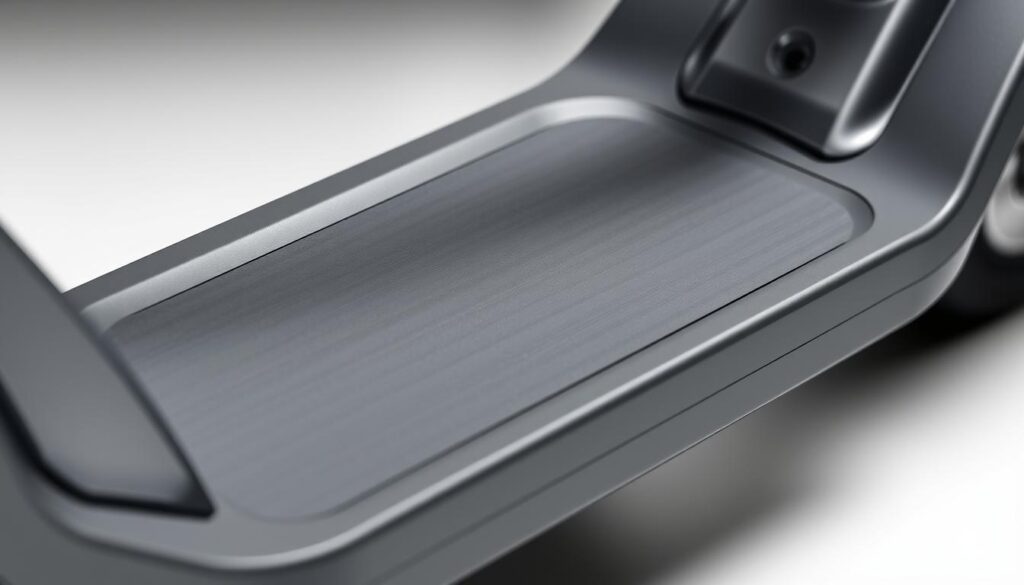
A roomy deck with an anti-slip texture gives riders secure footing when accelerating or braking. A large rear fender keeps spray off shoes and helps in wet water conditions.
The tall, non-adjustable stem favors taller riders and offers extra leverage when steering. Shorter riders may note the higher cockpit, but the rubberized handlebars improve grip and comfort.
Ahead of the latch
The folding mechanism hooks firmly to the deck and stays secure when carrying the scooter. Construction quality is solid overall, thanks to chosen materials and a stout latch that supports daily use.
- Durability: aerospace-grade frame and sturdy handlebars.
- Practical deck: wide, grippy, and stable for varied stance.
- Minor notes: exposed wiring under the deck and a modest bell are small compromises.
Thanks to thoughtful geometry and a reliable spring-assisted mechanism, suspension and brake components feel integrated into a cohesive build. The scooter prioritizes long-term quality over ultra-light weight, which benefits daily commuters.
Display and Controls: A Wide, Informative Cockpit
A compact but wide display consolidates speed, battery, and mode info for quick checks on the go.
The center-mounted display clearly shows current speed, remaining charge, and riding mode. Switching between Eco, Standard, and Sport happens in seconds with a double-press of the display button, keeping the dash uncluttered and intuitive.
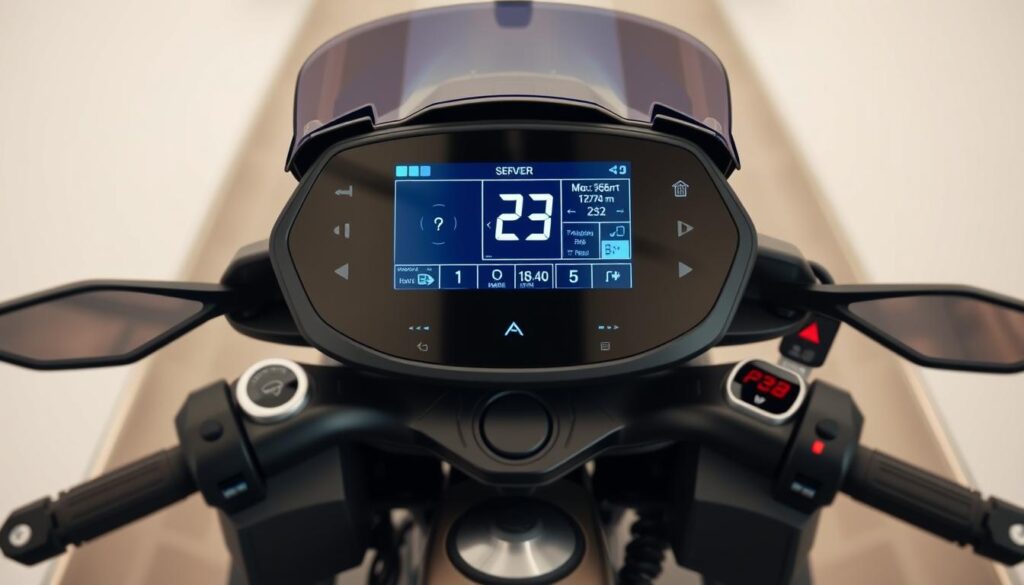
A responsive thumb throttle gives progressive acceleration and helps the rider modulate power smoothly in traffic. Auto deck turn signals sync with the cockpit so direction intent appears at a glance on the screen.
- Quick mode changes: single button access in seconds.
- Cruise control: engage by holding steady for five seconds or via the app.
- Handlebars: clean layout with rubberized grips for confident control.
Overall, the display and controls tie the scooter’s systems together so daily operation feels consistent and reliable. Battery status is always visible, which helps riders plan top-ups and avoid surprises.
Folding Mechanism and Portability in the Real World
Folding a commuter scooter should be fast, repeatable, and confidence-inspiring for daily routines.
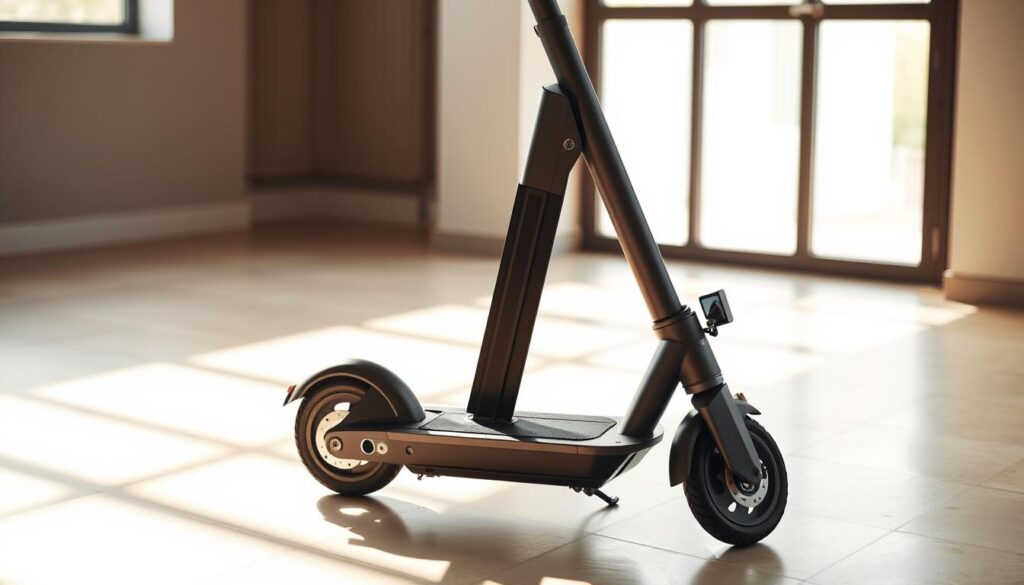
Fast three-second fold and latch system
The scooter folds in about three seconds with a two-step latch that hooks to the rear of the deck. The latch feels sturdy and aligns quickly, so transitions at platforms and doorways become routine.
Weight, folded size, and carrying realities
Weighing roughly 52.9 lb, the unit favors rigidity over being ultra-light. That extra weight helps stability at speed and supports a durable frame and spring-assisted components.
- Folded size: about 130.7 x 52 x 56 cm—fits trunks and closets with planning.
- Handlebars: non-folding, so the folded package occupies more width.
- Practical tip: use ramps or elevators for longer carries; short stair runs are manageable but tiring.
The reliable mechanism and rear deck hook make daily use simple. With the fast fold and secure latch, commuters get a practical balance between portability and real-world durability without sacrificing battery or ride quality.
Motor and Power Delivery: Front-Drive Electric Motor Performance
A responsive drive system defines how this scooter feels from the first twist of the throttle.
The front hub uses a 500W brushless motor with a 1,000W peak for short surges. That extra peak power helps on quick starts and brief inclines while keeping steady performance in city riding.
The thumb throttle maps smoothly for predictable roll-on power. Riders find low-speed control easy in crowded lanes, and cruise control keeps pace steady on longer straights.

- Balanced launch: 500W nominal with 1,000W peak for confident acceleration.
- Mode tuning: Eco, Standard, Sport change responsiveness and top speed targets.
- Combined braking: front regenerative braking supplements the rear disc for stable stops and modest energy recovery.
- Practical load: supports riders up to 308 lb while retaining usable power for errands.
Quiet operation and a front-drive layout help traction on dry pavement and keep the chassis balanced during brisk accelerations. Paired with a substantial battery, the powertrain supports real-world range and commuter needs without harsh lurches.
Speed and Acceleration: Top Speed, Modes, and Real-World Snap
Urban pacing depends on quick bursts and steady cruising—this scooter balances both with predictable throttle feel.

Eco, Standard, Sport: how each affects pace
Eco limits pace to about 10 mph to stretch the battery and keep the ride calm in crowded areas.
Standard sits near 15 mph for balanced commuting and steady power delivery.
Sport pushes toward a top speed around 18.6 mph on flats and matches typical bike-lane flow for many riders.
0–15 mph feel and urban pacing
Real-world tests show roughly 0–15 mph in about four seconds, giving the rider confident merges without a jumpy launch.
Acceleration is progressive, so a rider can meter power in tight spaces and open up when the way clears. Braking is composed thanks to the disc-plus-regen setup, which helps slow the scooter smoothly from higher city pace.
- Sport mode: top speed near 18.6 mph—good for bike lanes and neighborhood roads.
- Eco: caps at ~10 mph to conserve battery and extend range.
- Launch: 0–15 mph in ~4 seconds with repeatable, smooth motor tuning.
- Stability: frame and suspension keep the ride composed over seams and small bumps.
Hill Climbing and Rider Weight Considerations
Hill climbs expose how well a commuter scooter balances torque and traction under real-world loads. The model claims it can tackle grades up to about 30%, but actual results vary with rider weight, battery level, terrain, and weather conditions.

Short climbs on typical urban streets are handled well, especially when the battery is near full and the rider selects Standard or Sport. Heavier riders or a low battery will cut climbing speed and may need momentum to clear steeper pitches.
Practical tips for better uphill performance
- Start charged: keep the battery topped up before routes with hills to retain power and speed.
- Use Sport or Standard: these modes deliver the most power from the motor for sustained climbs.
- Tires and traction: 10-inch tubeless tires help grip rough pavement, but slick or icy surfaces reduce performance.
- Weight distribution: a balanced stance keeps the front wheel planted for better traction during uphill starts.
For long or very steep ascents, riders should temper expectations: sustained climbs will stress power delivery and reduce range. Planning moderate routes preserves speed and battery across commutes.
Battery, Charging, and Range: Endurance for Commuters
A scooter’s daily usefulness often comes down to how its battery and charging systems fit a commuter’s schedule.
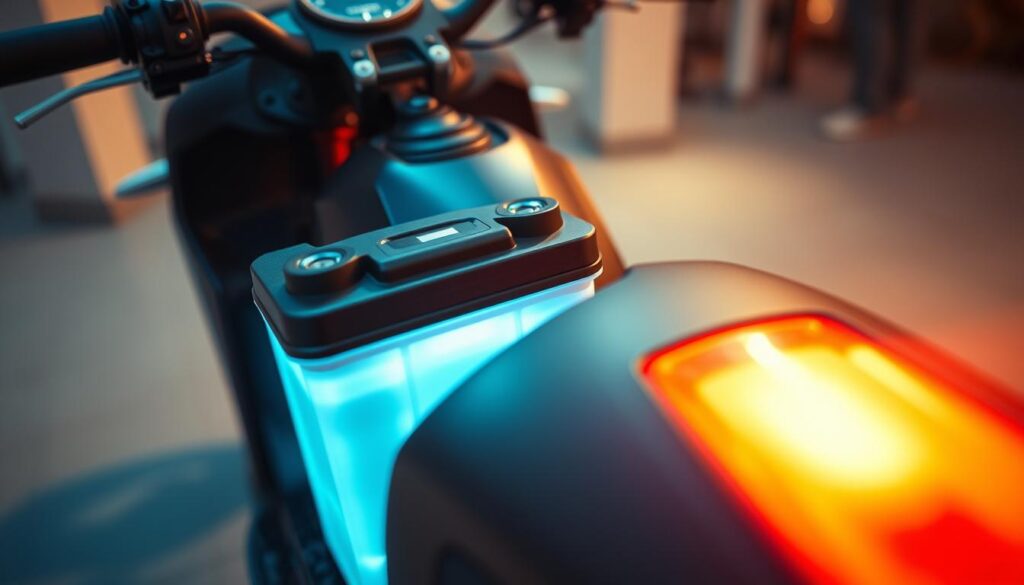
Core pack: a 54V nominal (63V max) 675Wh battery gives solid capacity for long days and errands. The larger pack helps keep speed and motor power steady as the charge drops.
Faster top-ups and practical charge times
Dual charging ports let a rider cut full charge time to about 3.6 seconds hours when using two chargers, compared with ~7.2 hours with one. Ports sit under a left-side cover to guard contacts from grime and water.
Claimed miles vs. real-world runs
While the claimed range reaches up to 59 miles under ideal conditions, mixed-terrain testing with a 165 lb rider in Sport mode landed near 31.1 miles. Riders can extend real range by using Eco or Standard modes and moderating top speed.
Battery care and fail-safes
Smart protections monitor temperature and cell health to preserve longevity and performance. If the pack depletes, pushing assist helps move the scooter without lifting its full weight.
- Tip: dry the charge port after wet rides before plugging in to protect the pack from water exposure.
- Practical: balanced capacity and controller tuning give steady performance across most of the charge curve.
Suspension and Tires: Ride Quality Across City Terrain
City terrain tests a scooter’s chassis; good shocks and tires turn rough stretches into manageable sections. This model pairs a front hydraulic double fork with rear dual spring shocks to keep the frame steady over bumps.
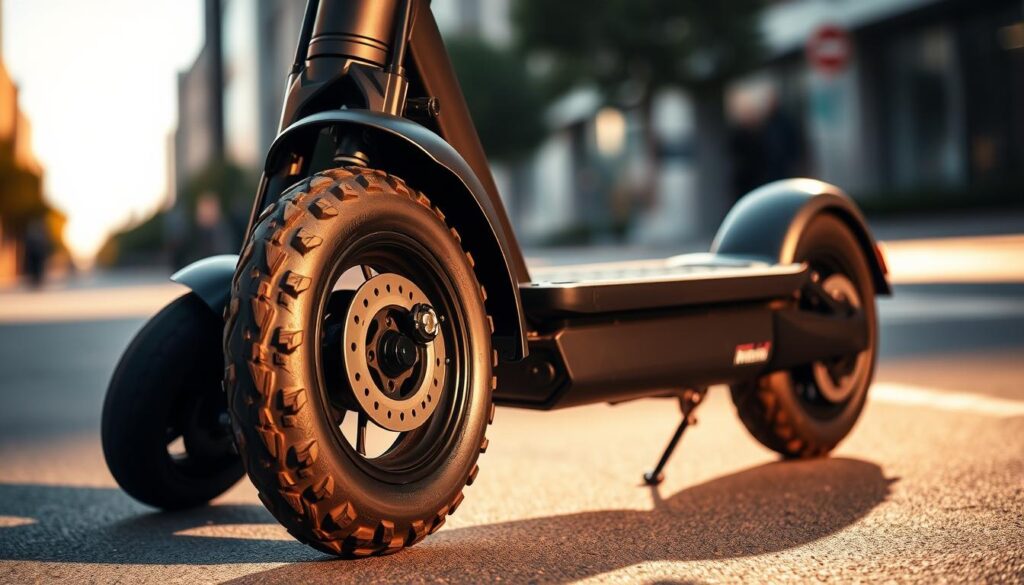
Front fork and rear spring shocks
The dual suspension soaks up cracks and potholes, making longer commutes less punishing. Rear spring shocks work with the front fork to keep the chassis composed when braking or cornering.
10-inch tubeless pneumatic tires
Ten-inch tubeless pneumatic tires add comfort and better puncture resistance than tube types. With proper pressures and periodic checks, the tires deliver a confident feel day after day.
- Stable ride: the setup maintains traction and balance across varied terrain.
- Brake control: a compliant chassis reduces chatter during stops for smoother brake feel.
- Visibility & resilience: bright lights and deck illumination aid awareness on rough roads, and IP ratings help parts resist water, though deep puddles should be avoided.
Thanks to this suspension and tire combo, riders get a calmer ride that cuts fatigue and raises daily comfort. The result is a scooter tuned for real urban surfaces and steady speed hold on jouncy segments while the display and battery readouts stay legible.
Braking Confidence: Rear Disc with Front Regenerative Support
Confident stopping is as important as speed when navigating busy streets. This scooter pairs a mechanical rear disc brake with front regenerative braking through the motor to give riders layered control.
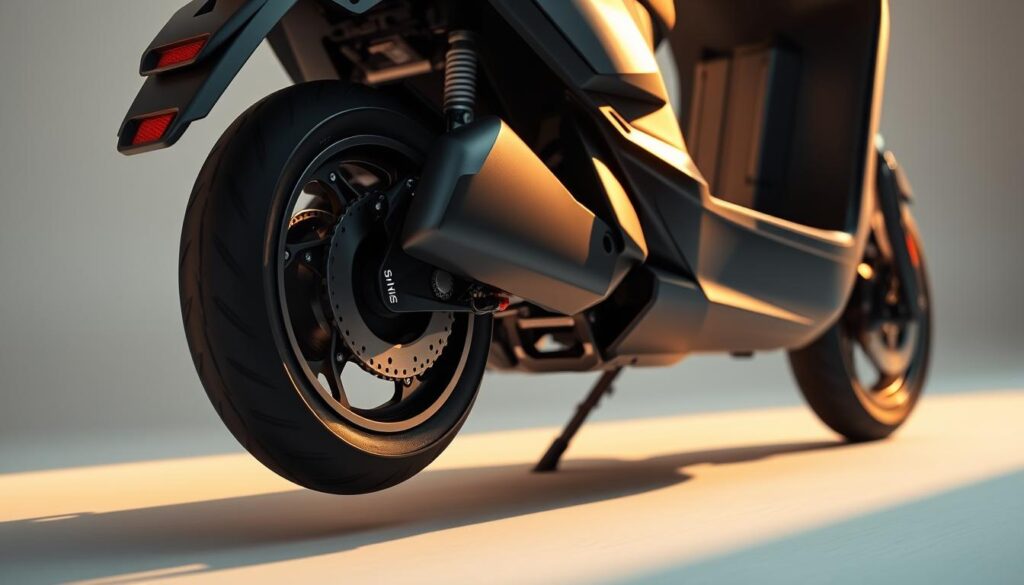
Stopping feel, distance, and battery recuperation
The rear disc brake supplies most of the stopping force. The lever feel is predictable and easy to modulate in traffic.
Front regen engages when the rider eases off the throttle. It smooths deceleration and recaptures a small amount of battery charge during slowdowns.
In favorable conditions the scooter stops in under ~14 feet (~4 m) from typical urban speeds. That performance is comparable to category leaders and feels linear rather than grabby.
- Tuneable regen: some versions allow riders to adjust regeneration strength via the app, tailoring decel to route and taste.
- Blended braking: combining lever braking with regen shortens stopping distance while keeping control.
- Stable chassis: the frame helps prevent wheel skip on patchy pavement during hard stops.
The display keeps speed visible so a rider can judge approach margins in seconds. Routine checks of pads, cable tension, and rotor condition keep brake performance consistent over time.
Mechanism simplicity also helps: the system is straightforward to inspect and maintain, supporting safe daily operation for most owners.
Lighting and Turn Signals: Safety Tech That Stands Out
A clear lighting package helps the rider communicate intent and avoid surprises. This scooter pairs focused beams with layered signals so visibility works both for seeing and being seen.
Dual headlights and rear brake light
Dual 1.25W headlights sit high on the stem and project a crisp beam for night rides. A bright rear brake light on the fender ties to the brake lever so drivers behind spot slowing sooner.
Automatic deck signals and visibility notes
The deck features RGB LEDs that auto-activate as turn signals when the rider initiates a turn. Because the system senses lean, quick swerves can sometimes trigger the signals; riders should watch for false activations.
- Reflectors add passive visibility from multiple angles.
- A handlebar-mounted bell provides an audible cue to pedestrians and cyclists.
- Lights integrate cleanly into the deck and tolerate light water exposure, though connections should be kept clean for reliability.
Overall, the lights and signals raise safety for night-heavy commutes and blend well with the scooter’s design. Riders can add auxiliary lights if they need extra reach on very dark routes.
Water Resistance and Weather Readiness
Rain and road spray are everyday realities for urban riders, so a scooter’s weather protections matter as much as its motor or range.
The model carries a clear set of protections: an IP55 chassis, an IPX6 controller, and an IPX7 battery. These ratings work together to guard key systems during wet commutes.
What those ratings mean in practice
- IP55 body: resists dust and low-pressure sprays from daily riding.
- IPX6 controller: survives heavier splashes that happen in stormy weather conditions.
- IPX7 battery: protects the pack from brief water exposure and boosts durability.
Riders should still avoid deep puddles and long, heavy downpours to protect bearings and connectors. After wet rides, drying ports and checking the charge port before plugging in helps extend component life.
Bottom line: the water resistance rating set is stronger than many budget peers, making this scooter a practical choice for variable climates and year‑round commuting.
Inmotion App and Connectivity: Tuning the Ride
With Bluetooth pairing, the app becomes a second display that expands what riders can see and set. It mirrors key stats like current speed, remaining battery, and trip mileage so the phone shows longer logs than the cockpit alone.
The app also lets riders tweak ride modes, set cruise control behavior, and adjust regenerative braking where available. Firmware updates and basic diagnostics appear in-app so owners can keep systems current and spot issues early.
- Trip logs: track averages to plan charging and routes.
- Customization: change mode selection and regen before a ride.
- Stability: pairing is simple and reliable, adding value without hassle.
The app complements the on-board display by expanding data without cluttering the dash. Casual riders can ignore deeper settings and enjoy a tuned baseline, while data-minded users get stats and control in one place.
For more details on recent app improvements, check the app update and features.
Who the Inmotion L9 Is Best For
Daily riders who prioritize comfort and dependable range will find this scooter a strong match. It trades ultra‑light carry convenience for a composed, confident ride that suits real commuting needs.
Daily commuters and taller riders
The tall stem and roomy deck give taller riders a more natural stance and relaxed reach. Dual suspension smooths rough pavement so stop‑and‑go trips feel less tiring.
Riders who prefer comfort and range over minimal weight
With a substantial battery and a sturdy frame, the scooter favors endurance and stability. Its 52.9 lb mass signals a build that resists flex and improves on‑road composure, though carrying it up many flights may be tiring.
- Comfort: cushioned chassis and grippy deck for longer commutes.
- Stability: planted handling for confident braking and cornering.
- Practicality: set‑and‑go operation with app tweaks for daily reliability.
- Trade‑off: extra weight brings road calm but reduces carry convenience.
Inmotion L9: Pros, Cons, and Value for the Money
Here’s a clear look at what this commuter model does best and where it asks riders to compromise.
Strengths that rival category leaders
- Ride comfort: dual suspension and 10-inch tires deliver a smooth commute and steady performance.
- Range and battery: a large pack gives long distance capability for daily use.
- Safety and stopping: confident braking with rear disc plus regen adds control and modest recovery.
- Practical touches: a spacious deck, bright lighting, app support, and a clear display boost real-world value and quality.
Trade-offs to consider before you buy
The package favors stability over lightweight carry. That means the scooter is heavier and bulkier when folded.
Single-charger sessions take longer unless two chargers are used. Small finish details—like a simple bell and some underdeck plastic—are less refined than the rest of the build.
Bottom line: thanks to solid construction, thoughtful ergonomics, and reliable systems, this model offers strong performance per dollar for riders who prioritize comfort and range. For a full look at spec details and testing, see the detailed review.
Final Take: Is the inmotion l9 the Right Electric Scooter for You?
Riders seeking a composed daily ride with real-world range will find this model hard to ignore.,
Inmotion electric scooter packs a 500W front motor and a 675Wh battery that combine usable power and an about 18.6 mph top speed.
The dual suspension and 10-inch tubeless tires make the ride feel steady, while rear disc plus front regenerative braking boosts stopping confidence.
Auto deck turn signals, bright headlights, app connectivity, and weather-ready ratings round out a practical ownership experience for city commuters.
For riders who value comfort and dependable range over ultra-light carry weight, this inmotion electric choice is an easy recommendation.
FAQ
What is the top speed of the L9 model?
The scooter reaches a top speed around 28–30 mph in Sport mode under ideal conditions. Real-world speed depends on rider weight, terrain, and battery charge, so commuters typically see lower maxima in mixed urban riding.
How far will the battery go on a single charge?
The 54V 675Wh pack is rated for long commutes, with claimed ranges up to about 50 miles under conservative test conditions. In practice, expect 20–40 miles depending on speed, rider weight, weather, and hill frequency.
How long does a full charge take?
With the stock charger, a full charge usually takes 6–7 hours. Using the optional dual charger cuts that closer to 3–4 hours. Charge time varies with battery state and ambient temperature.
Is the folding mechanism easy and secure for daily use?
The fold uses a quick latch design that snaps in roughly three seconds. It locks solidly when closed, but users should still test the latch and carry the scooter by the designated handle to avoid stress on the clamp.
How much does the scooter weigh and is it portable?
It’s heavier than ultra-light commuters due to the larger battery and suspension. Carrying it short distances is manageable, but frequent stair transport will feel tiring for most riders.
What type of motor does it use and how is acceleration?
The front-drive electric motor produces strong nominal power with higher peak bursts for quick starts. Acceleration is lively in Sport mode and smoother in Eco, giving riders good control from 0–15 mph in urban conditions.
How does it handle hills and heavier riders?
The scooter climbs moderate grades well, with manufacturer guidance up to roughly 30% in optimal conditions. Heavier riders will see reduced speed and range on steep inclines; gearing power delivery and using lower assist modes helps maintain momentum.
What suspension and tire setup does it have for city streets?
It pairs front fork suspension with rear spring shocks and 10-inch tubeless pneumatic tires. That combo smooths rough pavement, improves traction, and reduces puncture risk compared with thin, solid tires.
What braking system is fitted and how effective is it?
A rear disc brake provides mechanical stopping power, complemented by front regenerative braking. Together they deliver predictable stopping feel and help recuperate battery charge during deceleration.
Are turn signals and lights included for safer rides?
Yes. The scooter features bright dual headlights and a rear brake light, plus automatic deck turn signals that improve visibility for other road users. Riders should still use caution and audible warnings in busy areas.
How water resistant is the scooter?
The chassis carries an IP55 rating with higher IPX6 controller protection and an IPX7 battery rating. That makes it splash- and light-rain resistant, but it’s not intended for deep-water exposure or heavy, prolonged downpours.
Can the ride be customized through an app or display?
Yes. The onboard display and companion app allow tuning of ride modes, regenerative braking, and lights. Riders can fine-tune responsiveness and view diagnostics for a personalized experience.
What deck size and build quality should taller riders expect?
The deck is spacious and long enough for a comfortable stance, and the frame uses robust aluminum components. Taller riders often appreciate the roomy platform and higher handlebars for better ergonomics.
How durable are the tires and how often will they need maintenance?
The 10-inch tubeless tires offer a good balance between comfort and durability. Routine checks for pressure and occasional sealant top-ups keep them roadworthy; punctures are less frequent than with tube tires but can still occur.
Is this model good value compared to other mid‑range scooters?
It competes well on range, comfort, and safety features. Strengths include suspension, long battery life, and integrated lights. Trade-offs are weight and price compared with minimalist, ultra-light alternatives.