Top Rated Freestyle Scooter for Beginners and Pros
 PopScooter Team
February 5, 2026 11:25 am
.
10 min read
PopScooter Team
February 5, 2026 11:25 am
.
10 min read
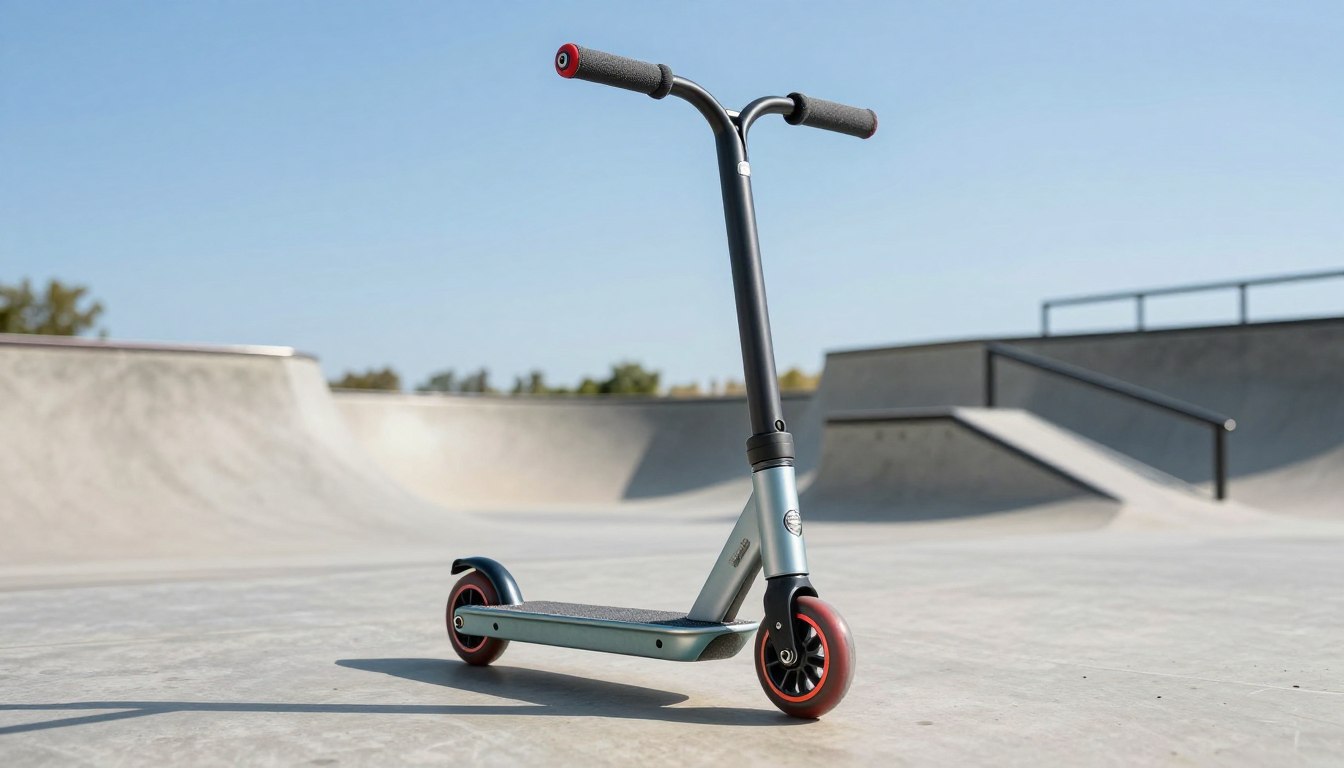
Can one complete truly serve a new rider and still satisfy a pro? This roundup answers that by focusing on real-world use, not marketing buzz.
You’re viewing 32 of 61 products. That snapshot shows the market’s depth and why clear criteria matter. Madd Gear models push a useful middle ground: lightweight yet built for streets, parks, and everything in between with reinforced decks, high-performance wheels, and responsive steering.
The guide explains what “top rated” means today in the United States. It highlights parts that affect control and comfort, like deck shape and wheel size, and why those details beat flashy graphics.
It’s written for new riders learning basics, those returning to riding, and advanced riders who want a reliable pro scooter complete out of the box that can be upgraded later. The rest of the article shows how picks were chosen, which completes fit each rider type, and a sizing guide so they start on the right setup the first time.
Key Takeaways
- Look for component quality and build reputation before style.
- A good complete scooter balances durability and lightweight performance.
- Deck and wheels shape control, comfort, and trick feel.
- Madd Gear targets street, park, and versatile riding with reinforced parts.
- Beginners get a ready-to-ride pro scooter that can be upgraded later.
- Match budget to intended riding style to avoid overpaying.
How this freestyle scooter roundup picks top-rated completes for every skill level
This roundup uses clear, rider-focused criteria to surface completes that perform in parks and on streets.
What a complete pro scooter is: a ready-to-ride build where the deck, bars, wheels, and compression are matched at the factory. That matching helps beginners avoid compatibility mistakes and gives pros a dependable baseline they can tweak later.
Performance vs durability: the must-haves
Performance shows up as smooth rolling, predictable steering, and stable landings. Durability matters when riders start dropping in, jumping, and learning harder tricks.
Spec signals to compare fast
- Deck size for stance and stability (width and length).
- Bars for leverage and control.
- Wheels size and width for speed and grip.
- Compression type for tightness and maintenance.
Price and value expectations
US price ranges guide buying: budget completes sit under about $100–$130, midrange models fall near $170–$250, and premium competition-ready builds approach $300–$400.
Value equals component quality more than flashy style. Good wheels, solid compression, and a well-built deck reduce long‑term cost and risk for first-time buyers.
Top freestyle scooters to buy now by rider type and riding style
This section sorts top completes by who rides them and how they ride. It helps shoppers pick a setup that matches goals without overanalyzing specs.
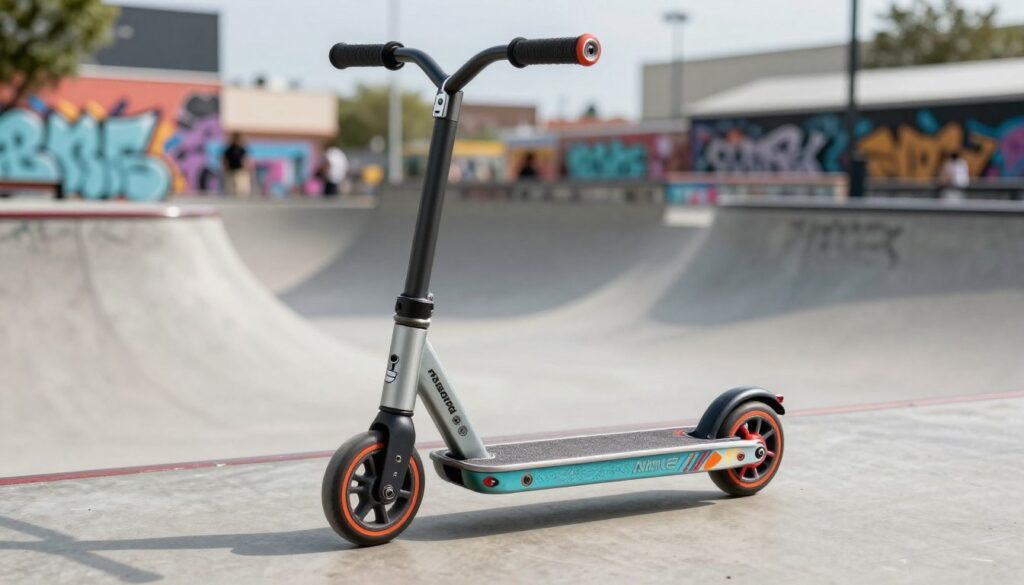
Best beginner-friendly complete scooters for quick progression and confidence
Who it’s for: new riders and kids learning basics.
Choose completes that prioritize stability, predictable handling, and durable decks. Good examples include the Madd Gear Raven ($89.95) and Envy One S3 (from $119.95).
Best pro scooters for park riding with lightweight performance
Who it’s for: ramp and transition riders chasing light, responsive feel.
Look for low weight, smooth wheels, and tight compression. Midrange to pro options from Root and Ethic deliver this balance.
Best street scooters with wider decks and stable setups for ledges and rails
Who it’s for: riders focused on grinds, rails, and stable landings.
Wider decks and robust bars improve control and durability for repeated impacts.
Best value picks under typical entry-level price points
Who it’s for: budget buyers who still want solid parts.
- Madd Gear Raven — $89.95: affordable, reinforced deck.
- District Titus — $99.95: solid starter complete.
- Envy One S3 — from $119.95: good wheels and compression at entry price.
Premium, competition-ready options for advanced riders
Who it’s for: competitors and experienced riders wanting refined performance.
Examples include Tilt Theorem (6.2″ wide) and TiLT Contact (5.8″ wide) around $389.95, plus Ethic Pandora and Root Air RS V3 in the $249–$260 range.
Brand spotlights riders shop for most
- Madd Gear: lightweight, reinforced decks, high-performance wheels, street and park focus.
- Envy: broad complete pro lineup for many skill levels.
- Root, Ethic, Tilt, Aztek, Invert: reliable options across value and premium ranges.
Parts and sizing guide to choose the right complete scooter (and upgrade later)
A well-sized complete transforms practice into progress; the right parts help riders level up faster. This short guide links common shop filters to how a setup feels on ramps, rails, and flat ground.
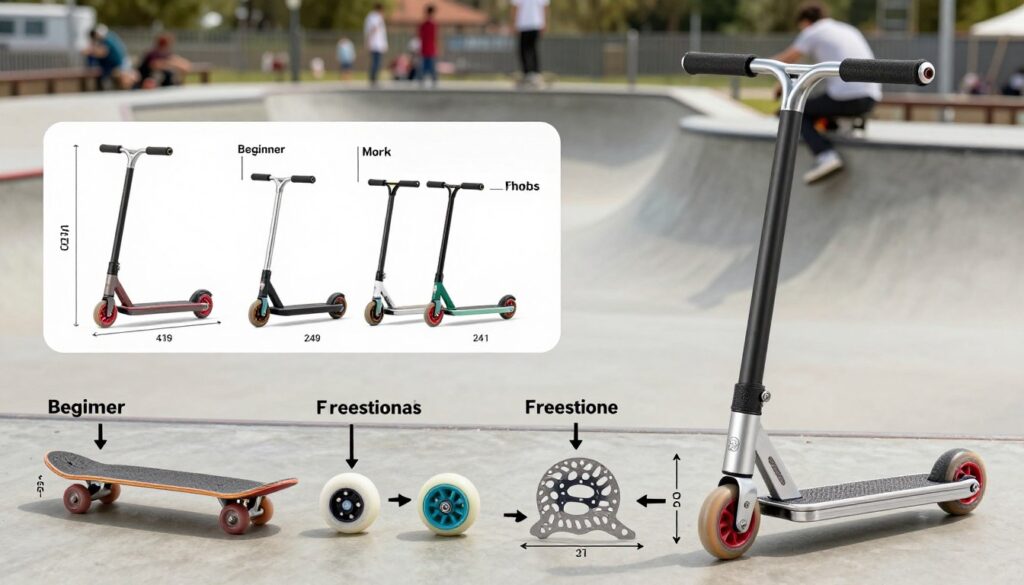
Decks: width and length that matter
Deck widths commonly fall into 4″-4.5″, 4.6″-4.9″, 5″-5.5″, 5.6″-5.9″, 6″-6.5″, and 6″+. Length buckets run up to 20″, 20.1″-21″, 21.1″-22″, and 22.1″+.
Narrow decks feel livelier for tricks. Wider decks add stability and comfort for street spots and heavier riders.
Wheels: size tradeoffs
110mm dominates most completes; it balances speed and control. Move to 115–120mm when riders want more roll-over speed or smoother gaps.
Wheel width (commonly 24mm, some 30mm) affects grip and clearance—wider rolls feel planted but need more deck clearance.
Compression: setup and maintenance
IHC and SCS are the most common in completes, with HIC less common. IHC and SCS offer tight setups; HIC is simpler to service.
Pick a compression type that matches future upgrade plans so bars, forks, and clamps stay compatible.
Bars, fit, and geometry
Bar heights usually range from up to 22″ through 29″+, and widths from up to 20″ to 24″. Taller or wider bars give more leverage for tricks; shorter setups suit smaller riders and parks.
Park vs street feel
Park geometry favors shorter decks and lower weight for pop. Street setups use wider decks and stronger components for grinds and repeated impacts.
Smart upgrades often start with wheels and bars. Keep compatibility in mind to avoid replacing the whole complete as skill grows.
Picking the right ride and hitting the park with confidence
strong, simple checklist: fit (size), terrain, and component priorities. Match a complete pro to the rider’s height and style, and pick parts that support the planned progression.
Start with size: check deck length and bar height. Use the sizing guide for a quick reference when shopping online or in-store, like this size and fit chart.
Before the first session, confirm bolts are tight, learn the brake feel, and practice balance and roll control. Progress tricks slowly—setup and steady practice beat chasing the priciest build.
Future-proof by choosing completes with common components so bars, wheels, or compression can be swapped later. Brands like Madd Gear, Envy, Root, Ethic, Tilt, Aztek, and Invert make it easier to upgrade along the same product family.
Pick a ride, get to the park, and build momentum—confidence grows faster on the right setup and regular practice. See a color option or style sample, for example this purple model, to lock in a choice that feels right.
FAQ
What does "complete pro scooter" mean and why should beginners consider one?
A complete pro scooter arrives fully assembled with a matched deck, bars, wheels, and compression system so a rider can start practicing right away. Beginners benefit from a complete because it ensures balanced geometry and reliable components from brands like Madd Gear or Envy, which reduces setup mistakes and speeds learning. It also gives clear upgrade paths when the rider wants lighter or more durable parts.
How should someone compare deck size, bars, and wheels when choosing a setup?
Shoppers should match deck width and length to riding style and shoe size, select bars for proper height and control, and pick wheel diameter based on terrain. Narrower decks offer lighter feel for tricks; wider decks add stability for street riding. 110mm wheels suit most park riders, while 115–120mm can smooth transitions and speed. Look at compression type and overall weight for a quick comparison.
What are the main compression systems and how do they affect maintenance?
The common systems are IHC, SCS, and HIC. IHC integrates the fork and bar clamp for lighter weight, SCS clamps bars externally for maximum strength, and HIC combines headset and compression with lighter service needs. Each requires different tools and periodic checks; SCS needs regular torque checks, while HIC and IHC are quicker to service at home.
Should a beginner choose a park-focused build or a street-focused setup?
It depends on where they plan to ride. Park-focused builds favor lighter, responsive decks and smaller wheels for aerial tricks and ramps. Street setups use wider decks, longer bars, and tougher wheels to withstand ledges and rails. Many beginners start with a versatile complete that leans slightly toward park geometry for easier progression and later specialize.
What wheel size and width tradeoffs matter for tricks and speed?
Smaller wheels (100–110mm) accelerate faster and help with flip tricks, while larger wheels (115–120mm) keep speed and roll smoother over rough surfaces. Wider wheels improve stability and grip during grinds and stalls but add weight. Riders should balance agility vs momentum based on whether they focus on park lines or street runs.
How much should someone expect to spend in the US for a reliable complete?
Entry-level completes that still offer decent parts start in the lower price ranges and can reliably handle learning. Mid-tier completes from reputable brands provide better decks, sealed bearings, and stronger compression for moderate prices. Premium, competition-ready builds with top materials and lightweight parts cost more but deliver performance for advanced riders. Budget decisions should prioritize durable wheels and a solid compression system.
Which brands are recommended for riders shopping for parts and completes?
Riders often shop brands like Madd Gear, Envy, Root Industries, Ethic, Tilt, Aztek, and Invert for a range of completes and parts. These brands offer reliable decks, bars, wheels, and compression options across skill levels, making it easier to upgrade components while maintaining compatibility.
What deck widths and lengths are common, and how do they influence skill progression?
Deck widths commonly range from about 4″ up to 6″+, with lengths up to roughly 22.1″. Narrower decks make footwork and flipping easier; wider decks boost confidence and stability for ledges. Beginners often choose a mid-width deck to balance control and comfort while learning tricks.
How do bar height and width affect control and comfort?
Taller bars give leverage for big airs and stability during grabs; shorter bars reduce weight and improve spin tricks. Wider bars add control on rails and high-speed approaches. Riders should match bar dimensions to their height and riding priorities to minimize strain and maximize control.
When is it worth upgrading parts instead of buying a new complete?
Upgrading is sensible when one or two components limit performance—like worn wheels, a heavy deck, or an outdated compression system. Replacing wheels, bearings, or switching to a lighter deck or stronger fork can transform ride quality at lower cost than a full new build, especially if core parts like bars and clamp remain solid.
What should a rider pack or check before hitting the skatepark?
They should bring a basic toolset for quick adjustments, spare bolts and an extra set of bearings or an axle, plus protective gear such as a helmet and pads. Checking tightness of the clamp and compression, wheel condition, and brake alignment before riding prevents failures and keeps sessions productive.