Ducati Electric Scooter Review: Performance and Design
 PopScooter Team
February 26, 2026 6:49 pm
.
16 min read
PopScooter Team
February 26, 2026 6:49 pm
.
16 min read
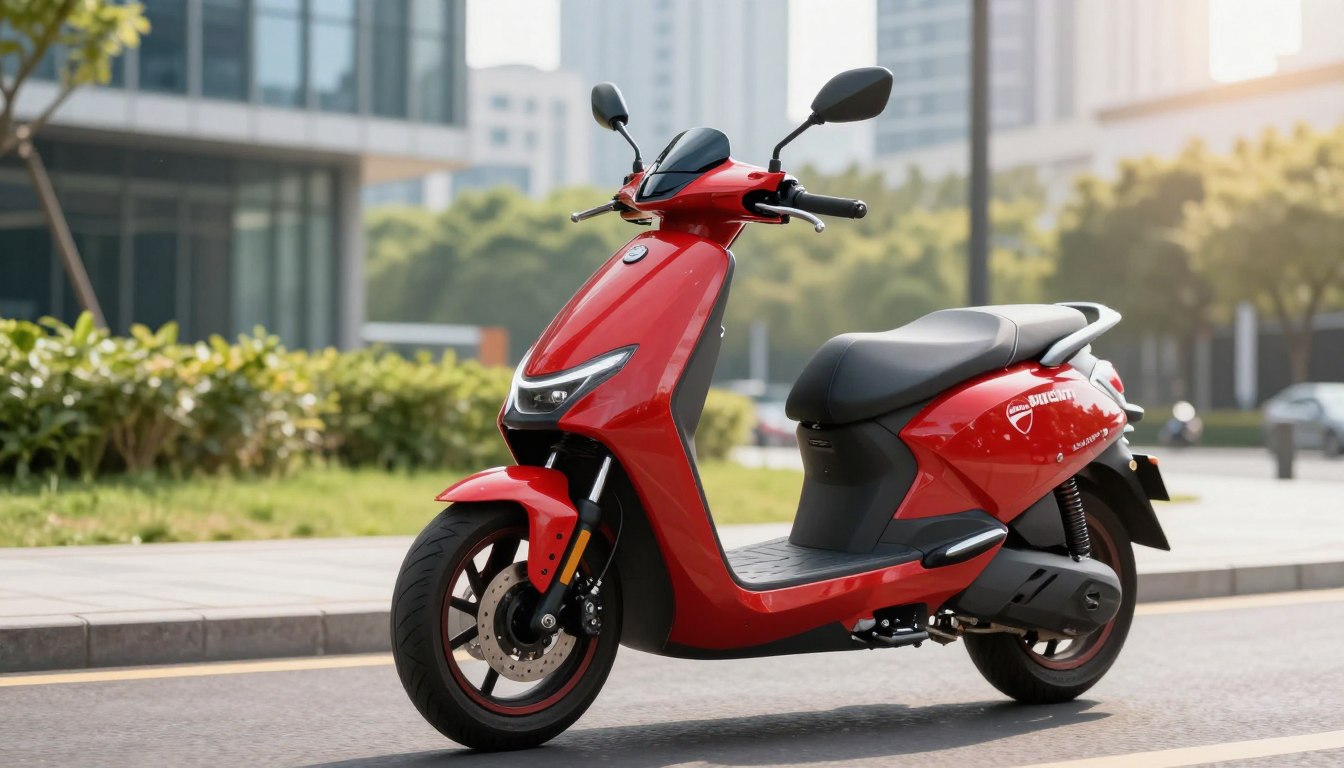
Can a brand-born ride truly deliver the thrills and practicality buyers expect? This review digs into that question by testing styling, range claims, real-world performance, and comfort so shoppers can decide if this is the right purchase today.
Context matters: the model line is brand-led while production and distribution come from PLATUM under license, with styling input from the Ducati Design Centre. The hands-on focus is the Ducati Pro III, using the Pro I Plus for baseline comparison where useful.
The article breaks down the bike-like cues that make up the Ducati DNA in scooter terms — styling accents, display design, dual brake levers and a more motorbike-like feel — without promising motorcycle-level power.
Readers will get clear notes on claimed range, cruise control, regenerative braking, and the main trade-offs: strong features versus limited comfort on rough pavement and some weight/portability issues. Specs and reviewer ride impressions are combined to keep the evaluation practical and buyer-focused.
Key Takeaways
- Brand styling and features stand out, but comfort on rough ground is limited.
- PLATUM handles production; Ducati Design Centre shapes the look.
- Pro III is the flagship; Pro I Plus serves as a value baseline.
- Good claimed range and tech like cruise and regen braking are pluses.
- Buyers should weigh performance and portability against rough-road comfort.
Quick take on who the Ducati Pro lineup fits best
For buyers picking by style, range, or daily practicality, the Pro family has clear strengths and limits.
Best fit: Riders who prize design, a premium cockpit, and a steady city commute will like the ducati pro line. It suits leisure cruising, bike lanes, and smooth pavement where the larger battery and features pay off.
https://www.youtube.com/watch?v=xpROoR-wnLQ
Best for style-focused city riders and leisure cruising
The Pro III is ideal for all-round leisure riders and design fans. It offers conveniences like cruise control and built-in lighting that make longer, relaxed rides pleasant.
Where it can disappoint on rough roads and portability
Be clear about limits: without suspension the comfort drops on broken road surfaces and potholes. At a listed weight of 17.5 kg, the Pro III is carryable for short lifts but not great for long stair carries.
- Compare: the Pro I Plus is much lighter at 11.5 kg and easier to handle for short trips and stairs.
- Buy direction: Check the pricing/value section later to decide whether to buy ducati now based on commute length, storage, and typical road conditions.
Design and build quality with Ducati DNA
Styling and construction signal how a high-end motorcycle brand translated its DNA into a city ride. The visual identity and cockpit feel aim for a sportier presence while keeping daily use in mind.
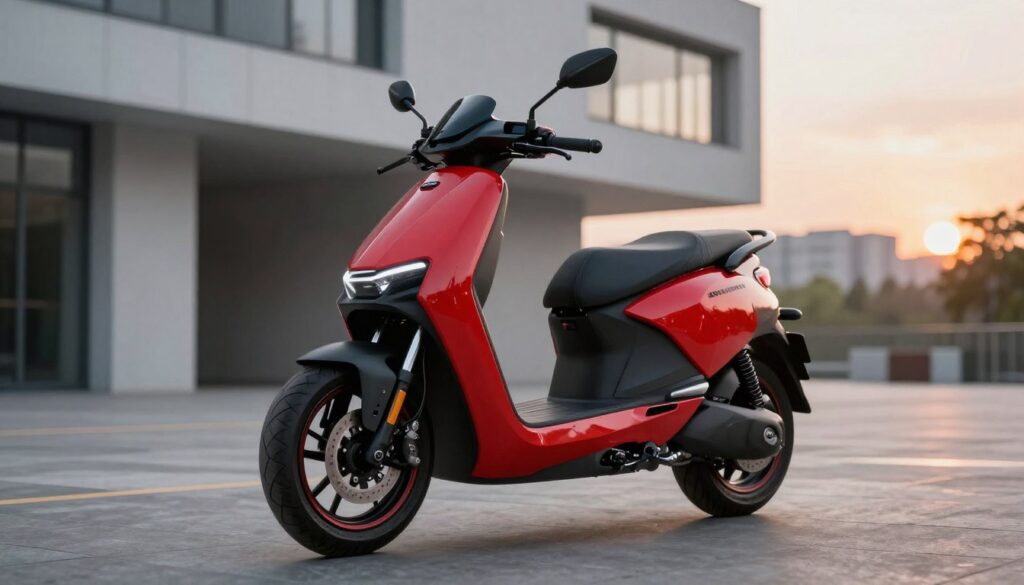
Licensed production and styling cues
Production is handled by PLATUM under license, while the Ducati Design Centre curated the look and layout. That partnership gives the product a distinct premium touch from the company’s studio work.
Frame materials and weight trade-offs
The Pro III uses a magnesium alloy frame that reads as robust yet refined. This frame choice ties to a higher price and a listed weight of 17.5 kg.
The Pro I Plus keeps the familiar aluminum-style frame and a lighter, 11.5 kg package. Both frames perform well, but they aim at different buyer priorities.
Deck, foldability, and practical size
The Pro III’s chunky deck houses the battery and gives a solid stance underfoot. The foldable frame folds for apartment halls, trunks, or under-desk storage with confidence.
Published size figures help set expectations: Pro III unfolded is 1140 x 520 x 1180 mm and folds to 1140 x 520 x 500 mm. The Pro I Plus measures 108 x 43 x 114 cm unfolded and 108 x 43 x 49 cm folded, so compare footprint and transit needs carefully.
Durability cues and ride controls
Reviewers note a secure clamp and confident folding mechanism, plus a handlebar layout that feels motorbike-like. Overall, build quality reads as a considered product rather than a simple rebrand of another model in the scooter category.
Performance: motor power, speed, and hill ability
The focus now shifts to real-world motion: how the Pro III delivers power, speed, and hill confidence.
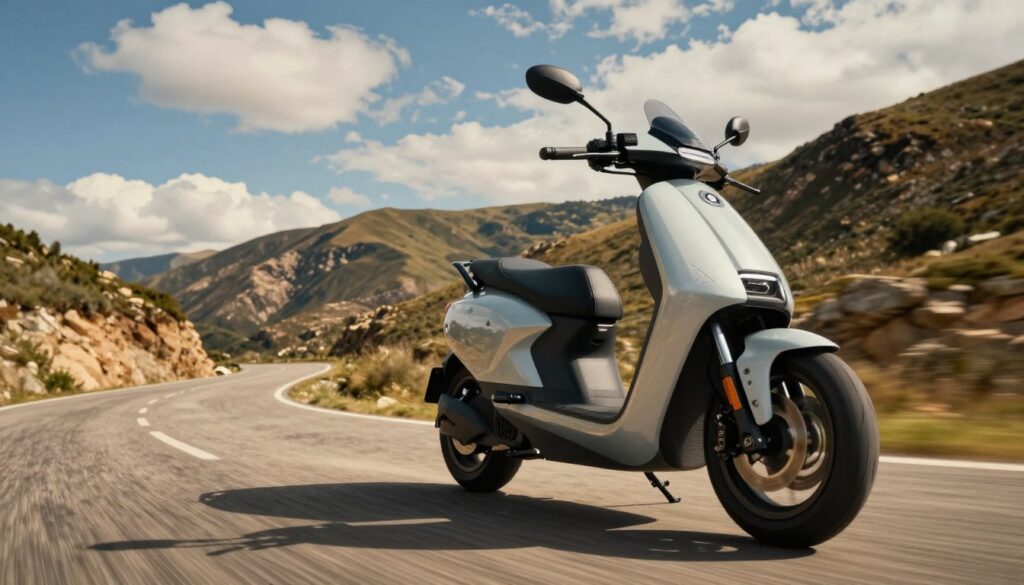
Motor output explained: The Pro III uses a 350W brushless rear motor. For everyday riders, that rated output means steady city cruising and reliable torque for stop-and-go traffic.
Why peak power matters: The published 515W peak power gives short bursts for quick acceleration and hill surges. Peak power is not continuous, but it helps when merging or clearing a steep curb.
Top speed and real riding feel
Top speed varies by region and limits, so the important part is how fast feels on the road. Riders report a lively top-end without feeling twitchy. Stability under load matters more than a raw number.
Hill climbs and load factors
The Pro III claims a 20% maximum gradient and testers confirmed it can handle that slope. Still, rider weight and cargo change outcomes — heavier loads reduce speed and strain the motor.
Acceleration and handlebar control
Acceleration delivers a “lovely boost” according to reviewers, with predictable power delivery. The thumb throttle on the handlebar gives intuitive control but requires measured pressure on uneven pavement.
- Everyday takeaway: Good mid-city performance and punchy peak power when needed.
- Ride confidence: Predictable power, stable rear drive, and manageable handlebar control.
- Limit notes: Heavy riders or long, steep routes will see reduced speed and range.
Range, battery, and charging time in everyday riding
Battery capacity matters because it determines how often a rider must plug in. The Pro III packs a 36V, 13.0Ah (468Wh) battery and claims up to 50 km per charge.
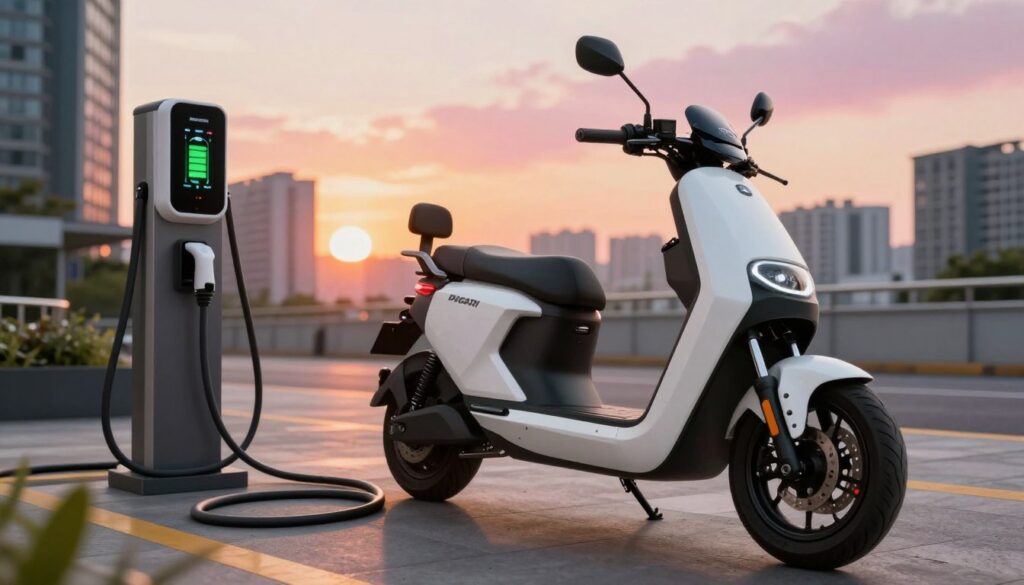
What the numbers mean on real trips
In practice, the published range often falls short. Speed, frequent stops, rider weight, and terrain lower the real figure.
Expect shorter runs for heavy riders or hilly routes. For errands or a commute, plan for 60–80% of the claimed range on mixed city rides.
Charging time and daily planning
The Pro III needs about eight hours to fully charge. That suits overnight top-ups and a morning-ready routine.
The smaller Pro I Plus uses a 36V, 7.8Ah (280Wh) battery with a claimed 25 km and a 5–6 hour charge time. Its lighter pack fits short commutes but means more frequent charging.
How to stretch range and energy use
- Choose a lower riding mode for steady city speeds.
- Keep tire pressure correct and avoid rapid throttle bursts.
- Use regenerative braking where possible to recover energy on decelerations.
Bottom line: The Pro III is built to maximize range while staying nimble. Riders who want longer daily distance will value the larger battery, while the Pro I Plus suits lighter, shorter routines that accept more frequent charges.
Riding modes, cruise control, and on-the-road control
Choosing the right riding mode changes how the Pro III feels on every trip. Riders can tailor speed, energy use, and response to suit crowded paths, long runs, or short walks.
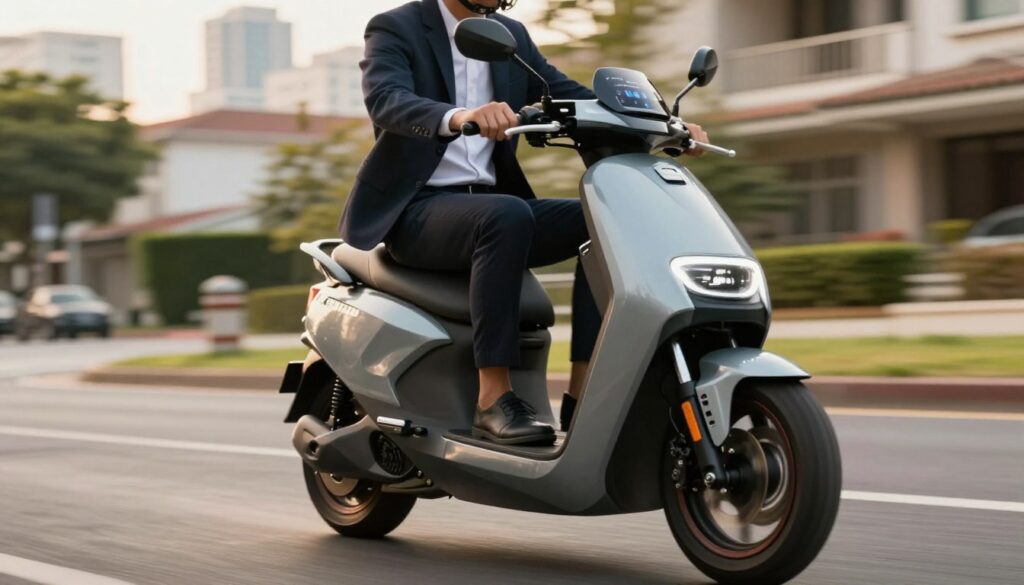
Four practical mode levels
The Pro III offers four levels: 6, 15, 20, and 25 km/h. The lowest is an assist level that helps when pushing the board through tight spaces or up a curb.
Eco mode prioritizes energy savings. It tames acceleration to extend range but gives up snappier starts.
Comfort mode is the everyday sweet spot. It balances response and energy use for mixed city routes and steady commutes.
Sport mode is the most responsive. With the larger battery, riders can stay in this mode longer without constant range anxiety, making quick overtakes easier.
Cruise control and safety-first control
Cruise control engages by holding the thumb down on the throttle. It feels steady on long, flat stretches and reduces wrist fatigue on longer rides.
The system cancels instantly when brakes are applied or the throttle is adjusted. That immediate cut-off keeps things predictable and safe in traffic.
- Pick Eco for long trips when range matters.
- Use Comfort for mixed routes and everyday control.
- Switch to Sport when extra responsiveness is needed and energy is available.
For more hands-on detail about behavior and real-world tests, see this concise review for practical context: Pro II Evo review.
Ride comfort and handling: tyres, suspension, and road feel
Ride comfort often comes down to tyre size and how the frame transmits bumps to the rider. The Pro III uses 10-inch tubeless tyres that smooth small chatter and give confident cornering on clean pavement.
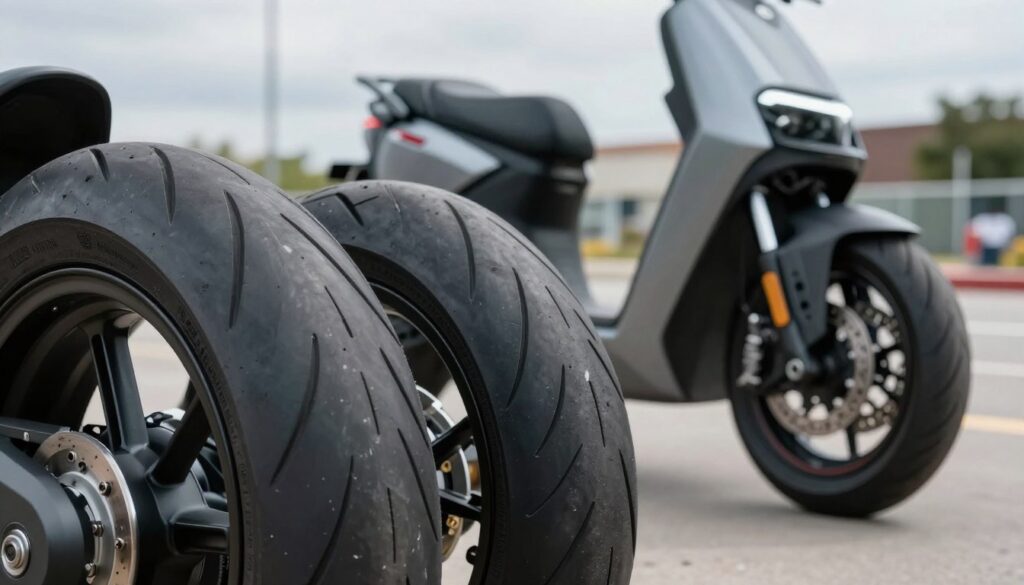
Stability in corners with 10-inch tubeless tyres
The larger tubeless setup helps the board feel planted when leaning into turns. Reviewers note the Pro III “sings” on smooth streets and tracks well through quick direction changes.
Why no suspension matters on rough ground
Without suspension, every pothole sends a visible shock through the deck and into the rider’s arms and knees. That transfer is the main comfort limiter and will shape route choices.
Pro I Plus: 8.5-inch pneumatic trade-offs
The Pro I Plus uses 8.5-inch pneumatic tyres that absorb some hits thanks to air cushioning. Still, the lack of suspension means harsh bumps can be felt more than on a suspended platform.
- Practical advice: Favor maintained streets, bike lanes, and smooth paths for the best comfort and control.
- Commuters on broken sidewalks or gravel should consider models with suspension.
- For detailed road impressions, see this hands-on review at Electroheads Pro III review.
Braking, safety, and visibility upgrades that matter
When traffic is tight and light fades, the braking system and visibility gear become the rider’s best defenses.
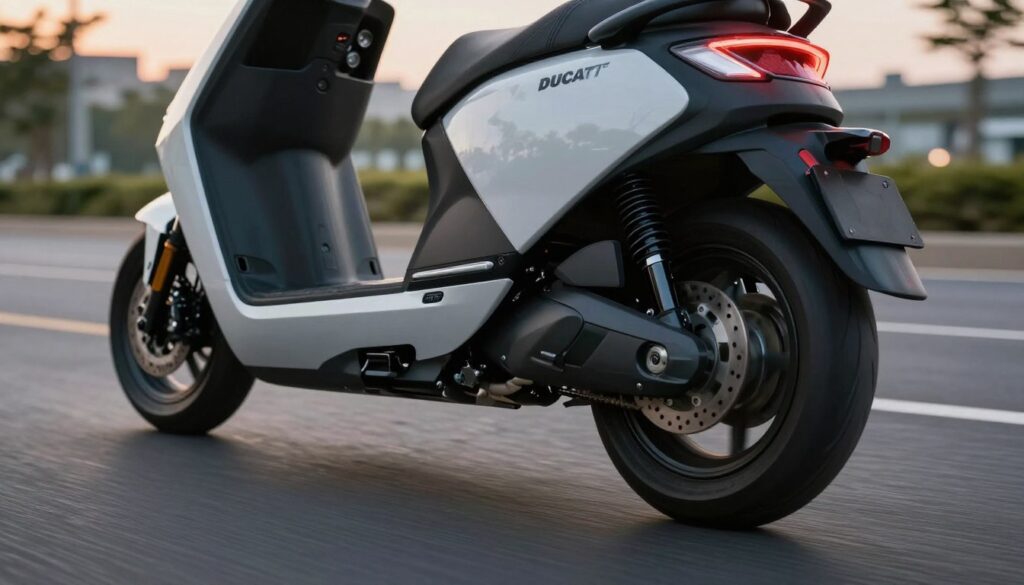
Mechanical disc backup and predictable stopping
The Pro III uses front and rear disc brakes for firm, repeatable stopping. Mechanical discs give a clear lever feel and strong bite when riders need it most.
Redundancy matters: two independent brakes mean one can help if the other loses power or grip in city stops.
KERS regenerative braking for control and efficiency
KERS regenerative braking recovers energy on decel and smooths the slowdown. It can slightly extend range and changes how the board coasts compared with purely mechanical braking.
Note: The Pro I Plus pairs a rear disc (KERS) with an electronic front brake for a similar energy-savvy approach.
Dual levers and LED lights as practical safety tools
Dual brake levers give a motorbike-like control layout that many riders find intuitive. They split stopping duties and let riders modulate force quickly.
Front and rear LED lights do double duty: they help the rider see and make the rider visible to others during low light.
IPX4 water resistance — what to expect
IPX4 offers splash resistance from any direction, but it is not proof against heavy rain or deep puddles. Avoid prolonged wet use to keep braking hardware working well.
- Slow down on wet paint and metal plates to avoid skids.
- Increase following distance in rain and leave extra stopping room.
- Check brake pads and cables regularly for wear and consistent performance.
Tech features: display, lighting, security, and app expectations
How a board shows information and locks down matters as much as motor specs. The Pro III’s 3.5-inch display uses an easy-to-read LED layout that stays legible in bright U.S. sunlight with minimal glare. Riders can glance at speed, battery, mode, light status, faults, and cruise info without slowing down.
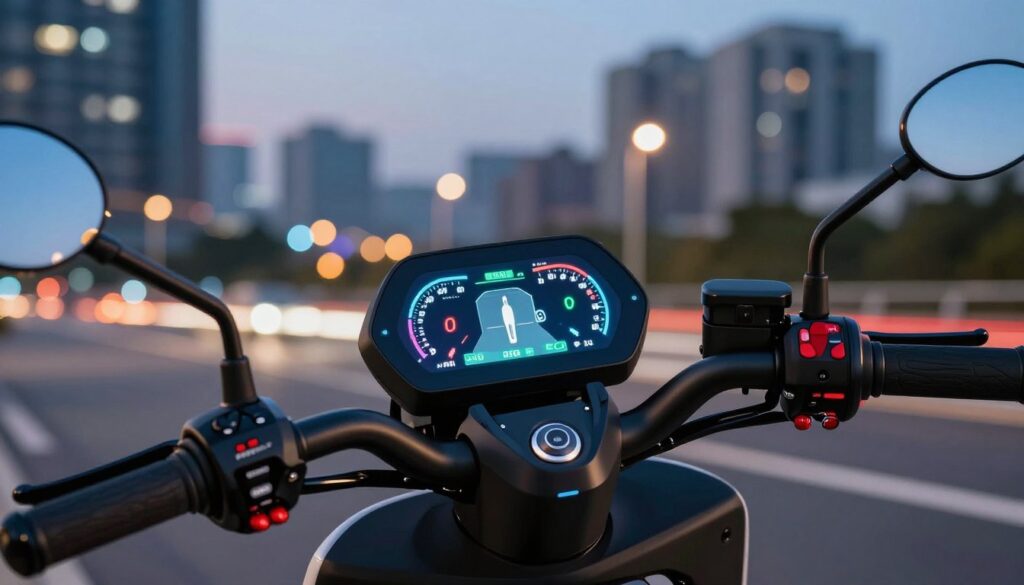
USB port and practical everyday use
The built-in USB port is useful on longer trips. It lets a rider top up a phone for navigation or an emergency call without extra gear. That small convenience keeps rides simpler and safer.
Security and app-enabled convenience
The Pro III ships with a token/fob for quick unlocking and to cut down on casual ride-offs. On supported models the companion app adds Bluetooth keyless unlocking and remote lock workflows.
What an app usually controls — and the Pro I Plus gap
An app typically handles locking/unlocking, ride settings, and occasional firmware updates. The Pro I Plus lacks app connectivity, so buyers miss customization and remote locking even though core riding data still shows on its screen.
- Buyers should confirm app support before purchase.
- Decide if the extra security and customization justify stepping up to Pro III or the linked ducati pro family model.
Ducati electric scooter pricing, value, and what to buy right now
Value is more than sticker price — it’s battery life, motor output, and how the frame fits a rider’s route. The Pro III has real strengths: a 468Wh battery, 350W brushless rear motor with 515W peak power, 50 km claimed range, and a magnesium frame with 10-inch tubeless tyres. At roughly £700 in recent reviews, it lands as strong value for longer leisure rides and feature-minded buyers.
For commuters who need lighter portability, the Pro II Evo can be a middle ground; see the Pro II Evo for comparison. Buyers should balance weight and comfort: the 17.5 kg Pro III rolls well but is heavier to carry. To buy ducati pro now, confirm local rules, rider weight limits, return policy, and that the claimed speed and ride comfort fit daily use.
FAQ
What models make up the Pro lineup and who are they best for?
The Pro lineup includes the Pro III and Pro I Plus, designed for style-focused city riders and leisure cruising. The Pro III targets those who want higher peak power, longer range, and larger 10-inch tyres for stability. The Pro I Plus suits shorter commutes and buyers on a tighter budget who prefer a lighter build and smaller footprint.
How does the design reflect the brand’s styling and build quality?
Design comes from the Ducati Design Centre and licensed production under PLATUM, so the scooters show clear motorcycle-inspired cues. The Pro III uses a magnesium-alloy-style frame for rigidity, while the Pro I Plus favors an aluminum-style build that saves weight. Both focus on clean lines, compact decks, and quality finishes that feel premium in hand.
Are the frames foldable and how practical is carrying one?
Yes, both models feature foldable frames. When folded, the Pro I Plus is easier to sling over a shoulder or store on transit thanks to its smaller folded footprint. The Pro III folds too but remains heavier; it’s best for users who mostly ride and only occasionally carry the scooter up stairs.
What are the motor specs and real-world performance on the Pro III?
The Pro III uses a brushless rear motor rated at 350W with a 515W peak. It delivers brisk acceleration for city starts and can handle moderate climbs. Riders should expect solid urban performance, especially on flat to mildly hilly routes.
How well does the Pro III climb hills?
The Pro III manages gradients up to roughly 20% under typical conditions. Climb performance depends on rider weight, battery state, and speed; heavier riders or low battery levels will reduce hill ability.
What battery sizes and ranges are offered across the lineup?
The Pro III packs a 36V 13.0Ah (468Wh) battery with a claimed range up to 50 km under ideal conditions. The Pro I Plus uses a smaller 280Wh pack and claims about 25 km. Real-world range varies with riding mode, rider weight, terrain, and speed.
How long does it take to fully charge each model?
Charging the Pro III’s 468Wh pack typically takes around eight hours with the standard charger. The Pro I Plus, with its smaller battery, charges faster—usually several hours less—making overnight charging practical for both.
Which riding modes are available and when should each be used?
The Pro III offers four riding modes ranging from eco to sport. Eco maximizes range and is ideal for casual commutes, mid modes balance speed and efficiency for mixed routes, and sport unlocks peak power for quick overtakes or hill climbing. Riders can switch modes depending on battery life and traffic conditions.
Does cruise control work reliably and how does it disengage?
Cruise control holds speed steady once engaged, which eases long, flat rides. It cancels immediately if the rider brakes, taps the throttle, or encounters a fault, prioritizing safety and predictable control in traffic.
What is the ride comfort like without suspension on the Pro III?
Even with its larger 10-inch tubeless tyres, the Pro III lacks active suspension, so riders will feel sharper feedback on potholes and rough surfaces. The bigger tyres help smooth small bumps and improve cornering stability compared with smaller-tyre models.
How does the Pro I Plus handle road imperfections with its 8.5-inch tyres?
The Pro I Plus uses 8.5-inch pneumatic tyres and no suspension, which keeps weight down but transmits more vibration to the deck. It’s acceptable for smooth urban streets but less comfortable on uneven or broken pavement.
What braking systems and safety features do these models have?
The Pro III has front and rear disc brakes combined with KERS regenerative braking to help recover energy and improve stopping feel. Dual brake levers offer a motorbike-like control layout. Both models include bright front and rear LED lights for visibility, and IPX4 water resistance—suitable for light rain but not heavy downpours or immersion.
How readable is the display and what tech features are included?
A 3.5-inch LED display provides speed, mode, battery level, and a USB port, and it remains readable in most sunlight. Supported models offer token/fob unlocking and Bluetooth keyless access via an app, while the Pro I Plus lacks full connectivity, which some buyers may miss.
Is there an app and what functionality does it provide?
Where available, the companion app adds security features like a Bluetooth key, ride stats, firmware updates, and basic diagnostics. The Pro I Plus does not include app connectivity, so buyers sacrifice those conveniences for a lower price.
What tire and wheel setup improves handling and safety?
The larger 10-inch tubeless tyres on the Pro III improve grip and cornering stability, reduce puncture risk, and work well with disc brakes. Tubeless designs also allow for lower pressures to cushion bumps while minimizing pinch-flat chances.
How do braking feel and regen interact during normal riding?
Mechanical disc brakes provide strong stopping power, while regenerative braking assists under light decel, extending range slightly and smoothing single-lever modulation. Riders get a predictable braking cadence that blends both systems effectively.
What are realistic speed expectations for commuting?
Expect comfortable city cruising speeds suitable for bike lanes and shared streets. Peak power and top speeds vary by mode and local regulations, but the lineup prioritizes balanced acceleration for urban traffic rather than outright top-end speed.
How much does each model weigh and how does weight affect use?
The Pro III is heavier due to its larger battery and sturdier frame, which improves stability but makes carrying harder. The Pro I Plus is lighter and more portable for mixed-mode commutes where lifting and stowing are common.
Are replacement parts and service widely available?
PLATUM-licensed production ensures authorized channels for parts, like tyres, discs, and chargers. Buyers should check local dealer networks for service availability and genuine spares such as brake pads, tyres, and chargers to keep performance consistent.
What should buyers consider about price and value right now?
Buyers should weigh range needs, ride comfort, and connectivity. The Pro III offers higher value for longer commutes and riders who prioritize stability and tech features. The Pro I Plus represents a budget-friendly choice for short daily trips and easy portability.