Top Rated Best EV Scooter Models of 2024
 PopScooter Team
November 14, 2025 9:40 am
.
23 min read
PopScooter Team
November 14, 2025 9:40 am
.
23 min read

Which commuter pick truly matches a daily route: a nimble city runner or a long-range workhorse? That single question guides this test-backed roundup and helps riders cut through marketing noise.
This compact guide highlights 2024 models verified in real-world testing. It covers measured speed and range figures — from nimble city options to high-comfort, long-distance rides.
Readers get clear comparisons of performance, comfort, and practical features like brakes, tires, and water resistance. Measured mph and mile figures for names such as Gotrax, Segway, NIU, Navee, and VMAX help set realistic expectations.
The goal is simple: match readers to the right model based on use case, not hype. Short commutes, hill climbs, rough pavement, or longer suburban runs — this intro previews the Editor’s Shortlist to speed decisions and protect value.
Why These Electric Scooters Make the 2024 Shortlist
Objective testing across city streets and hills determined which models stand out. The shortlist is built on 8,500+ miles and trials of 120+ models, not marketing claims. Measured metrics include top speed, tested range, hill climbs, braking distance, and durability.
The team favored machines that match advertised performance and deliver real-world value for riders. Selected scooters pair usable range with commuter-friendly speed so daily trips finish without stress.
Comfort and control matter. Models with dual suspension, tubeless tires, and stable geometry score higher for ride quality. Safety features — reliable brakes, turn signals, and visibility lights — also factor into picks.
- Consistency: steady behavior on wet roads and rough pavement.
- Practical extras: app support, GPS tracking, and folding mechanisms.
- Build quality: IP water ratings and proven components for longevity.
The 2024 shortlist names like Navee GT3, VMAX VX2 Pro GT, Gotrax G4, NIU KQi3 Max, and Segway Ninebot MAX G2 passed these tests. Clear features and verified numbers tipped the scales when choosing each scooter.
How They Test and What Matters for the Ride
Every model is put through consistent runs to record usable speed, verified range, and stopping power. Tests mimic common commutes: flat sprints, hill repeats, and urban potholes to show real-world behavior.
Performance and handling
Performance checks log top speed and acceleration to 15 mph on fixed courses. Hill climbs at 8% and 17% separate machines that hold pace from those that fade. Data favors repeatable numbers over single fast runs.
Comfort and practicality
Comfort tests rate dual suspension setups and how 10-inch tires absorb bumps. Evaluators note deck size and ergonomics for long trips. Models like the ST3 Pro and MAX G2 score high for plush travel.
Safety, components, and value
Braking systems include disc, drum, and regen checks for consistent stopping. Testers log stopping distances (Navee GT3: 14.1 ft; VMAX VX5 Pro GT: 12.2 ft). They also inspect build quality and IP water ratings to predict long-term reliability.
- Real-world range tests at steady paces, not marketing bursts.
- App and control system checks for usability on the road.
- Overall value blends numbers with durability and comfort features.
Choosing the Right Fit: Key Specs Explained
A practical match between rider needs and measured specs makes commuting predictable. Riders should focus on tested figures that reflect real streets, routes, and loads.
Top speed and actual mph matter for timing trips. Measured top speed is usually lower than marketing claims—Gotrax G4 hit about 19.8 mph in tests, while the Segway Ninebot MAX G3 reached 28.2 mph and held ~20 mph up a 10% grade.
Range vs. claimed range depends on weight, hills, and pace. Models like the MAX G2 did ~34.4 miles in realistic runs and the VMAX VX2 Pro GT reached ~39.6 miles. Use tested miles for planning, not just spec sheets.
Weight, suspension, and tires for mixed terrain
Check weight capacity to match rider size; many models rate 265–287 lb (VMAX VX2 Pro GT at 287 lbs). Higher load changes handling and braking distances.
Suspension type alters comfort and control on broken pavement. Dual setups plus 10-inch tires give the stablest ride over mixed terrain.
- Tire choices: pneumatic, self-healing, or tubeless affect puncture resistance and daily feel.
- Control and braking: disc or drum hardware changes maintenance and stopping confidence.
- App tuning: can cap mph or soften throttle for shared paths.
Best EV Scooters Under $500 for Value-First Riders
For budget-focused commuters, under-$500 models deliver surprising features that matter on real streets. This tier targets reliable daily trips with sensible specs rather than flashy claims. Riders get practical value without big trade-offs.
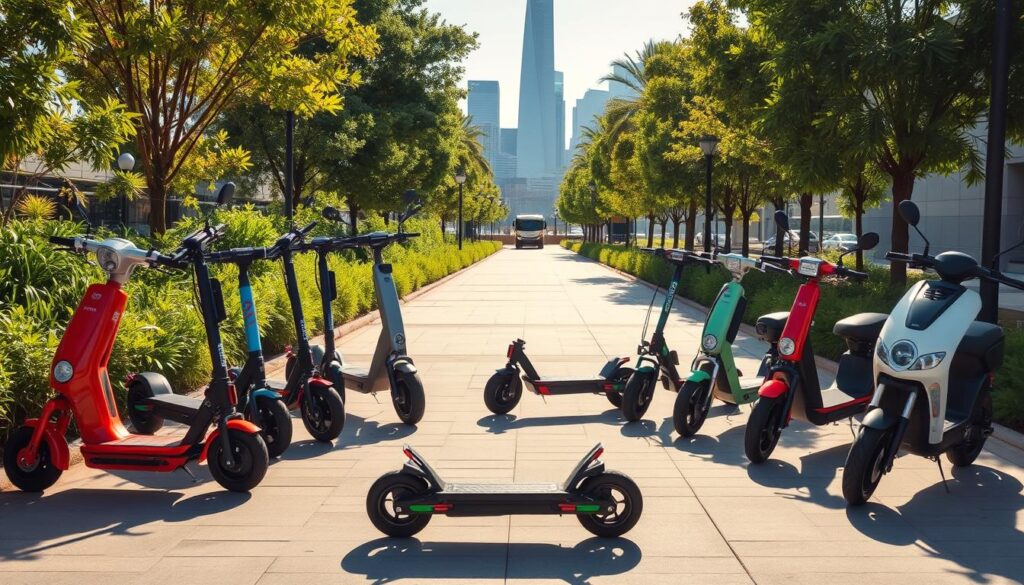
Navee GT3
The Navee GT3 brings dual suspension and 10-inch tubeless tires to this price band. It hit about 19.8 mph in tests and managed ~18.7 miles of usable range.
Turn signals, GPS, IPX5 water resistance, and drum + regen braking add low-maintenance reliability and everyday comfort.
Segway Ninebot E2 Plus
The Segway Ninebot E2 Plus focuses on compact city use. The 300W motor tops near 15.5 mph with ~12.4 miles at speed and RGB ambient lights for visibility and style.
iScooter 350W
The 350W model balances weight (~26 lb) with cruise control and an ~18-mile tested range. Disc brakes with anti-lock give predictable stopping, and foldability helps storage.
Jasion JS3
Jasion’s JS3 favors seated comfort and longer runs. With 12-inch pneumatics, strong front/rear mechanical disc braking, and about 20 miles of tested range, it suits riders who prefer a more planted ride.
- Value notes: tires and suspension matter most for bumpy roads.
- Choose low maintenance: drum + regen or sealed systems for set-and-forget ownership.
- Plan by miles: aim for models with 18–20 tested miles for daily reliability.
Best EV Scooters Over $500 for Commuting and Everyday Use
This price tier focuses on practical upgrades that matter on real streets: better range, sturdier frames, and improved ride comfort.
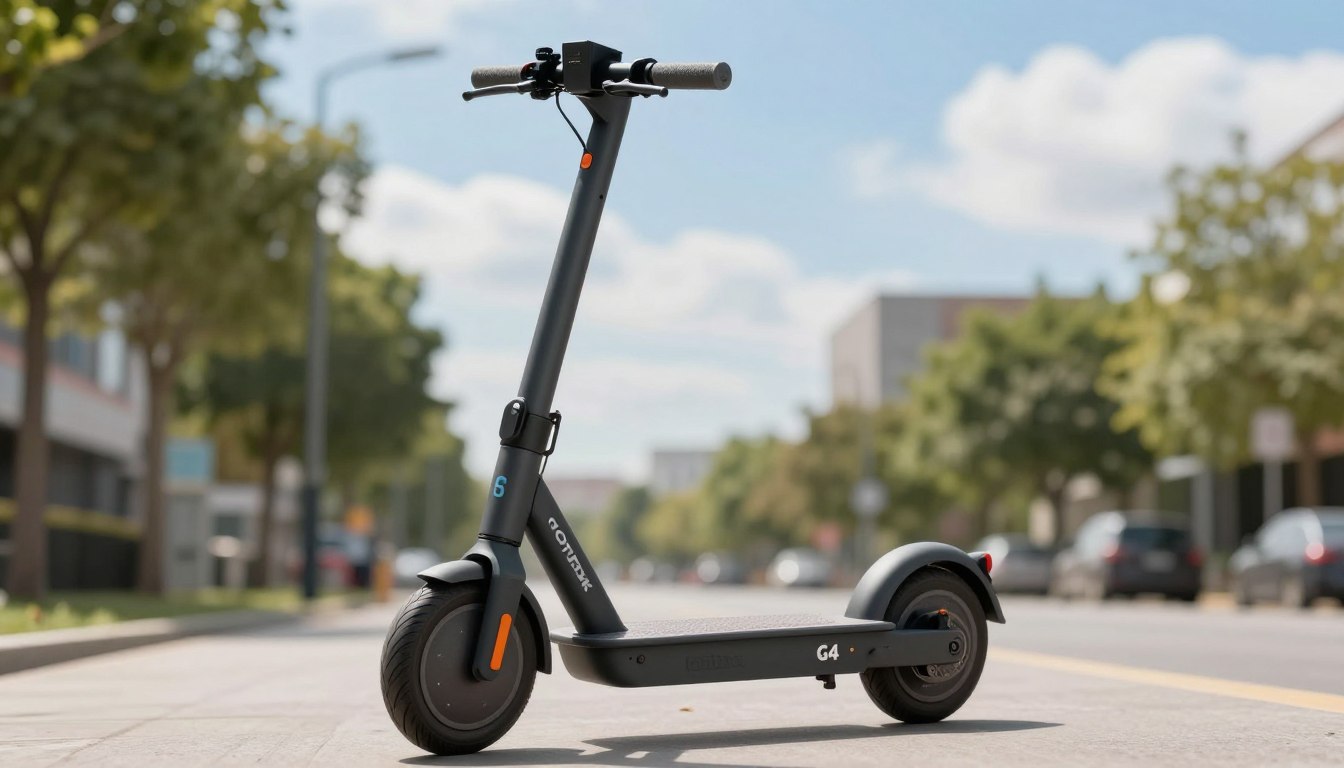
Gotrax G4 is a tried commuter option that hits about 19.8 mph and roughly 22 miles per charge. It weighs ~37.8 lb, uses 10-inch pneumatic tires, and offers a 500W motor in some trims. Riders who want a light, no-frills value pick will appreciate its simplicity and predictable performance.
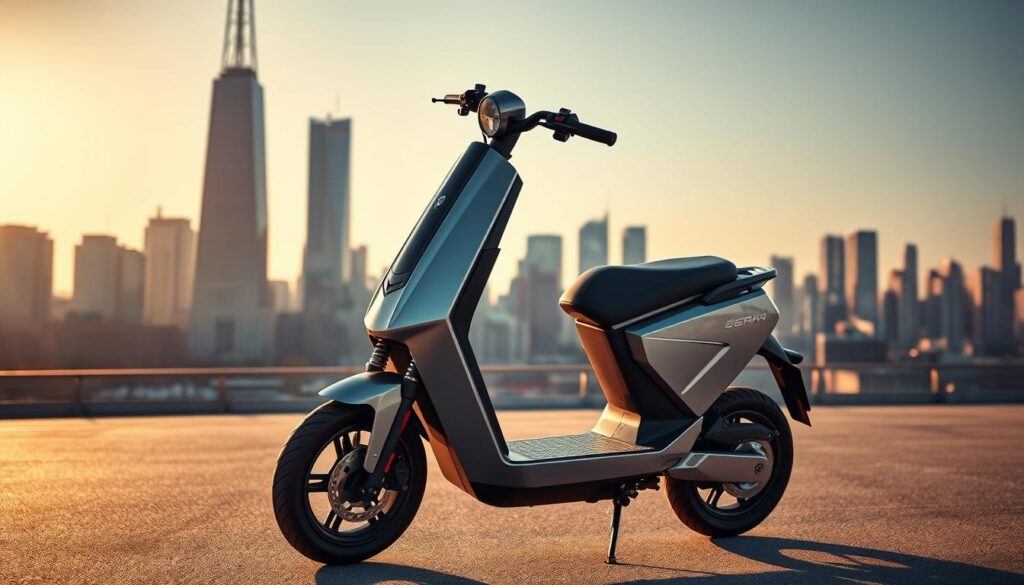
NIU KQi 300X blends pep and protection. Tested at ~23.6 mph with ~26.8 miles of range, it adds front suspension, dual disc brakes, a robust fold, and an IP66 rating for heavy rain and splashes.
VMAX VX2 Pro GT leads on distance with ~23.9 mph and nearly 39.6 miles real-world range from a 768 Wh pack. Its 48V system and dual drum brakes emphasize steady power delivery and lower maintenance, while a 287 lb capacity suits larger riders.
Navee ST3 Pro favors comfort: ~24.8 mph, ~24.9 miles, dual suspension, and pre-sealed tubeless tires that quiet city chatter. At ~55 lb it’s the heaviest in the group but delivers a plush ride for longer commutes.
- Match mph and miles to route length and local speed rules.
- Choose suspension for comfort or the VMAX for longest range.
- Consider weight for stairs and transit—mid-40 lb models balance portability and power.
Top Picks by Riding Scenario and Terrain
Choose a model by matching riding conditions to key hardware, from motors to tires. This short guide points riders to proven options for steep hills, rough streets, large riders, and mixed commutes.

Hilly cities
Inmotion Climber uses dual 750W motors and handles sustained 36% inclines. It holds about 23.6 mph and brings IP56 water protection for wet roads.
Apollo Go pairs dual motors with a ~26.7 mph top and a ~46 lb frame that still packs strong climbing power for long grades.
Rough roads and light off-road
The iScooter iX4 has an 800W motor, 10-inch off-road tires, and dual shocks for up to ~28 mph and ~28 miles of tested range.
Isinwheel GT2 also focuses on rugged tread and beefy suspension to smooth cracked pavement and gravel connectors.
Tall and heavier riders
Heavier or taller riders should prioritize higher weight capacity and longer decks for stance versatility. The Inmotion S1F supports up to ~300 lb and uses a supportive frame geometry for confident rides.
Mixed-mode commuters
The ultralight NIU KQi Air weighs ~26.4 lb for excellent portability. It fits subway transfers and stairs for riders who combine transit and last-mile legs.
- Dual motors sustain pace on steep grades and cut strain on the drivetrain.
- Choose tread and suspension based on how often rubble or gravel appears on routes.
- Match mph and power to local path rules; control beats raw speed on rough ground.
Speed Demons: Fast Electric Scooters with Stable Handling
When mph numbers rise, stability becomes the deciding factor—these fast models kept composure in real-world runs.
Segway Ninebot MAX G3
The segway ninebot hit a verified top speed of 28.2 mph and held about 20 mph up a 10% grade. Testers praised its control and steady comfort at high pace.
Apollo Go
Apollo Go reached ~26.7 mph in a roughly 46 lb frame. Dual motors deliver brisk acceleration without making the platform feel ungainly.
- Ride stability depends on geometry, tire size, and damping more than raw power.
- Larger 10-inch tires and tuned suspension tame twitchiness above 20 mph.
- Strong braking systems and predictable lever feel are critical from higher speeds.
- Battery health and hill testing show who keeps pace over long runs.
- App limits may unlock extra speed, but riders should balance thrill with safety and proper gear.
Range Leaders for Longer Rides
Long-range commuters need predictable output; field tests highlight models that sustain real-world distance and power.
The VMAX VX2 Pro GT sets the bar for tested range. It delivered about 39.6 miles on real-world runs while holding roughly 23.9 mph top speed. A 768 Wh battery and efficient drivetrain keep output steady deep into a charge.
VMAX VX2 Pro GT
The VX2 Pro GT pairs long range with practical features: dual drum brakes for fade resistance and an IPX6 rating for wet-weather reliability.
Segway Ninebot MAX G2
The segway ninebot MAX G2 reached about 34.4 miles in tests. Its dual suspension and self-healing 10-inch tires add notable ride comfort on longer runs while keeping endurance solid.
- For long commutes: tested range is the decisive metric; VMAX nears 40 miles.
- Battery size: bigger packs like 768 Wh deliver steadier power under load.
- Real factors: terrain, wind, and payload cut expected miles—plan a margin.
- Practical tips: check water resistance, brake fade on long descents, and access to charging at work.
- Routine: a weekly charging cadence keeps batteries predictable and healthy.
Comfort Kings: Suspension, Tires, and Ride Quality
Smooth urban rides often come down to thoughtful suspension tuning and the right tires. Small differences in damping, tire construction, and deck width change how long a rider can stay comfortable and focused.
Navee ST3 Pro: city bumps dialed down
The Navee ST3 Pro pairs dual suspension with pre-sealed tubeless 10-inch tires for a quiet, compliant ride. Tested at about 24.8 mph and ~24.9 miles, it favors long commutes where ride comfort matters most.
Inmotion S1F: planted and forgiving
Inmotion S1F uses dual suspension and 10-inch pneumatics to support taller, heavier riders. Its setup gives a cushioned, planted feel that keeps handling precise over broken pavement.
Segway Ninebot MAX G2: “what bumps?” ride
The Segway Ninebot MAX G2 combines tuned suspension and self-healing tires with blinkers for confident urban runs. Testers praised its near-flat response to potholes, and a wider deck helps riders shift stance to absorb shocks.
- ST3 Pro smooths expansion joints in city grids.
- Inmotion S1F balances cushioning with control for larger riders.
- MAX G2 lowers puncture risk with tubeless, self-healing tires.
Comfort reduces fatigue and keeps riders steady on longer routes. For model details and full specs, see the full sitemap.
Braking and Safety: Stop Power, Signals, and Night Visibility
Strong, predictable stopping is as important as top speed for safe city rides. Riders should look at both hardware and software that shape how a machine slows and communicates. Short stopping distances and clear lights cut risks in dense traffic.
Triple and dual stopping setups
The NIU KQi3 Max showed how a well-tuned triple setup works, stopping in about ~8.7 feet with front and rear discs plus electric. VMAX VX5 Pro GT and Navee GT3 recorded ~12.2 ft and ~14.1 ft respectively with strong combinations of drums, discs, and regen.
Signals, halo lights, and deck visibility
Turn signals and halo/deck lighting help riders be seen at intersections and when changing lanes. Bright brake lights and side illumination improve night-time side and rear visibility for faster recognition by drivers and cyclists.
Regen tuning and downhill control
Regen settings affect modulation and rider control on steep descents. Systems that auto-limit speed on long hills reduce rider fatigue and keep front rear balance from becoming unsettled during panic stops.
- Strong braking blends hardware and tuning for short, repeatable stops.
- Dual drum or disc setups plus regen lower maintenance and add consistent deceleration.
- Regular checks of pads, cables, and rotors keep a brake system reliable in wet weather.
Weight, Portability, and Storage Considerations
Small design choices — latch feel, folded geometry, and strap points — affect real-world portability. Riders should judge machines by how they fold and how they carry, not just a single pounds number.
Foldable handlebars that compress under a desk make daily transit much easier. NIU’s foldable-handlebar models like the KQi 100F compress for under-desk storage and subway entries, while the KQi Air hits an ultralight 26.4 pounds for mixed-mode use.
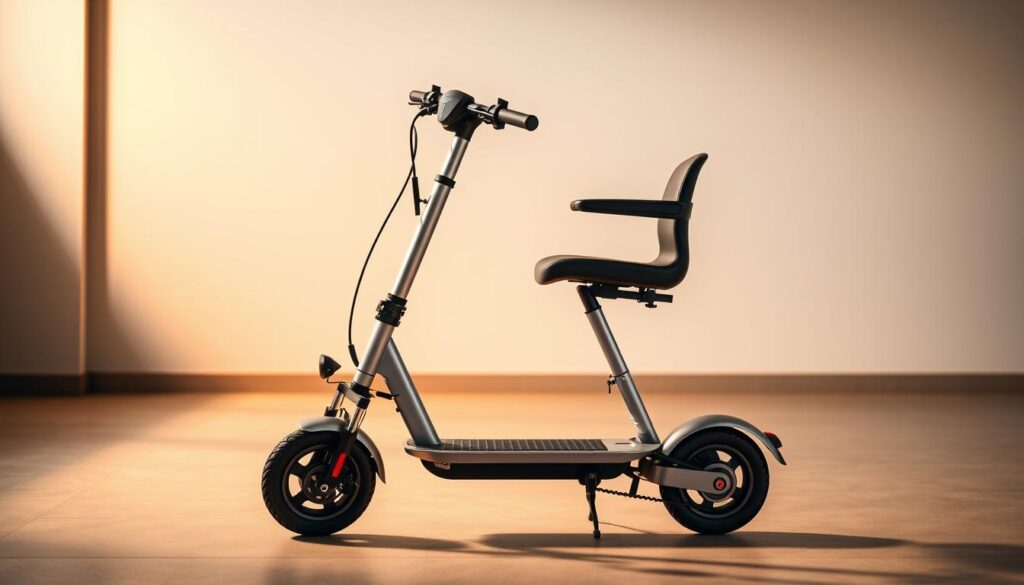
Quick, secure latches save time during repeated folds. Some stems and latches—MAX G2’s, for example—can feel stiff, whereas NIU’s folding mechanisms tested as smooth and reliable.
Pay attention to geometry and where a display or cables sit when folded. Exposed wires or a loose display can snag in bags or trunks. Test how the stem locks; any wobble undermines confidence in a daily ride.
- Carry tips: try shoulder straps or trolley wheels for long stairs.
- Storage fit: measure folded dimensions for closets, desks, or trunk space.
- Balance: systems with a low center-of-gravity carry safer and feel lighter in hand.
Apps, Displays, and Smart Features Riders Actually Use
Practical digital tools—locks, tracking, and easy mode changes—matter on crowded city trips.
Modern interfaces give riders useful control without fuss. NIU’s app adds locking, detailed ride stats, and simple speed-mode swaps that many commuters rely on each day.
Segway Ninebot models like the MAX G3 and G2 tie into Apple Find My for extra peace of mind. Segway’s app also earns praise for deep customization and tidy menus.
Useful in-ride tools
Some Navee models provide GPS via their app so owners can locate or recover a unit in dense areas. Cruise control toggles appear both on-board and inside apps to reduce thumb fatigue on longer rides.
- Why riders care: lock, track, and mode changes put core controls one tap away.
- Display clarity: a bright, glanceable screen makes mph, battery, and signals easy to read.
- Extendability: phone-as-display mounts add navigation and trip logging when needed.
Firmware updates pushed through apps can refine throttle, regen, and lighting behavior over time. Riders should check privacy settings before enabling continuous GPS or tracking to protect personal data.
Spec Matchups: Range, Speed, and Hill Climb Compared
Real-world runs reveal how a few mph tradeoffs can translate into much longer range over a workweek.
Real-world speed and mph trade-offs by model
Measured top mph often hides the daily reality. For example, the VMAX VX2 Pro GT logged about 39.6 miles of usable range while holding steady speed on mixed routes.
The MAX G2 reached ~34.4 miles and kept near-design pace, while Gotrax G4 averaged ~22 miles in our test runs. Riders should weigh peak mph against steady cruise for commutes.
Battery capacity, voltage systems, and power delivery
Higher-capacity packs and 48V systems keep power delivery stable deeper into a charge. In contrast, 36V systems can fade below half charge and cut usable miles.
Battery chemistry and BMS tuning change how fast output drops under load. That affects acceleration and long-run predictability.
Hill grades: 17% to 36% — who makes it and how fast
Hill tests separate flatland commuters from purpose-built climbers. VX5 Pro GT beat a 17% grade, while the Inmotion Climber handled up to 36% inclines in trials.
The MAX G3 still did ~20 mph on a 10% hill, showing that drivetrain efficiency matters as much as motor size. Match specs to typical terrain, not just headline numbers.
- Tradeoffs: small mph losses can yield better week-long range.
- System choice: 48V setups sustain power; larger batteries aid endurance.
- Consistency: real hill and load tests predict daily reliability better than peak figures.
For tips on handling big urban grades, see this guide on navigating hills.
The best ev scooter for Your Use Case
Match a model’s proven stats to how and where a rider will use it each day. That simple approach cuts through specs and helps narrow a practical choice fast.
Short, smooth commutes vs. long-mile days
For short, smooth rides a reliable ~20 mph and ~20–22 tested miles is plenty. The Gotrax G4 fits this role with around 19.8 mph and ~22 miles of real-world range. It keeps trips predictable and light to carry.
Long-distance commuters should aim for ~35–40 tested miles and steady power delivery. The VMAX VX2 Pro GT delivers roughly 39.6 miles and holds speed on extended runs, which reduces mid-day charging worries.
Heavy riders, big hills, or rough terrain priorities
Heavier riders need higher weight capacity and strong hill credentials. The Inmotion S1F and Inmotion Climber offer supportive frames and climb ability for steep grades.
Rougher surfaces call for dual suspension and 10-inch tires to keep grip and control. The Segway Ninebot MAX G3 also shows strong hill speed while maintaining stability under load.
Budget-first picks that don’t compromise safety
Budget buyers can still get solid braking and lighting without overspending. NIU KQi3 Max uses a triple stopping setup for short, repeatable stops. The Navee GT3 pairs drum + regen braking with signals and sensible kit at a lower price point.
- Practical rules: match mph to local paths and carry needs.
- Portability: under-40 lb helps for stairs and transit.
- Reliability: look for proven stopping distances and tire tech like tubeless or self-healing.
Editor’s Shortlist: Top-Rated Models of 2024
This shortlist highlights models that delivered repeatable results across hills, city runs, and longer commutes.
Each pick reflects verified test data and real-world use, not marketing claims. Riders can match priorities—speed, range, ride comfort, or weight—quickly from this list.
Best overall value: Gotrax G4
Gotrax G4 balances price with practical performance. It reached roughly 19.8 mph and posted about 22 miles in real runs. This model suits daily commuters who want reliable numbers and low fuss.
Best range: VMAX VX2 Pro GT
VMAX VX2 Pro GT leads on usable distance, delivering near 39.6 miles per charge. Riders who prioritize long rides and steady power will find its pack and tuning hard to beat.
Best comfort: Segway Ninebot MAX G2 or Navee ST3 Pro
Segway Ninebot MAX G2 and Navee ST3 Pro split duties for plush travel. MAX G2 pairs dual suspension with ~34.4 miles of tested range, while the ST3 Pro focuses on quiet, compliant damping.
Best for hills: Inmotion Climber or Apollo Go
Both the Inmotion Climber (dual 750W motors) and Apollo Go (dual-motor, ~26.7 mph) sustain steep grades without losing pace.
Best ultralight: NIU KQi Air
NIU KQi Air weighs about 26.4 lb, making mixed-mode commutes and short carries far easier.
- Verified picks: models chosen from measured tests.
- Focus points: water resistance, tires, and braking reinforce each selection.
- Quick match: use this shortlist to trim shopping time and pick by real needs.
Where Price Meets Performance: Value Winners You Shouldn’t Miss
When price and performance converge, the smartest buys deliver usable miles and confident stopping.
The NIU KQi3 Max shines for riders who want long tested range and strong stopping power. It posts about 29.8 miles and ~20.1 mph, with a triple braking setup that feels reassuring on city streets.
NIU KQi3 Max vs. MAX G2 vs. Gotrax G4
The Segway Ninebot MAX G2 justifies its price with roughly 34.4 miles of tested range, dual suspension, and blinkers for added safety. The Gotrax G4 trades some miles for a lighter frame and about 19.8 mph while staying more wallet-friendly.
Quick guide: NIU gives long range and stopping power; MAX G2 boosts comfort and miles; Gotrax saves weight and cash.
Under $500 gems: Navee GT3 and Segway E2 Plus
The Navee GT3 offers dual suspension, GPS, and ~18.7 miles at about 19.8 mph—an impressive package under $500. The Segway E2 Plus is a simple city mover with ~15.5 mph, ~12.4 miles, RGB lights, and IPX4 protection.
- Battery and cell quality drive true lifespan; look beyond watt-hours to test results.
- Many commuters top up at work to stretch each charge.
- Choose the model that matches daily needs, not just headline specs or extra features.
Ready to Ride: How to Pick, Charge, and Maintain Your Scooter
Small habits—how you charge, store, and check parts—make the biggest difference over months of riding. A few simple routines keep range steady, reduce roadside fixes, and preserve resale value.
Charging times, dual ports, and battery care
Plan charging around the commute: many models recharge in about 3.5–6 hours. For example, the MAX G3 finishes in ~3.5 hours, the iScooter 350W in ~4 hours, and the NIU K3 Max near ~6 hours.
If a unit supports a second cable or dual ports, riders can cut downtime on heavy weeks. Keep the battery between ~20% and 80% for longevity and avoid long storage at full or empty charge.
Tire choices, brake upkeep, and storage tips
Choose tires by route: pneumatic gives comfort, while self-healing or tubeless lowers flat risk. Check tire pressure monthly to preserve range and braking performance.
Brake upkeep varies: drum + regen systems need less routine work, while discs require occasional alignment and pad checks. Wipe and dry the system after wet rides and store indoors at moderate temperatures to avoid corrosion.
- Routine checks: bolts, stem latch play (note: MAX G2 latches can stiffen; NIU mechanisms rate well), and deck grip.
- Weight and control: track added weight from locks or racks—they change handling.
- Learn more: consult a beginner maintenance guide on beginner maintenance guide for step-by-step care.
Your Next Move: Find the Right 2024 EV Scooter and hit the road
Narrow choices by aligning your commute distance, terrain, and carry needs with a tested model’s strengths.
Match daily miles and desired speed to the right pick: Gotrax G4 for value, VMAX VX2 Pro GT when long miles matter, and Segway Ninebot MAX G2 or Navee ST3 Pro for premium comfort on broken roads.
Hill-heavy routes need dual-motor power from Inmotion or Apollo. Portability favors the NIU KQi Air for subway transfers, while reliable water resistance and a solid braking system ensure year-round confidence.
Test the fold and latch feel, check app features like locks and GPS, and pick the model that makes daily commutes safer and more fun to ride.
FAQ
How do top-rated electric scooters for 2024 differ from budget models?
Higher-tier models generally use larger battery packs, stronger motors, and thicker frames. That translates to greater real-world range, faster acceleration, and higher tested top speeds. Premium builds also add features like dual suspension, tubeless tires, better brakes (disc plus E-ABS), and weather sealing such as IP66. Budget models trade some of those perks for lighter weight, simpler suspension, and lower weight capacity to hit a lower price point.
What real-world top speed should riders expect versus the quoted MPH?
Quoted speeds are often measured under ideal conditions. In real use, expect 5–15% lower top speeds because of rider weight, terrain, and battery level. Dual-motor performance holds speed better on hills; single-motor models drop more. Riders testing models like Segway Ninebot MAX G3 or Apollo Go often see close to the claimed figures on flat ground but noticeably less when climbing.
How accurate are manufacturer range claims and what affects range most?
Manufacturer ranges are typically optimistic and measured at a light test weight and steady speed. Real-world range depends on rider weight, speed, incline, temperature, and accessory load. Using higher speeds, frequent acceleration, or hilly routes reduces range; dual-motor setups also consume more energy. A tested figure like ~39.6 miles for a VMAX VX2 Pro GT represents a more realistic expectation under mixed conditions.
What weight capacity should a heavier rider look for?
Look for models with at least 300 lb (136 kg) rated capacity if the rider is tall or carries gear. Some models such as Inmotion S1F list higher limits and stiffer suspension. Exceeding rated weight reduces range, acceleration, and may shorten component life, so match the scooter’s rating to the rider’s typical load.
How important is suspension and tire choice for mixed terrain?
Suspension and tire type strongly influence comfort and control. Dual suspension with 10-inch pneumatics or tubeless tires smooths bumps and improves traction on rough roads. Solid tires reduce maintenance but transmit more vibration. For light off-road or cobbles, tuned dual suspension plus tubeless or pneumatic tires offers the best balance of comfort and puncture resistance.
Are turn signals and lights worth it for city commuting?
Yes. Integrated turn signals, halo lights, and deck illumination increase rider visibility and safety at night and in traffic. They help communicate intentions to drivers and cyclists. Models from Segway, NIU, and VMAX often include robust lighting suites that make urban riding safer and more convenient.
How do braking systems compare—disc, drum, regen, and E-ABS?
Mechanical disc brakes provide strong, repeatable stopping power; drum brakes are low-maintenance but less powerful. Regenerative braking adds battery recovery and smoother deceleration but shouldn’t be the only stopping method. E-ABS enhances stability under hard braking. The best setups combine mechanical discs with regen to maximize stopping power and energy recovery.
What should riders know about battery care and charging times?
Charge cycles, storage temperature, and charging habits affect battery longevity. Avoid leaving batteries fully depleted for long periods and keep them stored in moderate temperatures. Charging times vary by charger and battery size; many commuter boards hit 80% in 2–4 hours, while long-range packs can take 6–8 hours. Some models support dual ports or fast chargers to shorten downtime.
How portable are foldable models and which factors matter for public transit?
Portability depends on folded dimensions, weight, and latch design. Ultralight models like the NIU KQi Air at around 26–27 lbs fold compactly for stairs and buses. Heavier, long-range scooters may fold but remain bulky. Look for quick-release fold mechanisms and a balanced carry handle if riders plan frequent transfers.
Do apps and onboard displays make a real difference?
Yes. Manufacturer apps from NIU, Segway, and VMAX add GPS, ride stats, remote locking, and firmware updates. A clear onboard display helps monitor speed, battery, and ride mode at a glance. For commuters who want tracking and security features, app integration is a meaningful convenience.
Which maintenance tasks keep a scooter reliable and safe?
Regular checks include tire pressure and tread, brake pad wear and adjustment, bolt torque on folding mechanisms, and battery health. Clean contacts and keep the electrical enclosure dry. For pneumatic tires, inspect for punctures and maintain proper pressure to preserve range and ride comfort.
How do riders choose between single- and dual-motor models?
Single-motor designs are lighter and more efficient for flat, urban commutes. Dual-motor scooters provide better hill climbing, faster acceleration, and more stable high-speed handling for heavier riders or hilly routes. Choose based on terrain, rider weight, and desired acceleration and top-speed performance.
Are weatherproof ratings like IP54 or IP66 meaningful for everyday use?
Yes. IP ratings indicate how well the scooter resists dust and water. IP54 gives splash resistance; IP66 offers stronger protection against jets of water and dust ingress. For frequent wet-weather riding or coastal routes, pick a model with higher ingress protection to avoid electrical and corrosion issues.
What features provide the best value for commuters under 0?
Value-oriented commuters should prioritize reliable brakes, cruise control, decent battery life, and visible lighting. Models such as the Navee GT3 or Segway Ninebot E2 Plus pack turn signals, helpful deck ergonomics, and manageable weight at a lower price. These features offer safety and comfort without a big premium.
How does hill grade performance vary and what should riders expect?
Hill performance depends on motor power, torque, battery voltage, and rider weight. Manufacturers sometimes list percent grade—typical capable ranges are 17% to 36% for strong models. Expect slower speeds and higher battery draw on steep climbs; dual-motor scooters maintain speed and heat management better on prolonged ascents.