Discover Bajaj Chetak Electric Scooter: Specs & Benefits
 PopScooter Team
December 22, 2025 9:18 am
.
14 min read
PopScooter Team
December 22, 2025 9:18 am
.
14 min read
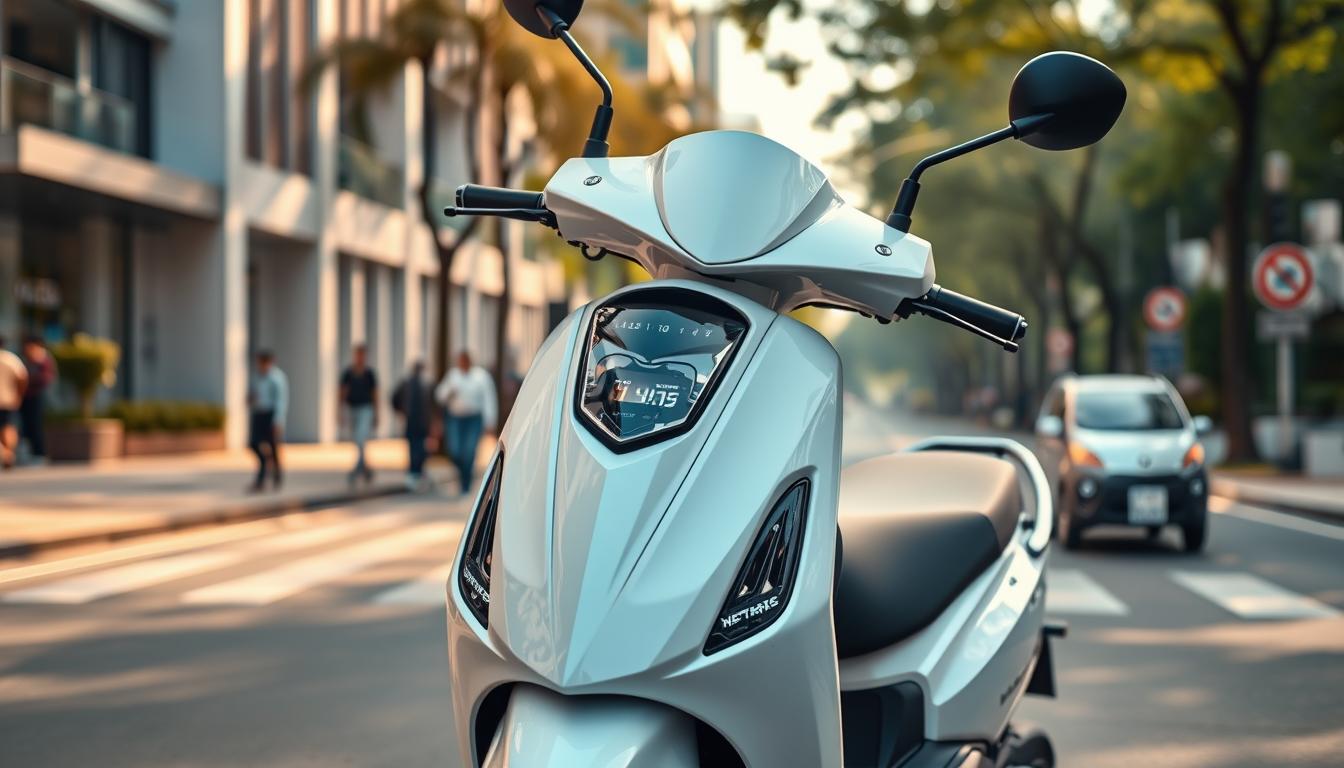
Can a city ride feel both premium and practical? This guide answers that by looking at a modern urban two-wheeler that blends metal build quality with real-world usability.
The introduction outlines key specifications and everyday benefits. It covers the four variants, battery choices (3.0 kWh and 3.5 kWh), claimed range up to 153–155 km, and top speeds between 62–73 km/h.
Readers learn about practical features like Hill Hold, Reverse, Parking Assist, LED lighting, Bluetooth controls, and about 35 liters of under-seat storage. Charging times and warranty details are included to frame ownership expectations.
Price context is given using Indian ex-showroom figures, so buyers in the United States can gauge value against import costs or local alternatives.
Short, clear specs and a focus on the sturdy build make this a useful starting point for anyone comparing city models for commuting and errands.
Why this Buyer’s Guide matters right now
Urban commutes are changing fast, and this guide shows why now is a smart moment to reconsider two-wheeler choices. Congestion and tight parking make a nimble, well-equipped ride highly practical for daily use.
Who it fits best: city riders, commuters, and EV first-timers
City commuters gain predictable daily range — the lineup claims about 127–153+ km depending on variant — and easy home charging.
- First-time EV riders benefit from simple dashboards and intuitive controls that lower the learning curve.
- Drivers with tight parking value Hill Hold and Reverse for steep ramps and cramped garages.
- Cost-conscious buyers see lower running costs and fewer service visits versus petrol models.
The guide also compares value points: Indian ex-showroom prices near ₹ 1.06–1.38 lakh help estimate import costs and total ownership. It notes the company’s sales and service reach in its home market to reassure buyers evaluating an electric scooter as a practical daily choice.
bajaj chetak electric scooter
At-a-glance highlights
Here’s a compact summary of the key specifications and conveniences that matter in city use.
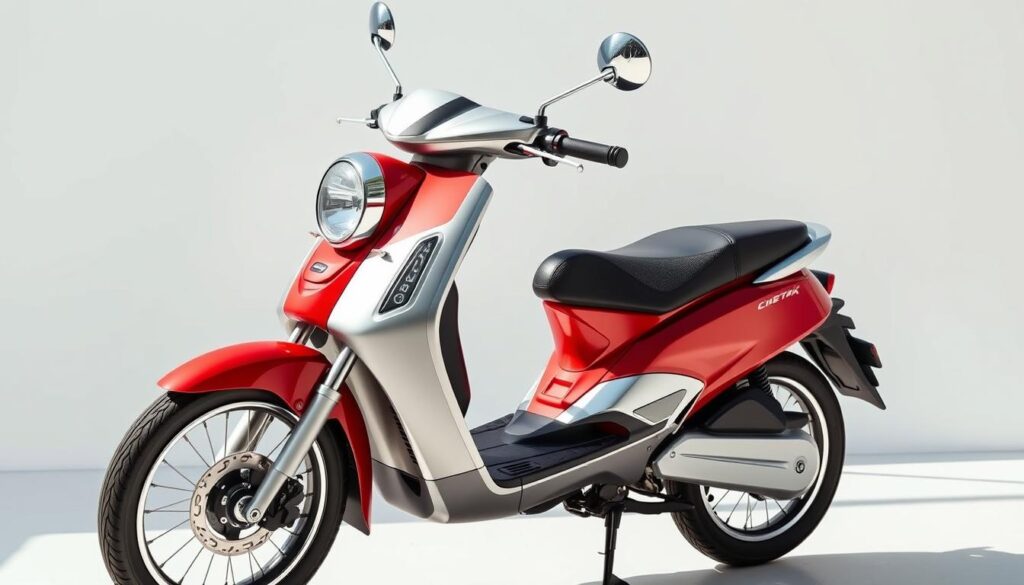
Range, top speed, charging, storage
Range: Claimed span runs from about 127 km (3.0 kWh) up to 153 km on the longer 3.5 kWh pack.
Top speed: Urban pace ranges from 62 km/h to 73 km/h depending on the variant, enough for busy city roads and short connectors.
Charging: With the 750W portable charger expect roughly 0–80% in 3–3.5 hours and a full charge in about 3–3.25 hours.
Storage: Up to 35 liters of under-seat space fits a helmet, small bag, or daily essentials without extra luggage.
Core safety and convenience
Safety: Combined Braking System pairs a front disc with a rear drum for predictable stop-and-go performance.
Convenience: Useful urban features include Hill Hold for ramps, Reverse for tight parking, Parking Assist, LED lighting, Bluetooth for calls and music, and app-based monitoring.
- Battery options: 3.0 kWh (shorter commute) or 3.5 kWh (longer range).
- Features: Modern dash and connectivity keep riders informed and less distracted.
- Specifications: Practical numbers for daily city ownership, useful when comparing variants.
Chetak variants explained: 3001, 3501, 3502, 3503
Short overview: The variants differ mainly by battery size, display tech, and ride modes. That makes it easy to match a trim to commute length and desired gadgetry.
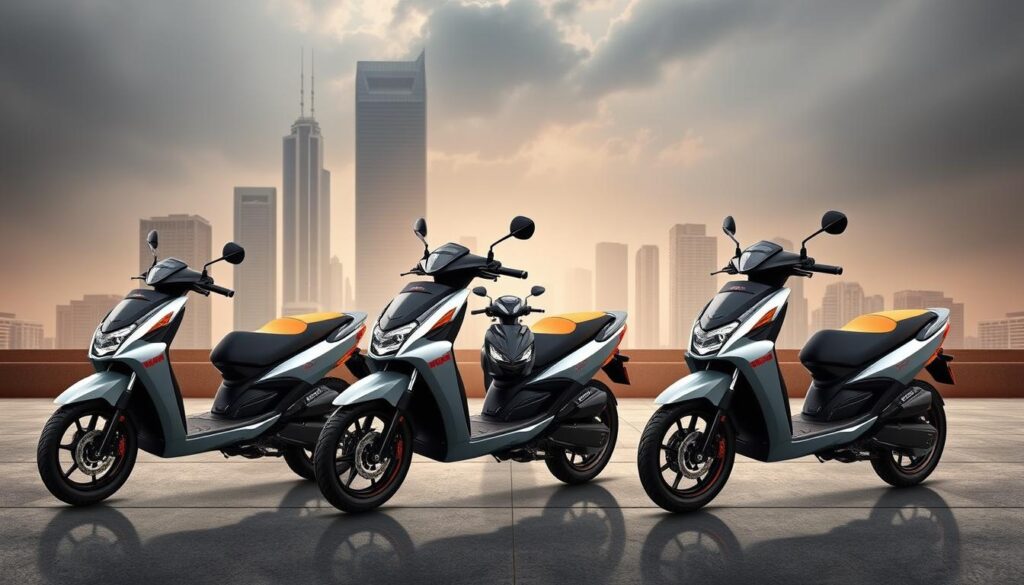
Battery and range differences
The chetak 3001 uses a 3.0 kwh pack with about 127 km of range and simpler controls.
The 3501, 3502 and 3503 use 3.5 kwh packs that hit the range 153 claim (3503 sits around 151–155 km).
Top speed and riding modes
Value trims top near 62–63 km/h. The 3.5 kwh models reach up to 73 km/h and add Sport plus Eco modes for flexibility.
Display and feature tiers
Displays step up from a basic digital console on the 3001 to colored LCD and TFT/TFT touchscreen on higher trims. TecPac adds keyless unlock and advanced alerts on the 3502.
Which variant is best for daily city use?
- Short hops: chetak 3001 for budget buyers and simple charging.
- Balanced value: 3503 for extra range and smart alerts without top-tier price.
- Tech-forward: 3501 or 3502 for navigation, Bluetooth and TecPac extras.
Price and ex-showroom price bands (India) help anchor expectations for U.S. buyers exploring imports or future sales channels via bajaj auto.
Performance and ride feel: motor, speed, suspension, braking
City riding depends as much on feel as on figures. The BLDC motor produces up to 3.1 kW and the 3.5 kWh versions deliver about 20 Nm of torque for brisk, predictable starts.

Top speed reaches roughly 73 km/h on higher trims and about 62–63 km/h on the base variant. Eco and Sport modes change how quickly that speed builds, helping riders choose efficiency or punch for short merges.
Real-world city performance and hill-hold confidence
The leading-link front and rear monoshock favor comfort over broken pavement. Suspension tuning soaks bumps and keeps the body settled over speed humps.
- Combined braking (front disc, rear drum) adds balanced stopping power and improves safety.
- Hill hold, Reverse and Parking Assist cut stress on ramps and tight curbside spots.
- Metal body gives a planted feel that boosts confidence in crosswinds and uneven lanes.
In short, expected range and brisk low-speed torque make this a practical city companion for commutes, school runs, and quick errands.
Battery, range, and charging time
Understanding how long a charge takes makes owning this urban two-wheeler simple.
Charging time breakdown: The supplied 750W portable charger plugs into a standard household outlet. Expect about 0–80% in ~3–3.5 hours and roughly 0–100% in about 3–3.25 hours, depending on the kwh pack and riding conditions.
Charger specs and daily charging habits
Most owners will use the portable charger at home, so no special wiring is needed. For typical commutes, a nightly top-up to 80% is enough for most days and reduces overall cell stress.
- Real range: Claimed figures are 127 km for the 3.0 kwh model and up to 153 km for the 3.5 kwh trims; real numbers vary with speed, weather, and load.
- Practical routine: Plug in after work, charge every other day for short commutes, or schedule a full weekly charge for longer loops.
- Warranty: The battery carries 3 years / 50,000 km coverage and the motor often extends longer, which eases early ownership concerns.
Pro tip: Treat the 0–80% window as the daily time buffer and plan trips knowing fast charging isn’t listed. For latest pricing and spec updates check the 2025 price and range update, and use the dealer network to locate local support and service.
Design, build, and storage practicality
A clean, modern silhouette and solid metal panels give this model a surprisingly premium street presence.
The all-metal build delivers a sturdy, durable body that resists scuffs better than many plastic rivals. That solid construction helps keep road noise down and supports a quieter ride, which can improve perceived range on mixed-city routes.
Under-seat storage totals about 35 liters, roomy enough for a full helmet or a small laptop and gym kit. A boot light and well-shaped seat make evening errands simpler and more comfortable.
LED headlamp, DRLs, and a boot light add visibility and an upscale look while saving power versus halogen lamps. The result is practical lighting that feels premium and lasts longer.
- Dimensions: 1914 mm length, 725 mm width, 1142 mm height.
- Geometry: 1355 mm wheelbase and 168 mm ground clearance for stable handling.
- Wheels: 12-inch alloy rims with 90/90-12 tubeless tires for confident steering.
Small touches — grab rails, seat contouring, and durable switchgear — show the company focused on everyday use. Together, the design and build make it easy to treat this as a daily bike replacement without trading away style or function.
Technology and connectivity features
Connectivity is designed to cut distractions and add useful feedback for daily riding. Riders get basic call and music controls on lower trims and richer smart alerts as they move up the range.

Bluetooth, calls, music, navigation, and alerts
The entry model pairs a digital console with Bluetooth-enabled call and music controls. That keeps phones stowed and reduces handling while riding.
The mid and upper displays add navigation support and clearer visual alerts. Riders can view ride statistics, battery status, and anti-theft/tow notifications in the app after trips.
TecPac capabilities: keyless access, over-speed alerts, sequential blinkers
Higher trims with TecPac expand the experience. Keyless access, over-speed alerts, and sequential blinkers give a premium, connected feel.
- 3001: Digital console, call/music controls, Hill Hold assist, Reverse light, app connectivity.
- 3501 & 3503: Colored LCD or TFT with Bluetooth and navigation; 3503 adds smart alerts.
- 3502: TFT touchscreen plus TecPac—keyless unlock, over-speed alerts, sequential blinkers, and extra connected functions.
Safety and assist features like Hill Hold and Reverse are part of the core kit and help in tight parking or on ramps. The section avoids assumptions about OTA updates or optional fast charging, sticking to confirmed features that matter each day.
Practical view: buyers should weigh which display and TecPac extras they will use most before deciding on trim and price. This keeps the ride smart without overpaying for unused tech.
Pricing, warranty, and ownership insights for the United States shopper
For stateside shoppers, the listed Indian price is only one line in the total ownership calculation. Use the ex-showroom price as a baseline, then add shipping, import duties, homologation, and local taxes to estimate a U.S. landed cost.

Ex-showroom price context and what to expect
Indian averages: 3001 ₹1,06,780; 3503 ₹1,13,898; 3502 ₹1,26,837; 3501 ₹1,38,675. These ex-showroom price points help U.S. buyers compare importer quotes and dealer offers.
- Cost notes: Excludes registration, insurance, and local fees. Landed cost may rise substantially.
- Ownership: Factor electricity, maintenance, and insurance versus a gas two wheeler to judge long-term value.
- Market: Feature tiers and variant choice will shift the final price—match needs to the right trim.
Warranty snapshot
The battery is covered for 3 years or 50,000 km and the motor warranty spans 7 years. Buyers should confirm how these terms apply overseas and check local service and parts availability.
Checklist: confirm warranty applicability in the U.S., ask about parts support, estimate local per-mile electricity costs, and compare price and features against other electric scooter options available stateside before committing.
Ready to ride: choosing your Chetak with confidence
A confident choice starts with one simple question: how far and how often will they ride?
The 3.0 kWh 3001 claims about 127 km and a top speed near 62–63 km/h. The 3.5 kWh 3501/3502 reach the advertised range 153 and up to 73 km/h, while the 3503 pairs the larger pack with a colored display and roughly 63 km/h top speed.
Charging is straightforward: the 750W portable charger usually delivers 0–80% in ~3–3.5 hours and a full charge in about 3–3.25 hours.
Key features include LED lighting, CBS, Hill Hold, Reverse, Parking Assist, Bluetooth controls and TecPac on select trims. Riders should weigh design and body durability, performance and suspension, battery capacity and charging time, plus connectivity and storage.
Test rides, warranty checks, and local after-sales support help seal the decision. Pick the model that fits daily rides now and stays reliable as commutes evolve.
FAQ
What are the key specs and benefits of the Bajaj Chetak electric scooter?
The model combines a 3.0 kWh or 3.5 kWh battery, a real-world range between about 127 and 153 km, and top speeds from roughly 62–73 km/h depending on the variant. It offers a smooth urban ride, CBS braking, hill-hold assist, and useful storage under the seat. Riders get low running costs, quiet operation, and simpler maintenance compared with ICE two-wheelers.
Who is this model best suited for?
It fits city riders, daily commuters, and EV first-timers looking for an easy-to-ride, low-maintenance transport option. It also appeals to those who value integrated tech like smartphone connectivity and a clear digital display for urban navigation and commute tracking.
How do the 3001, 3501, 3502, and 3503 variants differ?
The main differences are battery capacity and feature levels. The 3001 uses the 3.0 kWh pack, while the 3501/3502/3503 use 3.5 kWh hardware with rising tiers of display, connectivity, and accessories. Higher variants add color TFT or enhanced TecPac functions, improving convenience and value for tech-focused riders.
What range and battery options are available?
There are two pack options: about 3.0 kWh and 3.5 kWh. Expect real-world range around 127 km for smaller packs and up to about 153 km for the larger pack under mixed-city conditions. Actual distance varies with load, riding mode, and terrain.
What is the typical charging time?
With the supplied charger, 0–80% usually takes around 3–3.5 hours and a full 0–100% charge completes in roughly 3–3.25 hours depending on battery state and ambient temperature. Overnight charging at home covers typical daily use for most riders.
How fast does it go and what riding modes are there?
Top speed ranges from about 62 to 73 km/h across variants. Riders can switch between modes such as Eco and Sport to balance range and performance, with Sport providing stronger acceleration for city overtakes and Eco extending range.
What safety and convenience features are included?
Standard safety includes combined braking system (CBS), hill-hold assist, and robust suspension. Convenience features span reverse gear, parking assist, under-seat storage, and LED lighting. Higher trims add advanced turn signals and enhanced braking feel.
What does TecPac add to the feature set?
TecPac unlocks keyless access, over-speed alerts, sequential blinkers, and expanded telematics. It enhances security and lets riders monitor riding stats and get remote alerts through a companion app when available.
How is real-world city performance and hill-hold capability?
In urban use the motor delivers smooth acceleration and predictable power for stop-and-go traffic. Hill-hold works reliably for moderate inclines, preventing rollback and making starts on slopes less stressful for riders.
What are the charger specs and recommended daily charging habits?
The supplied onboard charger is designed for home outlets and balances charge speed with battery longevity. Daily top-ups after commuting are fine; deep discharge every day shortens long-term capacity. Charging overnight to ~100% when needed and keeping the battery between 20–90% for regular use extends pack life.
How practical is the design and storage for city life?
The build emphasizes durability and everyday practicality: a roomy under-seat bay for a helmet, a front cubby for small items, and a stable footboard. The frame and panels handle daily knocks and parking in tight urban spaces.
What connectivity features are available for calls, music, and navigation?
Bluetooth integration supports hands-free calls, music controls, and turn-by-turn navigation prompts via the display. Alerts and ride stats appear on the screen, improving situational awareness without needing to glance at a phone.
What warranty and coverage should U.S. buyers look for?
U.S. shoppers should confirm local import or distributor warranty terms for the battery and motor. Typical coverage from manufacturers includes multi-year warranty on the battery pack and motor — verify exact length, service locations, and any transferable terms before purchase.
How should U.S. buyers interpret ex-showroom prices from India?
Indian ex-showroom prices provide a baseline but exclude import duties, shipping, and U.S. homologation costs. Buyers should budget for additional taxes, compliance work, and dealer markups when estimating final cost for the American market.
Which variant offers the best value for daily city use?
For most daily commuters, the mid-level 3501/3502 tier strikes the best balance: the larger battery for extra range, useful tech, and a feature set that improves convenience without the premium of top-tier trims. Value depends on typical trip length and desired connectivity.
Are there storage and accessory options like top boxes or additional chargers?
Yes. Owners can add roof-style top boxes, lockable cases, and aftermarket charging solutions. Confirm compatibility with the vehicle’s electrical system and mounting points, and choose accessories from authorized suppliers when possible.
What maintenance and safety checks should riders perform regularly?
Regular tasks include tire pressure and tread checks, brake pad inspection, suspension condition, and electrical connector cleanliness. Keep the charging port clean and inspect fasteners periodically. Follow the manufacturer’s service schedule for software updates and deeper checks.
How does the vehicle perform on hilly routes and in mixed urban traffic?
The motor and torque delivery handle moderate hills well, especially in Sport mode. For steep, sustained climbs with heavy loads, range and acceleration will be affected more noticeably, so riders should plan accordingly for such routes.
Where can buyers test-ride and get verified sales support?
Prospective buyers should visit authorized dealerships and approved showrooms for test rides and certified pre-sales advice. Official dealers provide accurate spec breakdowns, warranty details, and genuine accessory options to ensure a confident purchase.