Apollo Phantom: The Ultimate Guide for Buyers
 PopScooter Team
November 19, 2025 8:36 am
.
16 min read
PopScooter Team
November 19, 2025 8:36 am
.
16 min read
Can one electric ride really replace a car for daily trips and weekend fun?
This guide helps U.S. buyers decide. It looks at the Apollo Phantom as a premium electric scooter and explains who it fits, how it performs, and what sets it apart at current prices.
The review pairs lab-style numbers with real-world test results to show what top speed and range mean on city streets. It covers the 1404 Wh battery, dual 3,000W nominal power, IP66 water resistance, UL2272 safety, and practical items like tires and front lighting.
Readers get clear benchmarks for speed, braking, handling, and the Mach controller system so they can compare daily commute needs and weekend performance. It also summarizes availability, the introductory price window, and when it may make sense to buy now versus wait for the upcoming Stellar model.
Why the Apollo Phantom matters right now
For American riders weighing value and capability, this premium electric scooter lands at a useful moment. It pairs safety certifications with measured performance so buyers can decide quickly during the intro pricing window.
At-a-glance: what buyers in the United States should expect
Real test numbers: the apollo phantom recorded a 41 miles per hour top speed in independent testing and a 32.9-mile real-world range versus the claim of 44 mph and 50 miles.
Built for daily use: Dual 1,500W motors (3,000W nominal), IP66 water sealing, and UL2272 safety mean U.S. riders get assured power and protection.
- Intro pricing and coupons make this scooter a strong value pick against pricier competitors.
- At 88.8 lb weight and 330 lb capacity, the platform feels stable at speed and in tight braking seconds.
- Clear front lighting and wide handlebars boost confidence in mixed traffic for most people.
- Upgrade paths—hydraulic brakes and suspension—let buyers tune performance over time.
- The upcoming Stellar variant promises higher top speed and range, but current performance suits most daily miles.
Bottom line: Certified safety, proven power, and practical range make this model compelling for U.S. commuters and riders who want performance without waiting.
Who the Apollo Phantom is really for
For people who split time between errands and fast city runs, this model balances comfort with punch.
The apollo phantom suits everyday commuters who prioritize stability and ride quality. A stiff chassis, wide handlebars, and a roomy deck give a confident stance. That layout reduces hand fatigue on longer trips and helps when a quick test of speed is wanted.
It also targets bigger riders. The 2.0 platform carries up to 330 lb and shows strong hill climbing in field test data with a 240 lb rider. That weight headroom keeps range steady and makes sprints feel planted.

Who else likes this setup
- Performance seekers get plenty of torque and a planted feel for fast city links.
- Commuters appreciate reliable front lighting and turn signals for safe urban rides.
- Riders who value ergonomics like the larger controls and the more dialed cockpit versus earlier non-folding handlebar designs.
Bottom line: This electric scooter is for riders who want a daily tool that still thrills — blending weight capacity, range, and commuter-friendly ride quality.
Apollo Phantom specs snapshot: motors, battery, weight, and certification
Here’s a clear rundown of the hardware and safeguards that shape real-world performance. This short spec summary helps buyers match numbers to daily needs.
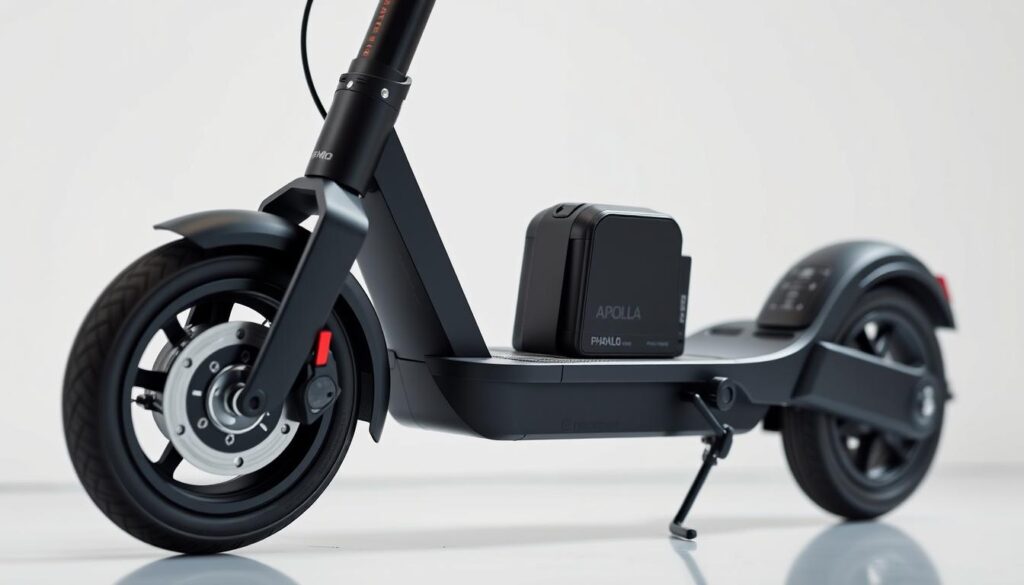
Dual motors, voltage options, and controller tech
Drivetrain: The model uses dual 1,500W motors for 3,000W nominal power, giving swift launches and steady high-speed cruise. Independent test runs hit 41 mph against a 44 mph claim, showing reliable output.
Controller: It runs on the Mach controller system that enables refined power delivery and easier compatibility with future upgrades across the brand’s ecosystem.
Battery capacity, range claims, and water resistance
Battery: A 1404 Wh pack underpins the scooter’s range. The manufacturer claims 50 miles; mixed-terrain tests measured about 32.9 miles with a heavier rider.
Sealing & safety: UL2272 certification and IP66 water resistance protect the system from front splash and wet commutes, giving riders added confidence.
Weight, max rider load, tires, and brakes
- Weight & load: 88.8 lb curb weight with a 330 lb max rider rating—stable but less portable for carry-heavy city use.
- Tires: 11-inch custom tubeless, self-healing tires lower flat risk and aid consistent contact for cornering and straight-line tracking.
- Brakes: Disc braking plus a dedicated regenerative lever lets riders choose light energy recapture or stronger stopping power when needed.
Bottom line: The apollo phantom spec sheet balances power, safety, and durable components for U.S. commuters who want honest numbers and sensible protection.
Performance testing: top speed, acceleration, and hill climbs
Measured runs show how the bike-like platform behaves when asked to sprint, cruise, and climb. The team focused on repeatable test data to help U.S. riders judge real-world capability.

Top speed and high-speed stability
Instrumented test runs recorded a 41 mph top speed and the model stayed composed above 40 miles per hour. The chassis, front geometry, and tire profile limit wobble when winds or bumps appear.
Acceleration with Ludo mode and throttle feel
The scooter posts brisk sprints: 0-15 mph in 2.3 seconds, 0-30 in 6.0, and 0-40 in 8.1. Engaging ludo mode via the Mach controller adds roughly 35% more punch for stronger launches without triggering wheelspin.
Climbing power and regenerative control
Dual 1,500W motors deliver steady torque up steep grades and the progressive throttle makes power easy to modulate. A dedicated brake lever for regen lets riders bleed speed smoothly before the mechanical discs engage.
- Test behavior shows consistent per hour pace even with added rider weight.
- Handling at city speeds stays calm, aiding confident line choice.
Range in the real world: what miles you can actually get
Range figures often change once a rider leaves the lab and tackles real streets. Owners want realistic miles per charge, not just a headline number.
The listed 50 miles drops in mixed-terrain testing. In one hilly loop with a 235 lb rider using ludo mode, the result was 32.9 miles. That gap comes from rider mass, aggressive modes, and course profile.

What shifts the outcome
- Weight & mode: Heavier people and aggressive power modes cut range noticeably.
- Regen: Using the dedicated regen adds roughly 10% efficiency in stop-and-go traffic.
- Conditions: Temperature, wind, and elevation all change miles expected.
- Tires & drivetrain: The 11-inch tubeless, self-healing tires help keep consumption steady.
Practical tip: Riders can trade a few seconds of acceleration for extra miles by dialing back power and using Comfort or Sport modes. Topping off after rides keeps weekly planning simple and reduces late-day charge anxiety.
Braking and control systems
Stopping power and control shape how a scooter behaves in traffic and on steep descents. The apollo phantom pairs electric slowing with mechanical hardware to give predictable decel and confidence.

Dedicated regen brake lever and disc brakes synergy
The dedicated regen brake lever enables regen-only slowing for smooth, energy-returning deceleration. When needed, the mechanical disc brakes bite for assertive stops.
Brake distances, pad wear, and maintenance savings
In a controlled test the scooter stopped from 15 mph to zero in 9.6 feet. That result shows repeatable performance in routine riding.
Using regen first cuts pad wear by roughly 10%. That reduces rotor heat and lowers service costs over time.
Progressive thumb throttle for precise control
The progressive thumb throttle keeps speed modulation separate from braking. Riders can feather power in technical sections without touching the brake lever.
Optional hydraulic upgrades improve lever feel and modulation on rough pavement. Different ride modes also change regen strength to keep decel balanced at higher speeds.
- Synergy: Electric regen and discs let riders choose gentle or aggressive stopping.
- Front stability: The front end stays planted under hard braking thanks to chassis and tire grip.
- Maintenance: Predictable wear makes ownership more affordable.
Ride quality, suspension, and tires
Small bumps and long straights reveal more about handling than headline top speeds ever will. The Phantom 2.0 uses a spring suspension that soaks up chatter and keeps the deck steady. Riders report a calm ride at commuting speeds and confidence when the pace picks up.
Spring suspension feel and upgrade paths
The stock spring suspension gives a comfortable baseline. It smooths city seams while keeping steering precise under power.
For riders seeking sharper control, there is a clear upgrade path to hydraulic suspension. That swap tightens small-bump response and improves high-speed stability. Hydraulic brakes are also available to match the firmer feel.
11-inch tubeless tires and handling
The 11-inch custom tubeless, self-healing tires add puncture resistance and a wider contact patch. That setup improves cornering confidence and mid-corner corrections.
- Steering damper option: calms the front over rough pavement.
- Handlebars: wider, rigid bars give direct inputs when carving tight lines.
- Disc pairing: tires and disc hardware keep braking firm without upsetting balance.
Bottom line: The apollo phantom blends comfort and control so U.S. commuters get a stable, fatigue-reducing ride that stays composed above 40 mph in test situations.
Design, build, and reliability focus
A scooter’s real value shows up after months of rides in rain, potholes, and tight parking spots.
Safety and sealing: The apollo phantom carries IP66 water resistance across the frame and UL2272 certification for electrical safety. A fireproof gel battery adds a layered protection inside the pack, giving owners extra peace of mind.

Deck, handlebars, and lighting
The 2.0 deck is roomier and grippy, and wide handlebars make tight maneuvers easier when carrying gear. Front and rear illumination use brighter projectors and legacy turn indicators so the platform stays visible in mixed traffic.
Durability, tests, and long-term ownership
Self-healing tires reduce flats and downtime. In a simple drop test the scooter showed only minor scuffs, reflecting a solid chassis and robust external parts.
- Reliability score: 9.5/10 in durability testing.
- Fewer surprise repairs thanks to quality assembly and parts choices.
- Design updates from earlier V2/V3 cockpits improved controls and the lighting system.
Bottom line: This electric scooter is built for daily conditions and long-term use, blending protection, visibility, and component durability into a dependable system.
apollo phantom versions and what’s new
This section compares current and upcoming models so buyers can match speed and range to real needs.

Phantom 2.0 (52V) vs 60V Stellar: speed, power, range
The 52V Phantom 2.0 uses a 1404 Wh battery and reached a 41 mph top speed in independent test runs. It delivers strong power and usable range for daily commutes.
The 60V Stellar is slated to push top speed toward 50 mph and claims about 50 miles range. That higher-voltage setup should improve acceleration and top-end speed in seconds-to-30 mph metrics.
How V2 and V3 informed the 2.0 redesign
Lessons from V2/V3—wider bars, stronger folding, and brighter front lighting—shaped the current cockpit and build quality. The result is a more integrated layout that keeps proven ergonomic cues while tightening reliability.
Controller evolution: Mach ecosystem and smoother power delivery
The Mach controller ecosystem refines throttle feel and system reliability. Ludo mode remains a clear performance step for quick bursts without compromising everyday control.
- Upgrade path: hydraulic options and brake/suspension accessories let riders tune ride feel.
- Buy vs wait: 52V is available now and balanced; 60V favors top speed and peak range.
- Support: Shared parts across apollo scooters ease maintenance and future upgrades.
Portability, setup, and daily usability
How a scooter lives in doorways, stairwells, and trunks matters as much as its top speed. The apollo phantom balances a stable ride with practical touches for everyday use.
The 2.0 tips the scales at 88.8 lb, so riders should plan carry time if stairs or long indoor moves are part of their route. That extra mass favors stability over ultra-portability.

Folding, stem ergonomics, and carry reality
Folding works quickly, but the wider handlebars and higher folded height can limit closet or trunk fit. Measure openings before you buy; bar width is often the limiting thing.
Compared to the earlier V3 (77 lb and a rear carry handle), the 2.0 trades some lift ease for a sturdier clamp and improved frame geometry. Riders can still lift by a stable grab point to protect the hand and back.
Out-of-box setup notes and rider-friendly touches
The cockpit is more integrated now, reducing the extra connections older models required. The thumb throttle and nearby controls cut fumbling time at lights and make starts smoother.
- Quick checklist: check tire pressure, tighten clamps, and confirm firmware or settings before first ride.
- Daily usability: fold at the front door, lift with the grab point, and tuck the board in—small habits that save effort.
- Trade-off: the higher curb weight pays back in ride quality and high-speed composure on imperfect pavement.
In short, the apollo phantom keeps controls predictable in quick test commutes and offers pragmatic touches for real-world routines. Buyers should accept a bit more heft for better handling and comfort.
Price, value for money, and the bottom-line verdict
Cost, tested speed, and ownership pros shape the final verdict for practical riders.
The apollo phantom ships with a US MSRP of $2,999 and intro pricing as low as $2,199 with coupon code ESGPHANTOM. At that level it delivers flagship power and a tested top speed of 41 mph with a real-world range of 32.9 miles.
Reliability scores (9.5/10), IP66 + UL2272 safety, self-healing tires, and a fireproof gel battery add real value over time. Disc hardware with a regen brake strategy keeps maintenance low, and upgrade paths (hydraulic brakes, suspension, steering damper) let owners tune the ride.
Bottom line: For U.S. buyers who want one best blend of speed, range, and durability, this electric scooter is an excellent buy—especially at current intro pricing. See full site details here.
FAQ
What top speed can riders expect from the Apollo Phantom in real-world tests?
Independent testing shows a top speed around 41 miles per hour on flat pavement with a fit rider and favorable conditions. Speed varies with rider weight, battery charge, and riding mode; heavier riders or hill climbs will lower the top speed. Proper tire pressure and suspension setup also help maintain stability at high speeds.
How far will one full charge actually go under normal conditions?
Real-world range typically falls short of ideal claims. On mixed terrain with a moderate rider and varied modes, expect significantly fewer miles per charge than the maximum advertised. Factors such as rider weight, throttle usage, frequent acceleration, and climbs reduce range. Regenerative braking can recoup some energy but does not replace the battery’s base capacity.
What braking systems are fitted and how effective are they?
The scooter combines disc brakes with a dedicated regen brake lever for controlled stopping and energy recovery. Disc brakes provide reliable mechanical stopping power, while regen helps slow the scooter and extend range slightly. Regular pad checks and brake adjustments keep stopping distances consistent.
Is the scooter suitable for heavier riders and what is the maximum load?
It is designed to support larger riders, but actual max rider load depends on model and build. Heavier riders will notice reduced acceleration, lower top speed, and shorter range. Reinforced deck, quality tires, and robust suspension improve ride quality and safety for higher loads.
How does the suspension perform and are upgrades recommended?
The spring suspension delivers a comfortable, compliant ride on urban roads. For more aggressive riding or rough terrain, many recommend upgrading to hydraulic components for improved damping and control. Suspension tuning affects ride quality, cornering, and braking stability.
What battery specs and safety certifications does it have?
The scooter uses a high-capacity lithium battery with options in different voltages. Look for UL2272 certification and fire-resistant battery protection features such as gel or reinforced enclosures. Voltage and capacity choices influence top speed, acceleration, and range.
How fast does it accelerate and what role does the controller play?
Acceleration is brisk, especially in sport modes and with a high-voltage setup. The controller—often part of the Mach ecosystem in newer versions—smooths power delivery and can change throttle response and peak output. Rider-selected modes adjust how quickly the scooter reaches top speed.
Are the tires tubeless and how do they affect handling?
The scooter uses large 11-inch custom tubeless/self-healing tires that balance grip and comfort. These tires reduce pinch-flat risk and improve handling, particularly at speed. Proper inflation and occasional inspection prolong tire life and maintain cornering stability.
What lights and visibility features are included?
The lighting system includes bright front illumination and rear visibility features to increase safety in low light. Some models add turn signals and reflectors for clearer communication with traffic. Good lighting enhances night riding and overall road presence.
How water resistant is the scooter and can it handle wet conditions?
The scooter is rated with robust water resistance (look for IP66 or similar), meaning it tolerates splashes and rain but should avoid deep puddles and prolonged submersion. Sealed battery enclosures and protected electronics reduce water-related failure risk, but post-ride drying and inspections are recommended after wet rides.
What maintenance should owners expect for long-term reliability?
Regular tasks include brake pad checks, tire pressure and wear monitoring, suspension inspection, and firmware/controller updates. Addressing wear items like disc pads and brake cables promptly keeps ride quality high. Routine battery care—avoiding full drains and extreme temps—prolongs lifespan.
How portable and easy to set up is the scooter out of the box?
The scooter folds for transport but remains relatively heavy due to its robust build and large battery. Assembly out of the box is rider-friendly: unfold the stem, secure the handlebar, and check bolts and tire pressure. Real-life carry weight means it’s best suited for short lifts rather than long carries.
What are the differences between the 52V and upcoming 60V versions?
Higher-voltage versions generally deliver increased top speed, improved acceleration, and slightly better sustained power on climbs. The 60V iteration aims to boost performance and heat management. Controller tuning and battery capacity changes also influence range and ride feel between versions.
Are turn signals and advanced safety electronics available?
Many models include front and rear lighting and some offer integrated turn signals for better on-road communication. Advanced electronics such as refined throttle mapping, regenerative braking settings, and stability-focused controller features improve rider safety and confidence.
How do climbing performance and hill starts hold up under load?
The scooter shows strong climbing power for its class, particularly with dual-motor configurations and higher-voltage setups. Throttle smoothness and consistent power delivery help with hill starts, but steep sustained climbs will reduce range and may lower top speed.
What warranty, parts support, and long-term ownership considerations apply?
Warranty terms vary by retailer and model. Prospective buyers should confirm coverage for the battery, controller, and frame. Availability of replacement parts—tires, brake pads, and suspension components—and access to qualified service centers are key to long-term ownership satisfaction.