
Kaabo Mantis 8 Electric Scooter Review and Features
 PopScooter Team
March 12, 2026 7:28 am
.
18 min read
PopScooter Team
March 12, 2026 7:28 am
.
18 min read
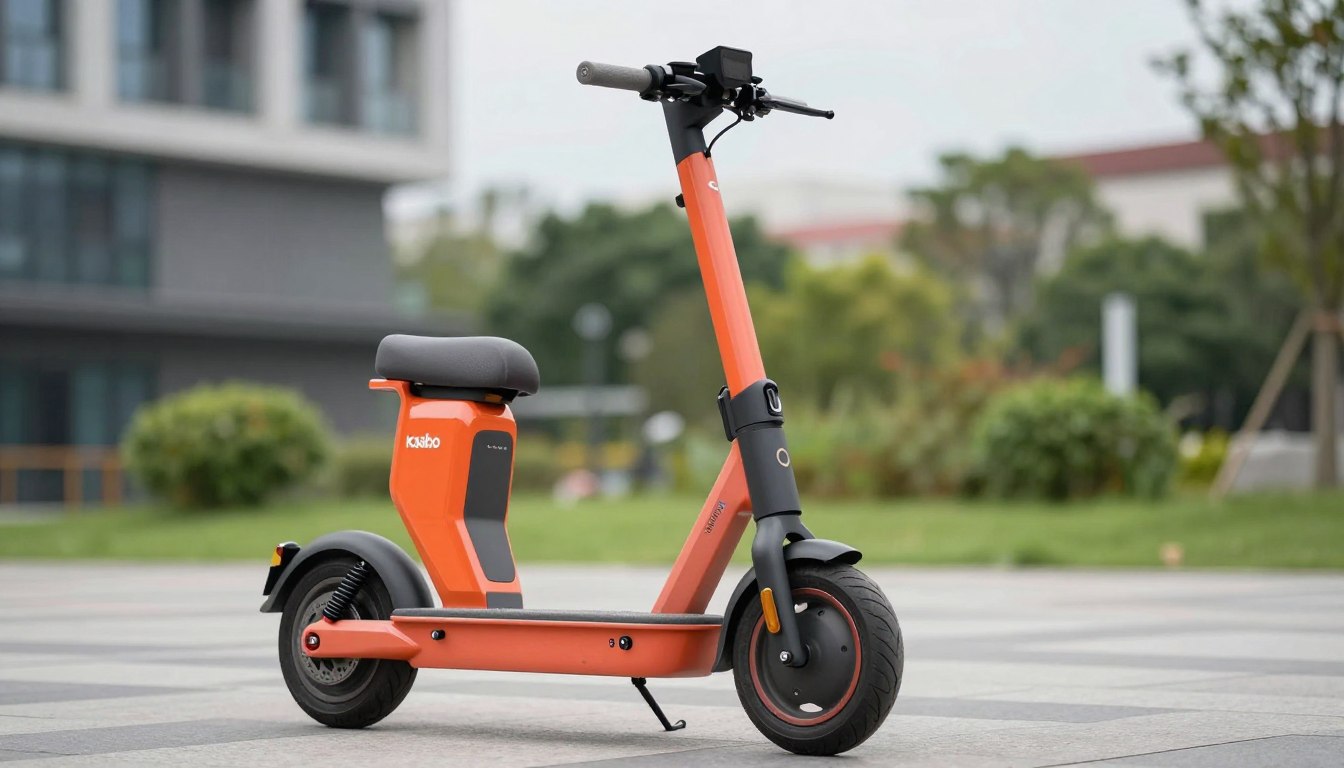
Can a city-focused electric scooter really deliver 25 mph and a useful 25-mile range on real streets?
The upcoming review tests that claim in everyday U.S. riding: mixed pavement, stop-and-go commutes, and moderate hills. It looks past lab numbers to show how the dual motor 500W*2 setup (2200W peak) and 48V 13Ah battery perform in traffic and on bumps.
The piece highlights what matters to commuters who value speed and comfort: the claimed top speed mph of 25, C-type suspension, 120mm disc brakes plus EABS, and NFC-enabled display with a finger throttle. It also notes the scooter’s 53 lbs weight and 265 lbs load capacity.
Readers will get clear distinction between manufacturer specs and rider impressions. The review aims to answer whether the machine’s punchy motor and 8″ pneumatic tires make it worth the price for safety-minded commuters who ride daily.
Key Takeaways
- The review focuses on real-world ride results, not just claimed specs.
- Expect quick acceleration from dual 500W motors and a 48V 13Ah battery.
- Claimed 25 mph top speed and 25-mile range may vary with hills and stops.
- Comfort and safety features: C-type suspension, discs + EABS, NFC display.
- At 53 lbs and 265 lbs capacity, it suits riders who prioritize performance over ultra-light portability.
Quick Take: What Stands Out About This Electric Scooter
kaabo mantis review highlights a simple truth: this model is fast and fun while staying practical for daily rides. Quick acceleration is the immediate hook; 25 mph feels notably brisk on a standing deck.
The controls are intuitive. Riders can switch eco/turbo, toggle single or dual motor, and signal turns without losing focus. The finger throttle and responsive display make changing modes easy on the fly.
Stopping hardware is confident. The 120mm disc brakes plus EABS provide strong braking, though occasional brake noise can occur. That sound sometimes helps announce a slow-down near pedestrians.
- Dual motor power for hill assistance and smooth sine-wave control.
- Practical lighting and turn signals improve night-time safety.
- NFC-enabled display adds daily security and convenience.
This quick take frames the upcoming deep-dive into specs, speed and hills, range, ride quality, and value for the asking price.
kaabo mantis 8 Specs Snapshot for US Riders
This compact specs view highlights the numbers US commuters care about. It makes trade-offs easy to scan before deeper testing.
Motor output and power
Dual motor power: 500W x2 (2200W peak)
The scooter uses dual 500W motors for stronger launches and better hill holding. Peak output tops 2200W, which helps with quick starts and steady climbs.
Top speed and real-world note
Top speed is a claimed 25 mph. That top speed mph depends on rider weight, road grade, and conditions — real-world speed varies.
Battery, range, and charging
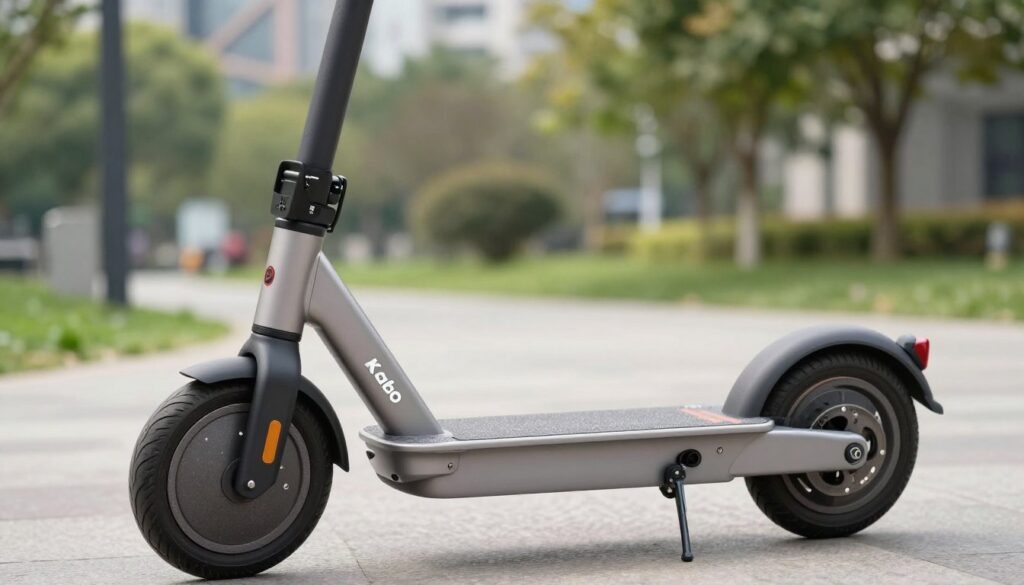
The 48V 13Ah battery uses 18650 cells and lists up to 25 miles per charge. Expect range to drop with sustained turbo use, hills, or heavier riders. Charger: 54.6V 2A (~6.5 hours).
Weight, capacity, and core hardware
Net weight is 53 lbs and max load 265 lbs. Core ride gear includes C-type suspension spring shocks, 120mm disc brakes with EABS, and 8″ pneumatic tires on tubed split rims.
- Display: NFC-enabled Kaabo display with a finger throttle and a 2024 sine-wave controller.
- Material: T6082 aviation-grade aluminum; folding and open dimensions suit city storage.
Speed, Acceleration, and Hill Power
Hitting 25 mph on a standing deck changes how a rider reads the street around them. The claimed top speed is real in short bursts, and it feels faster than the same mph on a bicycle because the deck raises the center of gravity and narrows handling inputs.
How fast 25 mph feels on a standing deck
Standing amplifies motion. At 25 mph the wind and surface feedback make turns feel sharper.
Safety matters: a firm stance and ready brake hand help as speed rises.
Single vs dual motor mode for real street pace
The finger throttle starts smoothly in single motor for controlled city riding. Dual motor engages more power and brings quicker acceleration in turbo.
Riders often leave dual motor + turbo on for confident on-ramps and quick lane changes, but that cuts range.
Climbing angle performance up to 20 degrees
Dual motor power with turbo handles steep city grades up to the claimed 20-degree angle for most riders. Heavier riders should expect slower sustained climbs and may shift to lower speed to protect the battery.
For practical notes and specs see Kaabo Mantis Pro details.
- Acceleration: smooth off the line, sharp in turbo.
- Control: easy mode switching on the display while riding.
- Braking: be proactive—brake setup must match increased speed.
Range, Battery, and Charging Time
Real-world distance depends less on the sticker number and more on how a rider uses the throttle through traffic.
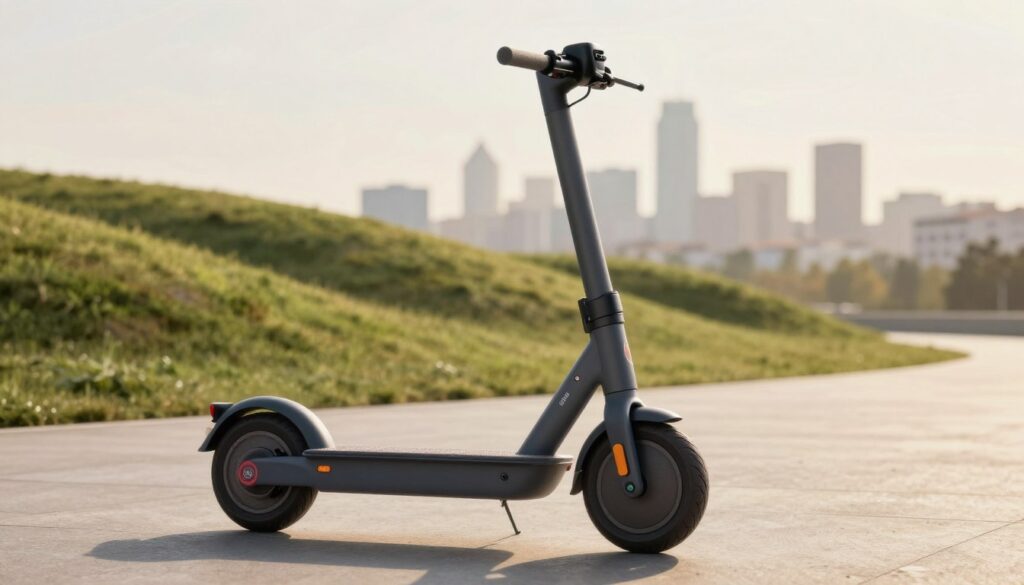
The scooter’s 48V 13Ah battery uses 18650 cells and lists a claimed 25 miles of range. In everyday U.S. commuting, that number is a best-case figure achieved on flat roads at steady moderate speed.
What “25 miles” looks like in daily use
Stop-and-go traffic, headwinds, hills, and heavier rider weight reduce total miles per charge. Using dual motor plus turbo and hard throttle bursts cuts range faster than steady eco riding.
Charge time reality check
The included 54.6V 2A charger brings a depleted pack to full in about 6.5 hours. That makes overnight top-ups simple, but riders who need back-to-back outings should plan a daytime plug-in or a faster aftermarket charger.
- Plan trips: short commute + errands fit the claimed range more easily than long weekend loops.
- Use the display: on-board readouts help estimate remaining miles and adjust throttle habits.
- Performance dip: expect slightly reduced power as the battery level drops near empty.
Ride Quality and Suspension Over Bumps
Urban bumps and curb drops reveal more about ride quality than top speed numbers. The front and rear C-type spring shock setup plays a central role in daily comfort and control.
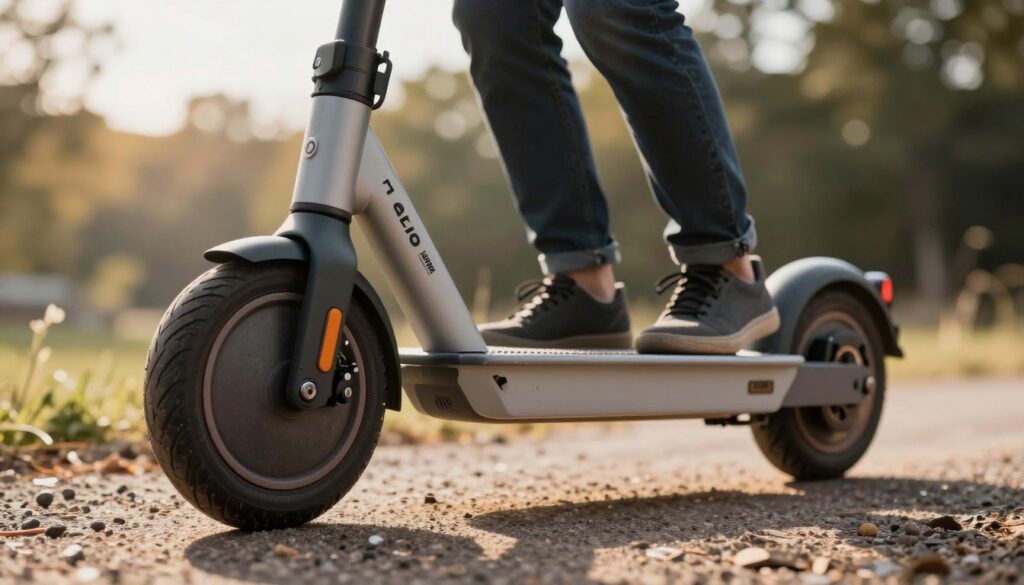
Front and rear C-type spring shock setup
The front and rear shocks absorb chatter from broken pavement. This dual shock arrangement smooths short, sharp impacts and helps the rider keep a steady line.
Comfort over speed bumps, curb drops, and rough patches
The suspension works especially well on speed bumps and curb drops. Paired with 8-inch pneumatic tires, it reduces vibration through the deck and bars.
Less chatter means easier braking and more confidence at mid-range speed, so riders hold their line and manage the throttle with less effort.
Where it starts to struggle: gravel and fire roads
On loose gravel or choppy fire roads the setup reaches its limit. The small tires can hop and the handlebar may shake. That shows this is a city-focused electric scooter, not an off-road rig.
- Tip: slow before rough patches and shift weight slightly back.
- Tip: scan ahead to pick smoother lines and protect brakes from sudden inputs.
Brakes, Control, and Safety at Speed
Stopping quickly in city traffic is as important as hitting top speed on a clear stretch. The 120mm disc brakes plus EABS give immediate bite and steady modulation when a rider needs to slow from higher mph.
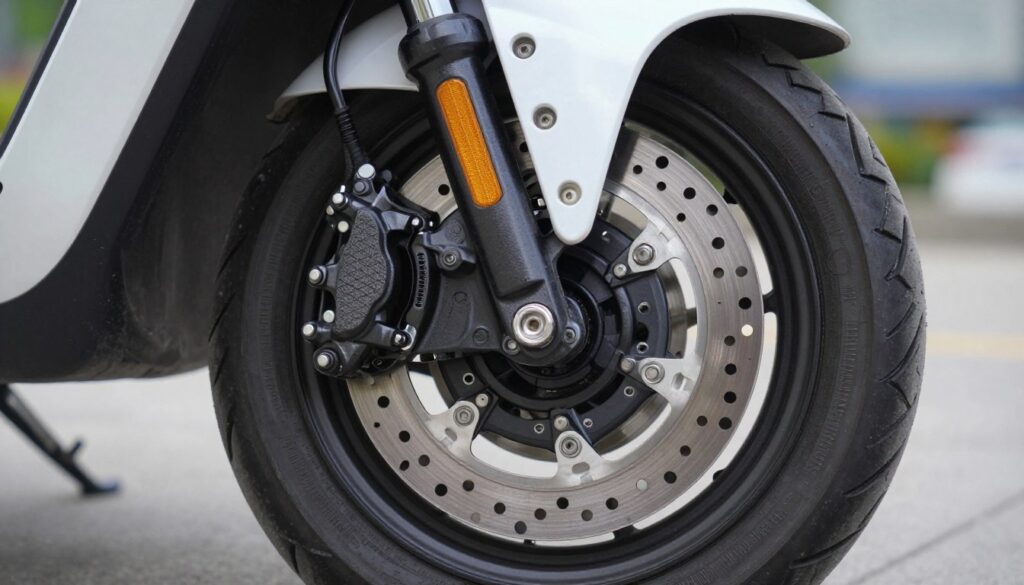
120mm disc brakes plus EABS: stopping feel and confidence
Disc brakes deliver firm stopping power and the EABS adds smoother initial engagement. Riders report short, controlled stops even when the throttle is cut abruptly.
Front vs rear technique for smoother stops
The best approach is to start with the rear lever, then add the front to avoid a harsh front bite. This front rear sequence keeps the deck stable and reduces nosedive on sudden stops.
Brake noise notes and what it means in traffic
Occasional squeal can show up when braking hard from top speed mph. It is often a sign of pad contact or wet rims, not a failure.
That sound can also act as an audible warning to pedestrians and riders behind in busy conditions.
- Practical tip: modulate, don’t grab, the levers—especially at speed.
- Maintenance: inspect pads and rotors regularly to keep brake feel consistent.
- Safety: scan ahead, use lights and the display to manage space at 20–25 mph.
Tires and Handling: 8-Inch Pneumatic Tires in Wet and Dry
Tire contact shapes how the scooter steers and how confident a rider feels at speed.
The kaabo mantis uses 8-inch pneumatic tires that give a planted feel when cornering. Wide rubber and a soft profile help quick steering and steady stability on typical city pavement.
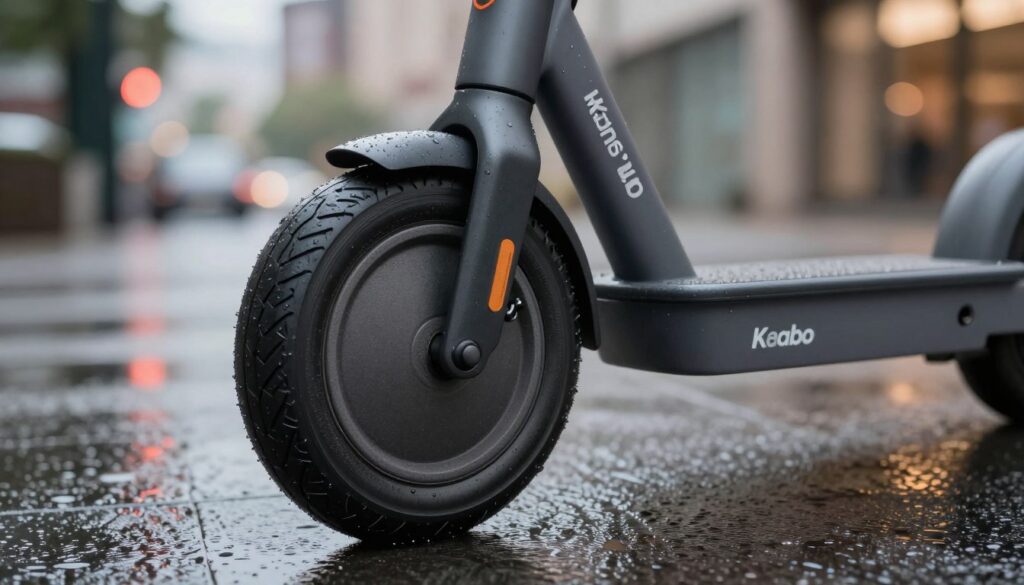
Traction while turning and stability on urban pavement
In dry conditions the wheels bite well, so turns feel predictable even at higher speed. Riders note that at top mph the combo of tread and suspension keeps the deck stable.
In wet conditions traction drops. It still holds better than narrow commuter tires, but riders should slow before painted lines, metal plates, or heavy spray for safety.
Tubed split rims and what that changes for upkeep
These are tubed split rims, which simplify tire swaps and tube repairs. They make roadside fixes easier but require correct torque on the rim clamps to avoid leaks.
Maintenance tips: check pressure often, watch tread wear, and carry a spare tube or patch kit for urban punctures. Proper inflation improves comfort and preserves suspension and disc brakes performance.
- Who benefits: city riders who want grip and comfort more than minimal weight.
- Practical advice: lower speed in wet conditions and avoid sudden inputs to front and rear controls.
- Buyer’s note: the tire setup adds slight weight but increases real-world ride confidence and reduces repair hassle for daily use.
Lighting and Visibility Features for Night Riding
Riding at dusk shifts the risk from speed to being seen by drivers and pedestrians. The scooter’s lighting package focuses on that problem with practical, bright LEDs placed around the frame.
Front, side, and rear LEDs for multi-angle visibility
The setup includes front LEDs, side strips, and rear LEDs so the rider is visible from nearly every angle. This helps drivers notice the scooter when approaching from the side or moving through intersections.
Turn signals and brake lighting for clear communication
Turn signals flash white at the front side and red at the rear side. When the rider applies the brake, the rear red lights illuminate to warn following traffic.
Why this matters: at 20–25 mph closing speeds are higher and reaction time shrinks. Bright, well-timed signals improve safety more than a faster top speed.
- Use signals early: tap the turn signal before lane changes or intersection turns.
- Positioning: ride where drivers can see the front and side lights, not tucked behind parked cars.
- Complement, don’t replace: wear reflective gear and keep the display and throttle controls ready for quick responses.
Bottom line: the kaabo mantis lighting features make night commutes safer and are a strong practical reason to choose this electric scooter for urban riding.
Controls, Display, and Everyday Usability
Small cockpit choices—lever placement, button reach, and screen clarity—matter on busy streets.
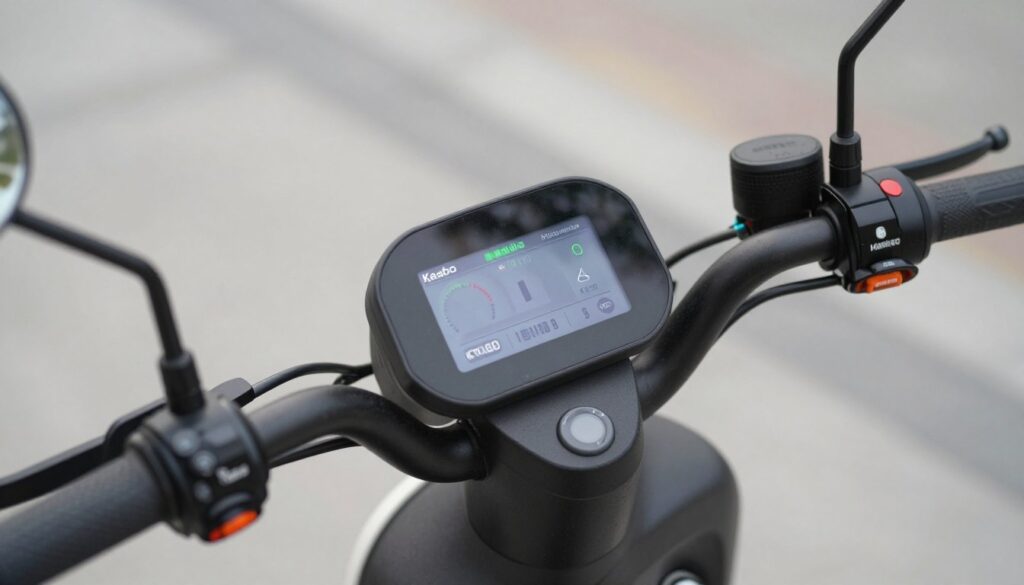
Finger throttle feel and responsiveness
The finger throttle is intuitive after a few rides. The accelerator lever responds smoothly and avoids sudden surges off the line.
Predictable control gives riders confidence when merging or dodging potholes. That smoother input helps keep traction on imperfect pavement.
Kaabo display with NFC and daily security
The Kaabo display shows speed, battery, and trip time clearly. NFC adds a simple lock layer for short stops and reduces theft risk in crowded areas.
Riders check the readout often to manage range and avoid surprises on longer commutes.
Switching modes while moving
Mode buttons sit within easy thumb reach. Switching eco, turbo, or single/dual motor happens without losing focus.
This placement makes it safer to adjust power and preserve battery when needed.
- Everyday usability: short learning curve and predictable controls.
- Key readouts: speed mph, battery %, and trip are front and center.
- Safety benefit: smooth throttle reduces sudden power that can unsettle front or rear traction.
Portability, Folding, and Storage in a City Lifestyle
Storage space and staircase runs shape whether a powerful scooter fits a city routine. The folding profile helps riders tuck the unit under a desk or in a closet, but carrying habits matter just as much.
Folding size versus open size for apartments, offices, and transit
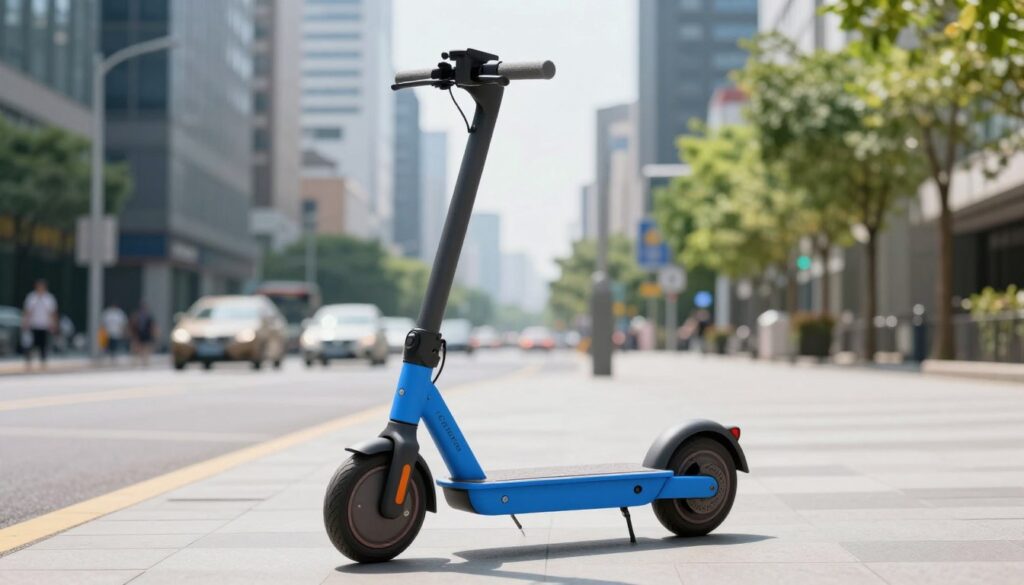
Open dimensions are 45.6×23.6×46.8 in while the folded length drops to 18.7 in. That smaller height makes it easy to slide under desks or place beside a coat rack.
Is 53 lbs “carryable” for stairs and commuting transfers?
The net weight is 53 lbs, so most riders find short carries manageable for a few steps or into a lobby. For long stair climbs or multi-floor walkups, the weight becomes tiring quickly.
Practical scenarios: it lifts into trunks, fits on trains during off-peak hours, and stores in small apartments. But if someone faces regular stair carries, they should consider a lighter option.
Why the tradeoff can be acceptable: the extra weight improves stability at speed and helps the suspension and tires feel planted. Buyers should weigh storage convenience against carry demands and price when choosing this electric scooter.
Build Quality and Design Details That Matter Long-Term
A scooter’s long-term value often starts with what it’s built from and how those parts fit together. Solid materials and smart hardware lower repair needs and keep the ride feeling tight for years.
T6082 aviation-grade aluminum and the solid-ride factor
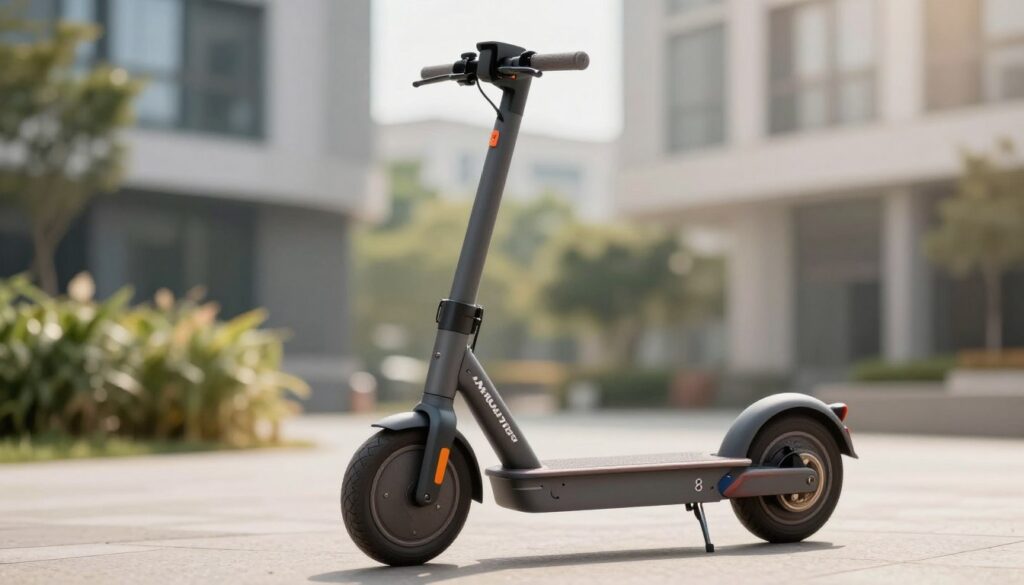
The one-piece forged T6082 aluminum frame gives a noticeably rigid stem and deck. Riders report fewer rattles and a firmer feel when the motor delivers sudden power or when the disc brakes bite hard.
Deck space, kickstand stability, and stance comfort
The wide deck provides room for taller or broader riders to find a steady stance at 20–25 mph. That extra space helps balance over front and rear shocks and improves overall safety.
The kickstand is sturdy and keeps the heavier 53 lbs scooter from tipping over when parked. A secure stand protects levers, the display, and cables from damage.
- Durability: upgraded double-locking clamp and clean hardware fit reduce loosening over time.
- Battery safety: UL-certified pack with BMS adds long-term reliability and peace of mind.
- Value: better build quality means fewer visits to the shop and a higher resale price versus cheaper alternatives.
For more on official specs and features, see the full model details here: kaabo mantis 8 official page.
Price, Value, and Who This Scooter Competes With
Price often decides whether a rider picks raw speed or daily practicality. This section breaks down what buyers get for their money and which trade-offs matter most for city commutes.
Mantis 8 vs Mantis 10 Lite: what riders gain with the upgrade
The Mantis 8 dual-motor package focuses on a lighter footprint and solid urban performance. It balances a 25 mph top speed with a 48V 13Ah battery and a manageable 53 lbs weight.
The 10 Lite raises the ceiling: higher top speed and longer range — up to about 31 mph and roughly 37 miles in ideal conditions. That extra performance comes with added weight (around 62 lbs) and larger 10″ tires.
Upgrade trade-offs: riders gain comfort and range with the 10 Lite, but they sacrifice some portability and storage ease. For many, the choice depends on commute length and how often they carry the scooter.
How it stacks up against lighter commuter-style scooters
Against lighter commuters, the Mantis 8 sells on power, suspension, and safety features like disc brakes and a full display with NFC. Those features boost confidence at 20–25 mph and in hilly routes.
Smaller commuter scooters win on weight and ease of carry, but they often lack the same dual motor torque, robust suspension, and integrated signaling. That matters when riders prioritize control over pure portability.
- Best for value: riders who want strong hill power and practical range without the bulk of a larger model.
- Consider a 10 Lite if: longer-range rides and higher top speed are daily priorities.
- Consider lighter commuters if: you need frequent stair carries and short, flat trips.
Final Thoughts: Who Should Buy the Kaabo Mantis 8 Today
Final Thoughts: Who Should Buy the Kaabo Mantis 8 Today
When a rider needs dual-motor punch and real suspension for stop-and-go streets, this model earns a second look. It delivers claimed 25 mph top speed and practical hill power from dual 500W motors, plus a 48V 13Ah battery that usually yields about 25 miles in city use.
This scooter fits U.S. commuters who want confident braking and comfort. The C-type suspension, 120mm disc brakes, 8″ pneumatic tires, NFC display, and sturdy 53 lbs build favor stability over ultra-light carry.
Skip it if you must lug a unit upstairs daily, want serious off-road use, or prioritize minimal weight over ride confidence. Practice proper front‑rear braking, use lights and turn signals, and adjust the throttle in wet or rough conditions for safer rides.
Bottom line: for riders whose commute needs match its power, suspension, and features, the price buys a durable, confidence-inspiring daily ride.
FAQ
What is the top speed of this electric scooter?
The scooter reaches a claimed top speed of about 25 mph in ideal conditions on a flat road with a light rider. Real-world top speed varies with rider weight, local terrain, battery charge, and weather. Using dual motor mode delivers the quickest acceleration and helps sustain higher speeds on slight inclines.
How far can it go on a single charge?
The rated range is up to 25 miles from a full 48V 13Ah battery under conservative riding. Typical urban use with stops, higher speeds, or hills will reduce that range; expect 15–22 miles in mixed-city conditions. Carrying heavier loads or frequent aggressive throttle use also shortens distance.
How heavy is the scooter and can a commuter carry it?
The scooter weighs about 53 lbs and supports a maximum load near 265 lbs. It is foldable for storage and transit, but the weight makes regular stair-carried commutes challenging for many riders. It’s more suited to short lifts into trunks or onto elevators than long stair carries.
What kind of motors and power does it use?
It uses a dual motor setup rated at 500W each (roughly 2200W peak combined). That configuration provides strong low-end torque for quick starts and improved hill climbing compared with single-motor commuter scooters.
How does the suspension handle bumps and rough roads?
The C-type front and rear spring shocks absorb urban imperfections well, smoothing speed bumps, curb drops, and broken pavement. The setup works best on tarmac; it starts to strain on loose gravel or very choppy fire roads where larger-travel suspension would be preferable.
What brakes are fitted and how effective are they?
The scooter has 120mm mechanical disc brakes combined with EABS for electronic braking assistance. This combo gives confident stopping power when riders use both front and rear brakes together. Proper modulation—front first, then rear—yields the smoothest, safest stops.
What tires come standard and how do they perform?
It ships with 8-inch pneumatic tires on tubed split rims. Those tires offer good traction on wet and dry urban pavement and better comfort than solid tires. Expect routine maintenance like occasional inflation and periodic tube repairs.
How long does it take to charge the battery?
Using the included 2A charger, a full charge takes about 6.5 hours. Faster aftermarket chargers are available but should match the battery’s voltage and safety specs to avoid damage or shortened battery life.
Are lights and turn signals included for night riding?
Yes. The scooter has front, side, and rear LED lights for visibility, plus turn signals and brake lights to improve safety when riding at night or in traffic. These lighting elements increase conspicuity from multiple angles.
What controls and display features does it offer?
It features a responsive finger throttle and a branded display with mode switching (eco/turbo) and basic diagnostics. Some models include NFC-enabled features for added convenience and security. Riders can change speed modes on the fly to match conditions.
How does it handle hills and steep grades?
In dual motor mode the scooter climbs well for its class, handling inclines up to roughly 20 degrees depending on load and battery state. Heavier riders or very long steep climbs will reduce speed and range.
What maintenance should an owner expect?
Routine checks include tire pressure, brake pad wear, and periodic tightening of fasteners. Tubed tires require tube inspections and occasional patching. Keeping the battery charged and avoiding deep discharges extends pack life.
Is the deck comfortable and stable for taller riders?
The deck offers solid footing with enough space for a natural stance, contributing to confident handling at speed. Taller riders should test stance and reach to ensure comfort, particularly for longer rides.
How does this scooter compare to lighter commuter models?
Compared with lightweight commuter scooters, this model prioritizes power, suspension, and stability over minimal weight. It offers stronger acceleration, better hill performance, and a more forgiving ride, at the cost of extra pounds and less portability for frequent carrying.
What precautions should riders take for safety?
Riders should wear a helmet, use the lights and signals at night, learn front/rear brake modulation, and avoid off-road surfaces that exceed the scooter’s suspension and tire design. Regular maintenance checks also help prevent mechanical surprises on busy streets.