
Gotrax G4: Top Features, Reviews, and Buying Guide
 PopScooter Team
March 9, 2026 2:53 am
.
11 min read
PopScooter Team
March 9, 2026 2:53 am
.
11 min read
Curious whether a budget city scooter can truly handle real-world commuting?
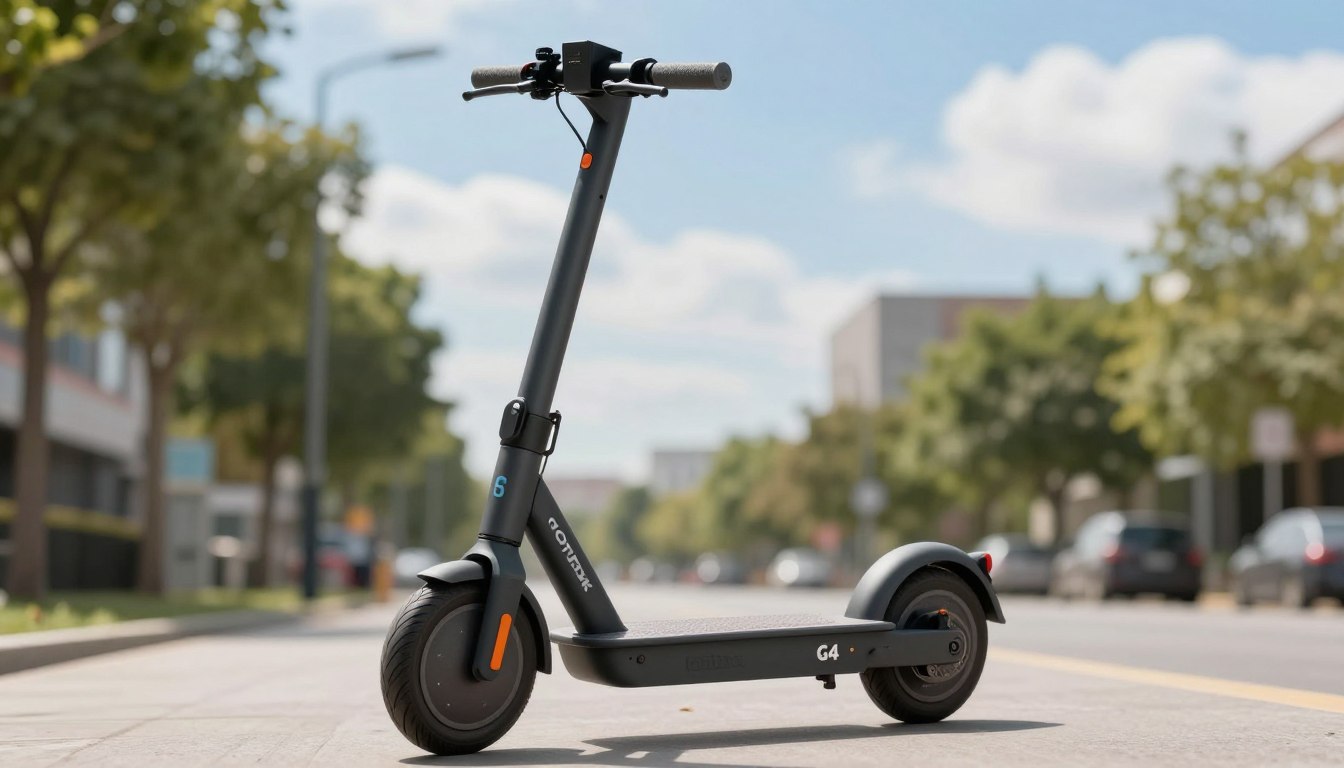
The Gotrax G4 is pitched at U.S. commuters who want solid range and everyday reliability without a premium price. It pairs a 500W motor with a 36V 10.4Ah battery that claims 21–25 miles and tested at about 22 miles on a charge.
The scooter hits close to a 20 mph top speed in hands-on tests (~19.8 mph) and uses 10-inch pneumatic tires and dual braking (E-ABS + rear disc) for confident stops on stop-and-go routes.
This review focuses on commuter priorities: short hills, cracks, folding for transit, and quick locking during errands. The 2024 update adds a digital passcode start and a built-in cable lock for extra security.
Buyers should weigh perks—power, range, and braking—against trade-offs like a heavier carry weight (~37–37.8 lbs) and longer charge times in some tests. The guide will show who this scooter fits best, who should skip it, and what to check before and after purchase.
Key Takeaways
- Real-world range: Tested ~22 miles, not just the claimed top.
- Balanced power: 500W motor delivers commuter-friendly speed and hill help.
- Safety and control: 10″ pneumatic tires plus dual braking improve ride confidence.
- Convenience: Folding setup is portable but heavier than ultra-light scooters.
- Security upgrades: Digital passcode start and built-in cable lock add value.
- Watch for: charge time and carrying weight when comparing price and performance.
Quick Take: Who the Gotrax G4 Electric Scooter Is Best For
Adults looking for a stable, mid-range electric scooter for 2–10 mile commutes will find this model appealing.
Best-fit riders and commutes in the United States
This scooter suits the commuter who needs reliable battery life for daily trips and errands. It handles one-way routes of about 2–10 miles well and supports riders up to 264 lbs.
Riders who value fewer midweek charges will like the claimed 21–25 miles and roughly 22 miles tested. Walk assist at ~3 mph helps when stepping off in crowds.
Standout reasons buyers choose it over other electric scooters
- Balanced range and speed: good miles per charge for mixed errands and commuting.
- Comfort and control: 10-inch tires and a stable ride make city streets easier.
- Convenience features: one-touch folding system and a digital lock/passcode add quick security.
Portability is real but limited by weight (~37–38 lbs); the folding system fits transit trunks, not long carries. The built-in cable lock adds convenience, but users should still use a heavy-duty lock for high-risk parking and stronger security.
Gotrax G4 Performance in Real-World Riding
Real-world rides reveal how the scooter’s 500W motor and battery perform under daily commute stresses.
Top speed and acceleration
The 500W motor delivers a brisk launch that keeps up with bike-lane traffic. Riders should expect a realistic top speed near 20 mph, with tested averages around 19.8 mph.
Battery life and range expectations
The 36V 10.4Ah pack (374.4Wh) achieved about 22 miles per charge in one real test over ~1 hour 54 minutes. Flatter routes and lighter riders trend toward the higher end of the claimed 21–25 miles, while hills and heavier loads reduce those miles.
Charge time and battery health tips
Advertised charging is 4–5 hours, but testers saw closer to ~5h50m. To protect battery life, top up to 80–90% when possible, avoid storing at 0%, and let the pack cool before charging after hard rides.
Hill climbing results
On mild grades (~3.5%) it held about 17.5 mph. On ~10.5% climbs speed fell to ~5–6 mph. Very steep 15% hills may stall the scooter—important for riders in hilly cities.
- Practical note: choosing lower speed modes extends range and eases battery strain.
- Planning baseline: use ~22 miles and ~2 hours riding as a realistic daily guide.
Ride Comfort, Handling, and Everyday Safety
Small bumps and cracked sidewalks reveal more about a scooter than top speed does.
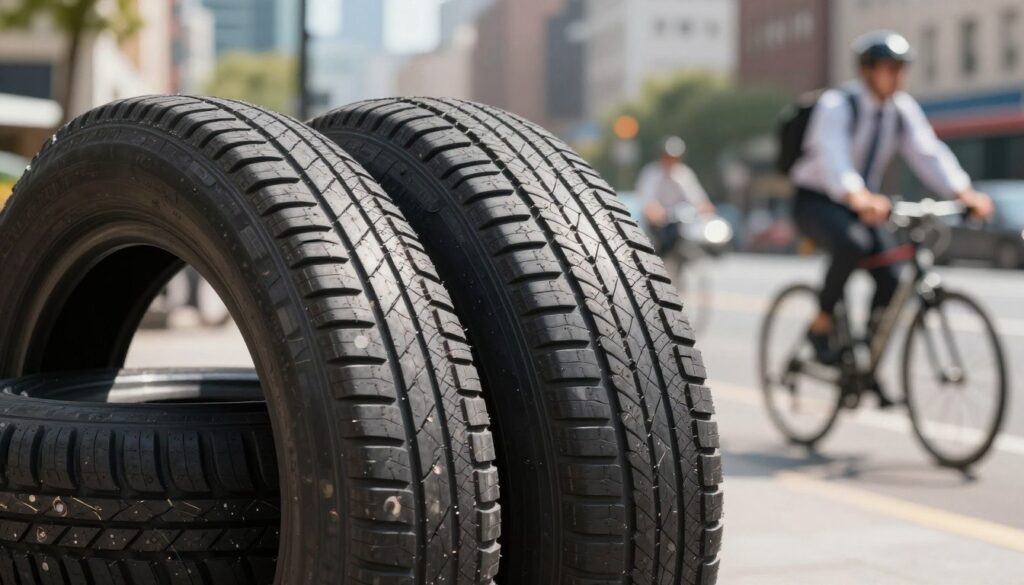
The 10-inch pneumatic tires soak up bumps, expansion joints, and rough pavement so riders stay steady at commute speeds.
These larger tires reduce the twitchy feel common on small-wheel models and make steering over uneven surfaces feel more predictable.
How the dual braking system works
Dual braking pairs E-ABS with a rear disc brake to blend controlled modulation and strong mechanical stopping power.
In testing, the brakes stopped the scooter in about 19 feet from ~12 mph, a useful baseline when comparing models.
The setup held up well on downhill slopes (5–15% grades), giving riders confidence when descending steeper streets.
Cockpit feel and throttle behavior
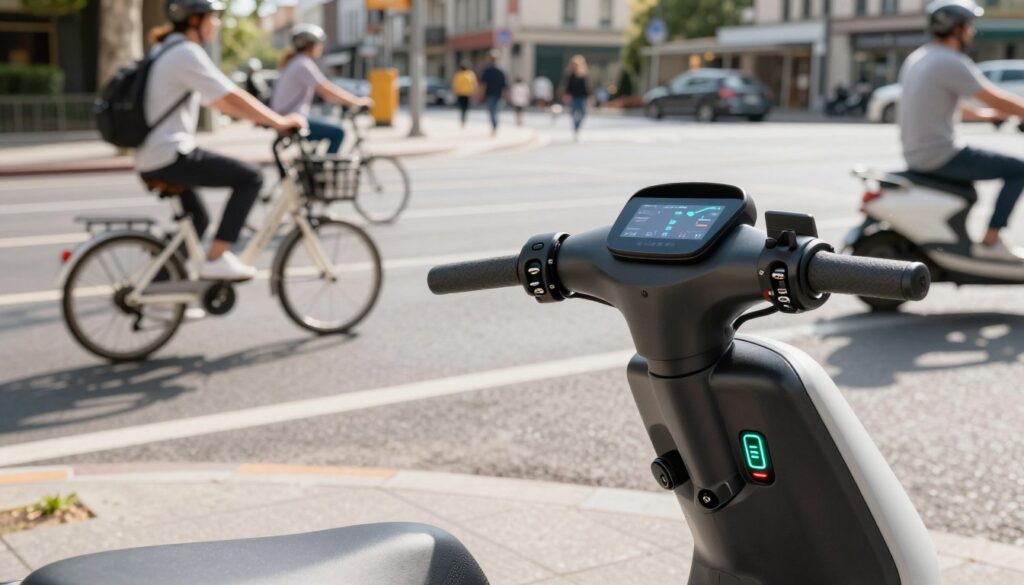
Textured grips and fixed lever positions make long rides comfortable and repeatable. The large LED display remains readable in direct sunlight.
Some riders report a finicky double-tap throttle that needs practice. It helps to learn the response in a low-traffic area before daily commutes.
Practical safety habits
- Check tire pressure before longer rides to keep the smooth ride and handling predictable.
- Test brake lever feel regularly so stopping power stays reliable.
- Slow down on loose debris or wet surfaces — even good brakes need room to work.
Design, Portability, and Specs That Matter Before Buying
Real-world portability hinges on how fast the scooter folds and how it balances when carried.
The one-touch folding mechanism collapses quickly for transit. Once learned, the latch feels secure and simple to use.
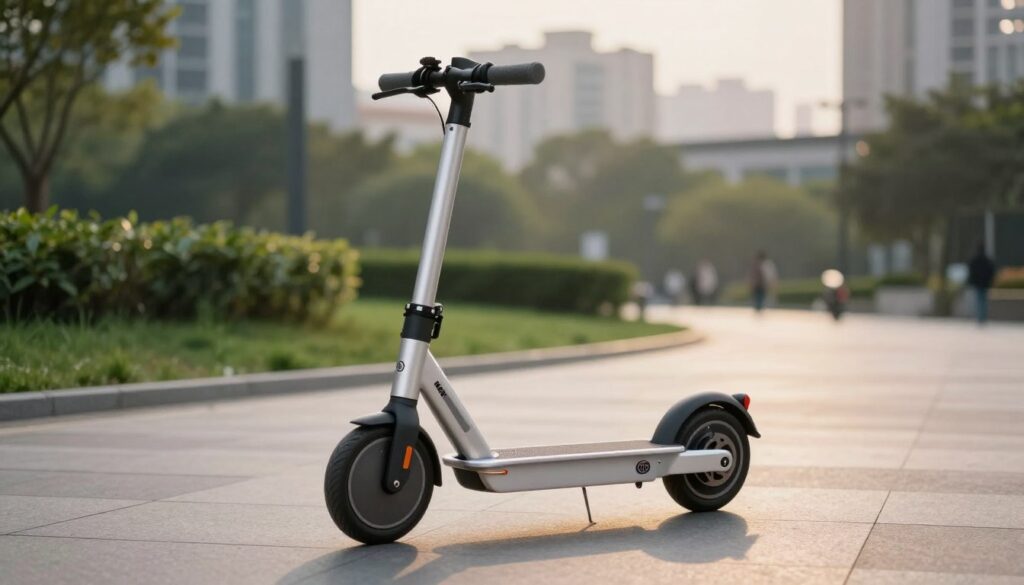
Folded size measures about 45″ L x 18.5″ W x 19.75″ H, so buyers can compare closet depth, under-desk space, or trunk fit in inches.
The listed weight is ~37–37.8 lbs. That weight gives a balanced carry feel for short lifts onto buses or into trunks, but it’s not ideal for long stair carries.
Fit and ergonomics for everyday riders
Handlebars sit near 40″ tall. The deck measures 17.5″ x 6.8″ with 4.3″ ground clearance, so taller riders and wider stances can judge comfort before buying.
Durability checks and simple maintenance
Check and tighten stem screws by the folding clasp to prevent stem wobble. A properly seated clasp ensures the stem lock fully connects.
- Tip: retorque folding bolts after the first 50 miles.
- Tip: inspect tires and screws monthly for steady handling.
Water resistance, safety, and security
The scooter carries an IP54 rating, so it tolerates light rain and road spray but not deep puddles or outdoor storage without cover. It is UL 2272 certified and rated for a max rider weight of 264 lbs, which matters for long-term reliability.
It includes a built-in cable lock that helps in low-risk stops, but a heavy-duty cable lock or U-lock is smarter for true security. For a deeper comparison, see this detailed review and this roundup of foldable adult scooters.
Is the Gotrax G4 Worth the Price for Commuters Right Now?
If daily usability matters more than ultra-light weight, this scooter is a strong mid-range choice.
For U.S. commuters who ride often, it delivers near-20 mph top speed, above-average range, and a braking system that builds confidence on mixed routes.
The value for the price comes from real-world performance, 10″ pneumatic tires, and useful security features like a passcode start plus a built-in cable lock. Still, the added weight and longer charge time are the main trade-offs versus lighter scooters.
Security-wise, the on-board lock helps deter casual theft, but buyers should budget for a heavy external lock for stronger protection and long-term security.
Best use: daily downtown commutes, campus runs, and mixed bike-lane trips. Avoid if you need ultra-light portability or tackle very steep hills often.
Before buying, confirm local speed rules, measure storage space, match commute distance to the range, and plan for the longer charge cycle. See the full review for details and buying tips: review of the model.
FAQ
What is the top speed of the scooter and how fast will it feel in real use?
The scooter reaches a top speed of about 25 mph on flat ground with a healthy battery and a single rider. In urban riding with stops, slight inclines, or a heavier rider it will feel a bit slower; acceleration from the 500W motor is strong enough for quick takeoffs but not like a motorcycle. Expect real-world cruising speeds around 15–20 mph for most commutes.
How effective is the dual braking system—electric ABS plus a rear disc brake?
The dual braking system combines regenerative E-ABS with a mechanical rear disc to provide confident stopping. E-ABS helps in wet conditions and reduces wear while the rear disc gives consistent bite for emergency stops. Riders should still practice controlled braking and keep tires and pads inspected for best performance.
What range can riders expect per charge and how many miles per charge are realistic?
Typical range under mixed city riding is about 20–25 miles per charge depending on rider weight, terrain, and speed. Riding aggressively at top speed, frequent hill climbs, or carrying extra cargo will reduce the miles per charge. Conserving speed and using eco modes will extend battery life.
How long does a full charge take and what are tips for prolonging battery life?
A full charge usually takes around 6–7 hours using the stock charger. To preserve battery health, avoid full discharges, store the battery at about 50% for long-term storage, and charge after rides rather than waiting until it’s near empty. Keep the scooter in moderate temperatures to protect battery life.
Can it handle steep hills and what should riders expect when climbing?
The motor can handle moderate hills well, but steep grades will slow acceleration and reduce top speed. On sustained climbs, expect shorter range and slower ascent times. Lighter riders will notice better hill performance; riders carrying weight should anticipate reduced speed and hotter motor temps.
Are 10-inch pneumatic tires good for city streets and rough pavement?
Yes. The 10-inch pneumatic tires deliver a smoother ride over cracks and uneven pavement compared with solid tires. They provide better shock absorption and traction, although riders should maintain proper pressure and repair punctures promptly. Occasional tire checks improve safety and comfort.
How portable is the folding system and what is the real-world weight when carrying it?
The folding system is straightforward and locks into place for carrying. The scooter’s weight makes it foldable for short carries onto transit or into buildings, but it is not featherlight—expect to shoulder it for short distances rather than long hikes. Check the carry handle and balance when lifting to avoid strain.
What safety certifications and water resistance does the model have?
The scooter meets UL 2272 electrical safety standards and offers an IP54 water resistance rating, which protects against splashes and light rain but not full submersion. Riders should avoid riding through deep puddles and dry the deck and electrical parts after wet rides.
Does it include any built-in security like a cable lock or digital lock feature?
The scooter does not come with a built-in heavy cable lock, though some packages may include a lightweight cable for short stops. It may offer an electronic lock mode that limits throttle response for theft deterrence, but riders should use a dedicated bike-grade lock for longer parking periods.
What maintenance should riders perform to keep brakes and the disc in good condition?
Regular maintenance includes checking brake pads, adjusting cable tension, and inspecting the rear disc for wear. Clean the braking surfaces and keep bolts tightened. Periodic professional tune-ups help ensure reliable stopping power and long-term safety.
How long does the scooter last as a commuter in terms of battery life and motor durability?
With regular charging habits and conservative riding, the battery can deliver good performance for a few years before noticeable capacity loss. The motor is durable for city commuting if riders avoid sustained overloads and steep, heavy loads. Proper care and timely servicing extend overall lifespan.
What is the maximum rider weight and how does it affect performance?
The scooter supports riders up to the published maximum weight (check spec sheet for exact limit). Heavier riders will see reduced top speed, slower acceleration, and shorter range. Keeping payload within limits preserves motor health and braking effectiveness.
Is the ride smooth enough for daily commuting and uneven surfaces?
Yes—between the 10-inch pneumatic tires and decent suspension tuning, the scooter offers a comfortable, relatively smooth ride on most city surfaces. It handles potholes and rough pavement better than small-wheeled models, though riders should still slow down for serious obstacles.
What accessories or upgrades should commuters consider buying?
Useful additions include a robust cable or U-lock for security, a brighter auxiliary light for night rides, a phone mount, and a high-quality charger if planning frequent long rides. Spare inner tubes or tire repair kits are handy for pneumatic tires.
How does the braking feel at the cockpit—throttle response, grips, and display readability?
The cockpit gives clear throttle response and intuitive brake levers. Grips are comfortable for short to medium commutes, and the display is readable in daylight. Riders should ensure regular grip checks and adjust position for optimal control and visibility.