
Chetak Electric Bike Price: Cost, Features, and More
 PopScooter Team
February 28, 2026 4:35 pm
.
21 min read
PopScooter Team
February 28, 2026 4:35 pm
.
21 min read
Could a stylish, metal-bodied scooter be the smart urban choice despite a premium tag? This introduction sets what shoppers should expect when checking the chetak electric bike price across cities today.
It explains why many listings show an ex-showroom price as a starting point and reminds buyers that taxes, registration, and local fees will add on. The Bajaj Chetak sits as a premium-leaning option focused on retro design, daily usability, and city commuting rather than outright top speed.
The page previews what follows: variant-level pricing, battery and charging notes, real-world range, ride feel, comfort, storage practicality, braking and safety, and on-board tech and features. Readers who compare models will find quick specs and practical takeaways to act on.
In short, the right purchase depends on intended use — short commutes, longer hops, or a preference for build quality — and the best value shifts by variant and by location. Treat listed figures as guides, not final totals.
Key Takeaways
- Ex-showroom figures are starting points; expect extra local costs.
- Bajaj Chetak targets style, daily comfort, and city use over top speed.
- Variant choice affects range, charging, and practical features.
- Compare specs and real-world range for the best value in your city.
- Use the listed numbers as a guide when budgeting and choosing trims.
Chetak Electric Bike Price Snapshot for Today’s Shoppers
The headline number is just a starting point. The figures shown by dealers are usually the ex-showroom values. These represent the base cost before fees.
Average ex-showroom figures: Chetak 3001 ₹1,02,377; Chetak 3503 ₹1,09,580; Chetak 3502 ₹1,22,518; Chetak 3501 ₹1,34,087.
What the ex-showroom does not include:
- Registration and road tax set by each city.
- Insurance and dealer handling fees.
- Optional accessories or extended warranties.
Two buyers in different cities can pay very different totals for the same scooter. Local incentives, state levies, and dealer add-ons change the out-the-door sum.
How U.S. readers should treat these INR figures
These amounts are shown as a market reference and not as final U.S. pricing. Availability, homologation, and dealer practices will affect any conversion to dollars and local costs.
Simple comparison approach: use ex-showroom as your baseline, then add registration, insurance, and any chosen packages to estimate the on-road total. Variant selection is the biggest controllable factor that will alter both cost and feature set — the next section breaks that down.
chetak electric bike price by Variant
This section lines up the four trims so buyers can see how range and top speed shift with each step up.
Chetak 3001 — ₹1,02,377: A value-oriented scooter with a 3.0 kWh battery and a claimed 127 km range. It tops at 63 kmph and suits city riders who want practical commuting without extra frills.
Chetak 3503 — ₹1,09,580: The better-range-for-the-money option. It moves to a 3.5 kWh battery and claims 151 km while keeping a 63 kmph top speed. Good for riders who want more range without a large step up in cost.
Chetak 3502 — ₹1,22,518: Offers the 3.5 kWh battery and a 153 km claim, but raises top speed to 73 kmph and adds a front disc brake. This trim is aimed at those who want higher speed for faster roads.
Chetak 3501 — ₹1,34,087: The premium trim with the same 3.5 kWh battery, 153 km claimed range, and 73 kmph top speed. It targets buyers who prefer fuller features and a top-tier feel.
Quick spec match
- 3001: 3.0 kWh / 127 km / 63 kmph
- 3503: 3.5 kWh / 151 km / 63 kmph
- 3502: 3.5 kWh / 153 km / 73 kmph
- 3501: 3.5 kWh / 153 km / 73 kmph
Note: The 35-series lists 20 Nm torque and targets slightly stronger performance for city and suburban use. Match the variant to daily needs — shorter urban runs, longer city commutes, or higher-speed roads — to simplify the buying decision.
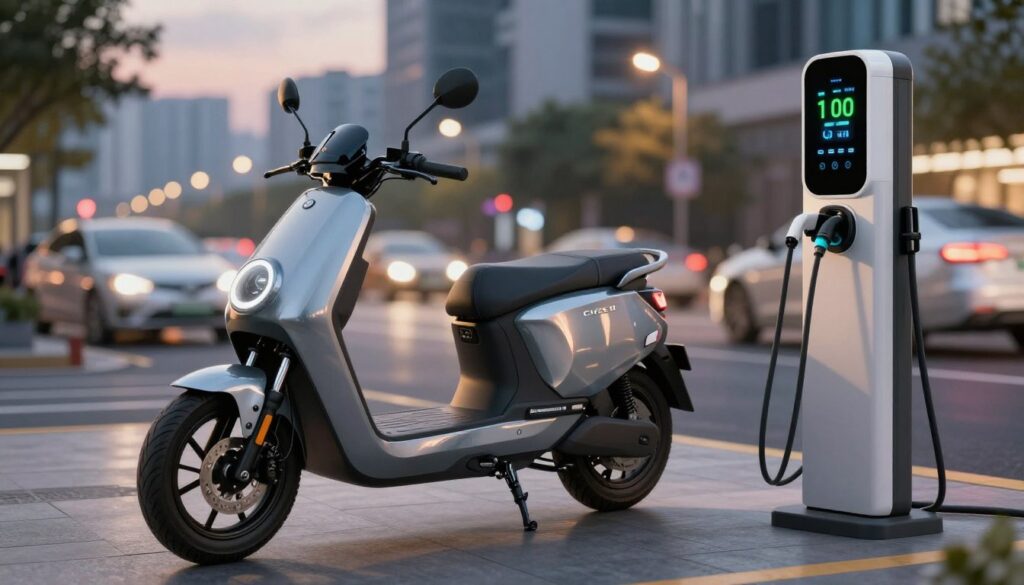
Battery, Charging Time, and Full-Charge Planning
Battery choice and charging habits often decide whether a daily commute feels easy or stressful. The model line offers a fixed 3.0 kWh pack on the 3001 and a 3.5 kWh pack across the 35-series. In practice, the larger pack usually gives more usable range rather than extra punch.
Charging benchmarks to plan around:
- 0–80%: 3001 — 3.5 hours; 3503 — 3.25 hours; 3502 — 3.25 hours; 3501 — 3 hours.
- 0–100%: 3502 — ~3.25 hours; 3501 — ~3 hours. The 3001 uses a 750W charger; higher trims align with ~800W figures.
Fixed battery design means many riders cannot remove the pack for indoor charging. That matters for apartment parking where access to a nearby outlet is limited.
Full charge planning: build short nightly sessions to keep a daily buffer and do a full charge before longer weekend trips. Expect real-world charging time to vary with outlet quality, charger output, and battery temperature.
Range and Real-World City Use
Range claims tell one story; real city rides often tell another. The trims list 127 km for the 3001 and 151–153 km for the 3.5 kWh options. These headline numbers help shoppers match a scooter to daily mileage needs.
Owner reports often land below the claims. For example, a 3001 owner reported about 98 km per charge in everyday traffic. That shows how weight, stop-and-go traffic, tire pressure, and temperature cut into the published range.
Experts note the 3.5 kWh trims commonly deliver roughly 120–140 km in Eco in typical urban conditions. Eco mode smooths power delivery to stretch miles, while Sport mode boosts responsiveness and reduces distance per charge.
- Claimed: 3001 — 127 km; 3503 — 151 km; 3502/3501 — 153 km.
- Real-world: 3001 example ~98 km; 3.5 kWh trims ~120–140 km in Eco.
- Factors: rider weight, average speed, traffic, tire pressure, and temperature.
Think in days between charges, not only kilometers. A commuter who rides 30 km daily can plan two to four days per charge depending on mode and traffic, which makes charging routines predictable and practical.
Top Speed, Acceleration Feel, and Everyday Performance
A clear split in peak numbers changes how the scooter behaves on faster urban roads. Riders will feel a real difference between a 63 kmph top speed and a 73 kmph top speed when they need to keep pace on wider arterials.
63 kmph trims suit dense, stop-and-go commutes. They accelerate smoothly from lights and merge confidently in city traffic. For short runs and crowded streets, the lower top speed rarely limits daily use.
73 kmph trims add higher sustained speed and are more comfortable on quicker stretches. The extra margin helps when riders want to match traffic flow on faster roads without running the motor at its limit.
Torque, throttle feel, and smooth ride in traffic
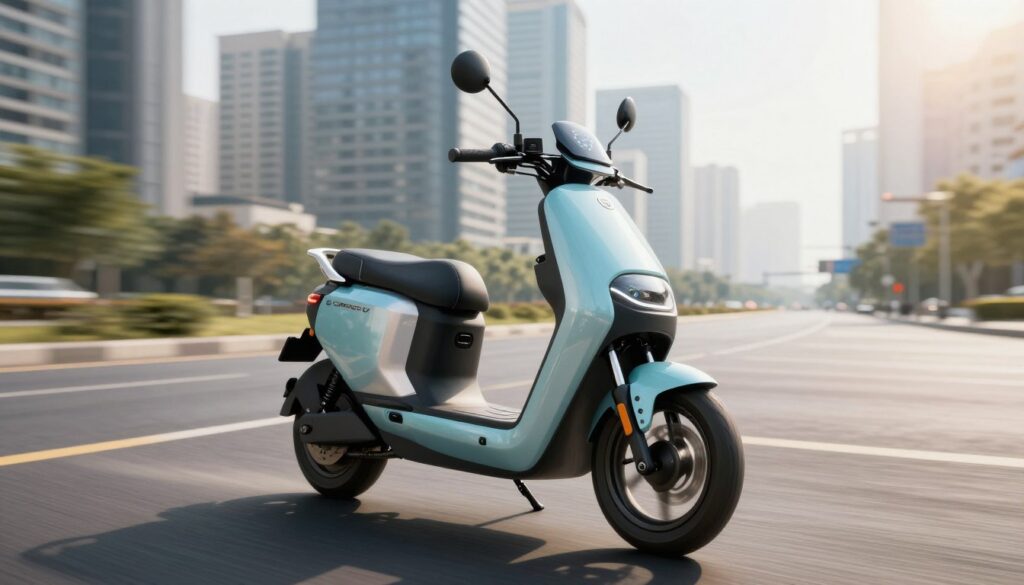
The 35-series lists about 20 Nm of torque, which gives steady pull in urban conditions. Throttle response is tuned for predictability, so riders get a smooth ride in stop-and-go traffic rather than abrupt bursts.
From a stop, acceleration feels brisk enough for confident lane merges. On longer runs, pushing near 65–70 kmph can feel more effortful and reduces range, so expect reduced performance when the motor works harder.
- When 63 kmph is enough: short commutes, heavy traffic, frequent stops.
- When 73 kmph helps: regular faster roads, longer arterial runs, fewer stops.
- Practical tip: choose the trim that matches the fastest road used regularly, not rare trips.
Design, Metal Body, and Build Quality
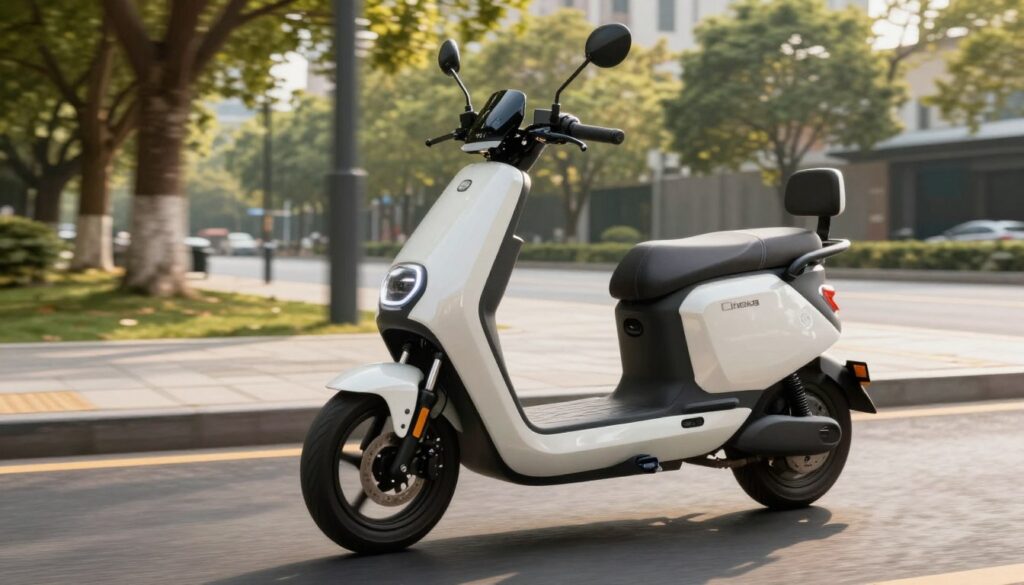
Retro lines, thoughtful proportions, and contemporary lighting give the Bajaj model its distinct character. The design leans into a classic silhouette with sweeping fenders, a rounded headlamp ring, and a subtle LED DRL that modernizes the look without losing heritage charm.
Retro-modern styling cues that define the look
- Sweeping body panels and a clean, balanced profile that reads as premium.
- LED ring lighting and darker trim options that lift the scooter’s visual presence.
- Simple accents that age well and keep the design relevant across seasons.
Metal body panels and the premium feel vs plastic-bodied scooters
The all-metal body is a clear differentiator in a market of mostly plastic shells. Metal panels give a denser, more solid feel when closing the seat or handling the scooter.
This metal construction boosts perceived quality and helps the scooter retain a showroom look longer into ownership.
Fit, finish, and durability expectations over time
Reviews praise tight panel fit and premium switchgear, highlighting strong build quality overall.
Some early units showed small panel gaps, but most owners report the metal body and finish hold up well with normal use.
Design and build are core buying reasons for shoppers who value refinement over headline specs. For those who prioritize long-term appeal, the visual and tactile quality is part of the ownership experience. See a full buying guide for more details at Bajaj Chetak listings.
Ride Comfort and Handling for Daily Commuting
Daily comfort and handling shape how a scooter fits into a commuter’s routine. Small details — seat height, posture, and steering effort — quickly tell a rider whether trips will feel easy or tiring.
Seat, posture, and passenger space
The listed seat height is 775 mm, which offers confident foot reach for many adults. This helps riders stop and start without awkward stretching and boosts low-speed confidence in city traffic.
Passenger comfort is practical: the seat has usable space and well-placed footpegs so two-up riding stays relaxed for short errands.
Suspension and ride quality
The front single-sided leading link and rear monoshock make the ride composed over potholes and speed bumps. On patchwork asphalt the setup soaks hits well and keeps the overall ride quality steady.
Stability and maneuvering
With a low center of gravity it feels planted while riding at typical city speeds. Turning radius is tight, which aids U-turns and tight-lane maneuvering. That makes parking and weaving through traffic simpler and less stressful.
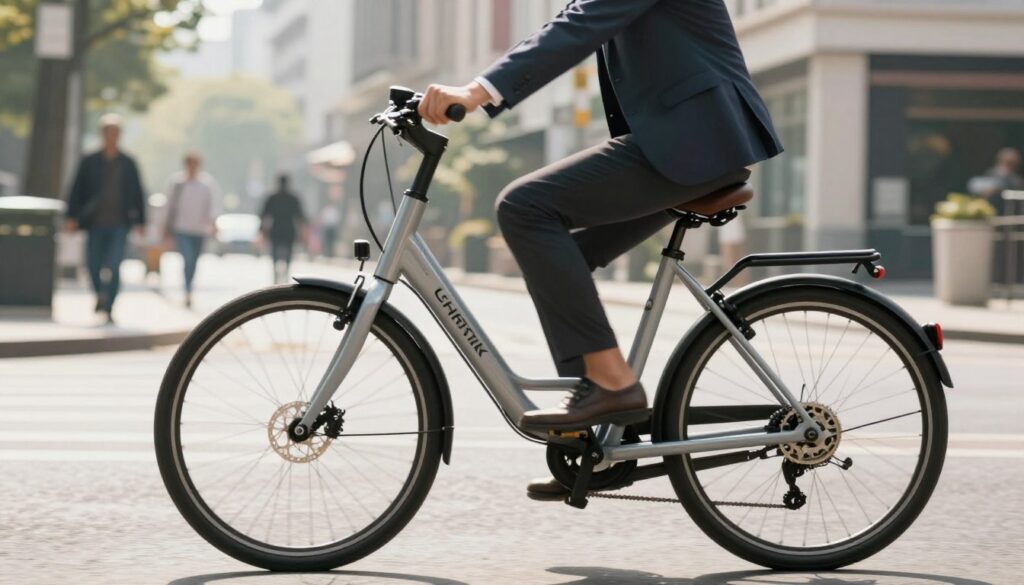
- Key points: 775 mm seat for confident reach, 168 mm ground clearance, composed suspension, tight turning for city lanes.
Storage and Practical Space for Real-Life Errands
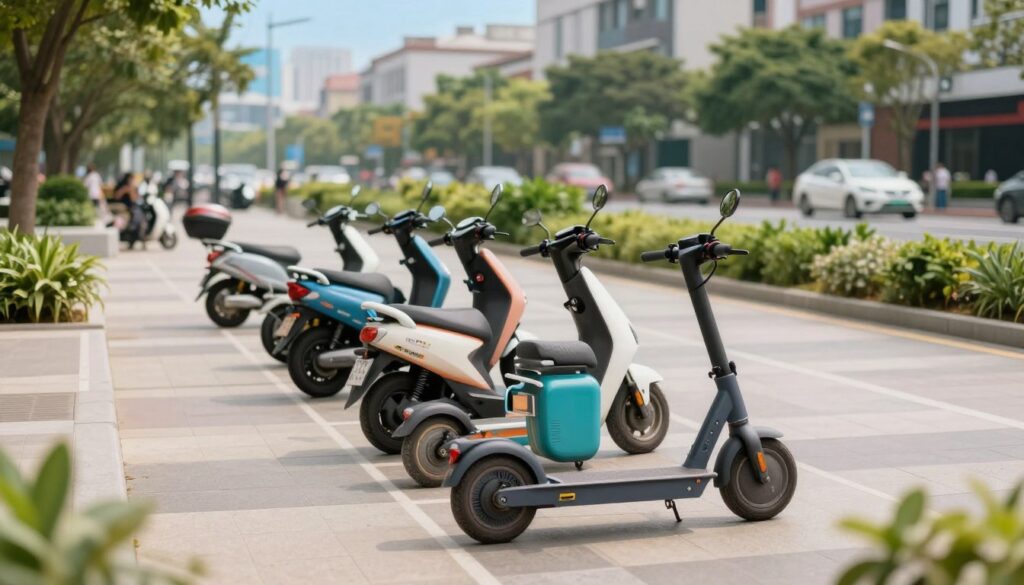
How storage is shaped matters more than the raw liter number for real use. The 35-liter under-seat bay is useful because it’s flatter and easier to pack than a deep, narrow hole.
The 35 liters of storage under the seat fits small bags, groceries, and many half-face helmets. A full-face helmet usually will not fit comfortably, so real-world expectations matter when planning city errands.
The front glovebox adds roughly 5 liters of handy space for a charging cable, wallet, or a compact portable charger. A retractable bag hook and extra carry points make short stops easier without upsetting balance.
- Under-seat: 35 liters, flatter layout — good for bags and daily items.
- Glovebox: ~5 liters — ideal for small accessories and cables.
- Hooks and points: secure shopping or tote bags on quick rides.
This storage and space setup changes the ownership experience most months in. For commuters who use the scooter for errands, the practical design of the bays makes daily life simpler and more reliable.
Braking, Safety, and Control in Stop-and-Go Traffic
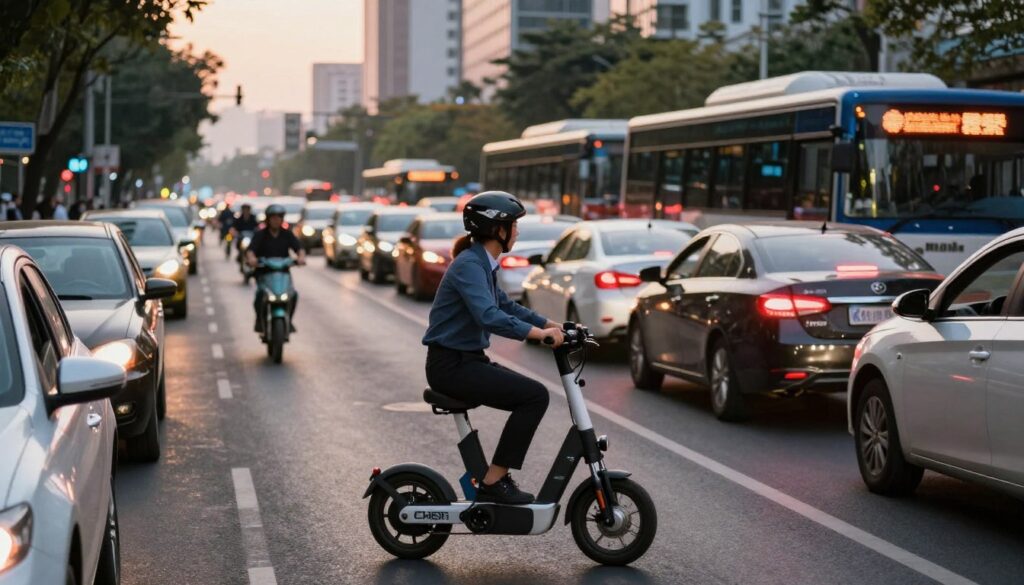
In stop-and-go traffic, predictable braking often matters more than raw stopping numbers. The model uses a Combined Braking System (CBS) that links front and rear brakes. CBS helps distribute force between the two brakes when a rider pulls the lever, which makes single-lever stops simpler for less experienced riders.
How CBS helps city riders
The system reduces the chance of skids and uneven stops in busy streets. For riders who must react quickly at intersections, CBS smooths the braking response and cuts rider workload. It is a helpful safety feature on crowded roads.
Front and rear brake layout by variant
- 3001 & 3503: front drum; rear drum.
- 3502 & 3501: front disc; rear drum.
The rear brake stays drum across the line, which is simple and low-cost to maintain. Drum rear brakes give steady stopping but can feel less sharp than modern setups. Disc fronts on higher trims offer crisper feedback and shorter stops at typical city speed.
Hill assist, reverse, and parking aids
Hill assist, reverse mode, and parking assist are practical features that reduce stall risk on slopes and ease tight parking. They act as daily convenience and safety tools for urban riders who deal with driveways or tight garages.
Real-world note: Some testers mention the brakes can “lack bite” versus rivals, so riders who often ride faster roads may prefer a disc-front trim. For most urban commutes and typical traffic speeds, the system is adequate and predictable.
Display, Tech Features, and Mobile Connectivity
Modern scooter displays now aim to give useful data at a quick glance so riders spend less time looking down and more time on the road.
The standard digital console is an LCD that shows speed, battery level, trip meters, and basic alerts. It keeps info clear and easy to read in traffic.
Bluetooth mobile connectivity brings practical help. Riders get call and SMS alerts on the dash so they can stay aware without grabbing a phone.
Higher trims or an optional Tech Pack may add a 5-inch color TFT touchscreen. That display can include navigation prompts, richer trip data, and touch controls depending on market and variant.
- Core benefits: clear speed readout, battery status, and simple alerts.
- Connectivity: call/SMS alerts via Bluetooth for safer riding.
- Upgrades: touchscreen, nav, and extra features vary by trim and region (check 2026 Bajaj updates).
Practical note: tech should support the ride experience, not distract. Choose simple and reliable if daily commuting matters most, or pick feature-rich options if you want extra convenience.
Riding Modes and Everyday Efficiency
Simple toggles between modes tailor the scooter’s behavior for different urban routes. Riders get a clear choice: prioritize long days between charges or sharper response for quick moves in traffic. The available options shift how the scooter feels far more than they change the spec sheet.
Eco mode for range and smoother output
Eco limits throttle response and tops speed to stretch each charge. On the 3001 this mode is the only option and is tuned to maximize real-world range in busy city traffic.
Eco smooths acceleration so stops and starts feel calm. It is the best default for longer commutes and conservative riders who prefer predictable energy use.
Sport mode for quicker response and faster merges
Sport sharpens throttle mapping and boosts low-end punch. The 3503/3502/3501 offer Sport for stronger performance and quicker merges at moderate speed.
Sport improves acceleration and passing feel but reduces range and increases how often one must charge. Pick Sport for shorter city runs or when confident bursts matter more than maximum miles per charge.
- Tip: use Eco for routine, longer commutes; switch to Sport for fast arterial sections.
- Plan: match mode choice to daily traffic patterns to balance range and ride quality.
- More info: see full Bajaj Chetak listings for variant mode details.
Specs That Matter Most Before Buying
Shoppers often choose by a few key figures—so this quick spec roundup puts those numbers side by side.
Top numbers at a glance
- Battery: 3.0 kWh (base) vs 3.5 kWh (35-series).
- Range: claimed 127 km (3.0 kWh) and 151–153 km (3.5 kWh); expect lower real-world figures.
- Speed: two top-speed tiers — 63 kmph and 73 kmph depending on trim.
- Motor torque: 35-series ≈ 20 Nm for better urban performance.
Dimensions that affect comfort
The listed seat height is 775 mm and ground clearance is 168 mm.
Those numbers help predict rider reach, parking ease, and how the scooter handles curbs or speed bumps.
Warranty basics and practical time notes
Battery warranty: 3 years or 50,000 km. Motor warranty: 3 years. Buyers should confirm local terms before purchase.
Charging time varies by trim and affects daily planning — full charges take a few hours, so factor hours-at-home into routine.
Ownership Costs Beyond Price
Real ownership math blends per-kilometer energy bills with occasional maintenance and service downtime. Buyers should plan past the purchase and include how often they charge, local utility rates, and routine upkeep.
Electric running cost math and what changes it most
Example running cost: roughly ₹0.24 per km in typical conditions. That number shifts with local electric rates, charging frequency, and whether Sport mode is often used.
Frequent fast riding or daily long runs raise the cost per kilometer. In many commute cases, this still beats gasoline scooters on monthly spend.
Maintenance and service expectations from rider reviews
Riders report fewer engine services but regular needs for tires, brakes, and electrical checks. Scheduled visits are simpler, yet some owners note slow dealer response in parts and service turnaround.
What riders praise and what they criticize
- Praise: smooth drive, comfort, and usable urban performance in many reviews.
- Criticism: service experience, parts cost, and occasional real-world range shortfalls.
- Tip: assume conservative range when planning trips and include a buffer before each charge.
How the Bajaj Chetak Compares to Other Electric Scooters
When shoppers compare models, clear differences emerge in how each scooter prioritizes practicality, tech, or ride feel. This short guide highlights who each rival suits so buyers can match choices to daily needs.
TVS iQube vs Chetak — practicality and riding feel
The iQube leans toward everyday usability with a strong dealer network and service footprint. It feels practical in daily traffic and scores well for predictable performance and straightforward ownership.
The Chetak trades some service ubiquity for a more refined ride and premium finishes. Choose iQube for ease of ownership; choose the Chetak for a smoother, more polished commute.
Ather Rizta vs Chetak — family comfort and storage priorities
The Rizta targets family riders with a roomier seat and larger storage solutions. It favors comfort and useful cargo space for errands and two-up trips.
The Chetak remains more style-driven, prioritizing appearance and finish over sheer storage capacity.
Ola S1 X/S1 Pro vs Chetak — speed and software vs refinement
Ola models push faster speed and deep software features, delivering sharp acceleration and connected apps. That appeals to tech-forward buyers who value pace and features.
By contrast, the Chetak focuses on consistent refinement and a calm ride rather than headline speed or aggressive software updates.
- Bottom line: pick the scooter that matches your priority—range and service, storage and comfort, or speed and software.
Best Chetak Variant to Choose for Your Use Case
Pick a trim by matching the scooter’s strengths to how and where it will be ridden most days. This keeps ownership simple and helps riders avoid paying for features they rarely use.
Short urban commutes and frequent stops
For quick city hops and lots of stop-and-go traffic, the 3001 makes practical sense. It keeps costs lower and focuses on efficient daily riding.
Why it fits: compact battery, calm throttle, and predictable range that works well for short trips.
Longer city rides where range anxiety matters
The 3503 (3.5 kWh) suits riders who log longer daily miles. The larger pack stretches time between charges and eases range concerns.
Why it fits: higher claimed range, fewer charge stops, and better flexibility for mixed-traffic routes.
Riders who care most about premium design and build quality
Choose the 3502 or 3501 if a metal body, refined finish, and a 73 kmph top speed matter. These trims give a stronger feel on faster roads and a more premium ride experience.
- Short trips: pick the 3001 for efficiency and value.
- Long urban runs: pick the 3503 to reduce charging frequency.
- Faster roads & premium feel: pick 3502/3501 for the speed margin and design focus.
Decision shortcut: match the variant to the fastest road you use weekly and the longest round-trip you make monthly. That simple check often finds the right balance of range, design, and riding confidence.
Where to View Bajaj Listings, Check Availability, and Move Forward
Start by checking official dealer listings to confirm which trims and offers are active in your area and to view bajaj inventory online or at a showroom.
Availability changes by city. Ask for an out‑the‑door quote that shows ex‑showroom and final on‑road totals. Include warranty terms and any 2026 bajaj promotions when comparing figures.
Note the wider model family — including chetak c25 and chetak c2501 — so shoppers know where lower‑cost options fit. Verify which features are standard or optional, especially tech/display packs.
Before you buy, do a quick checklist: daily commute distance, charging access, desired top speed, storage needs, and passenger use. Then compare quotes, request a test ride on the scooter, and confirm local offers to move forward with confidence.
FAQ
What does "ex-showroom price" mean and why does the total vary by city?
Ex-showroom is the seller’s quoted cost before adding local taxes, registration, insurance, and any optional accessories. Totals change by city because state taxes and registration fees differ, and dealer handling charges vary across regions.
Should U.S. buyers treat listed Indian prices as final reference points?
No. U.S. buyers should view those figures as indicative only. Import duties, shipping, homologation, and local certification will add substantial costs if a model is brought to the U.S., so use listed prices for broad comparison, not final budgeting.
Which variant fits best for short urban commutes and frequent stops?
The lower-range, lower-top-speed variant suits short urban use. It offers responsive acceleration in traffic, better efficiency in Eco mode, and typically costs less while delivering practical range for daily errands.
Which variant is best for longer city rides where range matters?
Choose the higher-capacity battery and longer-range trim. That variant extends miles per charge, works well in mixed-speed city traffic, and reduces charging frequency for longer daily use.
How do the 63 kmph and 73 kmph trims change real-world use?
The higher top-speed trim helps on faster urban ring roads and short expressway stretches. The lower-speed model still handles stop-and-go city traffic efficiently and may deliver slightly better range due to lower peak power draw.
What battery capacities are available and how do they affect range?
Typical offerings include around 3.0 kWh and 3.5 kWh packs. The larger pack increases claimed and real-world range, especially in mixed riding and when using Sport mode less often.
How long does charging take from 0–80% and 0–100%?
Fast charging to 80% usually takes significantly less time than a full charge because charging slows for the final 20%. Expect 0–80% in a few hours with a home charger and longer for 0–100%, depending on charger power and battery size.
Is the battery fixed or removable, and what does that mean for apartment charging?
Many models use a fixed battery design. That means owners need access to a parking spot with a power outlet or a common-area charging solution; removable packs make apartment charging easier but are less common.
How accurate are claimed range figures compared with owner reports?
Claimed ranges use standardized tests; real-world numbers often differ due to rider weight, riding style, traffic, terrain, and climate. Owner reports give a better picture for practical daily use.
How much can Eco and Sport modes change miles per charge?
Eco mode reduces power output and maximizes range, sometimes adding a noticeable percentage to miles per charge. Sport mode increases responsiveness and top speed but cuts range correspondingly.
How does metal body construction affect feel and durability?
Metal panels give a more premium tactile feel and often better impact resistance than plastic. They can add weight but generally improve perceived build quality and long-term durability when well finished.
What ride comfort can riders expect for two-up commuting?
Expect a comfortable seating posture with adequate seat height for most adults, with twin-rider comfort depending on pillion footpeg placement and cushioning. Suspension tuning balances urban compliance with stability.
How much under-seat storage is available and what fits realistically?
Typical under-seat space is around 35 liters, enough for a helmet or daily shopping. Owners often use the front glovebox and utility hooks for smaller items and quick access essentials.
What braking systems are offered and why does Combined Braking matter?
Many scooters include a Combined Braking System (CBS) to distribute braking force between wheels, improving stability in sudden stops. Higher trims may offer a front disc brake while base trims use drums.
Are features like hill assist, reverse mode, and parking assist useful in daily use?
Yes. Hill assist prevents rollback on slopes, reverse mode helps maneuver tight parking spots, and parking assist makes everyday handling easier in crowded city garages.
What digital display and connectivity features are common?
Standard displays show speed, battery level, trip data, and alerts. Bluetooth pairing adds call and message alerts, while premium models may include a touch-enabled TFT with navigation and richer telematics.
Which specs should a buyer check before deciding?
Focus on real-world range, battery capacity, top speed, torque, seat height, and ground clearance. Also confirm warranty coverage for battery and motor to manage long-term ownership costs.
How do running costs compare with fuel scooters?
Running costs are typically lower per mile due to electricity being cheaper than gasoline and fewer moving parts reducing maintenance. Actual savings depend on local electricity rates and charging habits.
How does this scooter compare with TVS iQube and Ola models?
Compared with the TVS iQube, it often trades slightly different storage, ride feel, and tuning. Against Ola models, the comparison centers on software and performance versus refinement and build quality. Test rides reveal which fits a rider’s priorities.
Where can buyers view listings and check availability?
Buyers should visit official Bajaj dealerships, the brand’s website, or authorized online platforms to check variant availability, pricing updates, and local offers. Scheduling a test ride helps confirm fit and comfort.