
Xiaomi Scooter Pro: Specs, Price, and Reviews
 PopScooter Team
March 5, 2026 6:26 am
.
17 min read
PopScooter Team
March 5, 2026 6:26 am
.
17 min read
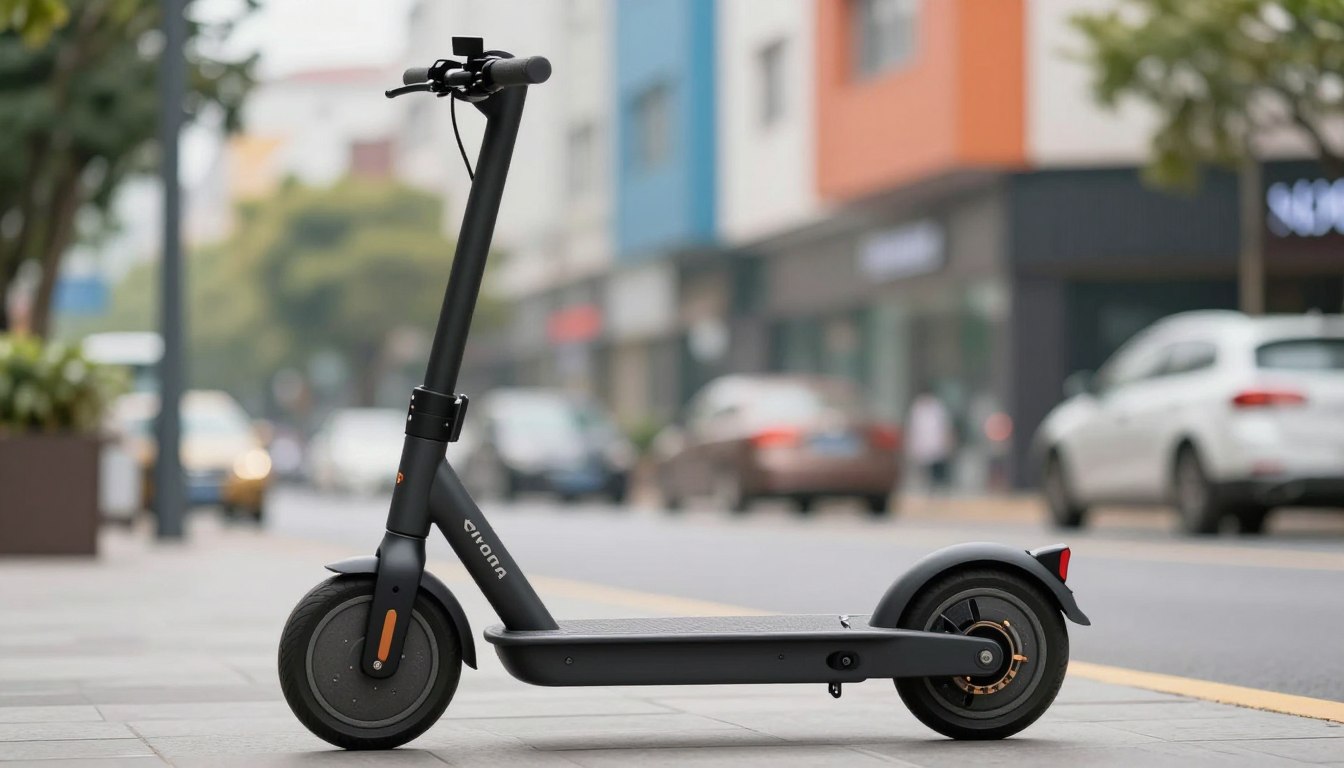
Can a compact electric commuter truly replace short car trips in US cities? This guide answers that question by looking straight at the facts around the xiaomi scooter pro family.
The article frames what this model line means on American streets and why many riders pick an electric scooter for short commutes and mixed trips. It notes common specs — roughly 14.2 kg weight, a 25 km/h speed cap, and up to 45 km range on the Pro 2 — and explains how those numbers play out in daily use.
Readers will get clear answers on real-world range in miles, typical speed in mph, portability for stairs or trunks, app features, and whether the device is worth the price today. The guide highlights where the xiaomi electric scooter Pro 2 differs from older models and focuses on comfort, control, and safety — the factors that decide long-term use.
Key Takeaways
- Practical ownership matters more than marketing specs.
- The Pro line balances portability and performance for short US commutes.
- Expect about 14.2 kg weight and a 25 km/h top cap on many models.
- Real-world range can reach ~45 km on Pro 2 under ideal conditions.
- Look for comfort, control, and safety when comparing electric scooters.
Quick take on the scooter pro xiaomi lineup for US riders
If your daily route mixes walking, transit, and short rides, this lineup often fits the bill. The electric scooter pro models focus on fast folding, predictable handling, and compact storage for city days.
Who it suits: first-time riders who want an easy learning curve, commuters who stash a ride on trains or buses, and mixed-mode travelers who carry the device often. The design favors simplicity over extra power.
What to know upfront: expect a lightweight, portable package with limited suspension and smaller tires compared with premium machines. That means a firmer ride on rough pavement but much easier carrying and storage.
Realistic use cases include hopping on public transit, tucking the unit under a desk, or carrying it up a flight of stairs. Riders should weigh “good enough” daily performance against higher-cost upgrades like larger tires or stronger motors.
- Best fit: last-mile commuting and mixed trips.
- Tradeoffs: portability versus premium comfort.
- Decision tip: choose simple, consistent design for everyday reliability.
Xiaomi scooter pro specs that matter most
Real ownership comes down to a few specs that shape everyday rides, not glossy marketing sheets. This short list translates spec numbers into what a typical US commuter will feel on the street.
Motor and power
The single front motor delivers 300W nominal and up to 600W peak. Nominal output keeps cruising steady. Peak power helps starts, short hills, and carrying momentum during quick accelerations.
Battery and range
The 12.8 Ah battery is rated for up to 45 km in ideal conditions. Real-world range will drop with heavier riders, wind, hills, and frequent stops. Expect lower numbers on mixed urban commutes.
Speed and riding modes
A 25 km/h cap roughly equals 15.5 mph. That is common in many regions and shapes commute time and legal use on shared paths.
Weight, load, and frame
At about 14.2 kg with a 100 kg rider limit, the build favors portability. The aerospace aluminum frame gives a strong strength-to-weight ratio and corrosion resistance. Inspect welds and fasteners on delivery for consistency.
Water resistance rating
IP54 means splash protection and light rain tolerance, not puddles or pressure washing. Warranties often exclude water damage, so avoid deep water and dry components after wet rides.
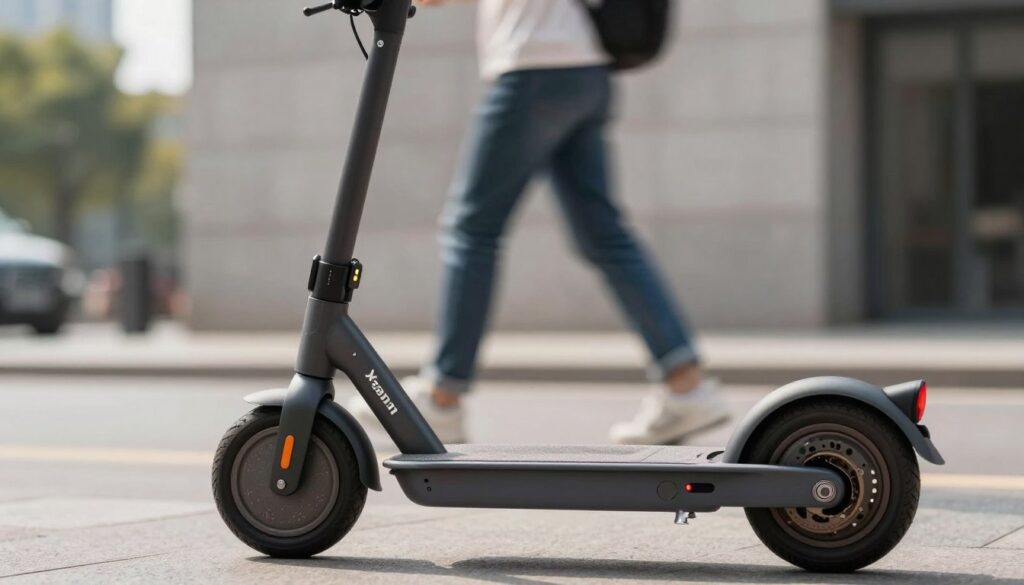
- Everyday impact: motor power affects hills; battery and range set commute reach.
- Portability: weight and frame decide carry ease for transit and stairs.
- Durability: IP54 rating limits water exposure—plan rides accordingly.
For a practical comparison and buying details, see the Xiaomi Pro guide.
Real-world performance: speed, power delivery, and control
Real-world ride checks reveal how speed, power delivery, and handling shape daily commutes on this compact electric model.
Top speed reality check
Top speed reality and firmware notes
Most testers see a practical top speed around 18 mph. A handful report reaching about 20 mph after a firmware tweak, but riders should keep mind of legal limits, safety, and warranty risks before considering that route.
Acceleration and hill ability
What one front motor delivers in traffic
The single front motor offers steady launches and predictable throttle response. From stoplights it accelerates briskly enough for city merges, though heavier riders will notice reduced punch on steeper grades.
Hills expose limits: grade, rider weight, and battery level change how much extra effort is needed. Sometimes a short push or lower speed is the practical option.
Adaptive cruising and control
Smoother cruising to cut fatigue
An adaptive-style algorithm reads a speed sensor and smooths throttle to keep a constant pace. This feature is about comfort and control, not raw performance, and it helps reduce rider fatigue on longer commutes.
- Use: balanced daily commuting versus speed-first riding.
- Expect: steady handling, modest top-speed, and honest hill limits.
- Tip: test a local route to match the riding experience to needs.
Battery range, charging, and long-term battery health
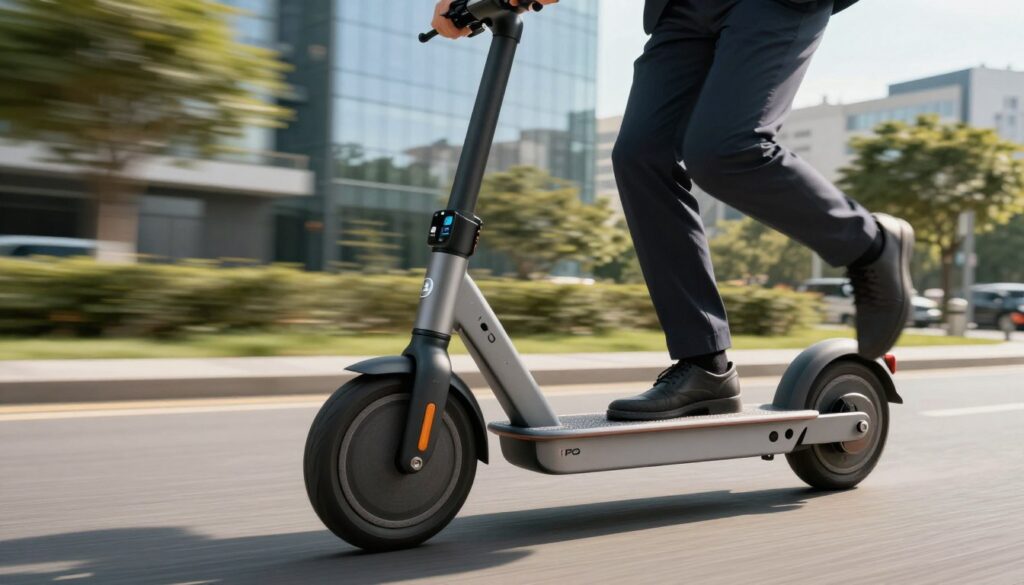
How a pack performs over months matters more than a single “up to” range number. The Pro 2 uses a 12.8 Ah cell rated for up to 45 km in ideal lab tests. Real-world range falls with rider weight, wind, hills, and frequent stops. Treat the spec as a best-case guide, not a daily guarantee.
Smart power management in the app
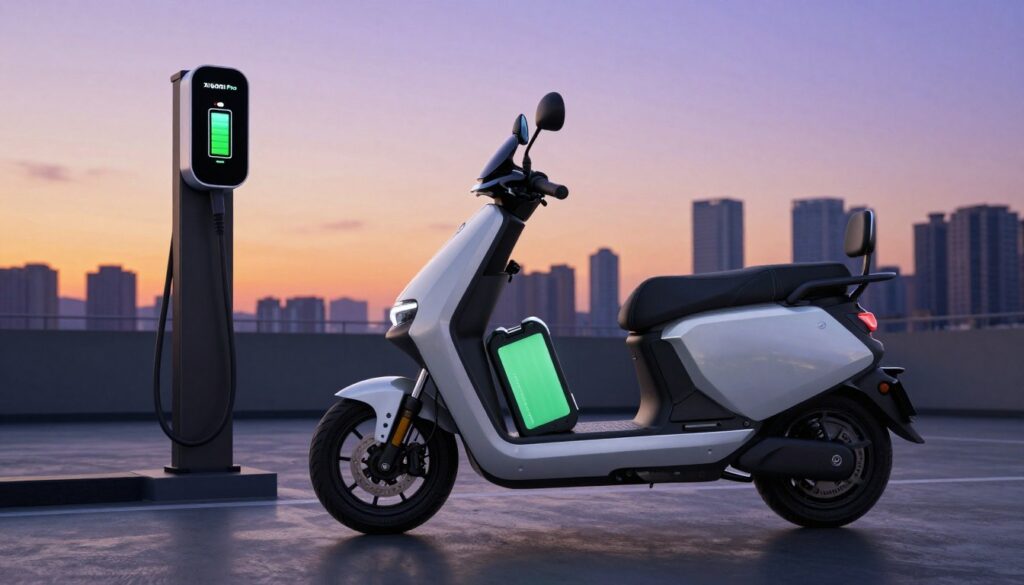
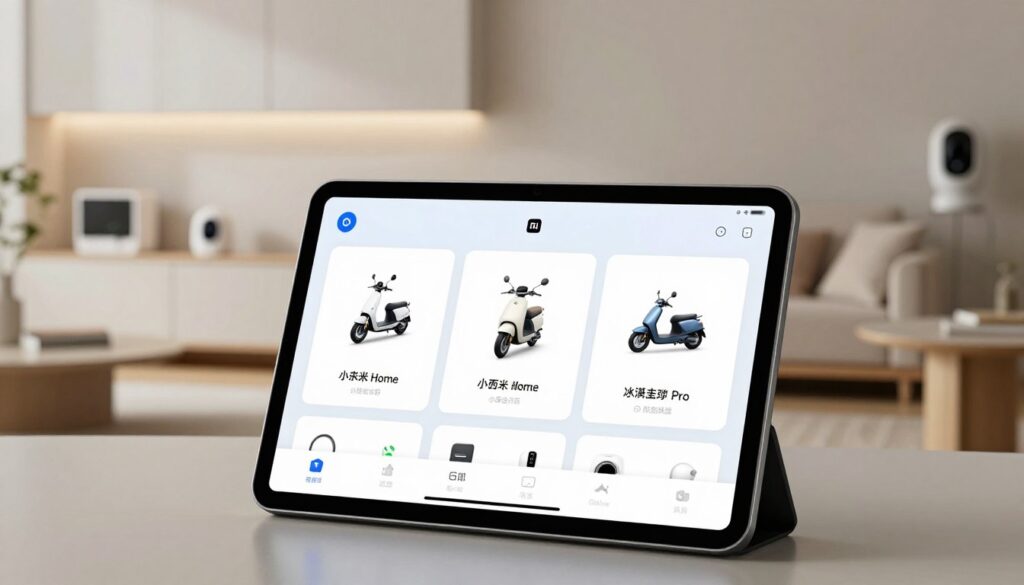
The mobile app shows battery percentage, charging cycles, and ride statistics. It also sends alerts for low voltage or abnormal drain. Using the xiaomi home app or home app dashboard gives clear information to plan charging before trips.
Regenerative brake and energy recovery
Regenerative brake helps recover small amounts of energy during decel. It feels like gentle drag and is most useful on long descents. Energy recovery is incremental—helpful, but not a substitute for regular charging.
How to extend range
- Ride smoother: steady throttle saves more power than frequent bursts.
- Use conservative speed modes for commutes with many stops.
- Keep tires inflated and avoid carrying extra weight when possible.
- Store the battery at moderate temperatures and avoid full 0%–100% cycles often.
Bottom line: the battery system is a long-term cost factor. Match expected weekly miles to realistic range and charging habits before buying an electric scooter pro as a daily tool.
Ride quality and comfort on typical city streets
City pavement often has hidden jolts; the right tire choice makes the difference between a rough trip and a relaxed commute.
Air-filled tires and inner tubes
The model uses dual 8.5-inch air-filled tires with an inner tube setup. These cushions conform to cracks and patched asphalt, so small bumps feel softer than with solid rubber.
Flat risk vs. comfort
Pneumatic tires give better wet grip and lower vibration, but they can puncture. Owners should keep proper pressure and consider tire slime as a preventative fix.
Practical tips:
- Check pressure weekly to balance comfort and puncture resistance.
- Use tire slime for long commutes or debris-prone routes.
- Plan routes to avoid glass-heavy areas when possible.
Deck and stance
The rubberized deck has traction nubs and is slightly longer than older entry models. That deck size offers stable footing for most riders and helps reduce fatigue on longer rides.
Keep in mind that many models rely on tires rather than a full suspension system. If someone’s route has lots of rough surfaces, they may prefer an electric scooter with larger tires or dedicated suspension.
For a hands-on comparison and buying detail, see a detailed Pro 2 review.
Safety features: lights, braking system, and visibility
Safety on city rides depends on how well lights, brakes, and grips work together. This section looks at the complete system so riders know what the model provides and what they should add.
How the braking system works
Rear mechanical disc brake handles primary stopping while E‑ABS regenerative braking helps stability and reduces wheel lock. Together they form a layered braking system for predictable response.
Stopping performance and brake lever feel
Reported stopping distance is about 4 meters from moderate speed. Surface, tire wear, and rider technique change results in practice.
Brake lever feel matters: a clear, progressive lever lets riders modulate force in traffic instead of relying on raw power alone.
Lights, night riding, and visibility
The 1.1W headlight reaches roughly 6 meters ahead and the taillight brightens on braking. These lights help short-range visibility but many riders add supplemental lighting for longer night routes.
Grip, throttle control, and speed management
Anti‑slip handles and a thumb-style brake/accelerator design give confident control during sudden stops. Managing speed in mixed traffic is often safer than chasing top mph.
- Takeaway: safety is a system—braking, lights, grip, and rider habits all matter.
- Inspect the brake lever feel before regular use and add extra lights for night commutes.
- Practice controlled stops on local routes to learn real braking distance.
Design, portability, and everyday practicality
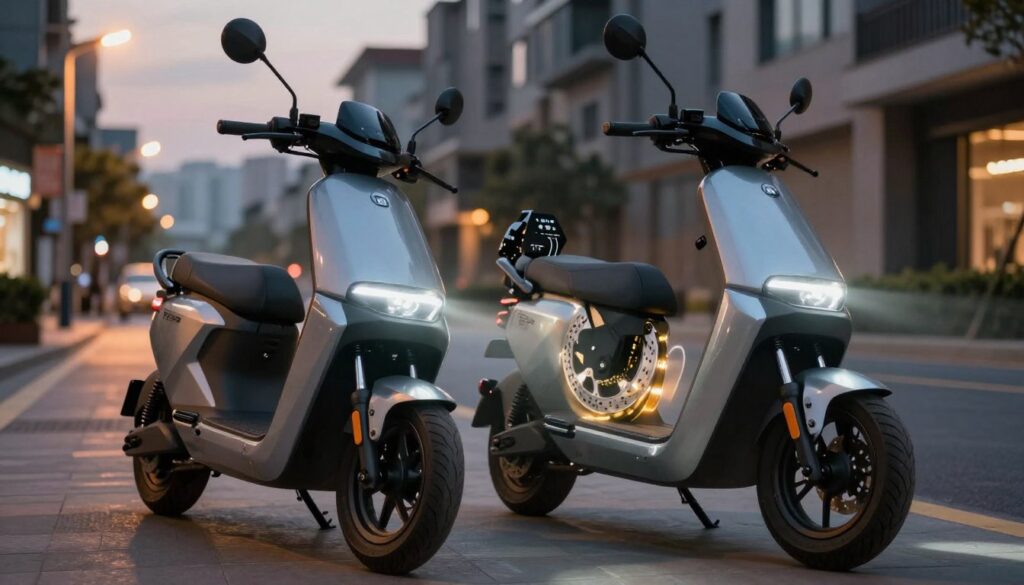
Practical design choices — from latch geometry to handle balance — shape whether a device becomes a daily tool. This section explains how folding, carry weight, and small upgrades make a real difference for commuters.
Three-step fold and secure latch
The fold uses a three-step motion: pull the lever, fold the stem down, and snap the bell into the rear latch. It locks into a compact package that fits under desks or in trunks.
What 31 lbs feels like for stairs and transit
At about 14.2 kg (~31 lbs), the unit is carry-friendly for short flights and train platforms. Handle shape, balance, and a firm latch matter more than the raw number when hauling it up stairs.
Frame, build quality, and production consistency
The aerospace aluminum frame adds stiffness and corrosion resistance. Mass production tends to tighten quality variance compared with small-batch runs, which improves overall reliability and rating in long-term use.
Small details that matter
Design touches—like a magnetized charging-port cover and sealed components—reduce dust and moisture issues. Riders should keep mind that IP54 is splash resistant, not waterproof, and warranties often exclude water damage.
- Ease: one-button controls simplify power, lights, and mode changes.
- Fit: folded size tucks into common storage spots for mixed commutes.
- Upgrade note: compared to earlier m365 m365 models, the charging cover is a clear quality win.
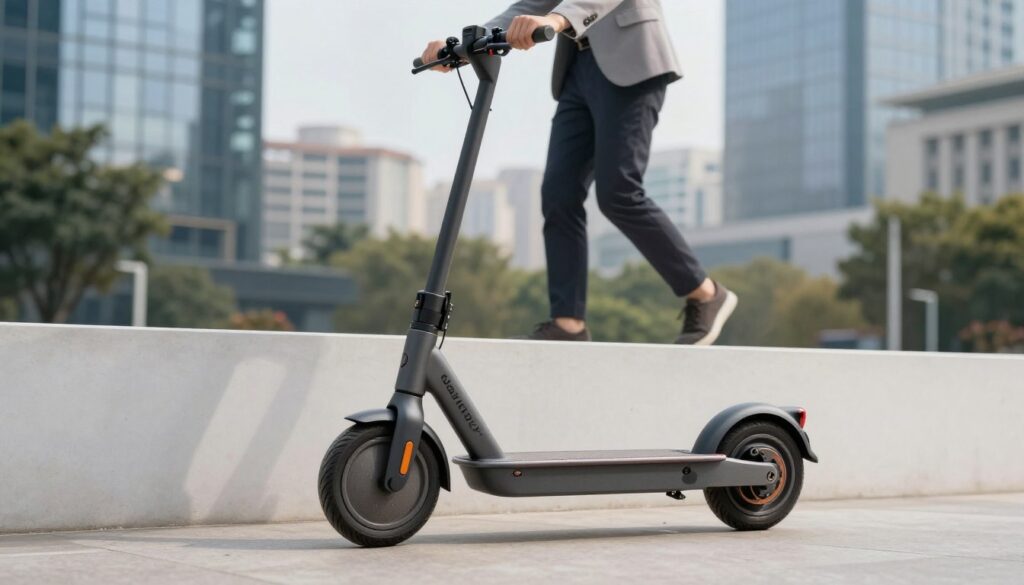
For a broader look at ownership and features, see this short guide on exploring the xiaomi electric scooter.
Xiaomi Home app, firmware, and the wider Pro family comparison
Connected controls and a clear cockpit help riders stay aware and in charge on city runs.
Dashboard and cockpit
The LED display shows speed, battery level, riding mode, lights status, and Bluetooth connection at a glance.
Always-visible speed and battery reduce range anxiety and let commuters pace a trip like a short car leg.
App controls and firmware
The xiaomi home app and home app dashboard let riders lock the device, toggle lights, review ride data, and apply firmware updates.
Firmware fixes stability issues and adds features, but riders should avoid unsupported tweaks that affect warranty or legal speed limits.
Pro 2 vs M365 and M365 Pro
The main gains of moving from M365 to a xiaomi pro model are longer range and extra oomph from the motor. If someone is happy with short routes, the upgrade may not justify the cost.
What the 4 Pro brings
Newer models push the envelope: 55 km range, 700W max power, and 10-inch tubeless self-sealing tires cut flats and smooth rides.
Security jumps too — UL IoT Security Rating Gold, stronger binding, and a hardware identity chip protect the system in a connected world.
Price, value, warranty, and the final buy-or-skip verdict
Price and warranty matter most when turning specs into a dependable daily ride. Buyers should weigh battery health, real-world range, braking confidence, and true portability against similarly priced electric scooter options.
Warranty and service vary by seller. IP54 only guards against splashes, not full water damage, so buy from an authorized dealer for better parts and support.
Buy if: they need a proven commuter, stable handling, and compact storage for mixed transit use.
Skip if: they want higher top speed, stronger hill power, brighter lights, or premium suspension—these needs point to newer or higher-end models like the m365 pro alternatives or the 4 Pro series.
Final verdict: for many US commuters the xiaomi scooter pro offers solid value, but match expectations for range, braking, and service before buying.
FAQ
What are the key specs, price range, and overall reviews for the Xiaomi Scooter Pro line?
The lineup balances practical range, reasonable power, and solid build quality for urban riders. Typical specs include a 300W nominal motor with bursts up to 600W on higher models, a battery rated for up to about 45 km per charge on the Pro 2, and a top speed governed to roughly 25 km/h. Prices vary by model and region; reviews praise ride quality and value while noting limits in hill performance and cargo capacity compared with heavier, more powerful electric options.
Who is this scooter best suited for?
It fits commuters, mixed-mode travelers who combine transit and walking, and first-time riders seeking a dependable, easy-to-use electric model. It works best for relatively flat urban routes and riders who prioritize portability, simple controls, and decent range over raw off-road power or heavy loads.
What should riders know upfront about comfort and portability?
Expect a compact folded footprint and a carry weight near 31 lbs, which is manageable for short stair climbs and transit stints but not ideal for long carries. Comfort comes from 8.5-inch pneumatic tires and a well-shaped deck; however, the absence of full suspension means riders feel more road feedback on rough pavements.
What motor and power specs matter most?
The nominal 300W motor with up to 600W peak (on some Pro-series models) defines typical acceleration and hill capability. Single front-motor layouts deliver efficient city performance but will slow on steep inclines or with heavier riders. Peak power helps short bursts, but sustained climbs depend on gearing, firmware, and battery state.
How far will the battery go and how long to charge?
Under ideal conditions the Pro 2 battery reaches around 45 km per charge. Real-world range varies with rider weight, terrain, speed, and temperature. Full charge time typically runs 4–8 hours depending on charger specs. Using app power modes and moderate speeds extends usable range.
What about top speed and how that matters in the U.S.?
The models are capped at around 25 km/h (roughly 18 mph). Many U.S. riders see a real-world top speed around 18 mph; modifications sometimes push higher but can void warranty and reduce safety. This cap aligns with many local regulations for light electric vehicles.
How much does the scooter weigh and what is its load capacity?
Typical builds weigh about 14.2 kg (around 31 lbs) and support up to 100 kg (220 lbs) rider weight. Heavier riders will notice reduced range and hill performance; for regular heavier use, a higher-capacity model or alternative electric vehicle is recommended.
Is there any water resistance rating?
Yes — an IP54 splash-protection rating on several models. That covers light rain and road spray but does not protect against heavy water immersion or thorough pressure washing. Riders should avoid deep puddles and prolonged wet storage.
What should riders expect about real-world top speed and firmware notes?
Riders typically see an 18 mph cap in everyday conditions. Some users report firmware tweaks that increase top speed to around 20 mph, but those alter system safety limits, can void warranty, and may breach local rules. Stick to factory settings for reliable performance and warranty protection.
How does acceleration and hill climbing perform with a single motor?
Acceleration is brisk on flat roads for urban commuting but tapers on steeper inclines, especially with heavier riders. Expect reduced torque on continuous climbs; short bursts help, and choosing a lower speed mode can preserve battery when climbing long hills.
What role does the speed-sensor algorithm play in ride comfort?
The adaptive speed sensor smooths power delivery to reduce sudden surges and lessen rider fatigue. It helps maintain a predictable cruising experience, which improves confidence in traffic and during lane changes.
What app features support battery management and ride tracking?
The companion app provides live battery status, ride statistics, alerts, and firmware updates. Riders can check charge level, monitor energy usage, and view trip logs. Smart power-management tools help optimize long-term battery health when used regularly.
How effective is regenerative braking and does it extend range significantly?
Regenerative braking captures some kinetic energy during deceleration and returns it to the battery. It helps slightly extend range and smooth braking feel, but it won’t replace conservative riding as the primary range extender.
What practical tips extend range for daily commuters?
Ride in lower power modes, avoid sustained high speeds, keep tires properly inflated, minimize sudden accelerations, and remove unnecessary cargo weight. Route planning to avoid steep climbs also helps conserve battery.
How do the pneumatic tires affect ride quality and flat risk?
8.5-inch air-filled tires deliver superior comfort and shock absorption compared with solid rubber. They reduce vibration and improve grip. However, they carry a higher flat risk; using slime sealant or tubeless setups can mitigate that risk.
What should riders know about the deck and stance for stability?
The deck offers a balance of traction and stability suited for entry-level urban scooters. Width and grip surface support a confident stance, though riders who prefer larger platforms may feel constrained during longer rides.
What braking system is on these models and how reliable is it?
The braking system pairs rear mechanical disc braking with E-ABS regenerative braking up front. This combination delivers predictable stopping power and improved control; reported stopping distances on well-maintained examples are around four meters in ideal conditions.
How bright and effective are the lights for night riding?
Headlight placement and taillight brake response offer good visibility for urban night use. They meet common brightness limits, making riders noticeable to traffic, but they are not substitutes for additional lighting on poorly lit routes.
What handling and grip features improve rider confidence?
Anti-slip handles, a responsive throttle, and a tuned speed-sensor algorithm combine for precise control. The frame geometry keeps handling predictable in traffic, while tire grip and deck traction aid cornering stability.
How does the folding mechanism and portability perform in daily life?
The three-step fold with a secure latch makes storage at home, in the office, or in a car straightforward. The compact folded size is convenient for tight spaces, though lifting the 31-lb unit for long periods can tire some riders.
What is the build quality like and what materials are used?
The frame uses lightweight aerospace-grade aluminum for a durable, corrosion-resistant structure. Manufacturing consistency is strong across mass-produced units, and sealed components reduce maintenance needs.
Are there small design details that improve ownership experience?
Yes — examples include a magnetized charging port cover, sealed wiring housings, and thoughtfully placed controls. These small features simplify daily use and protect components from debris and moisture.
What does the onboard dashboard and app display show?
The LED dashboard provides speed, battery level, selected mode, light status, and Bluetooth connectivity. The app mirrors this data, lets users lock the vehicle, change settings, and view ride history.
What controls and functions does the companion app provide?
The app allows locking, light control, firmware updates, ride statistics, and some ride-mode customization. It also pushes alerts for maintenance and battery health to keep ownership simple.
How do the Pro 2 and original M365 models compare?
The Pro 2 boosts range and power relative to the original M365 and M365 Pro. Upgrades include larger batteries, refined motor control, and improved hardware. For most commuters, the Pro 2’s range and comfort justify the upgrade.
What changes with the Electric Scooter 4 Pro and what matters most?
The newer 4 Pro shifts the conversation with roughly 55 km range, up to 700W peak power, and 10-inch tubeless self-sealing tires. Those changes improve long-distance comfort, hill performance, and puncture resistance for heavier or longer commutes.
Are there security and system upgrades on the newer models?
Newer models introduce stronger IoT security ratings and improved binding procedures, plus more reliable firmware update paths. These upgrades enhance vehicle security and long-term software support.
What about price, warranty, and overall value?
Price reflects battery capacity, tire type, and motor power. Warranties typically cover defects for a limited period; specifics vary by retailer and region. Value tends to be high for commuters who want a balanced mix of range, portability, and ride quality without moving to heavier electric alternatives.