
Turboant X7 Pro Electric Scooter Review & Specs
 PopScooter Team
March 10, 2026 10:36 am
.
11 min read
PopScooter Team
March 10, 2026 10:36 am
.
11 min read
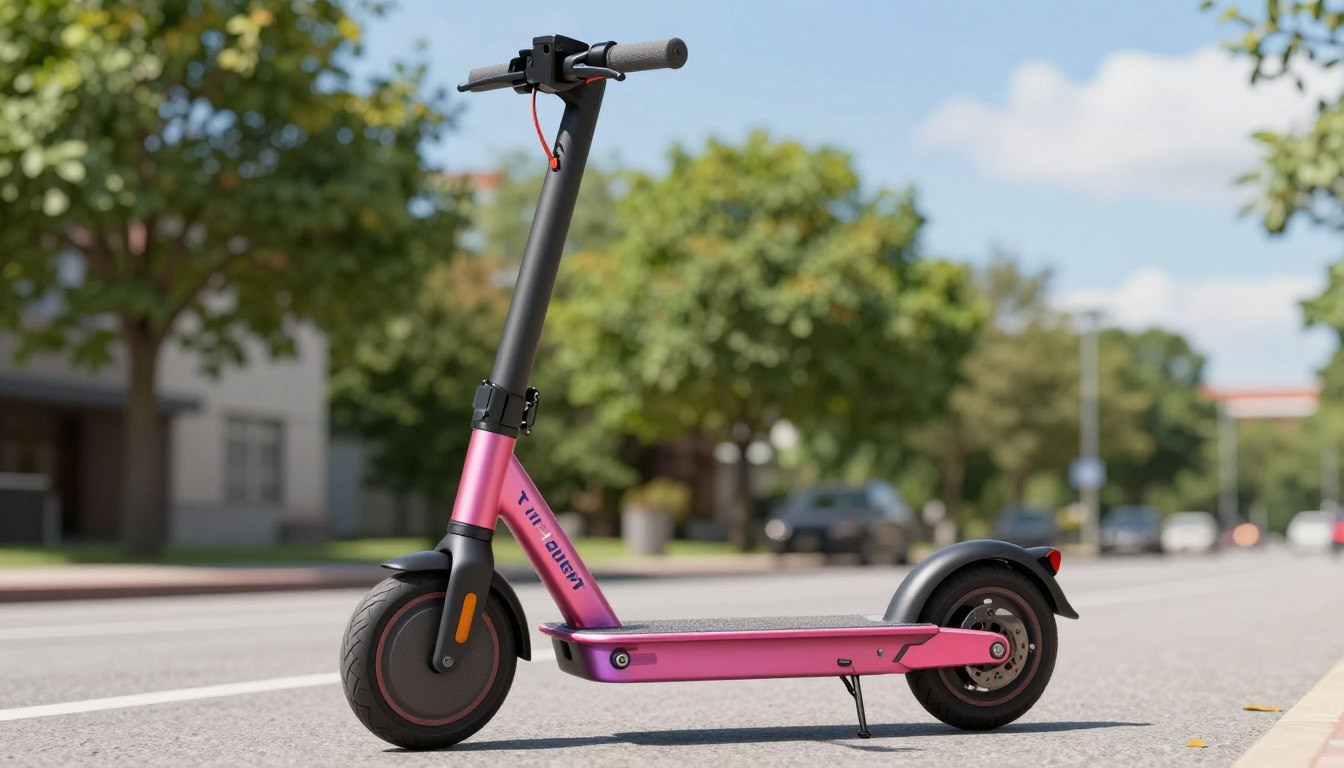
Can a foldable, adult-size electric scooter really replace short car trips and campus rides? This review looks at that question head on.
The Turboant X7 Pro is a commuter-focused model with a detachable battery and a 350W motor. It folds for storage and targets riders who want simple, practical transportation for daily use.
Readers will find clear coverage of specs, design, and real-ride performance across typical U.S. terrain. The review highlights common praise from owners: a smooth ride, easy setup, and helpful customer service when issues appear.
Expect honest notes on tradeoffs. The scooter is full-size and portable, but still a bit hefty on stairs. Pneumatic tires add comfort yet risk flats. Speed, range, and braking feel will vary by rider weight, route, and conditions.
This is a practical product review, not a hype piece. It opens with quick specs, then covers design and features, performance, braking and safety, and finishes with a commuting/campus verdict. See more on the Turboant scooter lineup.
Key Takeaways
- Commuter-ready: Designed for daily transportation and campus trips.
- Detachable battery: Adds charging convenience and flexibility.
- Comfort vs. weight: Smooth ride but somewhat hefty for carrying upstairs.
- Real-world variance: Speed and range depend on rider and terrain.
- Practical review: Focuses on real use, not marketing claims.
Quick Specs Snapshot for This Electric Scooter
Here’s a concise specs rollup so readers can decide fast if this electric scooter matches their daily route. The summary focuses on real-world numbers: speed, motor output, battery, and how portable the scooter feels when folded.
Top speed, motor power, and ride modes
Claimed top speed: 20 mph (actual top speed varies with rider weight, battery level, and hills).
Motor: 350W nominal output—enough power for city riding and quick starts in Sport mode, though steep grades reduce speed.
Ride modes: Three selectable modes plus cruise control for steady distance rides.
Claimed range and charge time expectations
Range: Brand claims a distance estimate, but real-world range changes with speed, stops, terrain, and rider size.
Charge time: Typically about 5–6 hours. The removable battery makes charging in an apartment or office easier.
Weight, folded size, and portability basics
- Weight: Around 33–35 lbs—portable for short carries, heavier for stairs or long lifts.
- Folded size: Compact enough for trunks and closet storage.
- Water: Light rain is manageable, but avoid deep puddles and prioritize traction and safe braking.
Turboant X7 Pro Review: Design, Build, and Everyday Features
We’ll walk through how the folding stem, cockpit, and deck shape the day-to-day ride.
Folding stem and deck layout: The folding latch feels solid when locked and the stem gives a stable ride at speed. The roomy deck supports a natural stance for commuting and short trips. Folding is straightforward: hold the stem, flip the latch, and secure the hook before carrying.
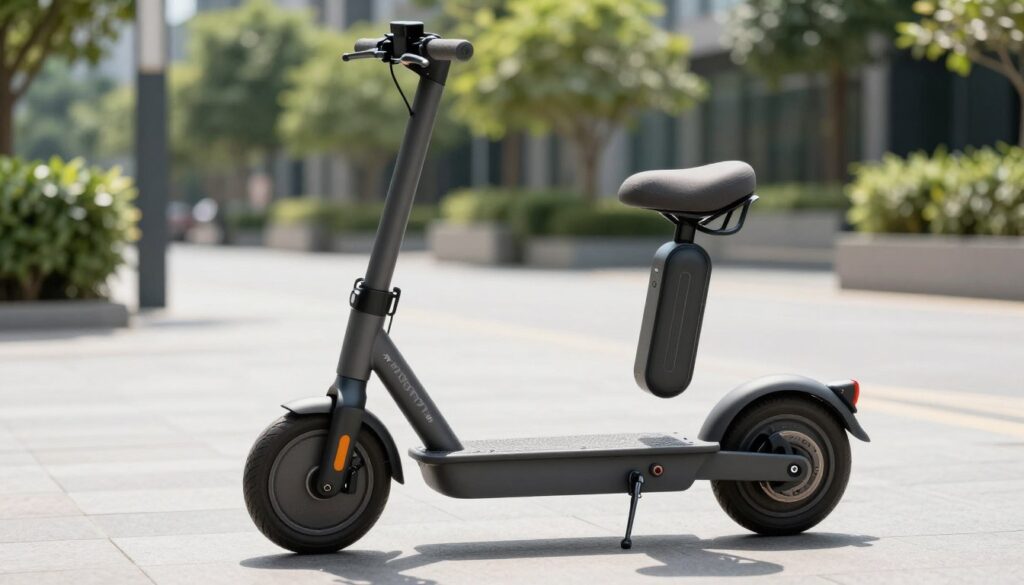
Detachable battery: The stem-mounted battery slides out for easy charging indoors. Riders like removing the battery to charge in an office or dorm and to deter theft when parked outside.
Controls, display, and cruise
The throttle and LCD display are simple to use. The screen shows speed and battery level clearly. Cruise control engages after holding a steady throttle for about six seconds, which eases thumb fatigue on longer straight stretches.
Tires, comfort, and assembly
10-inch pneumatic tires smooth out cracked pavement and small debris. Expect occasional flats; the box often includes a spare inner tube and a hex wrench.
- Included: scooter, battery, charger, manual, hex wrench, spare inner tube.
- Lights: headlight and rear light are commuter-friendly; some owners reported headlight issues resolved by support.
- Usability notes: deck width is comfortable and the display remains readable in daylight for most riders.
For a broader look at similar models and accessories, see this related scooter guide.
Performance on Real Rides: Speed, Range, and Hill Ability
Numbers on a spec sheet only tell part of the story; real rides show how speed and range hold up under load.
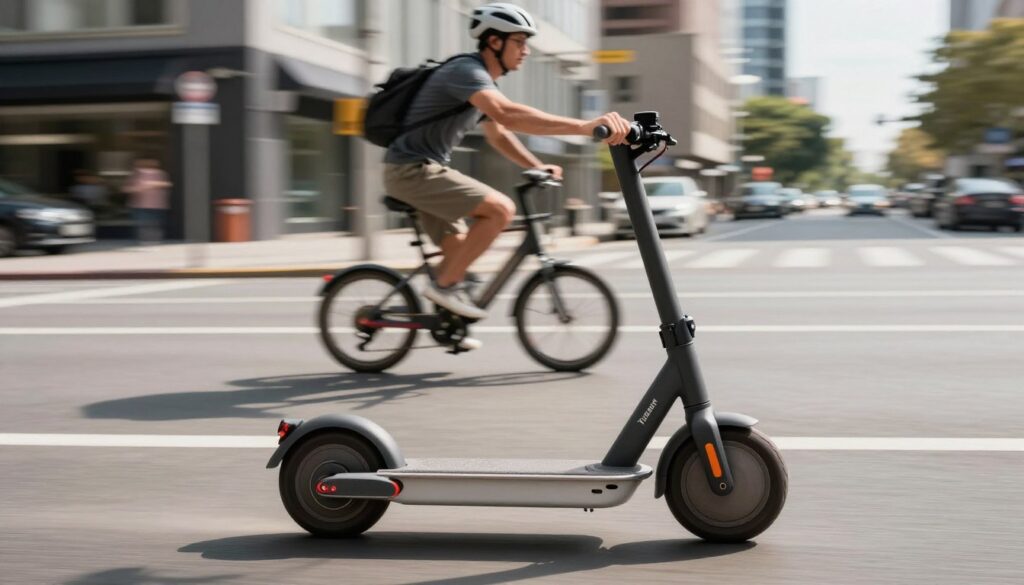
Top speed vs real mph: Many riders report hitting around 28 kph on flat ground, while some achieve the claimed 20 mph in ideal conditions. Differences come down to rider weight, wind, and battery state. Expect variation rather than a single fixed top speed.
Everyday range and distance habits
Range reports cluster near 19–20 miles for mixed commuting. Some riders charge once a week with moderate daily use. Others add a spare battery for longer weekend trips to extend total distance.
Sport mode feel and handling
Sport mode gives noticeably quicker acceleration. Acceleration feels strong rather than jerky for most riders, and stability holds on typical city pavement. Riders should still ease throttle near potholes and tight turns.
Rider weight and hill ability
Heavier riders (roughly 175–225 lbs) generally report adequate power on moderate grades. Expect slower speeds on steeper slopes.
- Manageable grades: Around 10% is climbable with reduced speed.
- Steeper hills: Approaching 15% the scooter may crawl or stall, especially under heavier weight.
- Tip: Anticipate hills, switch to the right mode, and conserve battery before long climbs.
For more detailed rider feedback and test numbers, see a full detailed ride review that compares real-world results to the specs.
Braking, Control, and Safety Considerations
Stopping power matters more than top speed for short urban trips, so brakes deserve close attention. This section explains how each braking element works and how riders can combine them for safer, more predictable stops.
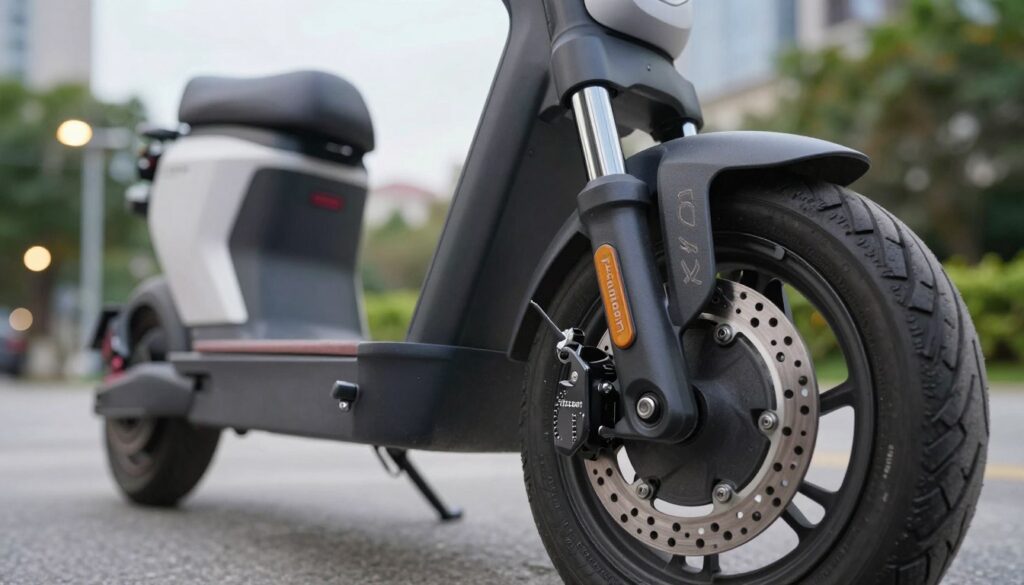
How the braking system works
The scooter uses a cable-operated rear disc brake, regenerative motor braking up front, and a rear fender brake for simple stomp stopping. Each part contributes differently: the disc gives mechanical stopping, regen helps slow the wheel without wear, and the fender adds extra bite at low speeds.
Stopping feel and common feedback
Some riders report a “weak brake” feel—longer stopping distance or less initial bite. Cable-disc setups can need periodic adjustment and pad alignment to restore firm control.
Many compensate by planning stops earlier and using the lever brake plus the fender brake together for quicker deceleration.
Night riding and wet-weather tips
Headlight and rear light aid visibility, but riders often add a brighter secondary lamp and wear reflective gear for city traffic. At least one user fixed a headlight issue with support guidance, so check lights before commutes.
- Check brake response and hand lever feel each ride.
- Keep tires properly inflated for predictable grip.
- Reduce speed in rain; water and wet surfaces increase stopping distance and lower tire traction.
Is the TurboAnt X7 Pro Worth It for Commuting and Campus Life?
The removable battery and 10-inch tires make day-to-day trips easier for students and apartment dwellers. Riders praise the simple charging routine and the ability to top off power indoors without lugging the whole scooter.
Best fit: people with short commutes (3–5 miles), campus routes, or errands who value folding storage and a smooth ride. A second battery extends weekend range for longer trips.
Tradeoffs: folding helps trunk and office storage, but the unit still has notable weight for stairs. Those who need ultra-light carry or flat-proof tires may look elsewhere.
The model offers solid value, quick setup, and responsive support. For specs and purchase details, see the official product page.
FAQ
What top speed can riders expect from this electric scooter?
This model is rated around 20 mph in ideal conditions. Real-world speed depends on rider weight, terrain, and battery level. Lighter riders on flat roads often hit close to the claimed top speed, while heavier riders or uphill sections will reduce peak mph.
How powerful is the motor and what are the ride modes?
The scooter uses a mid-range hub motor suitable for urban commuting. It offers multiple ride modes, including an eco mode for range, a standard mode for daily trips, and a sport mode that boosts acceleration and responsiveness for quick overtakes.
What range can users realistically expect per charge?
Claimed range varies, but realistic distances are shorter due to stop-and-go traffic, hills, and rider weight. Typical commuters report getting enough range for 10–20 miles on mixed routes; battery condition and riding style significantly influence this.
How long does the battery take to charge?
Charging time depends on the charger and battery capacity. Expect several hours for a full charge; using the detachable battery feature can allow convenient indoor charging and faster turnaround for daily use.
How much does the scooter weigh and how portable is it when folded?
The scooter is designed for commuting and strikes a balance between sturdiness and portability. It folds via a stem hinge and can be carried short distances, but it still has noticeable heft due to its battery. Folded size fits compact storage in trunks and closets.
Is the detachable battery secure and easy to remove?
The removable battery simplifies charging and reduces theft risk when stored indoors. It locks into the deck and detaches with a key or release—handy for commuters who need to bring the battery inside workplaces or classrooms.
What kind of display and controls are available?
The scooter includes a basic LCD screen showing speed, battery level, and mode. Throttle control is thumb-operated, with simple buttons for lights and cruise control. The layout is commuter-friendly and easy to learn.
How comfortable is the ride with 10-inch pneumatic tires?
The 10-inch pneumatic tires absorb bumps better than solid tires, offering a smoother ride on rough city streets. Riders report improved comfort and traction, though occasional maintenance like inflation checks is necessary.
What brakes does it use and how effective are they?
It combines a rear disc brake with regenerative front braking and a rear fender as a stopping aid. Many riders like the disc and regen combo, but some describe the overall stopping feel as modest and recommend giving extra braking distance, especially at higher speeds.
How do riders compensate for reports of “weak brakes”?
Riders often use a combination of regen and disc braking early, reduce speed before turns, and ride defensively in traffic. Upgrading brake pads or having a professional tune the system can improve stopping feel for heavier or frequent riders.
How does rider weight affect performance and range?
Heavier riders will see reduced acceleration, lower top speeds, and shorter range. Manufacturers publish specs based on an optimal rider weight; expect noticeable differences if the rider is near or above the scooter’s recommended load limit.
Can this scooter handle moderate hills and steep grades?
It manages gentle to moderate slopes well in sport mode, but steep grades will slow it significantly and reduce range. For frequent hilly commutes, choosing a higher-power motor or testing the route beforehand is advisable.
How is the scooter assembled out of the box and what comes in the package?
Assembly is straightforward: unfold the stem, secure the latch, attach the handlebar, and check tire pressure. The box typically includes a charger, quick-start guide, basic tool kit, and keys for the removable battery.
What night visibility features are included?
The scooter offers a front headlight and a rear light to increase visibility. Riders should still wear reflective gear and consider adding auxiliary lights for low-light commutes to ensure safety in traffic.
Is the scooter water resistant for rainy conditions?
It has basic water resistance for light rain and puddles, but prolonged exposure or heavy downpours can damage electronics. Riders should avoid deep water and store the scooter indoors when possible.
How does the deck size and design affect daily commuting?
The deck provides enough room for a natural stance and improved stability during rides. A lower deck height helps with balance, and the commuter-friendly layout supports quick mounting and dismounting in urban settings.
Are tire maintenance and replacement easy for 10-inch pneumatic tires?
Yes. Pneumatic tires require checking pressure regularly and occasional patching or replacement. Many repair shops can service these tires, and replacement parts are commonly available for commuter scooters.
What are practical tips for extending battery life and range?
Ride in eco mode when possible, maintain proper tire pressure, avoid aggressive acceleration, and keep the battery charged between rides. Storing the battery at moderate charge levels and avoiding extreme temperatures also helps longevity.
Is this scooter a good choice for campus and city commuting?
The scooter is well-suited for short to medium urban commutes and campus travel thanks to its foldable stem, pneumatic tires, and removable battery. It balances portability with performance for riders prioritizing convenience and moderate speed.
Where can riders find reviews and user experiences for real-world insights?
Reviews on e-scooter blogs, commuter forums, and retailer pages provide varied real-world feedback. Look for reports focusing on speed, range, braking, and rider weight impacts to gauge how it fits specific commuting needs.