
Discover the Best Scoot and Ride Roller for Kids
 PopScooter Team
February 9, 2026 11:37 am
.
9 min read
PopScooter Team
February 9, 2026 11:37 am
.
9 min read
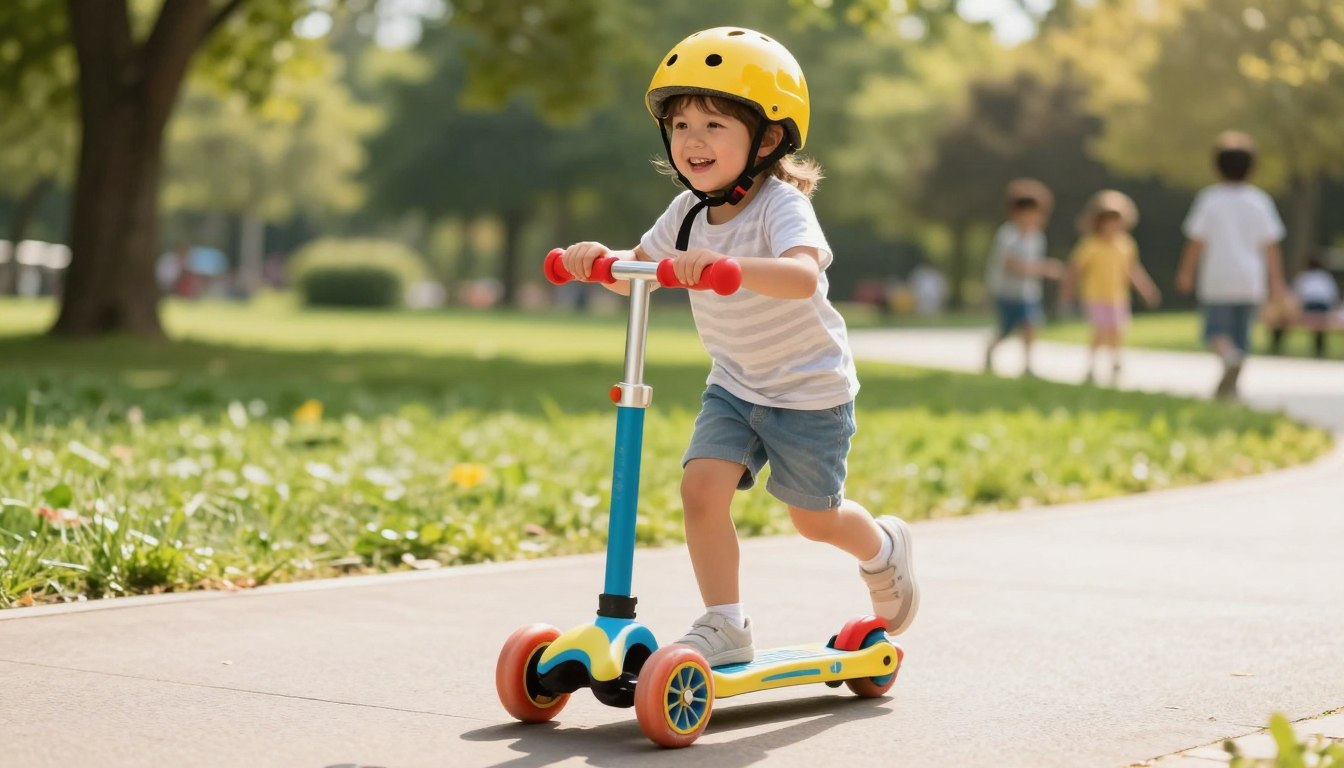
Which small change will make walking to school, park trips, and backyard play feel safer and more fun for a child? That question guides families when they choose a compact, everyday scooter option built for confidence.
Scoot & Ride focuses on practical design. The Highwaykick line blends multi-wheel stability, adjustable handlebars, and skill-building features. Parents find models like the Highwaykick 1 and Highwaykick 3S easy to fit into daily life.
The right toy-like ride supports coordination and makes outdoor time inviting for children. This page helps shoppers compare real differences—durability, adjustability, and long-term fit—so price points make sense for family budgets.
Readers will get a clear preview of stability basics, standout features like LED wheels and folding, and a model-by-model fit guide to match age, height, and riding style.
Key Takeaways
- Learn how Highwaykick models balance stability with skill-building for easy daily use.
- Compare features that justify price: durability, adjustability, and long-term fit.
- Find the best option by age, height, and preferred riding style.
- Focus on safety-first design to boost confidence for young riders.
- Get shopping tips to help caregivers feel confident when they shop.
Shop Scoot & Ride Scooters Made for Kids, Stability, and Everyday Fun
Durability and simple design make family outings less stressful. Parents often start by checking build quality because a child’s scooter gets tossed in car trunks and used hard every day.
https://www.youtube.com/watch?v=grzwuhE1fGM
Why parents choose Scoot & Ride for durability and smooth rides
Materials and wheels matter. Quiet PU wheels, a solid deck, and multi-wheel layouts reduce wobble so a child learns balance with less frustration.
The Highwaykick 3S adds non-slip rubber handles and a backward-folding handlebar for quick storage. Families value designs that cut setup time and avoid extra tools.
What makes a kid-friendly scooter: wheels, handlebar grip, and steady steering
- Look for wheel material and size — PU wheels give smoother, quieter motion.
- Choose comfortable handlebar grips and predictable steering to help small hands stay in control.
- Check stability features: the Highwaykick 1’s 2-front/1-rear kickboard layout and tool-free foldable seat convert from seated to standing use quickly.
Think long term: compare price to how long adjustable parts and higher load ratings will keep a model useful. For busy homes, fewer required tools is a real plus for saving time.
For a closer look at the Highwaykick 3S design and specs, see the detailed model page: Highwaykick 3S.
What Makes a scoot and ride roller Stand Out on the Sidewalk
A confident sidewalk ride starts with features that help a child progress at their own pace. The Highwaykick 3S focuses on simple, practical details that matter during short trips and longer outings.
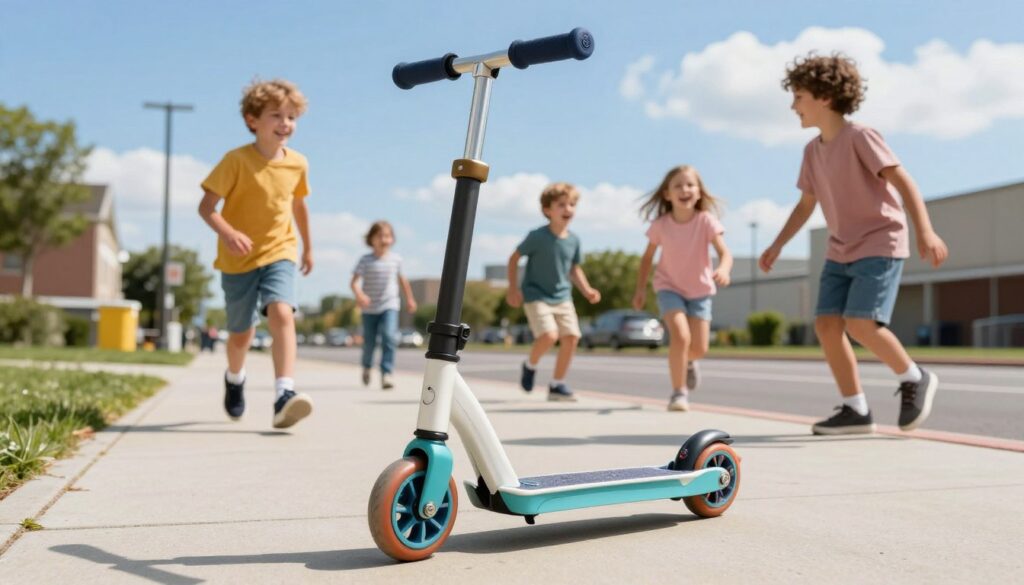
Dual steering control on the Highwaykick 3S for confidence as skills grow
Two steering options let a child turn the handlebar or shift weight to steer. Beginners can push with two feet and turn the bar, while more advanced children learn balance with weight-shift steering.
This dual system truly grows with them, easing the move from seated play to standing control without extra tools or parts.
Glowing LED wheels for visibility at dusk without batteries
The white LED wheels glow when the scooter moves, improving visibility on neighborhood sidewalks at dusk. There is nothing to charge or replace, so families get extra safety with no fuss.
Fold-and-go convenience with a simple handlebar folding mechanism
The handlebar folds backward for compact storage and easy carrying. At 2.6 kg, the model stays light enough to stash in a car or an entryway without taking much room.
Adjustable handlebar height that grows with children up to 130 cm tall
The 3-way height-adjustable handlebar adapts from 96–130 cm. That range helps parents avoid an early replacement as a child reaches new heights.
Comfort and control details: non-slip rubber handles and quiet PU wheels
- Non-slip rubber handles for a secure grip on longer walks.
- Durable PU wheels (2×120 mm front; 80 mm rear) for smooth, quiet rolling.
- Max load 50 kg supports years of use; available colors include Rose, Steel, Ash, and Forest.
Bonus: a DoC compliance PDF is available for download so shoppers can confirm specs and safety documentation before they buy.
Find the Right Model for Each Child, Age, and Height
A clear fit guide saves time and helps families choose a model that grows through key months of development.
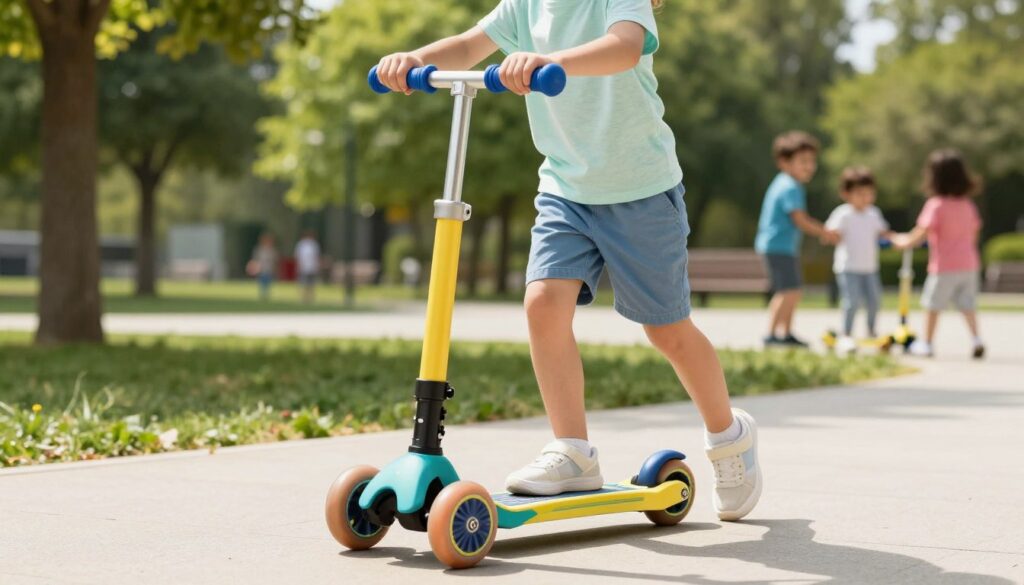
Which model fits which stage? Below is a quick match to age, height, and coordination so parents can choose fast.
Highwaykick 1 — 12 months to 5 years
The Highwaykick 1 is the starter 2‑in‑1 option with a folding seat that converts to a standing kickboard without tools. It uses two front wheels and one rear wheel for extra stability while a child learns to push and steer.
Specs to check: seat height 8–11″, handlebar height 22–25″, product weight 6.2 lbs, max load 44 lbs on the seat and 110 lbs on the standing deck (tread).
Highwaykick 3S — ages 3+ and 96–130 cm
The Highwaykick 3S is for taller toddlers and preschoolers who want more independent riding. It has a 3‑way adjustable handlebar, dual steering modes, and a foldable handlebar for compact storage. The model supports up to 50 kg for longer use.
My First — 6+ months
My First works indoors for early standing and first rolling moments. It features a reversible glide/roll plate, low-noise casters, and an 840 g EPP shell that is shock-absorbing and 100% recyclable.
Practical parent perks include toy storage openings, a removable washable seat cover, and a 20 kg max load.
- Fit tips: choose the Highwaykick 1 seat height for early months, then raise the handlebar as the child grows toward standing use.
- Push progression: children often move from assisted highwaykick push moments to self-propelled standing scoot; dual steering and tool-free conversion ease that shift.
- Compare loads: remember the 44 lbs seat limit vs. 110 lbs standing deck when planning longer use.
For more buying guidance, see this short guide on how to choose a kick scooter for.
Pick the Color, Check the Price, and Get Them Rolling Today
Choose the style that matches your child’s stage, check regional prices, and get them enjoying fresh air today.
Start with fit: if a seat is needed, the Highwaykick 1 supports younger toddlers and converts to standing use later. Its seat limit is 44 lbs and the deck supports 110 lbs for longer use.
Compare cost without pressure: the Highwaykick 1 shows a US sale price of $120 (regular $145) while the Highwaykick 3S lists at €99.90. Factor currency and availability when you shop.
Pick a color that will keep them excited — popular choices include Rose, Steel, Ash, and Forest. Small excitement means more outdoor play time with this favorite toy.
Quick pre-check before checkout: confirm age/height fit, folding for storage, where it will be used (indoors or sidewalks), and the color choice. Use the product documentation download when you need spec details.
Highwaykick 1 details and other ride-on options make it simple to shop, pick a color, and plan the first short route so kids can get rolling right away.
FAQ
What age range suits the Highwaykick 1 2-in-1?
The Highwaykick 1 2-in-1 fits children from about 12 months up to 5 years. It starts as a ride-on with a low seat, then converts to a stand-up deck to support developing balance and coordination. Parents appreciate the gradual transition so toddlers can progress at their own pace.
How does the Highwaykick 3S support a child’s skill growth?
The Highwaykick 3S features dual steering control that teaches turning with the body and the handlebar. That progressive steering helps kids move from seated balance to confident standing rides. Its adjustable handlebar height and stable three-wheel base make it suitable for most 3+ year olds.
What are the height and weight limits for these models?
Models vary: the Highwaykick 3S supports children roughly 96–130 cm tall and typically up to about 50–55 lbs on the standing deck. Ride-on seats and certain boards handle different loads, so checking the specific product sheet for exact weight limits is important for safety.
Are the wheels quiet and safe for sidewalks?
Yes. Many kid-focused boards use quiet PU wheels that roll smoothly on pavement and reduce noise. Some versions include glowing LED wheels that increase dusk visibility without batteries, improving safety and fun during evening play.
Is the handlebar adjustable as the child grows?
Most models offer an adjustable handlebar height designed to grow with children. Adjustable ranges differ by model; for instance, certain boards accommodate up to about 130 cm tall, so families can set a comfortable grip position as kids get taller.
How easy is folding and transport?
Models with a fold-and-go mechanism use a simple handlebar fold for compact carrying and storage. This quick action lets caregivers stow the unit in a car trunk or closet without tools, making outings and travel more convenient.
What materials are used for comfort and durability?
Brands prioritize durable steel or reinforced composite frames with non-slip rubber handles and comfortable seats. Some lightweight options use recyclable EPP foam for the body, offering resilience and reduced weight for toddlers.
Can a child use the seat and standing deck interchangeably?
Yes. Convertible models let parents switch between a ride-on seat and a standing deck. This flexibility supports early seated play and later standing kicks, extending the product’s useful life across developmental stages.
What should parents check before buying for safety?
Verify age and height recommendations, weight limits for both seat and deck, wheel type, and handlebar adjustability. Confirm that handlebars lock securely, grips are non-slip, and the base offers stable steering for confident play.
Are replacement parts and upgrades available?
Many manufacturers offer replacement parts like wheels, grips, and screws. Some shops sell upgrade accessories—such as cushions or carry straps—so families can maintain or customize the product without replacing the entire unit.
How do colors and styles affect price?
Colorways and limited editions sometimes carry a small premium. Base models in standard finishes tend to be the most affordable, while special colors or themed versions can raise the price slightly depending on retailer and demand.
What makes a model toddler-friendly versus suited for older kids?
Toddler-friendly models focus on low seats, broad bases, and EPP or soft-plastic bodies for lightweight handling. Older-kid scooters feature higher handlebars, narrower decks, stronger materials, and different steering geometry for faster, more agile riding.