
Discover Iqube Electric’s Innovative Electric Charging Technology
 PopScooter Team
December 2, 2025 4:21 am
.
21 min read
PopScooter Team
December 2, 2025 4:21 am
.
21 min read
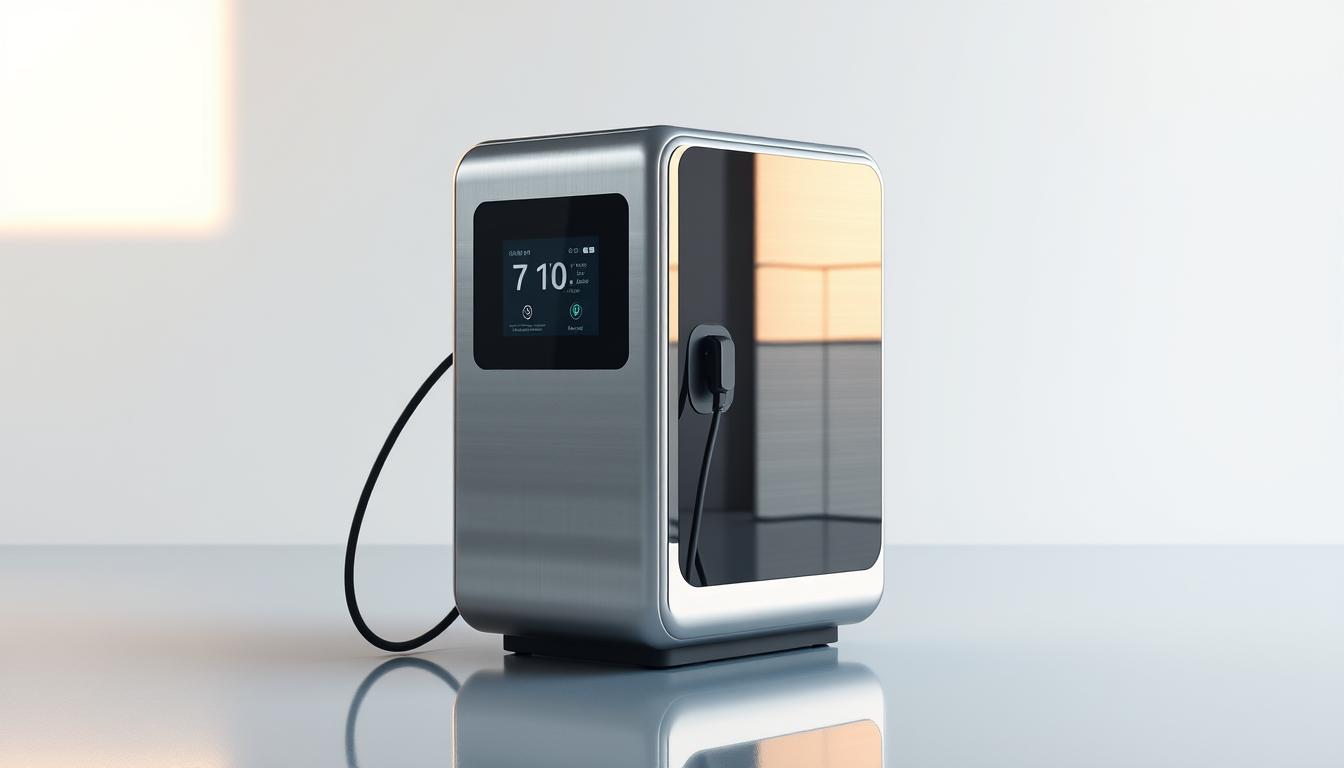
Can a family-friendly scooter truly replace daily car trips without charging headaches? TVS answers that question with a connected, convenient lineup built for real urban use. The introduction frames how TVS made charging simple and practical.
It highlights a 950W plug-and-play charger that works with a standard 15A wall socket and links to 2,000+ public chargers across India.
Key perks previewed here include quick 0–40 km/h sprints from a 4.4 kW motor, IP67-rated battery packs, an indigenous BMS, and a 3-year/50,000 km warranty that builds confidence for ownership.
The section also points to SmartXonnect tech—TFT displays, OTA updates, navigation and alerts—that makes daily riding simpler and more enjoyable.
Variant ranges are summarized so readers see how IDC claims translate to multi-day commuting freedom. This short intro sets up deeper looks at design, performance, and real-world charging advantages in the following sections.
Iqube Electric at a Glance: What This Product Review Covers
This quick guide explains what buyers will learn about the TVS iQube family. It highlights core specs, how trims differ, and which model suits a typical city commute.
The lineup includes six variants with IDC ranges from 94 km to 212 km and 0–80% charging times between 2 h 45 min and 4 h 18 min. Prices vary by city; typical ex‑showroom examples range roughly from ₹1.09 lakh to ₹1.62 lakh across trims.
Standard features cover LED lighting, a TFT display, Bluetooth connectivity, OTA updates, navigation, call/SMS alerts, park assist, DTE, and multiple ride modes.
- How variants scale battery, range and charging time.
- What the charging and battery sections explain for daily users.
- Performance, handling, connectivity, and ownership costs.
- City practicality: storage, reverse assist, and comfort.
The review also compares these scooters with competitors and balances spec sheets with friendly explanations. Readers can skim ahead to the sections that match their commuting needs and price expectations.
How the TVS iQube Charges: Plug‑and‑Play Convenience Explained
TVS made charging simple so daily routines stay smooth. The system centers on a portable 950W charger that plugs into any standard 15A wall socket. That design keeps home, work, or a friend’s garage ready for a quick top‑up.
Variant charging times vary. 0–80% windows range from about 2 h 45 min on the 2.2 kWh model to roughly 4 h 18 min on the 5.3 kWh ST. Mid‑capacity variants sit around 3–4 hours, letting owners choose a battery size that fits their day.
The scooter supports overnight top‑ups and includes an automatic cut‑off when the battery hits 100%. That feature removes overcharge worries and makes a nightly plug‑in a “set and forget” habit.
- Portable 950W charger for standard sockets.
- 0–80% charging times vary by pack capacity.
- 2,000+ public chargers for longer road days—see find public chargers and service points.
Overall, the tvs iqube keeps charging predictable. The result is a practical vehicle experience with features that match busy urban life and weekend road runs alike.
Battery Tech & Safety: IP67 Packs, BMS, and Real-World Peace of Mind
The battery system combines tough casing and smart management to make daily ownership less stressful. Riders get clear choices across capacities that match real commutes and charging habits.
2.2 kWh to 5.3 kWh capacities with aluminum extrusion casing
The line spans 2.2 kWh up to 5.3 kWh, so commuters can pick a pack that fits their daily miles and charging cadence. Smaller packs charge faster overnight; larger packs cut range anxiety for longer rides.
Build matters: each pack sits inside a high‑strength aluminum extrusion casing. That shell adds thermal stability and resists dings from urban use.
Indigenous BMS, water/dust resistance, and warranty coverage
The cells are IP67 rated, keeping out water and dust during rainy commutes or dusty streets. That rating is a practical quality edge for real-world riding.
TVS paired the packs with an indigenous Battery Management System that monitors cell health and thermal conditions. This helps keep performance consistent over years rather than just day one.
- Clear architecture: choose 2.2–5.3 kWh based on range and charging needs.
- Protection: IP67 plus aluminum casing for durability and heat control.
- Peace of mind: 3 years / 50,000 km warranty on the pack for assured ownership.
Across variants, these features work together so the tvs iqube scooter feels reliable on wet mornings, in traffic, and after seasonal wear. That practical engineering is what turns specs into genuine ownership confidence.
Performance, Power, and Acceleration in City Traffic
In dense urban lanes, instant throttle response makes every commute less stressful. The tvs iqube pairs a hub-mounted motor with a design that keeps drivetrain losses near zero.
Hub-mounted motor: direct torque, minimal loss
The hub-mounted 4.4 kW peak motor delivers immediate torque because there is no gearbox to sap energy. That zero transmission loss means the scooter feels lively from a stop.
Real-world sprint: 0–40 km/h in 4.2 seconds
TVS’s 0–40 km/h claim (about 4.2 seconds) translates to practical gains: beating a light, merging without hesitation, or clearing an intersection safely.
The top speed reaches up to 82 km/h depending on variant, so highway slips are possible when needed.
Eco vs Power modes: choose your balance
Eco mode smooths output and stretches range. Power mode unlocks sharper acceleration and snappier response for quick maneuvers.
- Linear power delivery helps riders modulate speed in tight gaps.
- Predictable acceleration improves placement and safety in traffic.
- Regenerative braking softens decel and recovers energy without abruptness.
Overall, the setup favors practical performance over raw theatrics. It gives confident acceleration where it matters in city traffic and a calm, controllable feel for everyday riding.
Range Reality: From 94 km to 212 km IDC—Which Variant Fits Your Ride
Real-world commuting depends on honest range figures. Riders can translate IDC numbers into how many city days a scooter will cover between charges.
The lineup lists 94 km (2.2 kWh), 123 km (3.1 kWh), 145 km (3.5 kWh and S/ST 3.5 kWh), and 212 km (ST 5.3 kWh) IDC. Each option suits different weekly patterns.
Distance-to-Empty visibility to reduce range anxiety
TVS iQube shows Distance‑to‑Empty on the TFT cluster, so riders can plan errands and return trips with confidence.
- The 94 km option fits short city cycles and daily commutes with nightly charging.
- Mid packs (123–145 km) cover multi‑day city use or light suburban runs.
- The 212 km ST pack suits longer suburban routes and fewer stops to charge.
Weather, load, and ride mode will alter practical range, and IDC is a lab metric. Still, the DTE readout cuts guesswork and helps riders match a variant to their weekly routine for low‑effort ownership.
Tip: map typical trips before buying so the chosen variant delivers predictable range, not just a headline number from the spec sheet. TVS iQube makes that planning straightforward.
Design and Build Quality: Practical Styling with Robust Details
Design choices here favored daily use over showy accents. The silhouette reminded reviewers of the TVS Jupiter, with smooth proportions that fit family riders and varied heights.
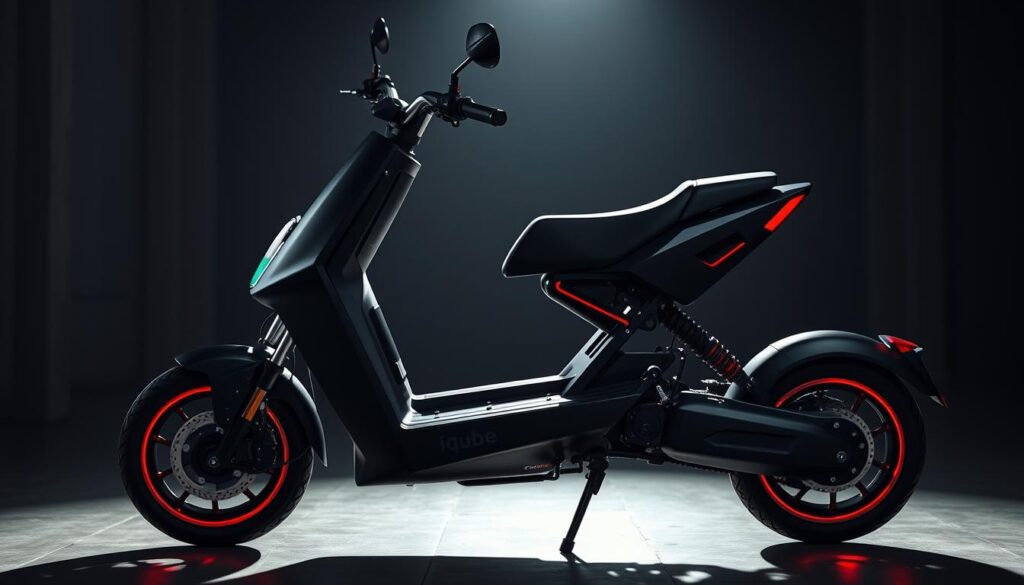
Paint finish and switchgear felt solid, and small touches like tactile buttons added a sense of lasting quality. Under-seat storage reached up to 32 L on some variants, enough for a helmet, groceries, or a small backpack.
Fit, feel, and durability
Most units showed robust build and good weather sealing. A few third‑party checks noted minor panel gaps or visor alignment on certain scooters.
Those isolated fit‑and‑finish issues did not undermine overall confidence. TVS focused on squeak resistance, secure latches, and switch longevity—features that help a vehicle stay pleasant year after year.
- Practical ergonomics: wide footboard and about 770 mm seat height for easy mounting.
- Tangible quality: strong paint and tactile switchgear for daily durability.
- Real storage: up to 32 L under seat for everyday errands.
The design philosophy leaned toward practical elegance. For commuters who value function first, the tvs iqube balanced looks with a build that aimed to last.
Ride, Comfort, and Handling: Suspension Tuning for City Roads
How a scooter soaks up urban bumps shapes every minute of a city commute.
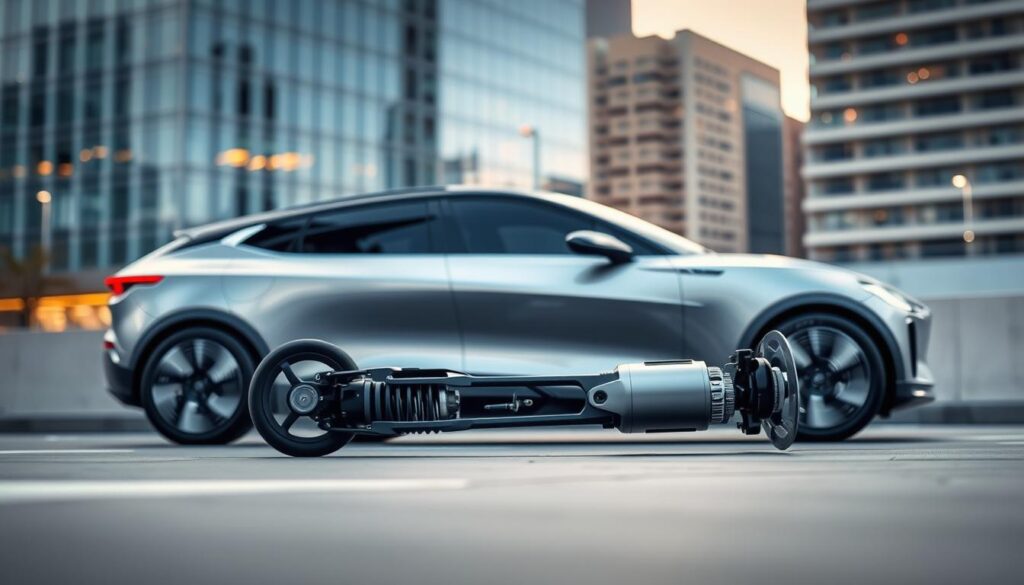
The tvs iqube uses telescopic front forks and twin rear shocks tuned for a pliant, composed ride on typical city surfaces. That setup absorbs bridge joints and the small uneven patches riders meet every day.
Seat height sits at about 770 mm, giving an accessible perch for many riders. The relaxed posture reduces fatigue on longer runs and supports a confident riding triangle for hands, hips, and feet.
Handling is flickable yet stable. Twelve‑inch wheels and tuned geometry help quick lane changes and smooth roundabout entries without nervousness.
Braking feel is progressive on the combined disc/drum setup, which builds confidence for both new and experienced riders. Quiet operation also lowers fatigue and keeps attention sharp.
Realistically, very large potholes can unsettle the rear on occasion. Overall, the focus on composure over sport stiffness ties comfort to safety: less strain means better focus and smoother control during the commute.
SmartXonnect & Connectivity: 100+ Features That Elevate the Ride
A connected cockpit and a phone app turn routine commutes into a more informed, less distracting ride. SmartXonnect packages 100+ features into an interface that favors clarity and usability.

Cluster and control: a 5–7 inch TFT shows turn-by-turn navigation, call/SMS alerts, and live battery status. The joystick or HMI lets riders browse menus safely when stopped.
Updates and growth: OTA updates keep the scooter current and add new features over time. Subscription plans unlock advanced services while basic connectivity remains useful out of the box.
TFT, OTA, and intuitive HMI
The display keeps important prompts visible and reduces phone checks. OTA patches improve nav accuracy and add small quality-of-life updates without a service visit.
App-led daily companion
The mobile app gives ride stats, live charging feedback, last-park location, and nearby charger maps. Geo-fencing and anti-theft alerts add security when parking in unfamiliar areas.
- Less distraction: nav and alerts cut down on phone handling.
- Smarter riding: ride stats help choose Eco or Power for better range and regen use.
- Variant-aware: S/ST trims offer richer cluster interactions and a fuller feature set.
The result is a friendly, practical experience that helps riders get more from their daily commute without overwhelming them with complexity.
Variants Deep Dive: Choosing Between Batteries, Features, and Charging Times
Choosing the right trim means balancing daily plug-in habits with how far a rider needs to go between charges. This short guide compares battery size, IDC range, and 0–80% charging windows so buyers can prioritize what matters most.
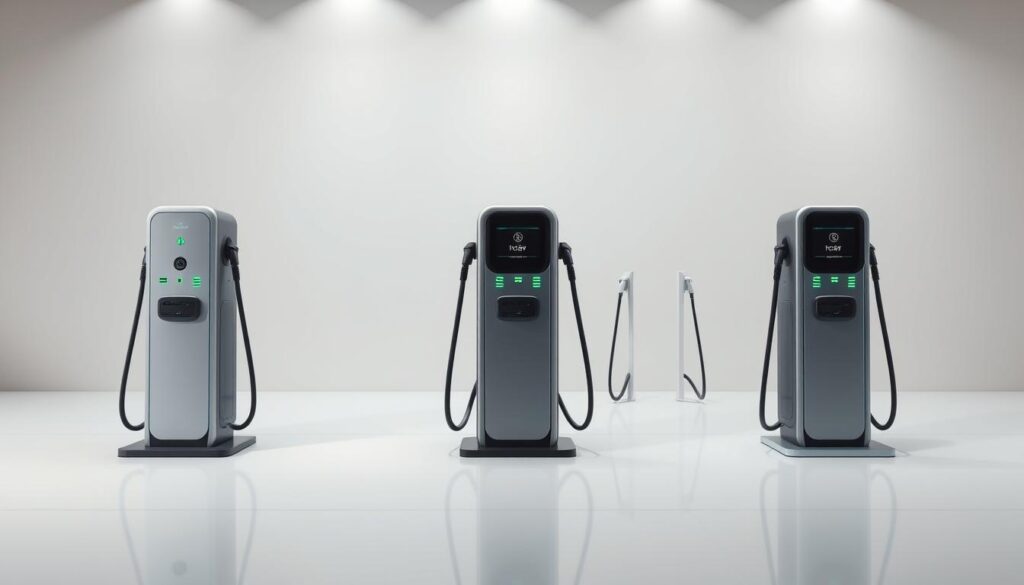
2.2 kWh — 94 km IDC
The entry pack suits short urban loops and tight budgets. It reaches 0–80% in about 2 h 45 min, making nightly top‑ups easy.
3.1 kWh — 123 km IDC
This mid option broadens daily flexibility. Expect roughly 4 h 03 min to 0–80%, ideal for riders who plug in less often.
3.5 kWh family — 145 km IDC (including iqube 3.5 kwh)
The standard 3.5 and the S/ST choices hit a sweet spot: solid range with practical charging. Times vary from ~3 h to 4 h 40 min depending on trim and hardware.
5.3 kWh ST — 212 km IDC
For longer daily runs, the ST 5.3 kWh cuts charging stops. It needs about 4 h 18 min to reach 0–80% and suits riders who value fewer weekly plugs.
- Why two 3.5 kWh variants differ: charger capacity and trim-level electronics affect charging speed.
- Feature lift: S and ST trims add larger TFTs and richer controls beyond battery numbers.
- Practical tip: match how often you can plug in at home or work, not just the headline range or price.
Overall, tvs iqube variants let riders choose a balance of range, charging time, and features so the scooter fits real weekly routines.
iqube electric Pros and Cons: The Balanced Take
This short, practical look at benefits and limits helps shoppers decide if this scooter family fits daily city life.
Where it shines for daily commuters
Enjoyable performance and a pliant ride make short trips and stop‑start traffic feel easy. The connected features keep navigation and alerts tidy on the move.
Low running cost and reduced maintenance compared with petrol alternatives are big advantages over years of ownership.
The build and ride quality score well for the segment, giving comfortable ergonomics and a steady chassis for city roads.
Trade-offs to weigh: price and fast‑charging availability
Top trims raise the price, so buyers should match features to real needs rather than pick the spec sheet. Full 0–100% charging still takes hours, so riders with unpredictable days must plan.
DC fast charging isn’t advertised for the lineup, which limits rapid top‑ups away from home or work.
- Benefits: easy home charging, connected features, smooth city manners, low cost of ownership.
- Support: established TVS service network and roadside assistance add confidence.
- Consider: slower full charging, higher price on premium trims, limited public fast‑charge options.
Overall, most city commuters will find the benefits outweigh the compromises—especially when nightly home charging is practical. The tvs iqube offers quality, useful features, and lower ongoing costs that suit daily urban riding.
Ownership Costs: EMI, Savings vs Petrol, and Maintenance
Owning this scooter family changes the monthly running math in a clear, measurable way.
TVS highlights that lower service needs and fewer moving parts cut long‑term cost and unpredictability. Routine maintenance visits are simpler and less frequent than on a petrol scooter, which helps owners plan expenses.
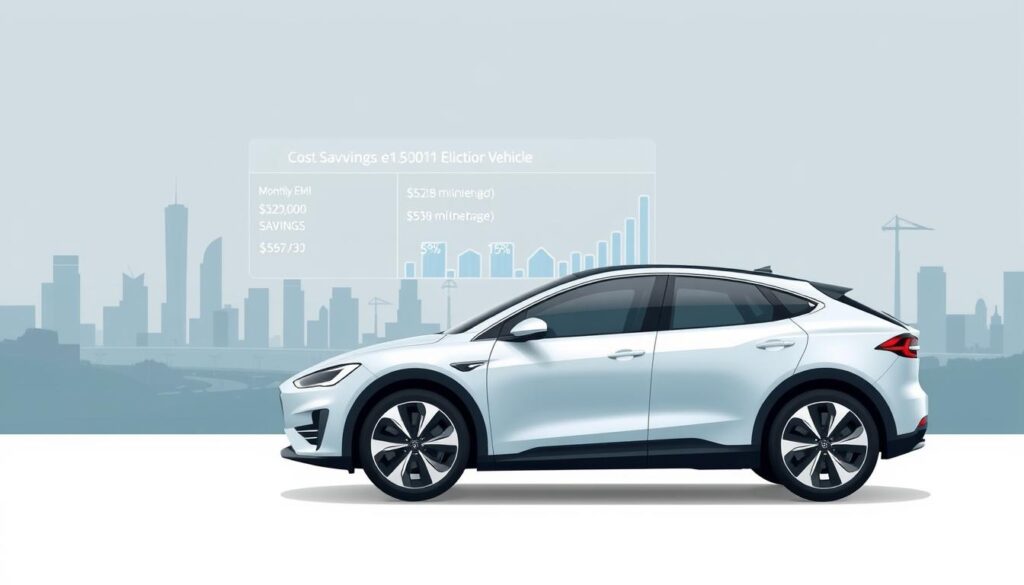
Lower maintenance and dependable service
Fewer components mean fewer service items and less wear. That reduces visits, parts swaps, and surprise bills.
TVS service network and roadside assistance (RSA) keep ownership low‑stress and reliable when help is needed.
The effective EMI concept
Think of avoided petrol spend as a monthly credit against your EMI. Using petrol ₹100/litre and electricity ₹7.5/unit with 45 km/day, a five‑year example shows about ₹1,46,813 saved in total (illustrative).
That saving lowers the scooter’s effective monthly price and makes the loan feel smaller over time.
- Cost predictability: fewer surprises from routine running and maintenance.
- Monthly planning: use an EMI calculator and add expected electricity costs to set a realistic month‑to‑month budget.
- Review annually: update assumptions for fuel and unit rates to keep the savings model accurate.
Overall, the ownership story is steady. With charging habits set and occasional servicing via TVS, owners often find lower running bills and more predictable money management than with traditional ICE scooters.
Pricing & Value: What You Get Across Trims
A clear pricing ladder helps buyers decide which trim delivers the right mix of range and features for their daily rides.
Average ex‑showroom prices (city dependent) give a practical orientation: 2.2 kWh ~₹1,09,319; 3.1 kWh ~₹1,24,918; 3.5 kWh ~₹1,32,308; S 3.5 kWh ~₹1,40,193; ST 3.5 kWh ~₹1,52,412; ST 5.3 kWh ~₹1,62,314.
As buyers move up, the main jumps are battery capacity, cluster tech, and convenience. Mid trims add range and sometimes faster 0–80% times on certain 3.5 kWh setups.
How each step justifies the cost
- Base trims focus on commuter value and basic connectivity.
- Mid trims increase usable range and add richer displays.
- S / ST add larger TFTs, joystick control, and expanded features for riders who want a fuller experience.
Local incentives and city taxes change final prices, so these averages are orientation, not exact quotes.
Value depends on usage: riders who travel farther or use nav and app features will see more benefit from higher trims. Also, compare total cost of ownership — running costs often tilt the balance in favor of this scooter over petrol options.
Charging Experience Review: From Wall Socket to Road-Ready
The hands‑on routine is low‑friction: unpack the portable 950W charger, plug into a 15A socket, and watch the cluster or app for progress on your tvs iqube electric.
In practice, the 0–80% windows span about 2 h 45 min to 4 h 18 min depending on pack. Overnight fills take a few hours, so most owners set a nightly plug‑in and wake to a charged scooter.
The portable unit also makes roadside or friend‑house top‑ups simple. The app shows nearby public stations—over 2,000 points across India—and sends live alerts so you know when to unplug.
- Unbox, plug into a 15A wall outlet, and monitor charge on the TFT or phone.
- Use an 80% quick top‑up when short on time, or let it reach 100% overnight with automatic cut‑off.
- Public chargers extend range on long errand days and are found in the app.
This straightforward approach turns charging into a background habit. With predictable hours and clear app feedback, the routine keeps the vehicle ready without fuss.
City Use Case: Stop‑Go Traffic, Parking, and Daily Range Comfort
City commutes demand calm starts, tight parking, and range you can trust day after day. The tvs iqube’s quick 0–40 km/h sprint (about 4.2 seconds) gives confident launches at lights and helps riders navigate stop‑and‑go lanes without stress.
Linear throttle and smooth regen let riders conserve energy while staying responsive. Distance‑to‑Empty on the cluster removes guesswork so short detours or errands no longer cause anxiety.
Compact dimensions and low‑speed control make parking simple. The Q‑Park reverse assist helps slot into tight spaces, cutting the hassle of crowded lots and narrow garages.
- Calm in traffic: quick launches and steady power reduce stop‑start fatigue.
- Range peace: DTE, ride modes, and regenerative braking build a forgiving buffer for daily errands.
- Easy parking: compact footprint plus reverse assist for tight spaces and curbside stops.
Top speeds up to about 78–82 km/h suit short highway connectors without turning the scooter into a long‑distance tourer. Quiet operation also makes each ride feel less tiring and more pleasant.
Bottom line: when matched to typical urban miles and nightly home charging, the combination of performance, range tools, and parking aids creates an effortless routine for most city riders.
Feature Highlights Worth Calling Out
When features focus on real use, ownership becomes simpler and less stressful. This short roundup points to the small comforts and safety touches that riders notice every day.
Reverse assist, regen braking, and generous storage
Reverse / Q‑Park Assist helps slot the scooter into tight spots without strain. It turns cramped parking into a quick, one‑person task.
Regenerative braking slows smoothly while recouping energy, making stop‑and‑go traffic kinder to range and brakes.
Under‑seat storage up to 32 L holds a helmet and daily essentials, which is a clear win for errand runs.
Safety, convenience, and rider‑centric touches
- Safety: combined braking system, bright LED lighting, and hazard lights for visible, confident stops.
- Convenience: USB charging port, app alerts for tow/theft, geofencing, and last‑park location.
- Upkeep: OTA updates keep the software fresh and the ride feeling refined over time.
The design and small choices lift perceived quality and reduce friction for new owners. These everyday aids show how TVS built the iqube to fit real routines. For a deeper look at the full spec list, see the key features explained.
How It Stacks Up Against Other Scooters Shoppers Consider
A clear comparison helps buyers choose a scooter that fits daily life, not just spec sheets. This section compares the tvs iqube with the Ola S1 family, Ather 450 series, and Bajaj Chetak on practical factors like ride, service, and ownership.
Context vs Ola S1, Ather 450 series, Bajaj Chetak
The Ather 450 line feels sportier and aims higher on peak performance and fast‑charging options. Ola markets flashier styling and aggressive tech bells. Bajaj Chetak leans on classic design and solid build cues.
Where the tvs iqube wins: an established service network, balanced ride quality, and polished connectivity that suits family riders and daily commuters.
- Practicality: tvs iqube favors usable range and friendly throttle over outright sprint times.
- Service advantage: better aftersales reach in many cities than some rivals.
- Trade-offs: top‑end trims can feel pricier and DC fast charging is not supported, so quick top‑ups on the road are limited.
Shoppers should test‑ride multiple models to feel differences in throttle, ride, and interface. Ultimately, local service, personal design taste, and long‑term fuel savings will decide the best pick.
Who Should Buy the TVS iQube—and Which Variant
For most riders, the best purchase is the one that fits their weekday route and charging rhythm. This short guide helps match daily miles, parking and plug‑in habits to the right model so ownership stays simple.
Short urban commutes vs longer suburban runs
Short city riders who plug in nightly will find the 2.2 kWh option practical and budget friendly. It charges quicker and keeps upfront costs lower.
Mixed city/suburban riders benefit from the 3.1–3.5 kWh band for balanced range and reasonable charging times. These trims suit a multi‑day routine without extra stops.
- Short city loops: lower capacity, faster top‑ups, lower cost.
- Daily mixed use: 3.1–3.5 kWh for flexibility and steady range.
- Longer runs: ST 5.3 kWh offers up to 212 km IDC and fewer weekly charges.
Battery size and charging time: matching lifestyle needs
When planning, compare typical daily distance to 0–80% charging windows (about 2 h 45 min to 4 h 18 min). Reserve Power mode for merges or hills to save energy most of the day.
- Choose based on commute distance, not just headlines.
- Consider parking with a nearby socket or workplace plug for easy charging.
- Feature-seekers who value navigation and richer screens should lean to S/ST trims.
Quick decision tree: list your daily miles, note charging access, set a features priority, and match budget. See the full variant comparison to finalize the right tvs iqube choice.
Your Next Move: Make an Informed Choice on Iqube Electric
To pick well, compare two trims — one budget‑minded, one feature‑rich — against your actual route and plug access.
They should weigh the lineup’s real numbers: IDC range from 94 km to 212 km, 0–80% charging in about 2 h 45 min to 4 h 18 min, a portable 950W charger, and IP67 battery packs with a 3‑year/50,000 km warranty. SmartXonnect, TVS service reach and RSA add practical support, while average ex‑showroom price sits near ₹1.09–1.62 lakh depending on trim.
Take a test ride to check comfort, throttle feel, and display usability. Shortlist two trims, review local offers and charger access, then set a simple nightly charging routine.
View the scooter in person and choose the iqube electric that fits today and scales with tomorrow’s commute.
FAQ
How fast does the TVS iQube charge with the portable 950W charger?
With the portable 950W unit, some variants reach 0–80% in roughly 3 hours, while others take up to about 4 hours 18 minutes. Exact times depend on battery capacity and ambient temperature.
Can it be charged at home using a regular socket?
Yes. It works with a standard 15A wall socket for overnight top-ups. Owners can also use the portable charger or public AC chargers found across most Indian cities.
Is there an automatic cut-off once the battery is full?
Yes. The charging system stops automatically when the pack reaches full charge, which helps prevent overcharging and preserves battery health.
What battery sizes are available and how do they affect range?
Battery packs range from about 2.2 kWh up to 5.3 kWh. Smaller packs target shorter urban commutes (around 94 km IDC), while the 5.3 kWh option stretches to about 212 km IDC under test conditions.
Are the battery packs water and dust resistant?
The packs feature robust aluminum extrusion casings and IP67-level protection, paired with an indigenous battery management system for safety and durability.
What warranty covers the battery and electricals?
TVS offers a comprehensive warranty for the battery and related systems, typically around 3 years or 50,000 km, subject to terms and local policies.
How does the hub motor perform in city traffic?
The hub-mounted motor delivers peak power around 4.4 kW with instant torque and no transmission losses, making hop-in traffic acceleration responsive and efficient for urban use.
What real-world acceleration can riders expect?
In city riding, the scooter feels brisk — comparable to a 0–40 mph sprint in roughly 4.2 seconds under typical stop-and-go conditions, especially in the Power mode.
How accurate is the stated range in everyday use?
IDC figures (94–212 km depending on the variant) are lab-derived. Real-world range varies with riding style, load, traffic, and climate. The distance-to-empty display helps reduce range anxiety.
What ride modes are available and how do they affect performance?
Riders can switch between Eco and Power modes. Eco maximizes range and smoothness; Power unlocks sharper throttle response for quick overtakes and climbing hills.
How is the build quality and daily durability?
The scooter features practical styling, solid fit-and-finish, tactile switchgear, and durable materials meant to handle regular urban wear and tear reliably.
Is the under-seat storage useful for commuting?
Yes. The storage capacity is practical for helmets and small bags, helping with daily errands and last-mile needs.
What connectivity features does SmartXonnect offer?
SmartXonnect includes a TFT cluster, OTA software updates, navigation prompts, and app-based features like ride stats, geo-fencing, and anti-theft alerts to streamline ownership.
How do the different variants compare in charging time and usability?
The 2.2 kWh variant reaches 0–80% faster (around 2 h 45 min), mid-size packs (3.1–3.5 kWh) take roughly 3–4 hours, and the 5.3 kWh pack requires up to about 4 h 18 min. Choose based on daily distance and charging access.
Are running costs lower than petrol scooters?
Yes. Maintenance needs are reduced because there are fewer moving parts and no petrol. Many owners find fuel savings offset the EMI or purchase premium over time.
How does this model stack up against rivals like Ola S1, Ather, or Bajaj Chetak?
It competes well on build quality, ride comfort, and practical range. Buyers should weigh feature sets, charging ecosystems, and price when comparing with Ola S1, Ather 450 series, and Bajaj Chetak.
Who is the ideal buyer for each variant?
Short urban commuters benefit from smaller batteries and quicker charging; riders with longer suburban runs should opt for larger packs for fewer charge stops and greater peace of mind.