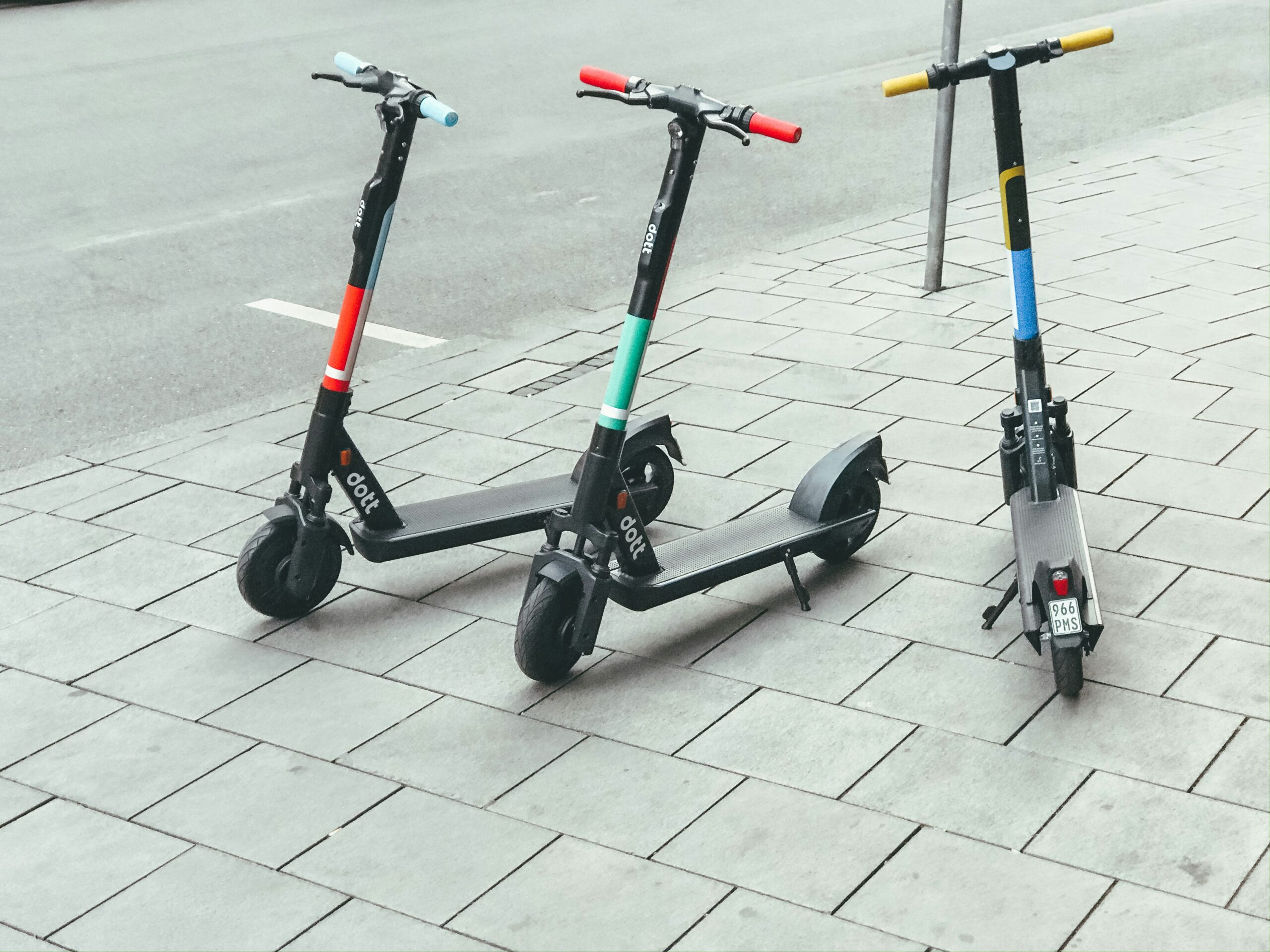

Segway ES2 Electric Scooter Review and Features
 PopScooter Team
November 29, 2025 10:35 am
.
12 min read
PopScooter Team
November 29, 2025 10:35 am
.
12 min read
Can a lightweight foldable scooter really replace short car trips and make city commutes easier?
This review introduces the ninebot es2 as a practical electric scooter built for everyday use. It blends portability, comfort, and smart features in a compact package.
The scooter hits about 15.5 mph top speed and claims up to 15.5 miles per charge from a 187 Wh battery. It weighs 27.6 lb, folds quickly, and fits well into apartment life or transit-friendly routines.
Design choices matter: the battery sits in the stem, the tires are solid, and front plus rear suspension aim to improve ride comfort with low maintenance.
Key tech includes a full dashboard display, built-in lights, Bluetooth app connectivity, and an electronic regenerative front brake with a rear foot brake. The unit has IP54 splash protection for rainy streets.
Buyers can later add an external battery to extend range to about 28 miles. This model focuses on value and reliable daily use rather than extreme performance, making it a sensible pick among similar products.
Who the Segway ES2 suits in 2025 and what shoppers should expect
For anyone who needs a compact, low-maintenance ride for quick urban hops, the ninebot es2 checks many boxes.
The scooter fits riders aged 16+ up to 220 lb and is best for short commutes, campus runs, and neighborhood errands. Top speed and range—about 15.5 mph and 15.5 miles—mean buyers should plan trips or quick charges rather than long tours.
Three ride modes (Eco, Standard, Sport) and cruise control let riders tune efficiency or power for the route. Solid tires plus front and rear suspension cut punctures and smooth everyday roads for predictable comfort.
Key buying notes: expect reliable basic braking, a clear display, and fast folding for last-mile use. Brand reputation and user reviews point to steady quality across these products.
- Who benefits most: city dwellers and first-time electric scooter owners who want low upkeep.
- Considerations: realistic range expectations, helmet use for safety, and aligning delivery with your commute start date.
- Value take: the segway ninebot es2 offers good price-to-feature balance for practical daily use.
Segway ES2 specs and real-world performance
Numbers tell the story: motor output, battery size, and braking systems define real-world performance for short trips.
Motor power and top speed
The motor is rated at 300 W nominal with peaks near 700 W, delivering quick urban acceleration and a practical top speed of about 15.5 mph. It manages modest hills—roughly a 10% grade—so city inclines are usually manageable.
Range and riding modes
The 187 Wh battery and Smart BMS aim for up to 15.5 miles of range under ideal conditions. Eco, Standard, and Sport modes change throttle response and consumption, so weight, terrain, and temperature will alter real results. Cruise control eases longer stretches and reduces wrist fatigue.
Brakes, lights, and durability
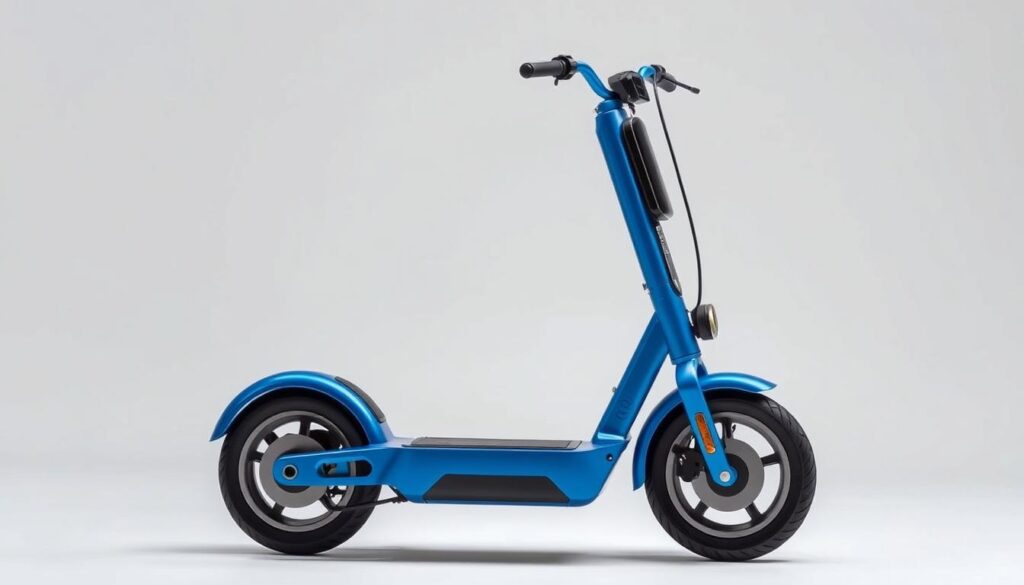
Stopping uses an electronic regenerative electronic brake up front and a rear foot brake for backup. Testers report a braking distance of about 3–4 meters at 20 km/h, a useful baseline for safe following space.
Visibility includes a 1.5W front light, dual rear lights with brake indicator, and app-controlled ambient underglow. The deck and 8-inch front / 7.5-inch rear solid tires plus front back suspension cut punctures and smooth bumps.
Water resistance and cockpit
With an IP54 rating, the scooter resists splashes and light rain but should avoid deep puddles. The dashboard and Segway-Ninebot app display speed, remaining battery, modes, and Bluetooth status so riders know their status at a glance.
- Power: 300 W nominal, peaks ~700 W
- Battery & range: 187 Wh, ~15.5 miles (varies)
- Brakes: electronic front + rear foot brake
- Tires: 8 inches front, 7.5 inches rear, solid
Ride quality, control, and safety on city roads
Urban rides test suspension, steering, and brakes; the ES2 was built to answer those day-to-day demands.
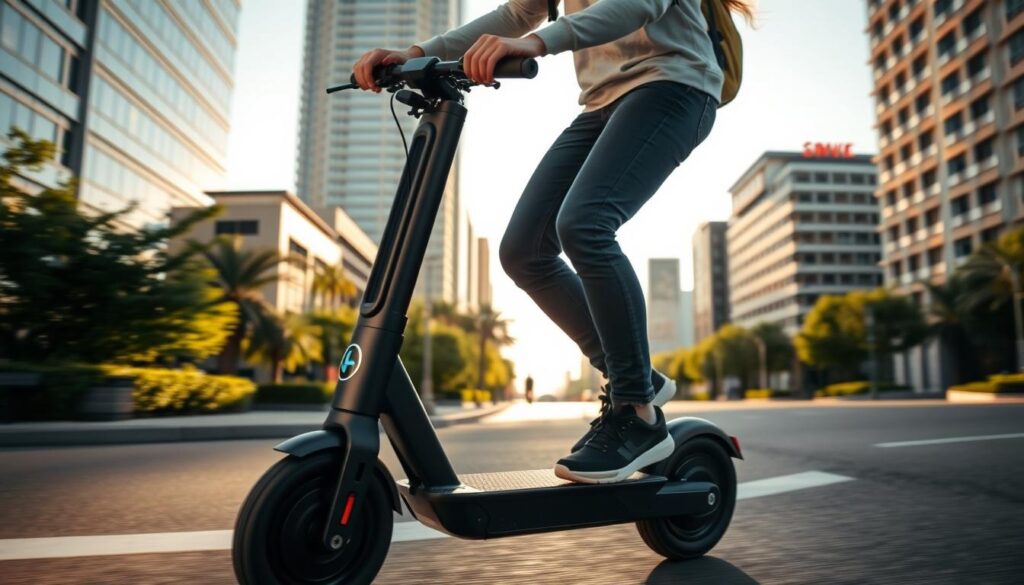
Solid tires with front & rear suspension: comfort without punctures
The scooter uses solid tires plus front and rear suspension to smooth bumps while avoiding flats. Riders feel steadier over cracked pavement, speed bumps, and short curb cuts.
Handling, braking feel, and stopping distance confidence
Low-speed maneuvering stays predictable, making crosswalks and crowded areas easier to navigate. Steering is stable and responsive for quick course corrections.
The front electronic regenerative brake offers smooth modulation, and the rear foot brake reinforces stops. Independent tests show roughly 3–4 meters stopping distance at 20 km/h—use that to set safe following gaps.
Safety musts: helmet use, road awareness, and night visibility
Safety basics matter: always wear a helmet, scan for potholes and metal grates, and signal when changing course in busy areas.
Lights include a 1.5W headlight, dual rear lights with brake indication, and app-controlled ambient lighting to boost visibility at dusk. With IP54 splash protection, riders should still slow on painted lines, wet metal, and leaf-covered surfaces.
- Keep a balanced stance and light grip to reduce fatigue on longer rides.
- Pre-ride light checks and moderate speed at night improve reaction time.
- Practice smooth brake modulation to maintain control in mixed road conditions.
Design, build quality, and portability details
A commuter-first approach shows in the ES2’s compact folding, solid frame, and user-focused cockpit.
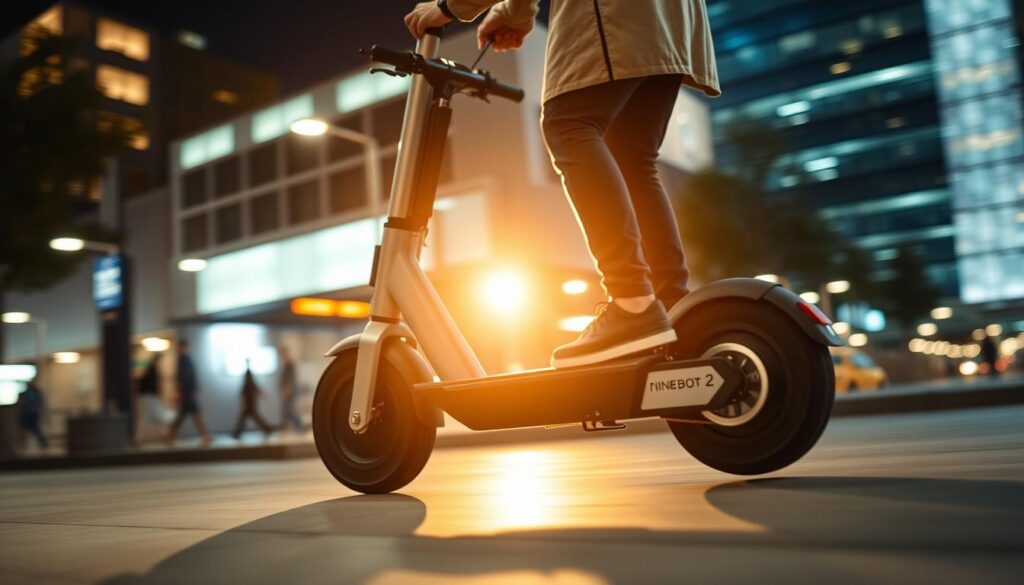
Hands-free quick fold and carry weight
The hands-free quick fold snaps the scooter into a compact shape in seconds. It folds to roughly 1130 × 430 × 400 mm, making storage simple.
At 27.6 lb the unit strikes a practical balance. Riders can lift it up stairs or load it on transit without undue strain.
Cockpit, display, and Bluetooth control
The full LED dashboard reports speed, remaining power, ride modes, and maintenance prompts. Bluetooth app control adds remote tweaks and diagnostics in real time.
That clear readout keeps riders aware of charge and mode, so they plan rides with confidence.
Fit, finish, and practical lighting
The Li-ion battery sits in the stem, freeing the deck and creating a slim silhouette. An aluminum frame and tidy cable routing reduce flex and boost long-term quality.
Lighting includes a 1.5W head light and dual rear lights with brake indication to improve night visibility and back signaling.
- Deck and reflector placement guide foot position and visibility.
- Simple out-of-box setup saves time; package size eases delivery to apartments.
- Grip the stem for short carries and rest the board flat to avoid scuffs on transit floors.
Battery, range, and charging time
Power delivery, charging time, and optional capacity upgrades shape how far and fast this model will carry you.
187 Wh Smart BMS battery — The ninebot es2 ships with a 187 Wh (5200 mAh) pack managed by a Smart BMS. This system balances cells, protects against overcharge, and helps deliver consistent performance for weekday commutes.
Charge time and daily use
A full charge takes about 3.5 hours, which fits neatly into an office shift or an overnight window. For mixed days, topping off 30–60 minutes adds useful buffer without cycling the pack fully.
Optional extra battery and boosted range
Adding the extra battery extends total range to roughly 28 miles and raises top speed by about 3 mph (from 25 km/h to 30 km/h). It also improves hill performance on routes near the rated 10% climbing angle.
What affects real-world range
Range varies with rider weight, terrain, wind, temperature, and selected power mode (Eco, Standard, Sport). Choosing Eco can stretch miles at the cost of peak speed and acceleration.
- Tip: Let the pack reach room temperature after cold rides before charging to protect battery health.
- Tip: Use the dashboard and app to monitor percentage and learn which mode best balances power and distance for a given route.
- Tip: For longer loops, the extra battery is the most practical upgrade for range and hill help.
segway es2 vs ES4 vs Xiaomi M365: which scooter is right for you?
A short daily loop can highlight big differences between otherwise similar scooter platforms.
Platform and extra battery differences
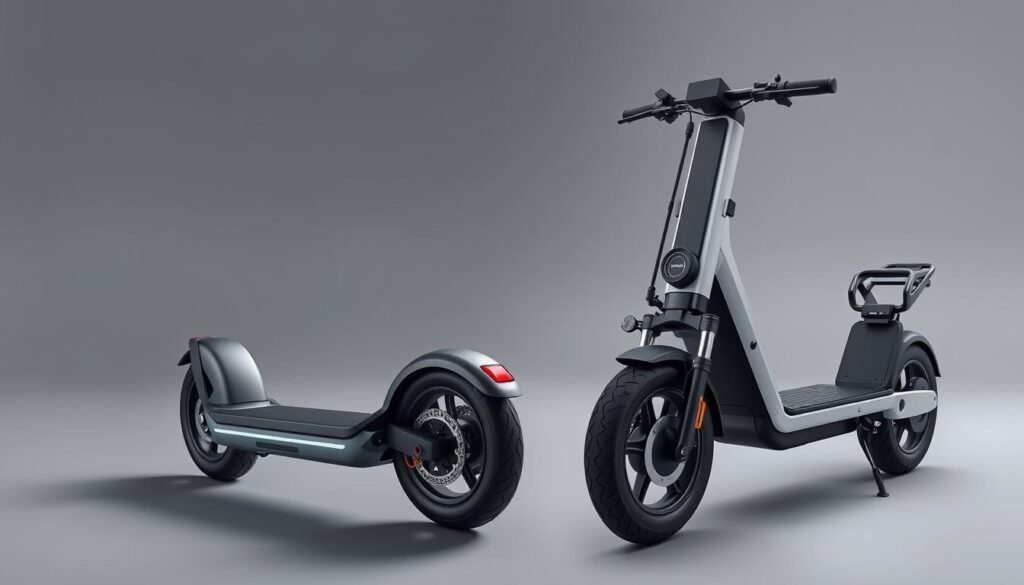
The ES4 is the same core platform as the ES2 but adds an extra battery. That extra battery boosts range to about 28 miles, raises top speed to roughly 19 mph, and improves hill climbing.
Ride feel: low-maintenance vs plush comfort
The ninebot es2 uses solid tires plus front and rear suspension for low upkeep and fewer flats. In contrast, the xiaomi m365 relies on pneumatic tires for a softer ride, though they can need tube repairs.
Daily use and cockpit features
The segway ninebot es2 includes a built-in dashboard for at-a-glance info. The m365 often needs an upgraded display to match that convenience.
- Brakes: expect electronic front regen and a rear foot brake feel common to the platform; lever feel varies slightly by model.
- Power mode: choosing Eco or Sport changes throttle response and range on all three models.
- Price vs quality: the extra battery option costs more up front but reduces charging stops and raises practical value for longer commutes.
Who should pick which scooter? Choose the ES2 for short commutes, mixed roads, and minimal maintenance. Opt for the ES4 (extra battery) if daily distance or hills matter. Pick the M365 for plush comfort on rough streets where tire compliance improves the ride.
For a side-by-side look, see a detailed comparison of the two platforms at compare Xiaomi M365 with Ninebot ES2.
Value, warranty, and buying considerations for the Ninebot ES2
Value for city riders is more than sticker price — it includes downtime, repairs, and peace of mind.
Price-to-performance and long-term maintenance
The solid tires and front/back suspension reduce flats and lower routine repair costs. That saves both time and the amount spent at local service shops.
Price compares well when buyers count fewer tube replacements and steady daily performance. For simple commutes, the product’s reliability boosts overall value.
Warranty coverage and delivery expectations for U.S. buyers
Most authorized dealers include about a 12-month warranty for core components, though terms vary. Buyers should read warranty details and return policies before checkout.
Check shipping and delivery windows. Confirm stock status and expected arrival so the scooter reaches you when needed.
Who should buy now, and who should consider the extra battery
Choose the segway ninebot if riders want a low-maintenance, foldable commuter that fits closets and trunks (27.6 lb; folded 1130 × 430 × 400 mm).
Opt for the segway ninebot es2 with the extra battery when longer routes, steep hills, or fewer charging windows matter.
- Box includes charger, screws, hex wrench, and user materials.
- Read user reviews for real-world shipping, warranty service, and product quality impressions.
Final take: a reliable electric scooter with smart upgrades where it counts
Final take: a reliable electric scooter with smart upgrades where it counts.
This model keeps the focus on predictable range and steady daily performance. A 187 Wh battery yields roughly 15.5 miles and a 15.5 mph top speed, with an optional external pack pushing range toward 28 miles.
Solid tires and dual suspension cut maintenance and smooth city blocks. The stopping system pairs an electronic front brake with a rear foot brake, and lighting (1.5W headlight plus dual rear/brake lights) aids visibility after dark.
IP54 water resistance protects against splashes, not deep water. Check warranty, shipping, and return terms before purchase, and pick power mode to match each route.
Verdict: the segway ninebot es2 is a practical, low-upkeep choice for short urban loops and riders who value straightforward upgrades.
FAQ
What is the top speed and real-world range of the ES2-style electric scooter?
The scooter reaches about 15.5 mph in real conditions and delivers up to roughly 15.5 miles per charge on flat terrain in Eco mode. Expect lower numbers uphill or with heavier riders; adding the optional extra battery can extend range significantly.
How long does the battery take to charge and what battery technology does it use?
It uses a 187 Wh smart BMS battery and typically charges in about 3.5 hours from empty. Charging time can vary with ambient temperature and charger condition.
Can the scooter handle wet streets and light rain?
The scooter carries an IP54 splash-resistance rating, which protects against rain and road splashes. Riders should avoid deep puddles and heavy downpours to protect electronics and connectors.
What braking system does it have and is it safe for city stops?
It has an electronic regenerative front brake paired with a rear foot brake for redundancy. The combination offers reliable stopping power for urban riding, though good braking technique and awareness remain essential for safety.
Are the tires puncture-prone and how is ride comfort?
The model uses solid tires and a front-and-rear suspension setup. Solid rubber eliminates flats and keeps maintenance low while suspension helps smooth bumpy city streets, though it won’t match pneumatic tire plushness.
Is there a mobile app and what controls does it offer?
Yes — Bluetooth app control provides ride-mode selection (Eco/Standard/Sport), cruise control, ambient underglow settings, and basic diagnostics like battery and firmware updates.
What weight and size should a rider consider for safe operation?
The scooter suits most adults and has a practical deck area and 27.6 lb carry weight for portability. Check the manufacturer’s max load; heavier riders will see reduced range and climbing power.
How does this scooter compare to the ES4 and Xiaomi M365?
Compared with the ES4, this base model uses the same platform but lacks the built-in extra battery—adding one boosts range, speed, and hill-climb. Versus the Xiaomi M365, it trades pneumatic tires for solid ones plus suspension, favoring maintenance-free riding over a slightly softer ride.
Is an extra battery worth buying?
The extra battery is a worthwhile upgrade for longer commutes or frequent hills; it can extend range to around 28 miles and improve acceleration and sustained top speed under load.
What routine maintenance should owners expect?
Maintenance is minimal: keep bolts and folding mechanism tight, clean electrical contacts, check brakes, and update firmware. Solid tires remove the need for puncture repairs, but suspension and electrical parts may need occasional attention.
What safety gear and riding habits are recommended?
Riders should wear a helmet, use lights and reflectors at night, ride at safe speeds for conditions, and avoid wet or severely uneven surfaces. Regularly inspect brakes and lights before each ride.
What warranty and delivery considerations apply for U.S. buyers?
Warranty terms vary by retailer and region; buyers should confirm coverage length and what parts are included before purchase. Expect typical delivery lead times and consider buying from authorized sellers for full support and returns.