
Everything You Need to Know About 150cc Mopeds
 PopScooter Team
November 8, 2025 2:51 am
.
47 min read
PopScooter Team
November 8, 2025 2:51 am
.
47 min read

Can a compact ride give the thrill of a bigger machine without the cost or fuss? This guide answers that question with clear facts and real-world context.
Riders will see how typical models hit 45–50 MPH and handle like lighter scooters while offering stronger acceleration and steadier cruising. The piece compares performance, comfort, and long-term value so buyers can judge what matters most.
Expect transparent price benchmarks using current listings and brand examples like Vitacci, TaoTao, TrailMaster, and Amigo. The guide also points to retailers that offer financing, warranties, and title support to simplify buying and protect the investment.
Whether shopping for short errands, daily commuting, or longer urban runs, readers get practical tips on brakes, suspension, storage, and ownership costs. By the end, they will know which model fits their lifestyle and how to move from research to purchase with confidence.
Why a 150cc moped is a smart pick for today’s riders
A compact scooter can deliver real-world speed and everyday usability without the bulk of a full-size bike. Riders get the nimble handling of smaller machines while adding enough power to keep pace with urban traffic.
Practical benefits include quicker acceleration for safe merges, less strain on hills, and more braking and suspension margin on rough streets. That makes this class a reliable daily tool rather than a weekend novelty.
The category stays friendly for newcomers. Predictable power delivery and modest weight shorten the learning curve and build confidence during city rides.
- Better hill performance and steady cruising at 45–50 MPH for route flexibility.
- Fuel efficiency and maintenance remain approachable for long-term ownership.
- Wide range of styling and feature options — sport, retro, and commuter-focused models.
- Simpler registration and insurance versus larger motorcycles in many U.S. areas.
Parts availability and dealer support are strong across brands, so ownership stays practical and affordable for most Americans.
Who a 150cc moped fits best
Many riders choose a compact scooter because it balances city pace with low running costs.
Killer Motorsports calls this class ideal for the “everyday city commuter” and for older, less experienced cruisers. Riders get steady cruising at 45–50 MPH while enjoying handling that feels familiar and confidence-building.

City commuters seeking speed and savings
Commuters value the mix of fuel economy and traffic-ready pace. It fits tight parking, makes short trips easy, and keeps up on arterial roads without burning gas.
New and returning riders wanting easy handling
Beginners and those returning to two wheels like the gentle throttle, CVT simplicity, and modest curb weight. That combination makes learning faster and reduces stopping anxiety.
- Extra torque versus a 50cc helps on hills and in wind.
- Under-seat storage and low seat heights ease errands and stops.
- Budget buyers access known brands without motorcycle-level costs.
This type of ride is a practical daily choice for students, short-hop suburban riders, and anyone skipping interstates but using faster city routes.
150cc moped performance at a glance
A nimble urban ride can feel like a lightweight scooter but with noticeably more highway-ready punch. Rider feedback and test notes show this class blends easy handling with added speed for everyday use.

Typical top speed: 45-50 MPH
Killer Motorsports reports most models reach about 45–50 MPH in real-world conditions. That pace suits city throughways and some suburban connectors without pushing into full highway speeds.
Handling that feels like a 50cc with more punch
Frames and wheelbases often mirror smaller scooters, so parking, filtering, and tight turns stay easy. Weight gains are modest, keeping the ride flickable for many riders.
- Stronger acceleration: clears intersections and assists confident merges.
- Scaled-up brakes & suspension: larger front discs and firmer forks give better control over bumps and stop-and-go traffic.
- Practical tech: CVT drivetrains keep shifts out of the picture, and extra torque steadies climbs and headwinds.
Fuel economy and decent lighting round out the package, making early-morning commutes calmer and daily ownership cost-friendly compared to car trips.
Today’s price landscape for 150cc scooters
Sticker prices for compact scooters vary widely, and knowing where models sit helps buyers set realistic expectations.
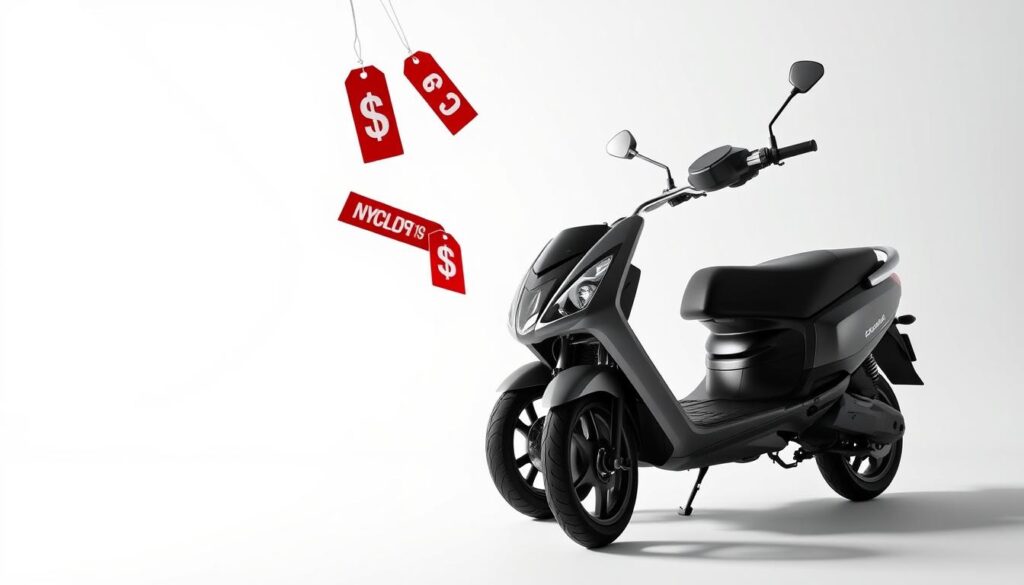
Value tier models land around $1,169.99–$1,399.99. Examples include Vitacci Bahama 150cc at $1,169.99 and the Taotao CY150D 150cc SuperScooter at $1,399.99. These offer a low entry cost with basic features.
Mid-tier sweet spot
Mid-range riders find the best blend of features and cost at roughly $1,400–$1,699. Picks here include Vitacci Nitro and Zoma at $1,599.99, and the TrailMaster Sorrento 150A at $1,649.00.
Premium builds and styling
Premium models start near $1,800 and can exceed $2,400 for upgraded fit and finish. The Amigo Warrior lists at $1,807.99 and targets buyers who value trim, lighting, and unique styling.
- Benchmark bands with real listings to judge value and avoid surprise costs.
- Compare included brakes, tire spec, lighting, and storage before buying.
- Factor warranty, dealer services, and regional fees into the final checkout number.
Tip: Watch sales cycles and inventory. Availability can move a model between bands, so checking current listings often yields better deals and clearer long‑term cost expectations.
Top 150cc moped picks worth your shortlist
This short list focuses on models that balance style, practicality, and clear value across common budgets.
Shoppers can start by comparing seat height, storage, and lighting to match daily needs. Below are reliable picks with current listed price points to make side-by-side comparisons easier.
Vitacci Nitro 150cc Scooter
$1,599.99 — Mid-tier, sporty styling and solid features for riders wanting a sharp look without premium cost.
Vitacci Rocket 150cc Scooter
$1,399.95 — Friendly entry choice with dependable road manners and a reachable price for first upgrades.
Vitacci Eagle 150cc Scooter
$1,391.99 — Value/mid crossover that suits commuters focused on balance and economy.
Vitacci Challenger 150cc Scooter
$1,229.76 — Budget anchor, approachable for new owners who want simple ownership.
Vitacci Zoma 150cc Scooter
$1,599.99 — Aggressive stance with everyday usability for riders who like bold styling.
Amigo Warrior 150 Scooter
$1,807.99 — Premium-leaning, for buyers who value trim and distinctive looks.
TrailMaster Sorrento 150A Scooter
$1,649.00 — Classic lines meet daily practicality; ideal for retro fans who ride often.
TaoTao CY150D 150cc SuperScooter
$1,399.99 — Dependable commuter pick that keeps ownership costs sensible.
Quick note: This short list covers a range of budgets and styles so buyers can craft a tailored shortlist. For final selection, compare ride height, cargo space, and lighting to fine-tune comfort before purchase.
150cc scooters by brand and style
Brands shape riding character as much as engine tuning, so choosing a maker helps narrow options fast.
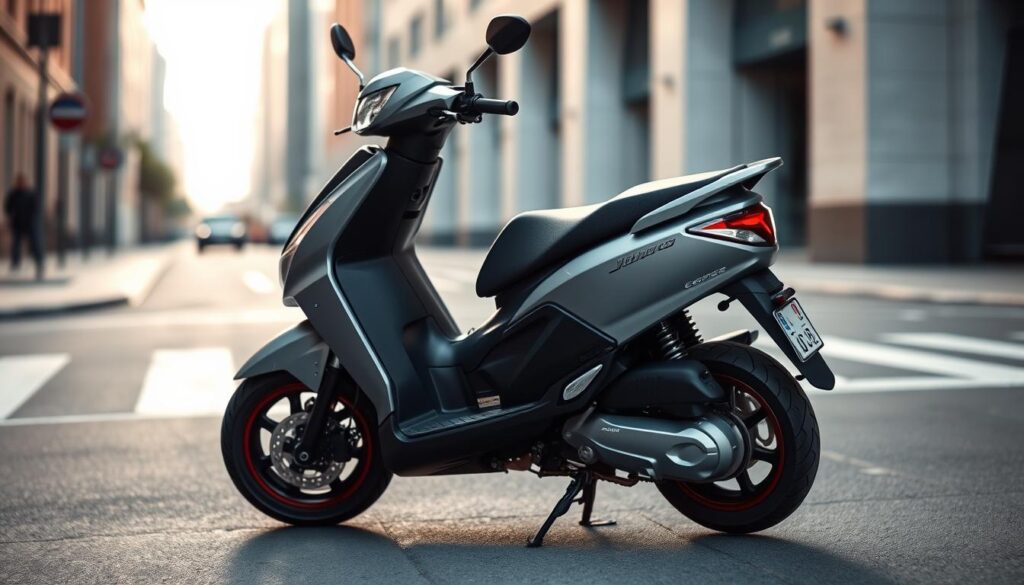
Vitacci: broad lineup from sport to retro
Vitacci covers sporty lines like the Nitro and Zoma alongside commuter-friendly Rocket, Eagle, and Challenger models.
Benefit: One badge can span bold styling and wallet-friendly choices.
TaoTao: accessible entry points
TaoTao focuses on straightforward, value-driven machines such as the CY150D. Riders find clear parts support and easy ownership here.
TrailMaster: classic and retro-inspired options
The TrailMaster Sorrento and similar models lean into vintage looks with modern usability. These appeal to riders who want a classic silhouette that still works daily.
Amigo & Ice Bear: distinctive cues
Amigo tends toward premium trim like the Warrior, while Ice Bear offers custom-inspired designs such as the Maddog series.
Roketa & Cougar Cycle: extra choices
Roketa and Cougar Cycle expand the field with alternate ergonomics and bodywork. They give riders more ways to match fit and feel.
- Tune and feel: CVT response and suspension vary by brand.
- Parts network: Brand ecosystems affect long-term ownership ease.
- Compare tire, brake, and lighting specs to pick the best daily rider.
Compare 150cc scooter features side by side
Side-by-side feature checks reveal which specs actually improve daily riding, not just headline numbers. Buyers should read spec sheets with their commute in mind and weigh long-term ease of ownership.
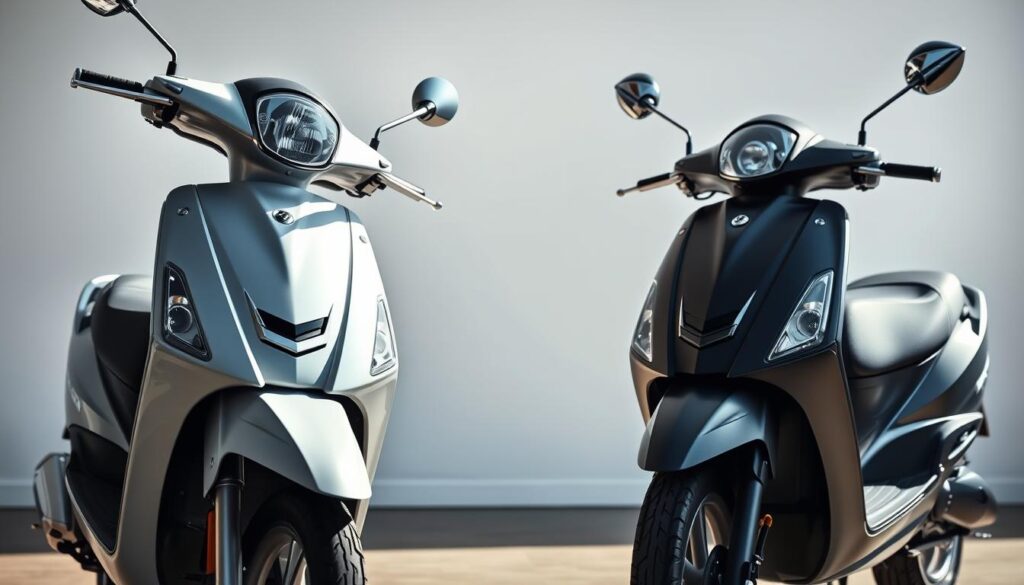
EFI vs. carbureted models
EFI delivers cleaner cold starts, steadier idle, and lower tune needs. It suits riders who want less frequent carb adjustments and better altitude performance.
Carbureted setups are simpler to service and often cheaper to repair. For budget-focused owners, carbs still make sense if they accept occasional tuning.
Suspension, brakes, and tire sizes
Fork diameter and shock adjustability change how the bike eats bumps. Stiffer forks and adjustable rear shocks improve stability on broken pavement.
Brake packages range from basic single-disc fronts to upgraded twins. A larger front disc gives more predictable stopping in traffic.
Tire diameter and tread affect grip and comfort; larger front wheels smooth rough streets better.
Storage, lighting, and charging ports
Under-seat volume, glove boxes, bag hooks, and rear racks vary widely. Pick the combo that fits daily cargo needs.
LED headlights and DRLs boost visibility. Built-in USB or 12V ports help keep phones charged for navigation.
Seat height and ergonomics
Seat shape, cushion foam, and how the seat narrows at the tunnel determine flat-foot confidence and long-ride comfort.
Check mirror placement, bar width, and switchgear feel — small ergonomic details cut fatigue on daily trips.
- Bottom line: prioritize fueling, braking, and comfort features that match real commute demands rather than chasing specs with little daily impact.
Engine tech: EFI, PRO, and “Sport” trims explained
Fueling systems and sport trims change ride feel more than many buyers expect. Knowing what each option adds helps riders match performance and upkeep to daily needs.

Cold starts, altitude, and fuel economy
EFI helps a scooter start reliably in cool weather and it adapts fueling across elevations. That means fewer hiccups on cold mornings and smoother pulls at higher altitude.
Carbureted engines can need rejetting when riders move between sea level and mountain roads. EFI often returns better fuel economy and steadier idle with less fuss.
Maintenance considerations over time
Carbs stay simple and DIY-friendly. Owners who like basic tune-ups may prefer this type.
EFI cuts routine tinkering but can require diagnostic tools if sensors fail. “PRO” and “Sport” trims usually add firmer suspension, larger brakes, or styling—check spec sheets to confirm actual upgrades.
- Use fuel stabilizer for storage.
- Match trim to riding style; sport tuning can raise revs for snappier takeoff.
- Factor parts availability and long-term service comfort into the decision.
Body styles and use cases
Style and function go hand-in-hand when matching a scooter to real routes. Riders should pick a look that also supports their daily needs—visibility, storage, and handling matter as much as paint or trim.

Sporty commuters
Sporty commuters favor sharper lines, firmer suspension, and stronger brakes for assertive lane changes and confident merges.
Typical features: lower bars, stiffer shocks, sport tread tires, and compact fairings that aid quick turn-in.
Retro and Vespa-style clones
Classic-themed models like the TrailMaster Sorrento or boutique Amigo builds emphasize timeless looks with modern reliability.
They often use upright ergonomics, smoother tire profiles, and larger, visible panels that improve conspicuity.
Touring-leaning urban cruisers
These scooter 150 designs focus on seat comfort, roomy storage, and calm throttle mapping for longer cross-town trips.
Riders can add options such as LED lighting, windshields, rear racks, and accessory power to reduce fatigue on long runs.
- Sport setups sharpen handling; retro choices prioritize comfort and charm.
- Tire profile and bodywork change feel and safety in traffic.
- Pick a moped style that matches tight urban grids or mixed arterials for best daily control.
Real-world speed, range, and ride comfort
Measured on mixed routes, these lightweight scooters deliver usable speed and surprising comfort.
Real speeds: In practice most models cruise in the 40–45 MPH window and can hit 50 MPH for short bursts when conditions and laws allow. That pace fits many city and suburban runs without pushing into highway territory.
Range and economy: Urban range is excellent for daily commutes. Fuel economy stays wallet-friendly compared to car trips or frequent ride-hailing, making overall ownership cost-effective for regular use.

- Suspension and seat padding define comfort on broken pavement; mid-tier trims often strike the best balance.
- Strong front discs and confident brakes reduce rider fatigue in stop-and-go traffic.
- Small wind screens, smooth CVT tuning, correct tire pressures, and good ergonomics all add up to better daily rides.
Owners should consider whether a slightly higher sticker price secures components that improve long-term comfort and safety. Lighting and wet-road stability are practical upgrades that pay off in varied weather.
Ownership costs beyond the sticker price
Beyond the invoice, ongoing expenses shape the real cost of ownership. Buyers should plan for recurring bills and small repairs to avoid surprises.

Insurance and registration
Budget for state insurance and registration fees early. In many states these items can shift the total price more than buyers expect.
Dealers like Red Fox Power Sports provide MSO/title help and a Warranty Request portal that streamlines paperwork. Their tech support hours (5:45pm–8pm PST) can help with post‑sale questions.
Fuel, tires, and routine service
Fuel costs stay low when riders keep correct tire pressures and ride smoothly. Still, tires, belts, and brake pads are periodic expenses; plan a modest annual maintenance fund.
Routine service—oil, filters, and CVT checks—preserves performance and engine life. DIY‑friendly models cut shop visits, while EFI versus carb choices affect tool needs and tune frequency.
- Protective gear: helmet, jacket, and a quality lock add safety and deter theft.
- Storage: covers and chargers prevent weather damage and downtime.
- Warranty & title support: use seller resources to simplify registration and claims.
Smart budgeting up front makes ownership predictable and keeps the ride reliable long term—so the long‑term price stays manageable and stress‑free.
Licensing and road legality in the United States
Before you ride, know that how a vehicle is classified can change your license, insurance, and where you may legally ride.
State rules vary: In many states these machines are treated as scooters or motorcycles and may require a motorcycle endorsement. Riders should check their DMV before buying or riding.
Registration & title: Most sellers must provide an MSO or title to register the vehicle. Reputable dealers like Red Fox Power Sports offer MSO/title support to simplify paperwork.
- Helmet, eye protection, and road access rules differ by jurisdiction.
- Insurance minimums change by state and can raise your monthly price to ride.
- Equipment standards—mirrors, lights, signals—must be met; confirm compliance if you modify parts.
Also check local parking rules, two-up legality, and how your town classifies small scooters. Keep registration, insurance, and license handy and recheck rules periodically since laws and enforcement can change.
For state-by-state guidance, consult this handy resource on scooter and motorcycle laws: scooter and motorcycle laws by state.
Where to buy scooters and mopeds online
A few trusted online dealers bundle financing, paperwork help, and post‑sale tech support to make buying simpler.
Red Fox Power Sports
Red Fox stands out for buyer support. It offers financing, layaway, and a Warranty Request portal that eases claims.
They also handle MSO/title paperwork and list tech support hours (5:45pm–8pm PST) for setup questions. That reduces uncertainty for first‑time owners.
Killer Motorsports
Killer Motorsports showcases compact 150 lines that cruise near 45–50 MPH and ride like smaller scooters with extra punch.
Their catalog includes brands such as TaoTao, Roketa, and Cougar Cycle, giving shoppers a broad selection to test ride or order online.
Other retailers and listings
Major sellers that list Vitacci, TrailMaster, TaoTao, Amigo, and Ice Bear make side‑by‑side comparisons easy.
- Compare total checkout price, shipping, and assembly fees.
- Scan warranty terms, PDI options, and recent customer reviews.
- Set stock alerts and ask dealers about parts availability before purchase.
Shopping checklist for a 150cc moped
Simple pre-purchase checks cut the risk of downtime and make ownership predictable from day one.
Warranty, parts support, and tech help
Confirm warranty length and what it actually covers. Ask how to file claims and whether parts are stocked nearby.
Tip: Strong parts support shortens downtime when wear items or plastics need replacement. Red Fox Power Sports lists a Warranty Request portal and Tech Support hours (5:45pm–8pm PST) which help during setup and early ownership.
Delivery, assembly, and PDI notes
Clarify MSO/title delivery so registration won’t stall. Verify if documents arrive with the unit or by mail afterward.
- Ask about PDI—torque checks and fluid verification prevent early failures.
- Check liftgate and curbside policies; delivery service affects convenience.
- Compare total price including shipping and assembly; support can justify a higher base cost.
Budget for initial fluids, a battery tender, and basic tools. Read the owner’s manual early, record VIN and key codes, and buy quality protective gear and a secure lock to protect the investment.
Final reminder: a clear checklist speeds setup and keeps everyday riding reliable for new owners of a moped or similar urban runabout. Good records ease insurance and warranty claims later.
Best values by budget and riding style
Smart buyers group models by price and purpose to find the best daily ride for their routes. Below are practical picks by three common budget lanes so readers can match features to real use.
Under $1,400: entry-level essentials
These are solid starters with low entry cost and simple upkeep. Top choices include the Vitacci Challenger at $1,229.76, Vitacci Eagle at $1,391.99, Vitacci Rocket at $1,399.95, and the Taotao CY150D at $1,399.99.
$1,400–$1,700: feature-rich daily riders
Mid-tier models add better suspension, brakes, and comfort for daily commutes. Look to the Vitacci Nitro and Zoma (both $1,599.99) and the TrailMaster Sorrento 150A ($1,649.00) for a balanced upgrade.
$1,800 and up: premium finishes and trims
At this level, buyers pay for refined fit and standout looks. The Amigo Warrior at $1,807.99 brings premium trim and curb appeal that justify the higher price for style-focused riders.
- Daily commuters may prefer mid-tier suspension and stronger brakes for comfort.
- Two-up or hill-prone routes often benefit from mid or premium CVT tuning and firmer rear shocks.
- Filter choices by seat height and storage — they shape everyday usability more than raw horsepower.
- After-sale support and parts access often decide true value over the long run.
150cc moped: final picks and next steps
This final roundup helps riders pick a clear shortlist and take the next steps toward ownership. Use the shortlist below to match budget and style to real needs, then check fit and dealer support before you buy.
For budget-first buyers, the Vitacci Challenger ($1,229.76), Eagle ($1,391.99), Rocket ($1,399.95), and Taotao CY150D ($1,399.99) deliver credible daily performance at a low entry price.
If comfort and style matter, consider the Vitacci Nitro or Zoma (both $1,599.99) or the TrailMaster Sorrento 150A ($1,649.00) as strong mid-tier commuters with upgraded suspension and features.
For standout looks and finish, the Amigo Warrior 150 ($1,807.99) offers a more premium curb appeal while staying in scooter territory.
Shortlist 2–3 models, confirm seat height and reach, and get an all‑in quote that includes shipping and setup fees. Choose a retailer with clear MSO/title help, financing, warranty claims support, and accessible tech hours to smooth the first weeks of ownership.
Plan basic gear and locks before delivery, and set a 30–60 day maintenance check for fluids and fasteners. With a focused shortlist and these next steps, riders can move confidently from research to a practical purchase that fits daily life.
FAQ
What makes a 150 scooter a practical choice for city riders?
It strikes a balance between fuel economy and usable speed. Riders get quicker acceleration and higher cruising speeds than smaller engines, while still enjoying low operating costs and easy parking in urban areas.
Who benefits most from choosing a 150cc scooter?
City commuters who need dependable daily transport and returning riders who want a machine that’s easy to handle but more capable than a 50cc fit this class best. It also suits riders who want occasional highway or faster suburban travel without a large motorcycle.
What typical top speed and ride feel should buyers expect?
Many models reach about 45–50 MPH and deliver handling similar to smaller scooters but with noticeably more punch. That makes stop-and-go traffic easier and gives confident passing power on multi-lane roads.
How much do these scooters usually cost?
Entry-level models often sit in the lower tier near
FAQ
What makes a 150 scooter a practical choice for city riders?
It strikes a balance between fuel economy and usable speed. Riders get quicker acceleration and higher cruising speeds than smaller engines, while still enjoying low operating costs and easy parking in urban areas.
Who benefits most from choosing a 150cc scooter?
City commuters who need dependable daily transport and returning riders who want a machine that’s easy to handle but more capable than a 50cc fit this class best. It also suits riders who want occasional highway or faster suburban travel without a large motorcycle.
What typical top speed and ride feel should buyers expect?
Many models reach about 45–50 MPH and deliver handling similar to smaller scooters but with noticeably more punch. That makes stop-and-go traffic easier and gives confident passing power on multi-lane roads.
How much do these scooters usually cost?
Entry-level models often sit in the lower tier near $1,169.99–$1,399.99. Mid-tier choices cluster around $1,400–$1,699, and premium builds with upgraded styling or features can range from $1,800 to $2,400 or more.
What feature differences matter most when comparing models?
Pay attention to fuel delivery (EFI vs. carb), suspension quality, brakes and tire size, and practical items like under-seat storage, lighting, and charging ports. Seat height and ergonomics shape daily comfort, so test-ride when possible.
Are EFI models worth the extra cost over carbureted versions?
EFI usually gives better cold starts, improved fuel economy, and more consistent performance at altitude. It can reduce maintenance headaches long term, which makes it a good investment for regular riders.
What ongoing ownership costs should buyers plan for?
Budget for insurance, registration, regular fuel, tires, brake pads, and scheduled service. Parts availability and dealer support affect cost and downtime, so favor brands and retailers with reliable parts channels.
What licensing and road legality issues should riders check?
Rules vary by state and locality. Some places require a motorcycle endorsement, others allow use with a standard driver’s license. Riders should verify local registration, helmet laws, and lane restrictions before buying.
Where are reputable places to buy these scooters online?
Look to specialty retailers and marketplaces that list established brands such as Vitacci, TaoTao, TrailMaster, Amigo, and Ice Bear. Check seller reviews, warranty terms, and whether they offer financing, delivery, and pre-delivery inspection (PDI).
Which shopping checklist items are most important before purchase?
Confirm warranty length, parts support, and tech service availability. Understand delivery timelines, assembly needs, and PDI details. Also compare feature sets in your budget range so the scooter matches daily needs.
What are the best values by budget and riding style?
For under $1,400 expect entry-level essentials that cover commuting basics. From $1,400–$1,700 shoppers find more features and comfort for daily use. Above $1,800 buyers get premium finishes, advanced trims, and stronger dealer support.
How do body styles affect use cases?
Sporty scooters favor nimble handling and a forward-leaning posture for quick commutes. Retro and Vespa-style designs focus on classic looks and upright comfort. Touring-leaning cruisers add storage and a relaxed ride for longer trips.
How long do engines and drivetrains typically last with regular maintenance?
With routine service—oil changes, belt checks, and proper fueling—many owners get several years of reliable use. Longevity depends on build quality, riding habits, and how well the scooter is maintained over time.
Are parts and service widely available for major brands?
Brands such as Vitacci, TaoTao, TrailMaster, Amigo, and Ice Bear tend to have broader parts networks through dealers and online stores. Verify local service options before committing, since regional support varies.
What should riders expect in real-world range and fuel economy?
Many riders see efficient fuel use, allowing long city ranges on a single tank. Actual mileage varies with riding style, load, and terrain; conservative riding and proper tuning yield the best economy.
,169.99–
FAQ
What makes a 150 scooter a practical choice for city riders?
It strikes a balance between fuel economy and usable speed. Riders get quicker acceleration and higher cruising speeds than smaller engines, while still enjoying low operating costs and easy parking in urban areas.
Who benefits most from choosing a 150cc scooter?
City commuters who need dependable daily transport and returning riders who want a machine that’s easy to handle but more capable than a 50cc fit this class best. It also suits riders who want occasional highway or faster suburban travel without a large motorcycle.
What typical top speed and ride feel should buyers expect?
Many models reach about 45–50 MPH and deliver handling similar to smaller scooters but with noticeably more punch. That makes stop-and-go traffic easier and gives confident passing power on multi-lane roads.
How much do these scooters usually cost?
Entry-level models often sit in the lower tier near $1,169.99–$1,399.99. Mid-tier choices cluster around $1,400–$1,699, and premium builds with upgraded styling or features can range from $1,800 to $2,400 or more.
What feature differences matter most when comparing models?
Pay attention to fuel delivery (EFI vs. carb), suspension quality, brakes and tire size, and practical items like under-seat storage, lighting, and charging ports. Seat height and ergonomics shape daily comfort, so test-ride when possible.
Are EFI models worth the extra cost over carbureted versions?
EFI usually gives better cold starts, improved fuel economy, and more consistent performance at altitude. It can reduce maintenance headaches long term, which makes it a good investment for regular riders.
What ongoing ownership costs should buyers plan for?
Budget for insurance, registration, regular fuel, tires, brake pads, and scheduled service. Parts availability and dealer support affect cost and downtime, so favor brands and retailers with reliable parts channels.
What licensing and road legality issues should riders check?
Rules vary by state and locality. Some places require a motorcycle endorsement, others allow use with a standard driver’s license. Riders should verify local registration, helmet laws, and lane restrictions before buying.
Where are reputable places to buy these scooters online?
Look to specialty retailers and marketplaces that list established brands such as Vitacci, TaoTao, TrailMaster, Amigo, and Ice Bear. Check seller reviews, warranty terms, and whether they offer financing, delivery, and pre-delivery inspection (PDI).
Which shopping checklist items are most important before purchase?
Confirm warranty length, parts support, and tech service availability. Understand delivery timelines, assembly needs, and PDI details. Also compare feature sets in your budget range so the scooter matches daily needs.
What are the best values by budget and riding style?
For under $1,400 expect entry-level essentials that cover commuting basics. From $1,400–$1,700 shoppers find more features and comfort for daily use. Above $1,800 buyers get premium finishes, advanced trims, and stronger dealer support.
How do body styles affect use cases?
Sporty scooters favor nimble handling and a forward-leaning posture for quick commutes. Retro and Vespa-style designs focus on classic looks and upright comfort. Touring-leaning cruisers add storage and a relaxed ride for longer trips.
How long do engines and drivetrains typically last with regular maintenance?
With routine service—oil changes, belt checks, and proper fueling—many owners get several years of reliable use. Longevity depends on build quality, riding habits, and how well the scooter is maintained over time.
Are parts and service widely available for major brands?
Brands such as Vitacci, TaoTao, TrailMaster, Amigo, and Ice Bear tend to have broader parts networks through dealers and online stores. Verify local service options before committing, since regional support varies.
What should riders expect in real-world range and fuel economy?
Many riders see efficient fuel use, allowing long city ranges on a single tank. Actual mileage varies with riding style, load, and terrain; conservative riding and proper tuning yield the best economy.
,399.99. Mid-tier choices cluster around
FAQ
What makes a 150 scooter a practical choice for city riders?
It strikes a balance between fuel economy and usable speed. Riders get quicker acceleration and higher cruising speeds than smaller engines, while still enjoying low operating costs and easy parking in urban areas.
Who benefits most from choosing a 150cc scooter?
City commuters who need dependable daily transport and returning riders who want a machine that’s easy to handle but more capable than a 50cc fit this class best. It also suits riders who want occasional highway or faster suburban travel without a large motorcycle.
What typical top speed and ride feel should buyers expect?
Many models reach about 45–50 MPH and deliver handling similar to smaller scooters but with noticeably more punch. That makes stop-and-go traffic easier and gives confident passing power on multi-lane roads.
How much do these scooters usually cost?
Entry-level models often sit in the lower tier near $1,169.99–$1,399.99. Mid-tier choices cluster around $1,400–$1,699, and premium builds with upgraded styling or features can range from $1,800 to $2,400 or more.
What feature differences matter most when comparing models?
Pay attention to fuel delivery (EFI vs. carb), suspension quality, brakes and tire size, and practical items like under-seat storage, lighting, and charging ports. Seat height and ergonomics shape daily comfort, so test-ride when possible.
Are EFI models worth the extra cost over carbureted versions?
EFI usually gives better cold starts, improved fuel economy, and more consistent performance at altitude. It can reduce maintenance headaches long term, which makes it a good investment for regular riders.
What ongoing ownership costs should buyers plan for?
Budget for insurance, registration, regular fuel, tires, brake pads, and scheduled service. Parts availability and dealer support affect cost and downtime, so favor brands and retailers with reliable parts channels.
What licensing and road legality issues should riders check?
Rules vary by state and locality. Some places require a motorcycle endorsement, others allow use with a standard driver’s license. Riders should verify local registration, helmet laws, and lane restrictions before buying.
Where are reputable places to buy these scooters online?
Look to specialty retailers and marketplaces that list established brands such as Vitacci, TaoTao, TrailMaster, Amigo, and Ice Bear. Check seller reviews, warranty terms, and whether they offer financing, delivery, and pre-delivery inspection (PDI).
Which shopping checklist items are most important before purchase?
Confirm warranty length, parts support, and tech service availability. Understand delivery timelines, assembly needs, and PDI details. Also compare feature sets in your budget range so the scooter matches daily needs.
What are the best values by budget and riding style?
For under $1,400 expect entry-level essentials that cover commuting basics. From $1,400–$1,700 shoppers find more features and comfort for daily use. Above $1,800 buyers get premium finishes, advanced trims, and stronger dealer support.
How do body styles affect use cases?
Sporty scooters favor nimble handling and a forward-leaning posture for quick commutes. Retro and Vespa-style designs focus on classic looks and upright comfort. Touring-leaning cruisers add storage and a relaxed ride for longer trips.
How long do engines and drivetrains typically last with regular maintenance?
With routine service—oil changes, belt checks, and proper fueling—many owners get several years of reliable use. Longevity depends on build quality, riding habits, and how well the scooter is maintained over time.
Are parts and service widely available for major brands?
Brands such as Vitacci, TaoTao, TrailMaster, Amigo, and Ice Bear tend to have broader parts networks through dealers and online stores. Verify local service options before committing, since regional support varies.
What should riders expect in real-world range and fuel economy?
Many riders see efficient fuel use, allowing long city ranges on a single tank. Actual mileage varies with riding style, load, and terrain; conservative riding and proper tuning yield the best economy.
,400–
FAQ
What makes a 150 scooter a practical choice for city riders?
It strikes a balance between fuel economy and usable speed. Riders get quicker acceleration and higher cruising speeds than smaller engines, while still enjoying low operating costs and easy parking in urban areas.
Who benefits most from choosing a 150cc scooter?
City commuters who need dependable daily transport and returning riders who want a machine that’s easy to handle but more capable than a 50cc fit this class best. It also suits riders who want occasional highway or faster suburban travel without a large motorcycle.
What typical top speed and ride feel should buyers expect?
Many models reach about 45–50 MPH and deliver handling similar to smaller scooters but with noticeably more punch. That makes stop-and-go traffic easier and gives confident passing power on multi-lane roads.
How much do these scooters usually cost?
Entry-level models often sit in the lower tier near $1,169.99–$1,399.99. Mid-tier choices cluster around $1,400–$1,699, and premium builds with upgraded styling or features can range from $1,800 to $2,400 or more.
What feature differences matter most when comparing models?
Pay attention to fuel delivery (EFI vs. carb), suspension quality, brakes and tire size, and practical items like under-seat storage, lighting, and charging ports. Seat height and ergonomics shape daily comfort, so test-ride when possible.
Are EFI models worth the extra cost over carbureted versions?
EFI usually gives better cold starts, improved fuel economy, and more consistent performance at altitude. It can reduce maintenance headaches long term, which makes it a good investment for regular riders.
What ongoing ownership costs should buyers plan for?
Budget for insurance, registration, regular fuel, tires, brake pads, and scheduled service. Parts availability and dealer support affect cost and downtime, so favor brands and retailers with reliable parts channels.
What licensing and road legality issues should riders check?
Rules vary by state and locality. Some places require a motorcycle endorsement, others allow use with a standard driver’s license. Riders should verify local registration, helmet laws, and lane restrictions before buying.
Where are reputable places to buy these scooters online?
Look to specialty retailers and marketplaces that list established brands such as Vitacci, TaoTao, TrailMaster, Amigo, and Ice Bear. Check seller reviews, warranty terms, and whether they offer financing, delivery, and pre-delivery inspection (PDI).
Which shopping checklist items are most important before purchase?
Confirm warranty length, parts support, and tech service availability. Understand delivery timelines, assembly needs, and PDI details. Also compare feature sets in your budget range so the scooter matches daily needs.
What are the best values by budget and riding style?
For under $1,400 expect entry-level essentials that cover commuting basics. From $1,400–$1,700 shoppers find more features and comfort for daily use. Above $1,800 buyers get premium finishes, advanced trims, and stronger dealer support.
How do body styles affect use cases?
Sporty scooters favor nimble handling and a forward-leaning posture for quick commutes. Retro and Vespa-style designs focus on classic looks and upright comfort. Touring-leaning cruisers add storage and a relaxed ride for longer trips.
How long do engines and drivetrains typically last with regular maintenance?
With routine service—oil changes, belt checks, and proper fueling—many owners get several years of reliable use. Longevity depends on build quality, riding habits, and how well the scooter is maintained over time.
Are parts and service widely available for major brands?
Brands such as Vitacci, TaoTao, TrailMaster, Amigo, and Ice Bear tend to have broader parts networks through dealers and online stores. Verify local service options before committing, since regional support varies.
What should riders expect in real-world range and fuel economy?
Many riders see efficient fuel use, allowing long city ranges on a single tank. Actual mileage varies with riding style, load, and terrain; conservative riding and proper tuning yield the best economy.
,699, and premium builds with upgraded styling or features can range from
FAQ
What makes a 150 scooter a practical choice for city riders?
It strikes a balance between fuel economy and usable speed. Riders get quicker acceleration and higher cruising speeds than smaller engines, while still enjoying low operating costs and easy parking in urban areas.
Who benefits most from choosing a 150cc scooter?
City commuters who need dependable daily transport and returning riders who want a machine that’s easy to handle but more capable than a 50cc fit this class best. It also suits riders who want occasional highway or faster suburban travel without a large motorcycle.
What typical top speed and ride feel should buyers expect?
Many models reach about 45–50 MPH and deliver handling similar to smaller scooters but with noticeably more punch. That makes stop-and-go traffic easier and gives confident passing power on multi-lane roads.
How much do these scooters usually cost?
Entry-level models often sit in the lower tier near $1,169.99–$1,399.99. Mid-tier choices cluster around $1,400–$1,699, and premium builds with upgraded styling or features can range from $1,800 to $2,400 or more.
What feature differences matter most when comparing models?
Pay attention to fuel delivery (EFI vs. carb), suspension quality, brakes and tire size, and practical items like under-seat storage, lighting, and charging ports. Seat height and ergonomics shape daily comfort, so test-ride when possible.
Are EFI models worth the extra cost over carbureted versions?
EFI usually gives better cold starts, improved fuel economy, and more consistent performance at altitude. It can reduce maintenance headaches long term, which makes it a good investment for regular riders.
What ongoing ownership costs should buyers plan for?
Budget for insurance, registration, regular fuel, tires, brake pads, and scheduled service. Parts availability and dealer support affect cost and downtime, so favor brands and retailers with reliable parts channels.
What licensing and road legality issues should riders check?
Rules vary by state and locality. Some places require a motorcycle endorsement, others allow use with a standard driver’s license. Riders should verify local registration, helmet laws, and lane restrictions before buying.
Where are reputable places to buy these scooters online?
Look to specialty retailers and marketplaces that list established brands such as Vitacci, TaoTao, TrailMaster, Amigo, and Ice Bear. Check seller reviews, warranty terms, and whether they offer financing, delivery, and pre-delivery inspection (PDI).
Which shopping checklist items are most important before purchase?
Confirm warranty length, parts support, and tech service availability. Understand delivery timelines, assembly needs, and PDI details. Also compare feature sets in your budget range so the scooter matches daily needs.
What are the best values by budget and riding style?
For under $1,400 expect entry-level essentials that cover commuting basics. From $1,400–$1,700 shoppers find more features and comfort for daily use. Above $1,800 buyers get premium finishes, advanced trims, and stronger dealer support.
How do body styles affect use cases?
Sporty scooters favor nimble handling and a forward-leaning posture for quick commutes. Retro and Vespa-style designs focus on classic looks and upright comfort. Touring-leaning cruisers add storage and a relaxed ride for longer trips.
How long do engines and drivetrains typically last with regular maintenance?
With routine service—oil changes, belt checks, and proper fueling—many owners get several years of reliable use. Longevity depends on build quality, riding habits, and how well the scooter is maintained over time.
Are parts and service widely available for major brands?
Brands such as Vitacci, TaoTao, TrailMaster, Amigo, and Ice Bear tend to have broader parts networks through dealers and online stores. Verify local service options before committing, since regional support varies.
What should riders expect in real-world range and fuel economy?
Many riders see efficient fuel use, allowing long city ranges on a single tank. Actual mileage varies with riding style, load, and terrain; conservative riding and proper tuning yield the best economy.
,800 to ,400 or more.
What feature differences matter most when comparing models?
Pay attention to fuel delivery (EFI vs. carb), suspension quality, brakes and tire size, and practical items like under-seat storage, lighting, and charging ports. Seat height and ergonomics shape daily comfort, so test-ride when possible.
Are EFI models worth the extra cost over carbureted versions?
EFI usually gives better cold starts, improved fuel economy, and more consistent performance at altitude. It can reduce maintenance headaches long term, which makes it a good investment for regular riders.
What ongoing ownership costs should buyers plan for?
Budget for insurance, registration, regular fuel, tires, brake pads, and scheduled service. Parts availability and dealer support affect cost and downtime, so favor brands and retailers with reliable parts channels.
What licensing and road legality issues should riders check?
Rules vary by state and locality. Some places require a motorcycle endorsement, others allow use with a standard driver’s license. Riders should verify local registration, helmet laws, and lane restrictions before buying.
Where are reputable places to buy these scooters online?
Look to specialty retailers and marketplaces that list established brands such as Vitacci, TaoTao, TrailMaster, Amigo, and Ice Bear. Check seller reviews, warranty terms, and whether they offer financing, delivery, and pre-delivery inspection (PDI).
Which shopping checklist items are most important before purchase?
Confirm warranty length, parts support, and tech service availability. Understand delivery timelines, assembly needs, and PDI details. Also compare feature sets in your budget range so the scooter matches daily needs.
What are the best values by budget and riding style?
For under
FAQ
What makes a 150 scooter a practical choice for city riders?
It strikes a balance between fuel economy and usable speed. Riders get quicker acceleration and higher cruising speeds than smaller engines, while still enjoying low operating costs and easy parking in urban areas.
Who benefits most from choosing a 150cc scooter?
City commuters who need dependable daily transport and returning riders who want a machine that’s easy to handle but more capable than a 50cc fit this class best. It also suits riders who want occasional highway or faster suburban travel without a large motorcycle.
What typical top speed and ride feel should buyers expect?
Many models reach about 45–50 MPH and deliver handling similar to smaller scooters but with noticeably more punch. That makes stop-and-go traffic easier and gives confident passing power on multi-lane roads.
How much do these scooters usually cost?
Entry-level models often sit in the lower tier near $1,169.99–$1,399.99. Mid-tier choices cluster around $1,400–$1,699, and premium builds with upgraded styling or features can range from $1,800 to $2,400 or more.
What feature differences matter most when comparing models?
Pay attention to fuel delivery (EFI vs. carb), suspension quality, brakes and tire size, and practical items like under-seat storage, lighting, and charging ports. Seat height and ergonomics shape daily comfort, so test-ride when possible.
Are EFI models worth the extra cost over carbureted versions?
EFI usually gives better cold starts, improved fuel economy, and more consistent performance at altitude. It can reduce maintenance headaches long term, which makes it a good investment for regular riders.
What ongoing ownership costs should buyers plan for?
Budget for insurance, registration, regular fuel, tires, brake pads, and scheduled service. Parts availability and dealer support affect cost and downtime, so favor brands and retailers with reliable parts channels.
What licensing and road legality issues should riders check?
Rules vary by state and locality. Some places require a motorcycle endorsement, others allow use with a standard driver’s license. Riders should verify local registration, helmet laws, and lane restrictions before buying.
Where are reputable places to buy these scooters online?
Look to specialty retailers and marketplaces that list established brands such as Vitacci, TaoTao, TrailMaster, Amigo, and Ice Bear. Check seller reviews, warranty terms, and whether they offer financing, delivery, and pre-delivery inspection (PDI).
Which shopping checklist items are most important before purchase?
Confirm warranty length, parts support, and tech service availability. Understand delivery timelines, assembly needs, and PDI details. Also compare feature sets in your budget range so the scooter matches daily needs.
What are the best values by budget and riding style?
For under $1,400 expect entry-level essentials that cover commuting basics. From $1,400–$1,700 shoppers find more features and comfort for daily use. Above $1,800 buyers get premium finishes, advanced trims, and stronger dealer support.
How do body styles affect use cases?
Sporty scooters favor nimble handling and a forward-leaning posture for quick commutes. Retro and Vespa-style designs focus on classic looks and upright comfort. Touring-leaning cruisers add storage and a relaxed ride for longer trips.
How long do engines and drivetrains typically last with regular maintenance?
With routine service—oil changes, belt checks, and proper fueling—many owners get several years of reliable use. Longevity depends on build quality, riding habits, and how well the scooter is maintained over time.
Are parts and service widely available for major brands?
Brands such as Vitacci, TaoTao, TrailMaster, Amigo, and Ice Bear tend to have broader parts networks through dealers and online stores. Verify local service options before committing, since regional support varies.
What should riders expect in real-world range and fuel economy?
Many riders see efficient fuel use, allowing long city ranges on a single tank. Actual mileage varies with riding style, load, and terrain; conservative riding and proper tuning yield the best economy.
,400 expect entry-level essentials that cover commuting basics. From
FAQ
What makes a 150 scooter a practical choice for city riders?
It strikes a balance between fuel economy and usable speed. Riders get quicker acceleration and higher cruising speeds than smaller engines, while still enjoying low operating costs and easy parking in urban areas.
Who benefits most from choosing a 150cc scooter?
City commuters who need dependable daily transport and returning riders who want a machine that’s easy to handle but more capable than a 50cc fit this class best. It also suits riders who want occasional highway or faster suburban travel without a large motorcycle.
What typical top speed and ride feel should buyers expect?
Many models reach about 45–50 MPH and deliver handling similar to smaller scooters but with noticeably more punch. That makes stop-and-go traffic easier and gives confident passing power on multi-lane roads.
How much do these scooters usually cost?
Entry-level models often sit in the lower tier near $1,169.99–$1,399.99. Mid-tier choices cluster around $1,400–$1,699, and premium builds with upgraded styling or features can range from $1,800 to $2,400 or more.
What feature differences matter most when comparing models?
Pay attention to fuel delivery (EFI vs. carb), suspension quality, brakes and tire size, and practical items like under-seat storage, lighting, and charging ports. Seat height and ergonomics shape daily comfort, so test-ride when possible.
Are EFI models worth the extra cost over carbureted versions?
EFI usually gives better cold starts, improved fuel economy, and more consistent performance at altitude. It can reduce maintenance headaches long term, which makes it a good investment for regular riders.
What ongoing ownership costs should buyers plan for?
Budget for insurance, registration, regular fuel, tires, brake pads, and scheduled service. Parts availability and dealer support affect cost and downtime, so favor brands and retailers with reliable parts channels.
What licensing and road legality issues should riders check?
Rules vary by state and locality. Some places require a motorcycle endorsement, others allow use with a standard driver’s license. Riders should verify local registration, helmet laws, and lane restrictions before buying.
Where are reputable places to buy these scooters online?
Look to specialty retailers and marketplaces that list established brands such as Vitacci, TaoTao, TrailMaster, Amigo, and Ice Bear. Check seller reviews, warranty terms, and whether they offer financing, delivery, and pre-delivery inspection (PDI).
Which shopping checklist items are most important before purchase?
Confirm warranty length, parts support, and tech service availability. Understand delivery timelines, assembly needs, and PDI details. Also compare feature sets in your budget range so the scooter matches daily needs.
What are the best values by budget and riding style?
For under $1,400 expect entry-level essentials that cover commuting basics. From $1,400–$1,700 shoppers find more features and comfort for daily use. Above $1,800 buyers get premium finishes, advanced trims, and stronger dealer support.
How do body styles affect use cases?
Sporty scooters favor nimble handling and a forward-leaning posture for quick commutes. Retro and Vespa-style designs focus on classic looks and upright comfort. Touring-leaning cruisers add storage and a relaxed ride for longer trips.
How long do engines and drivetrains typically last with regular maintenance?
With routine service—oil changes, belt checks, and proper fueling—many owners get several years of reliable use. Longevity depends on build quality, riding habits, and how well the scooter is maintained over time.
Are parts and service widely available for major brands?
Brands such as Vitacci, TaoTao, TrailMaster, Amigo, and Ice Bear tend to have broader parts networks through dealers and online stores. Verify local service options before committing, since regional support varies.
What should riders expect in real-world range and fuel economy?
Many riders see efficient fuel use, allowing long city ranges on a single tank. Actual mileage varies with riding style, load, and terrain; conservative riding and proper tuning yield the best economy.
,400–
FAQ
What makes a 150 scooter a practical choice for city riders?
It strikes a balance between fuel economy and usable speed. Riders get quicker acceleration and higher cruising speeds than smaller engines, while still enjoying low operating costs and easy parking in urban areas.
Who benefits most from choosing a 150cc scooter?
City commuters who need dependable daily transport and returning riders who want a machine that’s easy to handle but more capable than a 50cc fit this class best. It also suits riders who want occasional highway or faster suburban travel without a large motorcycle.
What typical top speed and ride feel should buyers expect?
Many models reach about 45–50 MPH and deliver handling similar to smaller scooters but with noticeably more punch. That makes stop-and-go traffic easier and gives confident passing power on multi-lane roads.
How much do these scooters usually cost?
Entry-level models often sit in the lower tier near $1,169.99–$1,399.99. Mid-tier choices cluster around $1,400–$1,699, and premium builds with upgraded styling or features can range from $1,800 to $2,400 or more.
What feature differences matter most when comparing models?
Pay attention to fuel delivery (EFI vs. carb), suspension quality, brakes and tire size, and practical items like under-seat storage, lighting, and charging ports. Seat height and ergonomics shape daily comfort, so test-ride when possible.
Are EFI models worth the extra cost over carbureted versions?
EFI usually gives better cold starts, improved fuel economy, and more consistent performance at altitude. It can reduce maintenance headaches long term, which makes it a good investment for regular riders.
What ongoing ownership costs should buyers plan for?
Budget for insurance, registration, regular fuel, tires, brake pads, and scheduled service. Parts availability and dealer support affect cost and downtime, so favor brands and retailers with reliable parts channels.
What licensing and road legality issues should riders check?
Rules vary by state and locality. Some places require a motorcycle endorsement, others allow use with a standard driver’s license. Riders should verify local registration, helmet laws, and lane restrictions before buying.
Where are reputable places to buy these scooters online?
Look to specialty retailers and marketplaces that list established brands such as Vitacci, TaoTao, TrailMaster, Amigo, and Ice Bear. Check seller reviews, warranty terms, and whether they offer financing, delivery, and pre-delivery inspection (PDI).
Which shopping checklist items are most important before purchase?
Confirm warranty length, parts support, and tech service availability. Understand delivery timelines, assembly needs, and PDI details. Also compare feature sets in your budget range so the scooter matches daily needs.
What are the best values by budget and riding style?
For under $1,400 expect entry-level essentials that cover commuting basics. From $1,400–$1,700 shoppers find more features and comfort for daily use. Above $1,800 buyers get premium finishes, advanced trims, and stronger dealer support.
How do body styles affect use cases?
Sporty scooters favor nimble handling and a forward-leaning posture for quick commutes. Retro and Vespa-style designs focus on classic looks and upright comfort. Touring-leaning cruisers add storage and a relaxed ride for longer trips.
How long do engines and drivetrains typically last with regular maintenance?
With routine service—oil changes, belt checks, and proper fueling—many owners get several years of reliable use. Longevity depends on build quality, riding habits, and how well the scooter is maintained over time.
Are parts and service widely available for major brands?
Brands such as Vitacci, TaoTao, TrailMaster, Amigo, and Ice Bear tend to have broader parts networks through dealers and online stores. Verify local service options before committing, since regional support varies.
What should riders expect in real-world range and fuel economy?
Many riders see efficient fuel use, allowing long city ranges on a single tank. Actual mileage varies with riding style, load, and terrain; conservative riding and proper tuning yield the best economy.
,700 shoppers find more features and comfort for daily use. Above
FAQ
What makes a 150 scooter a practical choice for city riders?
It strikes a balance between fuel economy and usable speed. Riders get quicker acceleration and higher cruising speeds than smaller engines, while still enjoying low operating costs and easy parking in urban areas.
Who benefits most from choosing a 150cc scooter?
City commuters who need dependable daily transport and returning riders who want a machine that’s easy to handle but more capable than a 50cc fit this class best. It also suits riders who want occasional highway or faster suburban travel without a large motorcycle.
What typical top speed and ride feel should buyers expect?
Many models reach about 45–50 MPH and deliver handling similar to smaller scooters but with noticeably more punch. That makes stop-and-go traffic easier and gives confident passing power on multi-lane roads.
How much do these scooters usually cost?
Entry-level models often sit in the lower tier near $1,169.99–$1,399.99. Mid-tier choices cluster around $1,400–$1,699, and premium builds with upgraded styling or features can range from $1,800 to $2,400 or more.
What feature differences matter most when comparing models?
Pay attention to fuel delivery (EFI vs. carb), suspension quality, brakes and tire size, and practical items like under-seat storage, lighting, and charging ports. Seat height and ergonomics shape daily comfort, so test-ride when possible.
Are EFI models worth the extra cost over carbureted versions?
EFI usually gives better cold starts, improved fuel economy, and more consistent performance at altitude. It can reduce maintenance headaches long term, which makes it a good investment for regular riders.
What ongoing ownership costs should buyers plan for?
Budget for insurance, registration, regular fuel, tires, brake pads, and scheduled service. Parts availability and dealer support affect cost and downtime, so favor brands and retailers with reliable parts channels.
What licensing and road legality issues should riders check?
Rules vary by state and locality. Some places require a motorcycle endorsement, others allow use with a standard driver’s license. Riders should verify local registration, helmet laws, and lane restrictions before buying.
Where are reputable places to buy these scooters online?
Look to specialty retailers and marketplaces that list established brands such as Vitacci, TaoTao, TrailMaster, Amigo, and Ice Bear. Check seller reviews, warranty terms, and whether they offer financing, delivery, and pre-delivery inspection (PDI).
Which shopping checklist items are most important before purchase?
Confirm warranty length, parts support, and tech service availability. Understand delivery timelines, assembly needs, and PDI details. Also compare feature sets in your budget range so the scooter matches daily needs.
What are the best values by budget and riding style?
For under $1,400 expect entry-level essentials that cover commuting basics. From $1,400–$1,700 shoppers find more features and comfort for daily use. Above $1,800 buyers get premium finishes, advanced trims, and stronger dealer support.
How do body styles affect use cases?
Sporty scooters favor nimble handling and a forward-leaning posture for quick commutes. Retro and Vespa-style designs focus on classic looks and upright comfort. Touring-leaning cruisers add storage and a relaxed ride for longer trips.
How long do engines and drivetrains typically last with regular maintenance?
With routine service—oil changes, belt checks, and proper fueling—many owners get several years of reliable use. Longevity depends on build quality, riding habits, and how well the scooter is maintained over time.
Are parts and service widely available for major brands?
Brands such as Vitacci, TaoTao, TrailMaster, Amigo, and Ice Bear tend to have broader parts networks through dealers and online stores. Verify local service options before committing, since regional support varies.
What should riders expect in real-world range and fuel economy?
Many riders see efficient fuel use, allowing long city ranges on a single tank. Actual mileage varies with riding style, load, and terrain; conservative riding and proper tuning yield the best economy.
,800 buyers get premium finishes, advanced trims, and stronger dealer support.
How do body styles affect use cases?
Sporty scooters favor nimble handling and a forward-leaning posture for quick commutes. Retro and Vespa-style designs focus on classic looks and upright comfort. Touring-leaning cruisers add storage and a relaxed ride for longer trips.
How long do engines and drivetrains typically last with regular maintenance?
With routine service—oil changes, belt checks, and proper fueling—many owners get several years of reliable use. Longevity depends on build quality, riding habits, and how well the scooter is maintained over time.
Are parts and service widely available for major brands?
Brands such as Vitacci, TaoTao, TrailMaster, Amigo, and Ice Bear tend to have broader parts networks through dealers and online stores. Verify local service options before committing, since regional support varies.
What should riders expect in real-world range and fuel economy?
Many riders see efficient fuel use, allowing long city ranges on a single tank. Actual mileage varies with riding style, load, and terrain; conservative riding and proper tuning yield the best economy.