
Explore TVS Creon: Specifications, Price, and Performance
 PopScooter Team
November 16, 2025 3:51 pm
.
16 min read
PopScooter Team
November 16, 2025 3:51 pm
.
16 min read
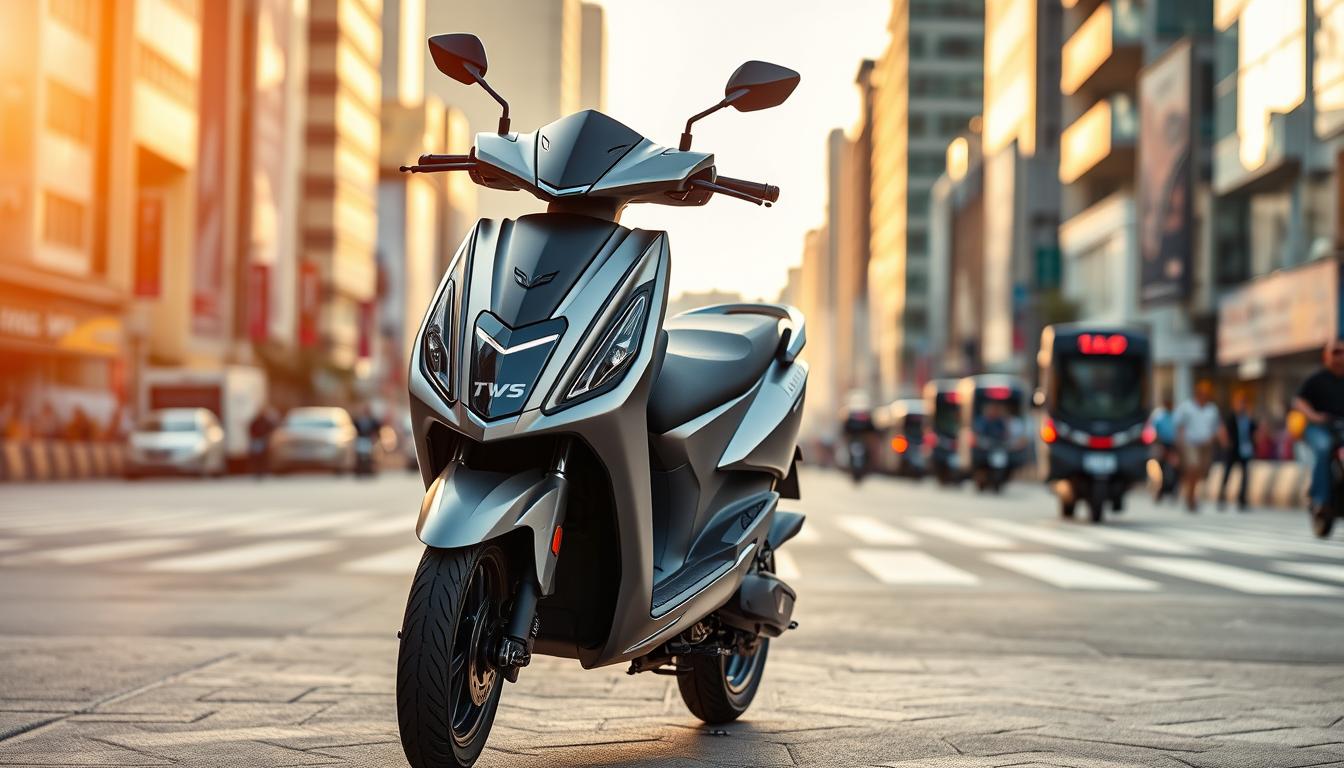
Can a production-ready sporty electric scooter truly match the bold claims of its concept? This review looks at the TVS X, the real-world follow-up to the Creon idea, and asks whether its specs and ride deliver on that promise.
The short take: the vehicle pairs a 4.44 kWh battery with a claimed IDC range of 140 km, a peak motor power figure of 11 kW, and a top speed near 105 km/h. It also aims for brisk acceleration and a motorcycle-like feel thanks to a twin-spar alloy frame and single-sided swingarm.
Readers will get clear facts on design, ride dynamics, charging options, and the ex-showroom price band up front. For a compact deep dive into its full specifications and ownership practicalities, check the detailed sitemap for related specs and context at detailed specs and pricing.
Quick take: What the TVS Creon legacy means for TVS’s sporty electric scooters
A concept’s DNA can steer a brand—here, it pushed a sport-focused electric scooter into reality.
The tvs creon story set a clear design tone that made its way into the production model. The result kept the muscular apron and trellis-style cues that signal a sporty intent and confident handling.
The production scooter launched at a premium price around Rs 2.5–2.64 lakh ex-showroom and arrived without a FAME II subsidy. It also became the first electric scooter in India to offer ABS, underlining a focus on safety and performance.
- Heritage to showroom: The creon concept influenced fit, finish, and tech-first features.
- Performance intent: A 140 km IDC range balances sporty riding and daily use.
- Ownership notes: Higher price and advanced electronics mean insurance and servicing are key considerations.
In short, the legacy explains why this electric scooter targets riders who value handling, connected features, and premium appointments over purely commuter economics.
Sporty design and build quality
Clean, aggressive bodywork and a compact footprint give this scooter a distinctly athletic stance. It favors sharp lines up front and layered surfaces at the back to read like a small motorcycle rather than a commuter box.
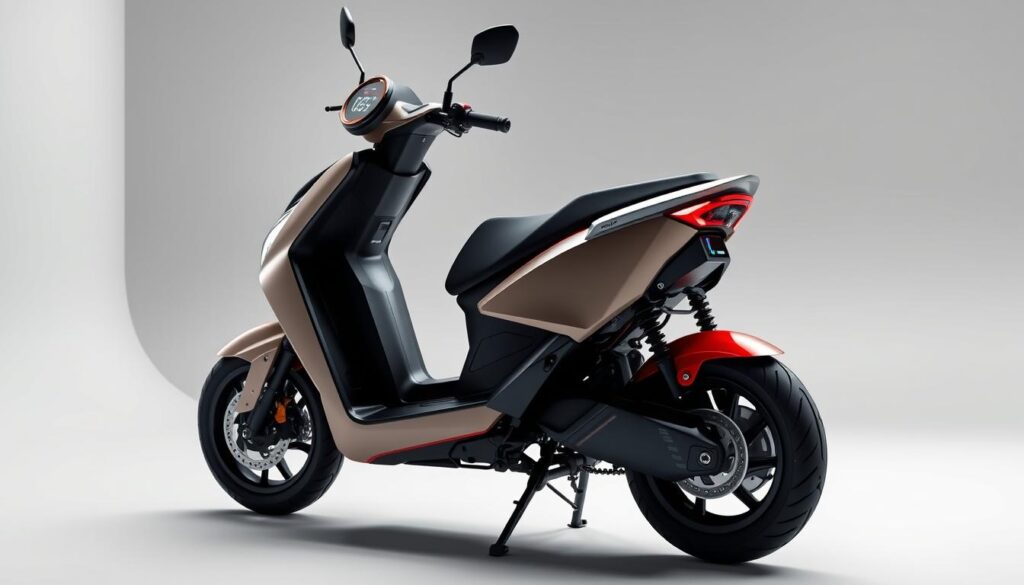
Sharp apron, trellis-style cues, and a motorcycle-like rear stance
The sharp front apron and side panels borrow cues from the TVS Creon showpiece to deliver a purposeful look. A single-sided swingarm and stacked tail create a planted, motorcycle-like rear that stands out from most scooters.
Alloy twin-spar Xleton platform: rigidity and agility benefits
It uses a cast aluminum alloy twin-spar platform called Xleton. TVS says this gives more than double the torsional stiffness and over four times the vertical stiffness of a typical underbone frame.
Placing the battery between the spars lowers the center of gravity. The result is confident turn-in and stable mid-corner manners on urban sweepers.
Lighting package and practical touches
The lighting is all-LED with bright DRLs, a focused headlight, and a defined tail light. A boot light helps access the 19-liter underseat storage after dark.
- Wheels: 12-inch wheels wrapped in 100/80 front and 110/80 rear tires for grip and low rolling resistance.
- Technology: A 10.2-inch TFT ties the display to the edgy bodywork.
- Variant: A single flagship variant keeps the design language consistent.
Motor, battery, and performance specs
A focused motor and smart battery management give this scooter its sprint and stamina.
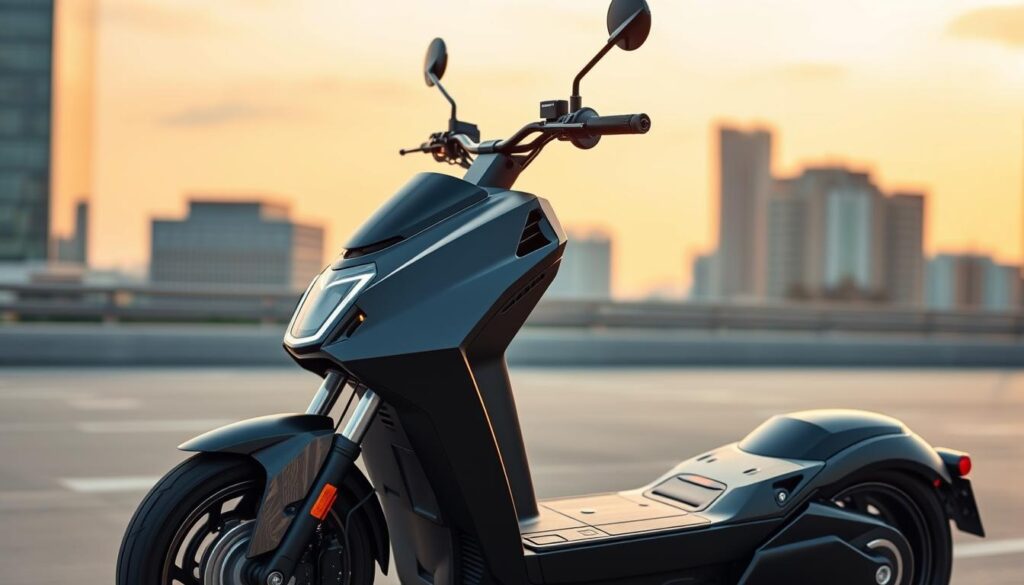
PMSM drive and measured power
The vehicle uses a PMSM motor that defines its on-road character. It produces 11 kW peak and a rated output near 7–7.5 kW to balance efficiency and punch.
Speed, acceleration, and riding modes
Claimed 0–40 km/h in 2.6 seconds shows the launch intent, while a stated top speed of 105 km/h keeps highway runs possible.
Three selectable modes — Xtealth, Xtride, and Xonic — let riders tune throttle feel and regen levels for calm city riding or aggressive performance.
Battery pack, BMS, and cooling
The 4.44 kWh lithium-ion pack is managed by an in-house BMS that protects cell health and optimizes the claimed 140 km IDC range.
Thermal control is aided by a ram air-cooled motor design, which boosts sustained output during repeated hard riding and keeps the system stable.
- Driveline: Single-speed for low maintenance and direct acceleration.
- Energy recovery: Multi-level regen adapts to each mode for a trade-off between range and responsiveness.
- Real-world balance: The setup aims to mix spirited speed with usable daily range, matching the broader tvs electric strategy.
Riding experience on city streets and open roads
City streets and open highways reveal how the scooter balances agility with composure. It feels at home in tight traffic and remains planted on faster stretches.
Throttle calibration across Xtealth, Xtride, and Xonic
The three ride modes offer distinct throttle maps. Xtealth is smooth and conservative, ideal for commuting and conserving energy.
Xtride gives a confident mid-level punch for mixed riding. Xonic unlocks the quickest response but stays controllable thanks to progressive mapping.
Comfort, ergonomics, and day-to-day usability
The 770 mm seat height and motorcycle-like rider triangle make long day rides less fatiguing. The flat floorboards and low spine avoid a cramped stance.
The chassis feels flickable once moving; the weight largely disappears and direction changes are easy when darting through traffic or merging onto a faster road.
- Range and efficiency: Regen and throttle tuning support practical urban range without dulling the riding fun.
- Braking and safety: Single-channel ABS gives front-end confidence; ease into the rear lever to avoid rear lock on hard stops.
- Comfort notes: Offset monoshock and balanced weight keep the rear planted over bumps while limiting harsh feedback.
In this review, the blend of agility, comfort, and predictable control makes the scooter enjoyable for spirited sprints and reliably practical for everyday use.
Tech and features that elevate the experience
Smart displays and cloud-linked services change how a rider plans routes, protects the vehicle, and stays connected.
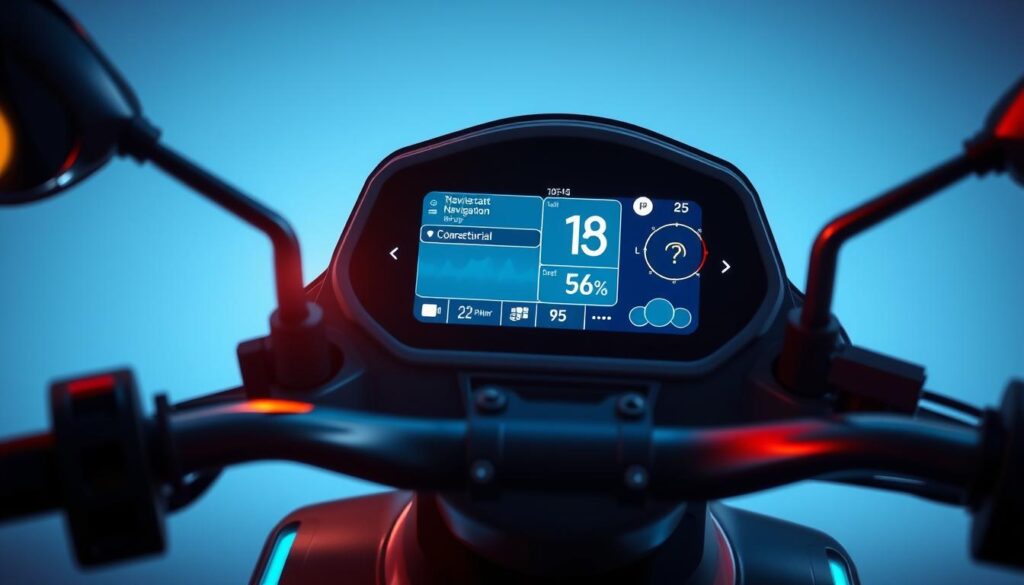
The centerpiece is a tiltable 10.2-inch TFT touchscreen that brings widgets, themes, video playback, and even games when parked.
It ties into the SmartXonnect platform and TVS NavPro for EV-aware routing and charging-aware directions. The system supports Bluetooth, Wi‑Fi, and wired links so calls, messaging, and notifications appear at the dash.
Security, updates, and daily convenience
- Geo-fencing and an anti-theft alarm help protect the scooter in busy areas.
- Crash alerts via Smart Xhield and hill assist add safety for the rider and the vehicle.
- Frequent OTA updates keep the technology fresh without dealer visits.
- Keyless ignition, cruise control, DRLs, and a 19-liter underseat bay boost everyday usability.
- Riders can switch ride mode quickly from the dash, tailoring performance on the fly.
- Owners should consider insurance that accounts for advanced electronics and connectivity hardware.
In short, these connected options and features aim to justify the premium by delivering a richer, more seamless digital experience than many a bike or electric scooter rival.
Charging options, time, and estimated range
Practical charging options give owners flexibility for overnight fills or quick mid-day boosts.
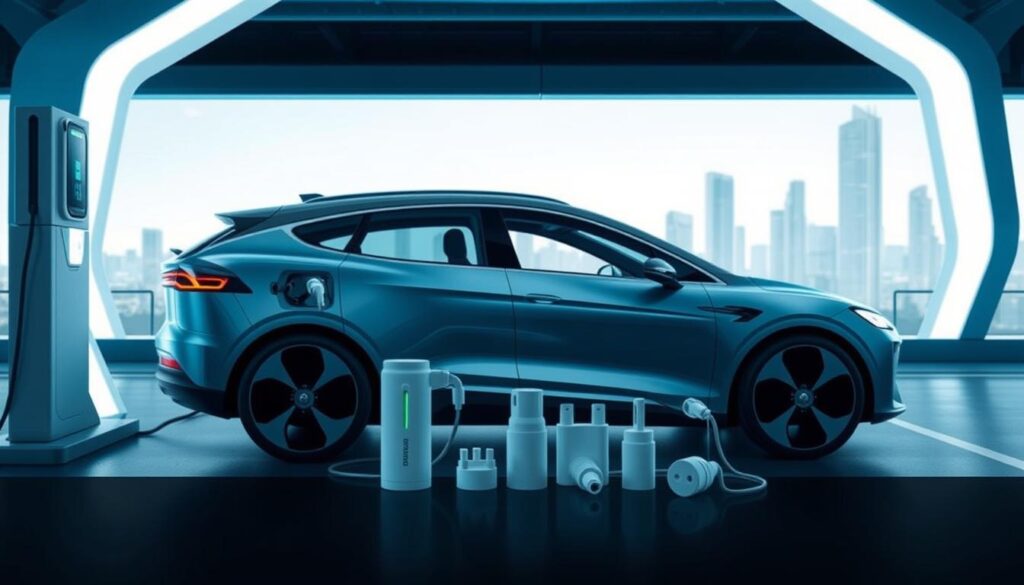
Owners can pick between the standard portable charger or a faster Smart X Home unit. The 950W portable brings the pack to about 0–80% in roughly 4 hours 30 minutes. It is a lower upfront cost at about ₹16,000.
The 3 kW rapid charger cuts top-up time dramatically. It can reach 0–50% in around 50 minutes and is priced near ₹26,000. Many tvs electric owners favor this for urban life.
Realistic daily range and efficiency factors
The claimed IDC range is 140 km, but real-world distance varies. Speed, ride mode, rider weight, terrain, and temperature all change the result.
Using higher regen and calm throttle stretches range. Sustained high-speed runs reduce it. Running cost estimates sit near ₹0.31 per km, so fuel savings add up over months.
- Choice: portable for budget, rapid for quick top-ups.
- Time: full-charge setups may reach 0–100% in around 4 hours depending on wiring.
- Cost: include charger hardware and possible home electrical work in ownership planning.
Braking system, chassis, and safety
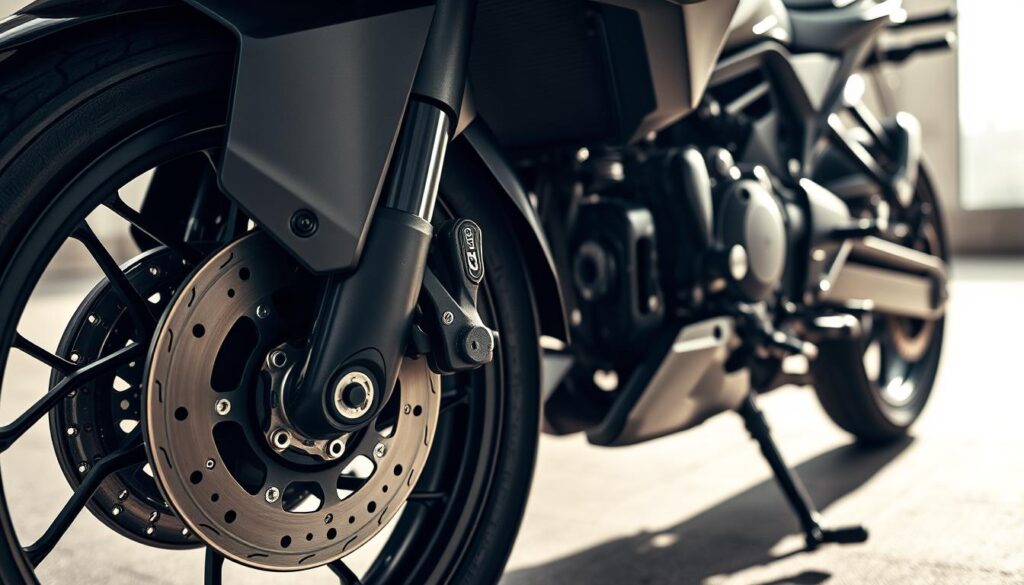
Stopping power and chassis stiffness combine to shape how the scooter feels under braking. The platform pairs a single-channel ABS with a 220 mm front disc and a 195 mm rear disc to balance confident deceleration and predictable control.
Hardware, tires, and suspension
The cast alloy Xleton twin-spar frame raises torsional rigidity, helping the chassis stay composed during hard stops. Telescopic forks up front and an offset monoshock at the rear reduce dive and keep the contact patch stable.
Real-world feel and rider notes
As India’s first production scooter with ABS, the single-channel system governs the front wheel; riders should modulate the rear lever to avoid lock on loose surfaces. Multi-level regenerative braking uses the motor to ease mechanical load and recover energy in city riding.
- Wheels: 12-inch rims with 100/80 front and 110/80 rear compounds tuned for grip and low rolling resistance.
- Safety: The setup aims to deliver a braking system that inspires confidence for riders shifting from bikes to an electric scooter.
Price, running cost, and ownership factors
Pricing and ownership reality often decide whether a premium electric scooter makes sense for daily use.
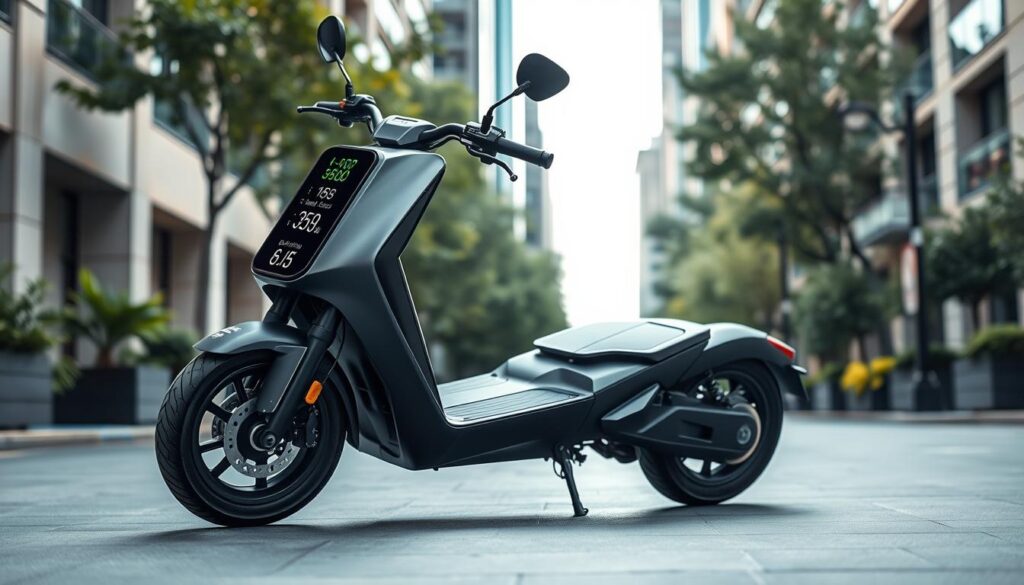
The ex-showroom price sits around Rs 2,49,990 to Rs 2,63,880, with local variations and no FAME II subsidy. Deliveries began in Bengaluru in early 2025.
What’s included and extra costs
The single variant bundles ABS, a 10.2-inch TFT, SmartXonnect/NavPro, and OTA updates as standard. Buyers should add charger hardware to the total cost: the 950W portable is ~Rs 16,000 and the 3 kW rapid unit about Rs 26,000.
Running cost, warranty, and upkeep
Estimated running cost sits near ₹0.31 per km depending on electricity tariffs and habits. Battery warranty covers 3 years or 50,000 km, giving clarity for the early years of ownership.
- Maintenance: Lighter than an ICE bike — no oil changes — but software and brake upkeep matter.
- Insurance: Comprehensive cover is recommended to protect the TFT, electronics, and charger.
- Ownership tip: Factor in installation, parking, and local service access when judging total cost of the vehicle.
tvs creon concept vs TVS X: what carried over and what changed
What started as a striking concept evolved into a production scooter that blends sporty looks with practical engineering.
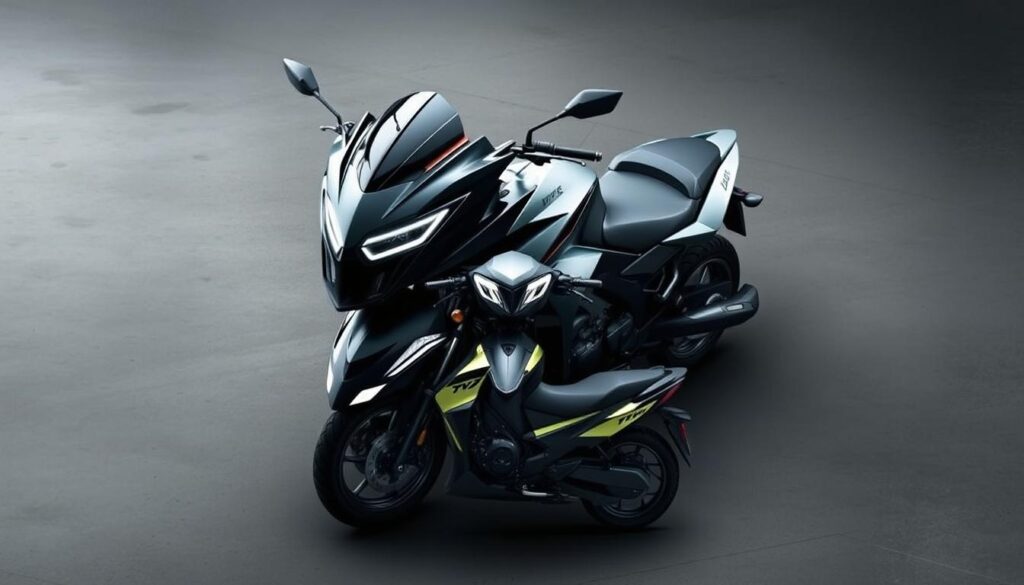
Design lineage from the showpiece to a production-ready sporty electric
The concept’s sharp apron, trellis-style cues, and motorcycle-like rear stance largely survived the move to the road. The visual language stayed true while panels, lighting, and ergonomics were refined for daily life.
The alloy Xleton twin-spar frame replaced more experimental layouts to give real-world stiffness and better handling. That chassis choice kept the sporty design intent but added serviceability and crash tolerance.
Spec differences: power, speed claims, and hardware
The production model locks in a 11 kW peak motor (about 7–7.5 kW rated), a claimed top speed near 105 km/h, and a 4.44 kWh pack rated for 140 km IDC range. Concept chatter once suggested up to 115 km/h and alternate motor architectures, but those figures were simplified for production reliability.
- Safety and hardware: single-channel ABS, a tuned braking package, and production-grade electronics replaced some concept show tech.
- Connected features: a 10.2-inch TFT, SmartXonnect/NavPro, and OTA updates bridge style and daily usability.
- Price and position: the final price sits around Rs 2.5–2.64 lakh, reflecting its premium spec and feature set.
How it stacks up against other electric scooters
A head-to-head look at peers reveals how the X stacks value, range, and tech in a crowded segment.
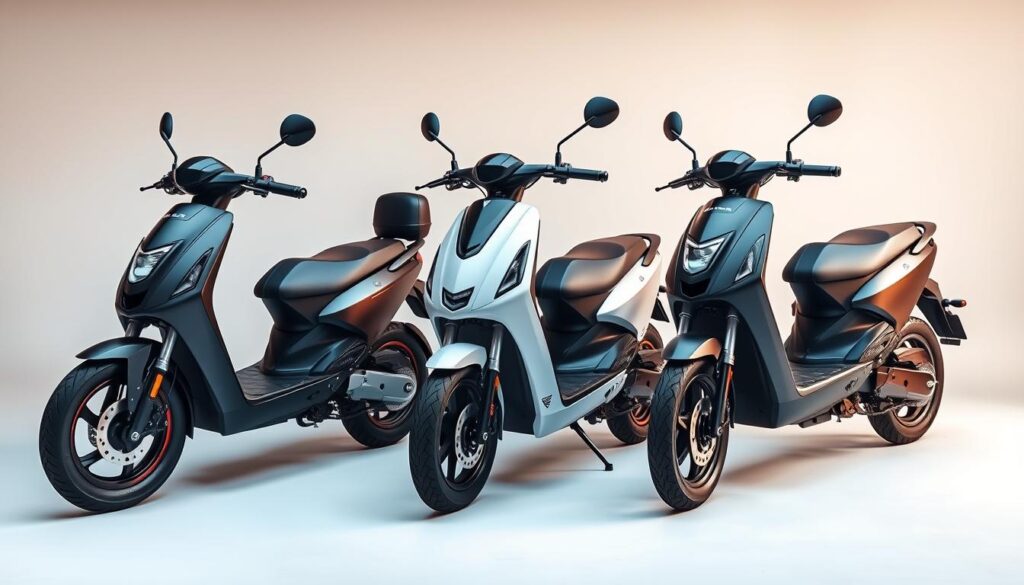
The X sits at the top of its maker’s ladder, priced near Rs 2.5–2.64 lakh ex-showroom. That puts it well above the practical TVS iQube, which lists around Rs 1.11–1.32 lakh.
Positioning versus iQube, Ather 450 Apex, and rivals
Against the Ather 450 Apex — roughly Rs 1.85 lakh with a 157 km claim and a 100 km/h top speed — the X answers with a 140 km IDC range and a higher claimed top speed near 105 km/h.
What it trades is price for a larger 10.2-inch TFT, a distinctive alloy chassis, single-channel ABS braking system, and deep connectivity. Reviewers praise its handling and power delivery but note the premium cost versus rivals.
- Value: The X is a premium, performance-and-tech flagship compared with the iQube and many electric scooters.
- Everyday cost: Buyers must add charger hardware and insurance when comparing total cost and price tvs across cities.
- Use case: The iQube stays the practical choice; the X targets riders who favor features, riding feel, and a tech-rich vehicle.
For a detailed comparison and specs, see this detailed comparison.
Who should consider this sporty electric scooter
If daily commutes need to be fun as well as practical, this scooter fills that role neatly.
It targets riders who want a premium, tech-forward option with a big TFT, connected services, and safety-first hardware like ABS.
Urban commuters with a predictable daily route and home charging will find it easy to integrate into their day while enjoying spirited riding on weekends.
- Enthusiasts upgrading from a basic bike will notice improved handling from 12-inch wheels, grippy tires, and a stiff twin-spar frame.
- Safety-minded buyers gain confidence from ABS and a stable chassis across mixed road conditions.
- Those who value a rich in-dash experience will appreciate the large, customizable display and robust app options.
- Buyers focused solely on lowest cost per mile should compare mainstream alternatives; this model prioritizes experience and style over bargain pricing.
In short, it’s a confident pick for anyone who wants modern safety, connected convenience, and engaging riding in a daily-capable package.
Our take on value, performance, and everyday livability
, This final verdict balances the scooter’s thrills against its asking price and everyday livability.
In this review, the machine scores high on performance thanks to a tuned motor, progressive throttle, and nimble handling that make daily rides engaging.
The 140 km IDC range is realistic for urban use, and the 3-year/50,000 km battery warranty adds peace of mind. Low running cost versus fuel cars helps offset the initial price over the first few years.
On the downside, the premium price and needed insurance for the large TFT and electronics are real considerations for value shoppers.
For riders who want a sporty electric scooter with strong design and a refined riding experience, this vehicle makes a persuasive case.
FAQ
What are the key specifications and performance highlights of the sporty electric scooter?
The scooter offers a high-efficiency permanent magnet synchronous motor (PMSM) or BLDC option, peak power figures designed for brisk urban acceleration, multiple riding modes, and a battery pack with active thermal management and a smart BMS. Top speed and 0–30 mph times vary by variant and mode, with emphasis on a balance of range and performance.
How does the sporty design and build quality affect riding dynamics?
The sharp apron and trellis-style visual cues create a motorcycle-like rear stance that improves rider confidence. The alloy twin-spar “Xleton” platform boosts chassis rigidity, delivering sharper cornering and a stable high-speed feel. Attention to ergonomics keeps daily commutes comfortable while preserving a sporty posture.
What lighting and visibility features are included?
The scooter comes with a full LED lighting package, including a bright headlight, daytime running lights (DRLs), a prominent tail light, and a practical boot light. These improve night visibility and add to the aggressive styling.
What motor, battery, and charging options are available?
Buyers can expect a PMSM or BLDC motor depending on the configuration, paired with a lithium-ion battery pack managed by a dedicated BMS. Charging choices include a standard portable charger and an optional rapid home charger. Charge times and usable range depend on battery capacity and charger type.
What real-world range should riders expect and what affects it?
Realistic daily range depends on riding mode, rider weight, terrain, and speed. Urban stop-start riding in eco modes yields the best efficiency, while sustained high-speed runs reduce range. Weather, accessory load, and tyre pressure also influence efficiency.
How are the riding modes calibrated and what do they change?
The scooter includes multiple modes—often labeled for economy, balanced, and sport—that adjust throttle response, peak power delivery, and regenerative braking intensity. Sport mode sharpens throttle mapping for quicker acceleration, while eco smooths inputs to extend range.
How comfortable and usable is the scooter for everyday use?
Ergonomics focus on a slightly forward, sporty stance without compromising daily comfort. The seat, footwell design, and suspension tuning aim to handle urban potholes and highway stretches. Practical touches like storage, a boot light, and phone connectivity enhance daily usability.
What smart tech and connectivity features are included?
Key tech includes a large TFT display, smartphone connectivity via SmartXonnect-style systems, turn-by-turn navigation, and app-based features such as geo-fencing, anti-theft alerts, call/message notifications, and OTA firmware updates for feature improvements.
How secure is the scooter against theft and tampering?
Security features include remote immobilization, geo-fencing alerts, and alarm integration via the companion app. Mechanical measures like a robust lock and an anti-theft disc brake lock are recommended for added peace of mind.
What braking, chassis, and tyre features contribute to safety?
The scooter uses a disc brake setup with single-channel ABS, matched to a chassis tuned for stability. Tire compounds balance grip and longevity, and suspension geometry supports predictable handling under braking and cornering.
What is the expected running cost and maintenance profile?
Running costs are lower than an internal-combustion scooter thanks to electricity’s lower per-mile cost and fewer moving parts. Regular checks include tyre wear, brake pads, and battery health. Periodic software and BMS updates help maintain efficiency and safety.
How does pricing reflect what’s included in the ex-showroom price?
Ex-showroom pricing typically covers the vehicle, standard warranty, and basic accessories. Optional items such as a rapid charger, extended warranty, and premium paint or tech packages add to on-road cost. Insurance and registration vary by state and model variant.
How did the production model evolve from the original concept design?
Design lineage preserves the sporty DNA—sharp lines and aggressive stance—while production changes focus on manufacturability, crash safety, and regulatory compliance. Some concept specs are tuned down for real-world reliability and cost-effectiveness.
How does this sporty scooter compare to competitors like the iQube and Ather 450 series?
It positions itself toward riders who want a sportier appearance and sharper handling. Compared to the iQube and Ather 450 Apex, differences show up in power delivery, top speed, feature set, and pricing strategy. Buyers should compare real-world range, after-sales service, and feature parity.
Who is the ideal buyer for this sporty electric scooter?
The ideal rider seeks a blend of performance and daily practicality—commuters who enjoy spirited acceleration, tech-savvy users who value connectivity, and urban riders who want low running costs with standout styling.
What should buyers consider before making a purchase?
Prospective buyers should evaluate real-world range, charging convenience at home or work, local service network, tyre and brake options, insurance costs, and available variants. Test rides help assess throttle feel, suspension comfort, and fit for the rider’s proportions.