
Xiaomi Mi M365 Electric Scooter: Reviews, Specs, and Buying Guide
 PopScooter Team
November 7, 2025 1:04 am
.
14 min read
PopScooter Team
November 7, 2025 1:04 am
.
14 min read

Can a decade-old budget scooter still beat newer models for everyday commuting? This introduction answers that question by looking at the scooter that helped launch shared fleets and sparked a personal transport boom.
The review opens with a quick snapshot of why this model mattered: its 15.5 mph top speed, about an 18.6-mile range, and a light aluminum frame that folds in seconds. Riders praise the balance of value and quality for short commutes.
The guide previews practical features such as cruise control, app connectivity, pneumatic tires, and decent splash resistance. It also sets expectations on charging time, maintenance, and where this scooter fits in today’s market.
Readers will get an easy, fact-based look at performance, range, folding convenience, and price so they can decide if this proven model still meets their needs in 2025.
Quick take: is the Xiaomi Mi M365 still worth it today?
The M365 remains a sensible pick for budget-minded commuters who want a simple electric scooter that does the essentials well. Real-world testing confirms the claimed 15.5 mph top speed and roughly an 18–19 mile range for average riders.
Build quality is solid for the price. The aluminum frame and folding stem feel sturdy, and early folding problems were addressed in later batches. That makes daily use straightforward and reliable.
Trade-offs exist: 8.5-inch pneumatic tires can lead to flats, and the scooter slows noticeably on steep hills or when the battery is low. Batteries also age — expect around 15–20% capacity loss over time.
- Value: Great under ~$500 for short urban rides.
- Performance: Consistent 15.5 mph and practical range.
- Comfort: Pneumatic tires give a smoother ride on pavement.
- Limitations: Flats, hill slowdown, and eventual battery fade.
- Who it’s for: Beginners and commuters seeking reliable, low-cost riding.
Design and build quality of the Xiaomi M365
This scooter’s build focuses on lightweight strength and simple, fast folding. The frame uses aerospace-grade aluminum and houses the battery inside the deck. That keeps the center of gravity low and helps with balance when standing on both feet.
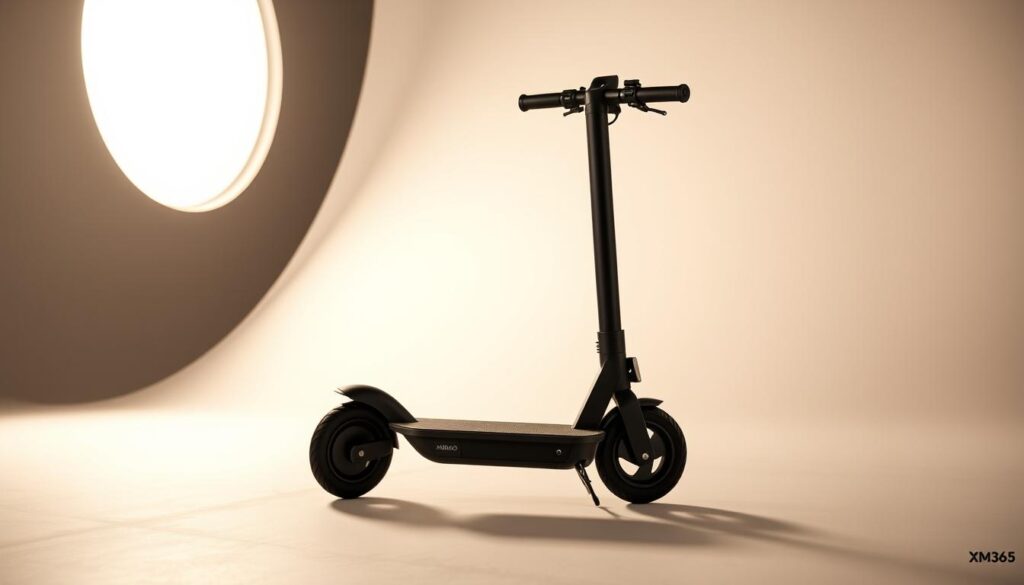
The unfolded dimensions are 108 x 43 x 114 cm and fold down to 108 x 43 x 49 cm. At roughly 12–12.5 kg, the weight makes it easy to carry short distances and store under a desk or in a car trunk.
Frame, deck, and folding stem
Ground clearance sits near 8.7–9 cm, enough for curb cuts and driveway transitions. The folding mechanism is quick: a latch secures the stem and a hook on the rear fender locks it in place. Riders learn the motion in seconds.
Cockpit, handlebars, and lighting
The cockpit is simple and functional. Four LEDs show battery level. A right thumb throttle controls speed while a bike-style brake lever sits on the left.
- Lighting: Bright integrated LED headlight and a rear brake light that flashes when braking.
- Display options: No bar speedometer on early units, but a Pro display or phone app adds speed and trip data.
- Minor problem: Deck mat glue can loosen over time; re-gluing fixes it quickly.
Overall, the design balances daily practicality with solid build quality, making this an easy scooter to rely on for short urban commutes.
Performance on the road: speed, range, braking, and ride feel
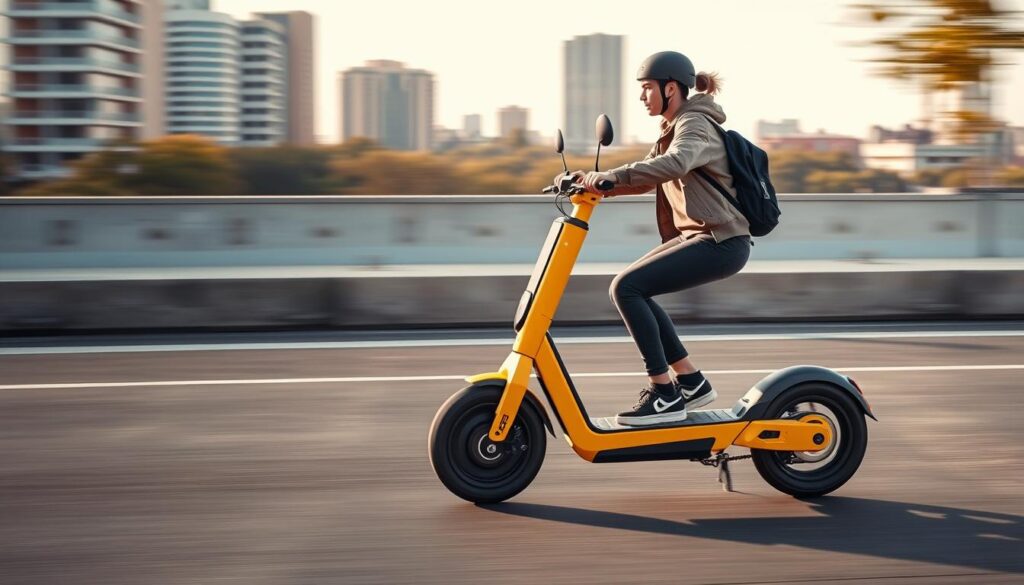
Riding around town reveals a mix of brisk acceleration, confident braking, and a comfort level that suits quick errands. Real-world tests confirm the official top speed of 25 km/h (about 15.5 mph), reached in roughly six seconds from a standstill.
Top speed and acceleration
The 250 W nominal hub motor (500 W peak) gives responsive takeoff and smooth throttle control. Riders feel a snappy and predictable power delivery that helps when merging with traffic or keeping pace on flat road sections.
Hill climbing
The scooter is rated for a 14° (about 25%) climb. On moderate grades it maintains usable speed, but steeper ground or heavy riders see reduced pace. Low battery levels also cut power on climbs, so plan routes accordingly.
Braking and control
Front E-ABS paired with a rear mechanical disc brake gives solid stopping performance. From top speed, expect about 4–6 meters to stop, which is competitive among budget electric scooters.
Tires and comfort
8.5-inch pneumatic tires smooth out small cracks and seams better than solid rubber. They improve the overall ride feel on paved surfaces but are more prone to flats.
- Range and distance: Real-world runs typically hit 18–19 miles for average riders on mixed, mostly flat routes.
- Handling: Balanced weight and a stable stem make cornering confidence easy for new riders.
- Rough surfaces: Expect more vibration on cobbles or broken pavement since there is no suspension.
Battery and charging: what the 280 Wh pack delivers
A dependable battery makes weekly rides predictable, and this scooter’s pack aims for that balance. The unit uses a 36 V, 280 Wh pack that pairs well with the scooter’s 250 W nominal motor to provide steady urban performance.

Specs, protection, and port placement
The battery includes a smart BMS that guards against overcharge, over-discharge, and short circuits. That protection helps extend usable life when owners charge responsibly.
The charging port sits on the front-left of the deck under a red, water-resistant cap for easy access during a quick top-up.
Real-world range and aging
Official range is 30 km (about 18.6 miles); most riders see roughly 28–31 km (17.5–19 mi) depending on weight, terrain, and weather.
Expect gradual capacity loss over time; many owners report a 15–20% decline after extended use. Using the app to monitor state of charge and trip distance can help avoid deep discharges that speed aging.
Charge time and ongoing cost
Charging from empty takes about 4.5–5 hours, so overnight or at-work top-ups are practical. Electricity cost per full charge is negligible — roughly five cents in the U.S.
- Balanced pack: good power-to-weight for daily commuting.
- Practical range: factor in hills and headwinds when planning distance.
- Low running costs: fast to recharge and cheap per fill-up.
Portability and folding mechanism in daily use
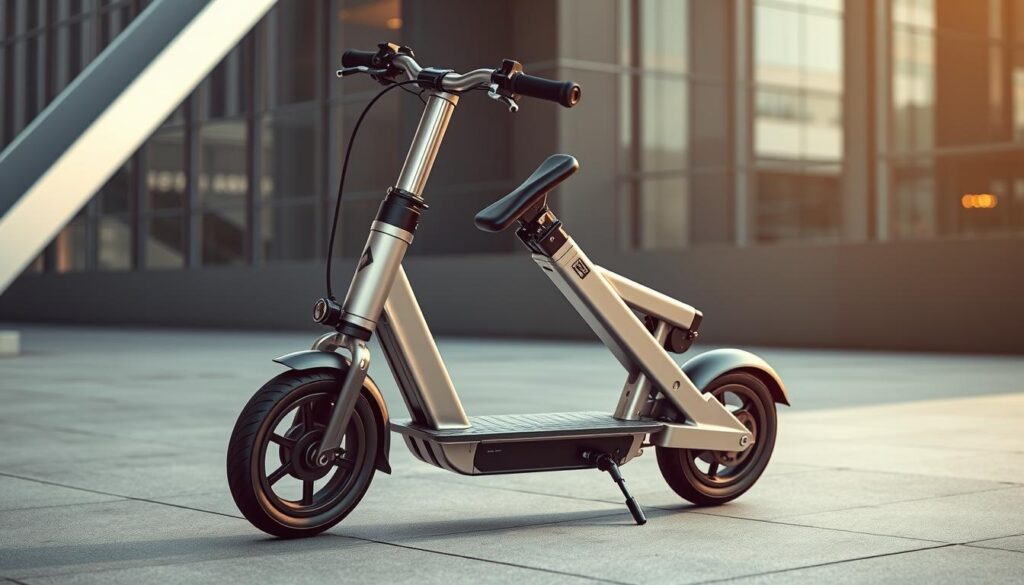
How easy a scooter folds can change a commute from clumsy to seamless. The folding steps are simple: unlock the latch, lower the stem, and click the bell hook onto the rear fender. That quick motion makes it easy to switch between riding and public transit.
Folding steps, hook-on fender, and stem stability improvements
The hook-on fender keeps the folded stem secure for short carries. Later runs tightened the latch and improved stem stability, reducing wobble when riding.
Weight and carry: 26-27 lbs is manageable for short distances
At about 26–27 lbs, the scooter is light enough to lift a few stairs or tuck under a desk. Handlebars stay fixed for strength, so the folded footprint stays compact at 108 x 43 x 49 cm.
- Folding is fast, helping riders hop between transport and errands with minimal fuss.
- Keeping one foot near the deck’s center improves balance when carrying the folded scooter.
- Ground clearance and deck shape help when rolling over thresholds, but lift to avoid scraping.
- The folding mechanism favors speed and reliability over ultra-compact collapses.
- For many first-time buyers, the portability is a key reason to pick the xiaomi m365 as a daily way to move around town.
App, display, and rider features that matter
Connectivity makes the scooter more useful for daily commutes. The iOS and Android app shows live speed, trip distance, and battery state. Riders can toggle lights and enable a simple lock from their phone.
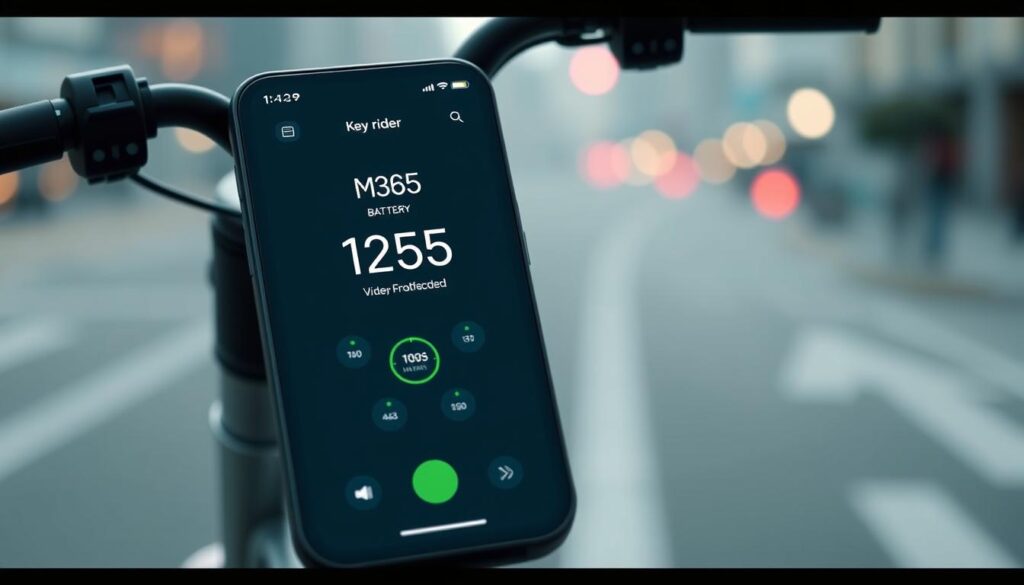
iOS/Android connectivity: speed, distance, lock, and settings
The app pairs quickly and lists ride stats like current speed and total distance. It also offers a basic alarm and a remote lock to deter theft.
For precise cockpit readouts, owners may add a Pro display module to see speed on the handlebar directly.
Cruise control, speed modes, and LED indicators
A quick press of the center button toggles lights; a double-press switches between Eco (~18 km/h) and Standard (~25 km/h) modes. Cruise control holds a steady speed on long straights and reduces hand fatigue.
- LED battery bars give a fast glance at remaining charge.
- Right-thumb throttle and left-side brake keep controls intuitive.
- The app and alerts let riders customize safety and lighting without fuss.
xiaomi mi m365 vs competitors and the M365 Pro
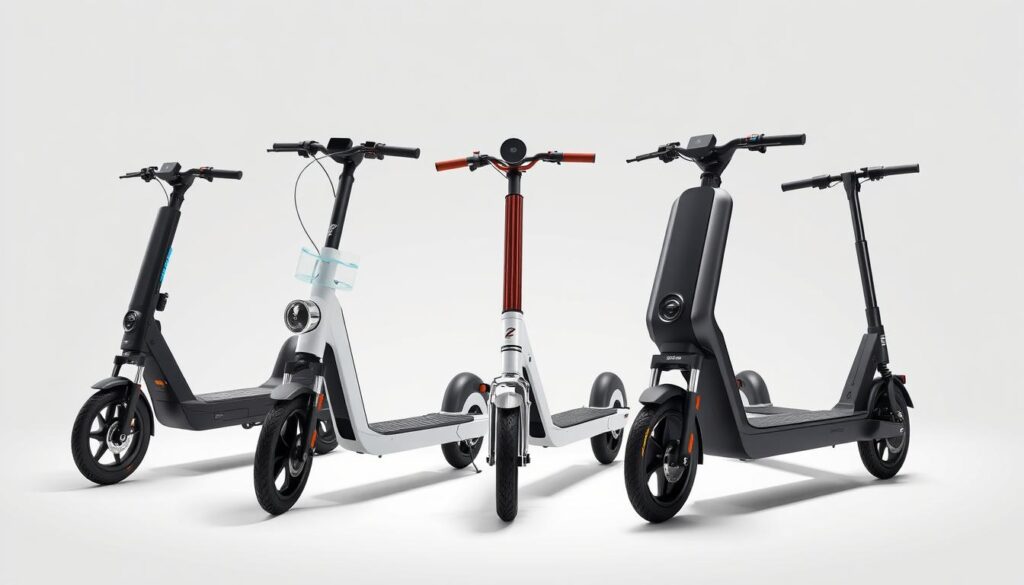
M365 vs M365 Pro: the standard model keeps a lighter weight and lower price while the M365 Pro adds a larger battery, more power, and a built-in display. The Pro gives extra miles per charge and a clearer cockpit, but buyers accept added weight and higher price for that upgrade.
M365 vs Ninebot ES2 / Max: the ES2 uses solid tires and a stem-mounted battery, so it avoids flats but feels harsher on the road. The Ninebot Max trades portability for serious range and power, making it a better pick for longer commutes or hillier routes.
M365 vs GoTrax GXL V2 / XR Ultra and Hiboy S2: GoTrax models are wallet-friendly and fine for short trips but often lack the range and build refinement of the M365. Hiboy S2 uses solid tires to eliminate flat problems, though the ride is more vibrating on rough pavement.
Who should choose which scooter
Riders on short-to-medium distance commutes and mostly smooth pavement get the best comfort and value from the M365. Those wanting a few extra miles and a built-in display should consider the M365 Pro despite the extra cost and weight.
- Budget-first: GoTrax GXL V2 for lowest price and basic use.
- No-flats preference: Hiboy S2 or ES2 for solid tires, trade comfort for puncture-free rides.
- Long distance / hills: Ninebot Max for greater range and power.
- Balanced value & quality: the M365 remains a standout for many riders.
Safety, maintenance, and durability
Staying visible and keeping brakes tuned cut most common risks on urban streets.
Wear a certified helmet and slow down on unfamiliar surfaces. Small wheels can catch potholes and throw a rider off balance. A stable stance—feet staggered, knees slightly bent, light grip—improves control and reduces fatigue.

Night visibility and posture
Use the built-in lights at night and confirm the rear brake light flashes when braking. Clean LED lenses so the light stays bright in dusk and rain.
Common issues and simple fixes
Flats are the most frequent problem because of 8.5-inch pneumatic tires. Keep proper tire pressure to cut pinch flats and improve braking and handling.
- Check brake pads and rotor often; adjust the caliper if the lever feels soft.
- Re-glue a loose deck mat to restore traction and appearance.
- Expect typical stopping distances near 4–6 meters from top speed with well-maintained brakes and dry road conditions.
- Store and charge the battery in moderate temperatures to help the scooter reach multi-year life spans (many owners report 3–3.5 years or more).
Regular care and mindful riding keep the xiaomi m365 feeling solid. Simple checks before each ride add up to better safety, longer component life, and higher overall quality.
Price, availability, and where to buy in the United States
A smart purchase starts with checking availability, warranty terms, and what arrives in the box.
Amazon is a common place to find the xiaomi m365 in the U.S., but stock can shift with seasonal demand and new releases. Typical street price lands under $500 depending on promotions and seller listings.

Typical price range, Amazon availability, and warranty expectations
Buyers should confirm return policies, seller reputation, and included items like a charger, tool kit, and spare screws. Many listings note a 12–24 month warranty window, but coverage specifics vary by seller and region.
- Check the box: charger, tools, and mounting screws.
- Seller vetting: choose authorized sellers and read recent reviews.
- Compare value: if price nears M365 Pro or Ninebot Max, weigh specs and weight before buying.
- Delivery and support: confirm return windows and post-sale help to avoid delays.
Finally, consider local rules for riding an electric scooter and expected delivery timing so the purchase fits your plans for the year.
Final verdict: the iconic budget commuter that still nails the basics
, For riders who want a no-frills, reliable commuter, the verdict favors this tried-and-true model.
The xiaomi m365 review shows a clear balance: about 15.5 mph top speed, an ~18–19 mile range, and a light weight near 26–27 lbs. Quick folding, 8.5″ pneumatic tires, E-ABS plus a rear disc brake, and app support with cruise control make daily use easy.
Expect modest battery aging (15–20% over time) and multi-year life with regular care. At a typical price under $500, this electric scooter still nails the basics. For longer commutes, the Pro or heavier Max models add range and power. For short urban trips, this model remains a smart, low-drama choice.
FAQ
Is the Mi M365 electric scooter still worth buying today?
The original Mi M365 remains a solid budget commuter. It offers reliable performance, a compact folding design, and a familiar ride feel. Newer scooters beat it on power, range, and displays, but for short urban trips and first-time buyers it still delivers good value.
What top speed and acceleration can riders expect?
Real-world top speed sits around 15–16 mph with brisk takeoff from a stop. Acceleration is smooth and adequate for city riding, but it won’t match modern high-torque motors designed for steep hills or fast merging.
How far will the 280 Wh battery go on a single charge?
Typical range is 12–18 miles depending on rider weight, terrain, and riding style. Flat routes and conservative throttle use push toward the upper end; hills or heavy loads reduce range and increase battery wear over time.
How long does charging take and what does it cost?
Full charging takes about 4.5–5 hours from empty using the stock charger. Electricity cost is negligible — often just a few cents per charge in the U.S., making it an inexpensive daily refill compared with fuel.
Is the folding mechanism durable and easy to use for daily carry?
The clamp-and-hook folding system is intuitive and quick. It locks securely for riding and hooks to the rear fender when folded. Some older units show wear in the latch, so periodic checks and tightening help maintain stability.
How heavy is the scooter and is it easy to carry upstairs or on transit?
Weight is roughly 26–27 pounds. It’s manageable for short carries and folding for buses or trains, but it’s not ideal for long hauls up multiple flights. Use the stem as a handle and lift with the stronger hand for better balance.
What braking system does it use and how effective is it?
It combines e-ABS regenerative front braking with a mechanical rear disc. Stopping distances typically fall around 4–6 meters in good conditions. Brake maintenance and tire pressure directly affect effectiveness, so regular checks are important.
Are pneumatic tires comfortable on rough pavement?
The 8.5-inch pneumatic tires absorb small bumps and give a more forgiving ride than solid wheels. They still transmit a lot of vibration on very rough surfaces, and they carry a risk of flats — carrying a patch kit or using sealant helps.
Does the scooter have lights and are they bright enough for night riding?
It includes a forward LED headlight and a rear brake light integrated into the fender. The headlight is fine for urban streets and visibility to others, but riders in low-light areas may want an aftermarket beam for better road illumination.
What features does the companion app offer?
The app pairs via Bluetooth to show speed, trip distance, and battery percentage. It provides basic settings like speed modes, firmware updates, and an electronic lock. Functionality is useful, though some competitors offer more advanced telematics.
How does this model compare to the Pro version and other rivals?
The Pro version upgrades motor power, battery capacity, and adds a clearer display, making it better for longer commutes and hillier routes. Competing models trade off between ride comfort (pneumatic vs solid tires), power, and price; choose based on commute length and surface quality.
What common maintenance issues should riders expect?
Typical maintenance includes checking tire pressure, tightening the folding clamp, replacing worn brake pads, and reseating the deck mat if adhesive fails. Flats are the most common roadside issue; learning quick repairs helps keep downtime minimal.
Is it safe to ride without a helmet or extra lights?
No. Riders should always wear a helmet and use lights for night riding. Proper riding posture, visible clothing, and following local traffic rules significantly improve safety on urban roads.
Where can buyers in the United States purchase this scooter and what price range is typical?
It’s widely available through online marketplaces and some brick-and-mortar retailers. Prices vary by condition and seller, but expect budget-friendly offerings compared with current high-end models. Warranty coverage depends on the retailer and whether the scooter is new or refurbished.