4 wheel electric scooter Reviews and Comparisons
 PopScooter Team
February 15, 2026 2:59 pm
.
18 min read
PopScooter Team
February 15, 2026 2:59 pm
.
18 min read
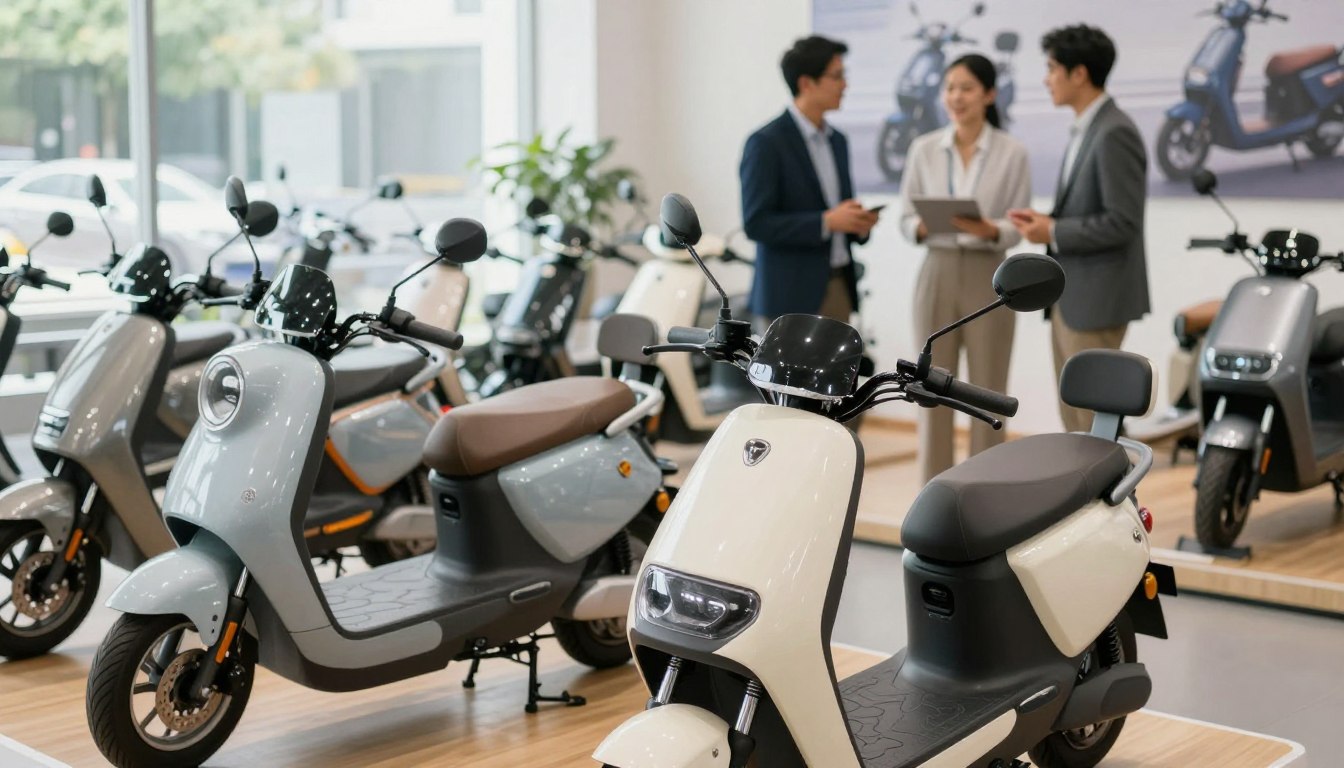
Can a four‑point ride really replace a car for short trips and errands? This guide helps shoppers answer that question by comparing practical, mobility, and performance models side by side.
The page previews real specs from top names like CycleBoard, Pride® and Vive Mobility. It highlights range, speed, suspension, security, and load capacity so readers can match designs to daily use.
CycleBoard brings high power and long range for outdoor adventures. Pride® offers medically rated, user-friendly options for indoor and outdoor travel. Vive Mobility focuses on portability and easy disassembly for transport.
The article frames a clear comparison of mobility styles and performance rides. It aims to help riders narrow choices, weigh tradeoffs, and feel confident about a purchase. For a quick look at solid, reviewed options, see a concise roundup at decent models.
Key Takeaways
- Four‑point designs add stability for low‑speed travel and errands.
- Compare specs like range, top speed, battery weight, and suspension.
- Choose mobility models for indoors and medical needs; pick performance models for outdoor range.
- Security and comfort features matter as much as power numbers.
- This guide uses real product data to make a trustworthy comparison.
Best Picks for a 4-Wheel Scooter in the United States Right Now
To simplify buying, these three nominees focus on range, portability, and premium features. Each one fits a clear shopping scenario so readers can shortlist without guesswork.
Best for long-range outdoor rides: CycleBoard X-Quad
Why it wins: Built for distance and speed, this model offers an estimated 50+ miles of range and a top speed of 27 mph. A removable 60V 30Ah lithium battery and 3000W peak output deliver the power and performance needed for longer outings.
Best for portable, everyday mobility: Vive Mobility 4 Wheel Mobility Scooter
Why it wins: Designed for easy travel, it disassembles into four pieces for trunk transport. The 12V/12Ah battery system supports onboard or offboard charging, and the design includes flat-free tires, an LED headlight, and a handy basket for errands.
Best for premium mobility features: Pride Go Go® lineup and upgrades
Why it wins: Pride’s family emphasizes convenience and safety with tech like EZ Turn for tight maneuvering and Charge360 magnetic charging on select models. Higher-end options add NFC security and ergonomic upgrades for a refined user experience.
- CycleBoard: performance and long range for outdoor trips.
- Vive Mobility: value and simplicity for daily use.
- Pride®: premium features and safety-focused options across models.
For a quick shopping link and more options, see a concise roundup of a 4-wheel scooter for adults.
4 wheel electric scooter Comparison: Range, Speed, Comfort, and Value
Buyers should focus on real-world range, practical speed targets, and comfort for where they actually ride.
Speed matters differently for errands versus outdoor runs. Many mobility models aim for controlled pacing, while performance builds such as the CycleBoard X-Quad offer ride modes at 11 mph, 15 mph, and 27 mph for flexible use. That makes it easier to match speed to safety and local rules.
Battery range is an estimate, not a promise. Short local trips suit low-voltage systems like 12V packs, while long-range outings need high-capacity packs (the X-Quad lists 50+ miles). Compare the stated battery range against your typical route.
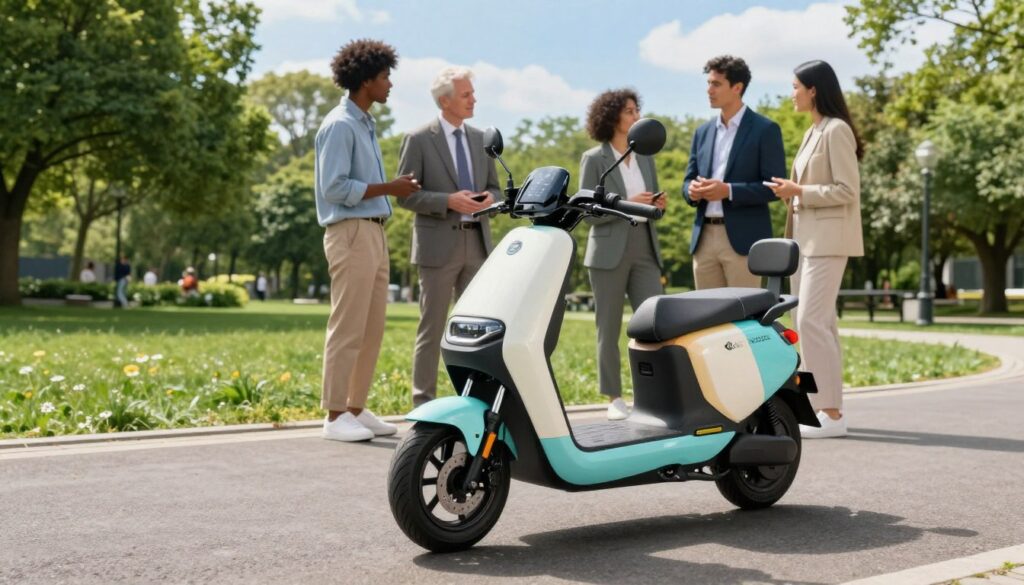
Comfort comes from tires, suspension, and frame weight. Independent suspension and larger treaded tires help on rough terrain and uneven sidewalks. Portable models sacrifice some weight for easy loading; heavy, outdoor-ready units weigh more but add stability.
- Price bands: Vive Mobility models run about $675–$1,050; Pride® MSRPs span roughly $1,759 to $7,611.
- Value drivers: suspension, security features, and outdoor-ready construction often raise price.
Match range, speed, comfort, and transport needs to find the best long-term value for U.S. riders.
Who a Four-Wheel Electric Scooter Is Best For
Start by asking where and how often the ride will be used—answers narrow the choices fast. This simple question helps match features to real needs and avoid chasing specs that don’t matter.
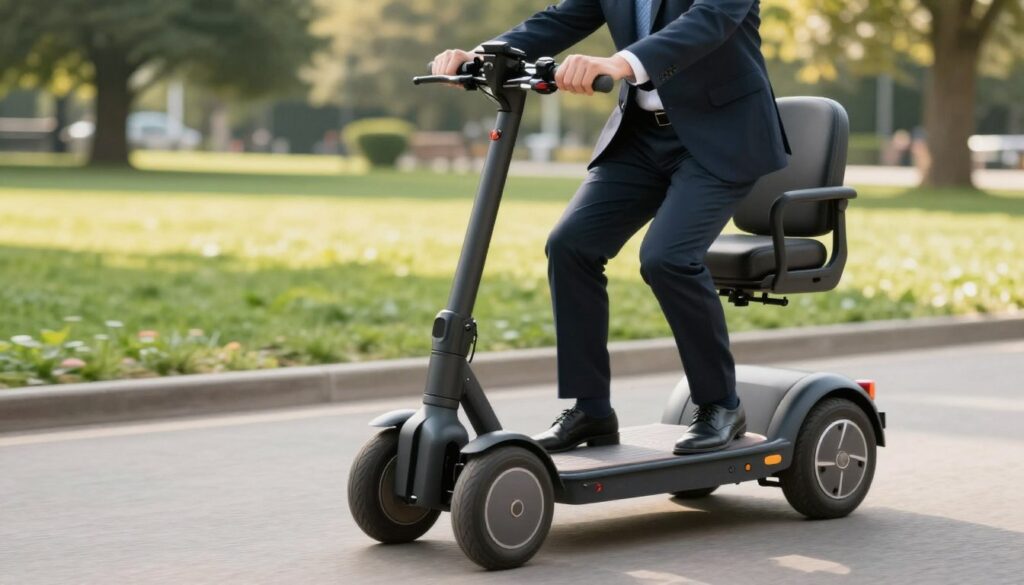
Riders prioritizing stability and confidence
Those who value predictable balance at low speeds benefit most from a four-point design. Four contact points often feel steadier during starts, stops, and slow turns.
Adults and seniors who want simple controls for daily errands
Shoppers looking for ease should pick models with intuitive dials, straightforward steering, and handy storage. Vive Mobility targets seniors with a speed adjustment dial, flat‑free tires, an LED headlight, and a basket that makes errands simple.
Outdoor explorers planning varied terrain and longer distances
Adventures off sidewalks need stronger power and suspension. The CycleBoard X‑Quad offers independent suspension, a lean‑to‑steer setup, and a long estimated range for longer routes and mixed terrain.
- Stability: best for predictable, confidence‑boosting rides.
- Simplicity: ideal for adults and seniors who value easy control and daily use.
- Performance: choose when range, power delivery, and comfort over rough terrain matter most.
Bottom line: Match rider goals to the environment—home, neighborhood, parks—and pick the mobility class that makes daily use easy and safe.
Battery Life and Battery Range: What to Look For Before Buying
Battery claims look good on spec sheets, but real use tells the full story. Shoppers should learn what “battery life” means so they avoid surprises during daily trips.
Battery types compared: 12V systems vs high-voltage lithium packs
Lower-voltage 12V packs, like Vive Mobility’s 12V/12Ah setup, work well for short, low-speed use and indoor errands. They are simple and affordable.
Higher-voltage lithium packs, such as the CycleBoard removable 60V 30Ah unit (~1,800Wh, ~21 lb), deliver much greater range and power. Larger packs also need more charging time — the X-Quad example takes about eight hours to fully recharge.
Real-world range factors
Manufacturers list a best-case battery range, but rider weight, terrain, and speed cut that number in normal use. Cold temperatures and rough surfaces also reduce distance.
Charging time and charging styles
Charging time affects daily convenience. On-board charging is fine when you park near an outlet. Off-board chargers let you remove a pack to charge indoors, which helps in apartments or cramped garages.
Removable and extended battery options
Removable packs and optional extended battery modules make longer trips practical. The tradeoff: more capacity adds weight and cost, so buyers should balance added miles against portability.
- Tip: Compare stated battery life to realistic routes before buying.
- Tip: Choose a system that fits charging access and storage needs.
- Tip: Plan for conditions and rider weight when estimating real range.
Performance on Terrain: Tires, Suspension, and Control
How tires, suspension, and steering are built decides whether a ride feels planted or jittery on mixed surfaces.
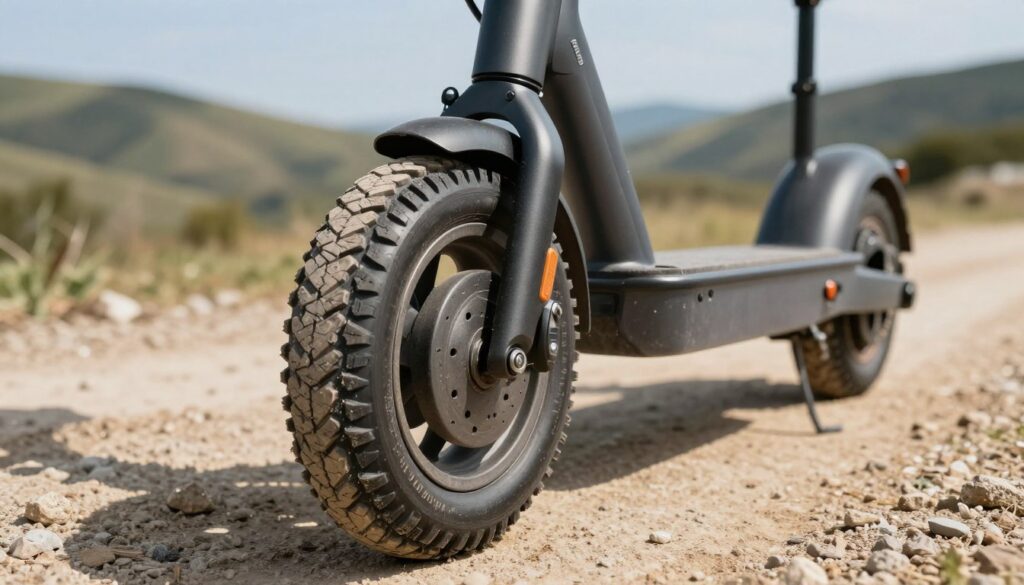
Flat-free vs treaded tires for mixed surfaces
Flat-free tires, like those on Vive Mobility models, cut maintenance and work well on smooth sidewalks and short errands. They handle modest inclines—Vive lists up to 6°—and keep downtime low.
By contrast, larger, treaded tires give more grip on uneven pavement and rough terrain. Treaded rubber feels more confident on gravel, cracked sidewalks, and longer outdoor runs.
Why independent suspension matters
Good suspension soaks up bumps and keeps wheels planted. The CycleBoard X-Quad uses independent suspension with about 3″ travel per side front and rear, reducing jolts and improving control on rough terrain.
Pride® models that offer full suspension also raise comfort for longer outings and uneven surfaces.
Steering and turning: indoor tight turns vs outdoor tracking
Some designs prioritize tight turns for indoor use. Others favor stable tracking for calm handling at higher speeds. Lean-to-steer systems, like the X-Quad’s patented setup, change the learning curve but add steady directional control.
- Tip: Match tires and suspension to the surfaces you ride most.
- Tip: Choose steering that fits your daily routes—tight turns or steady tracking.
Safety Features That Matter on a 4-Wheel Ride
Safer rides start with clear lights, dependable stopping power, and access controls you trust. Buyers should check practical safety features for parking lots, crosswalks, and shared paths.
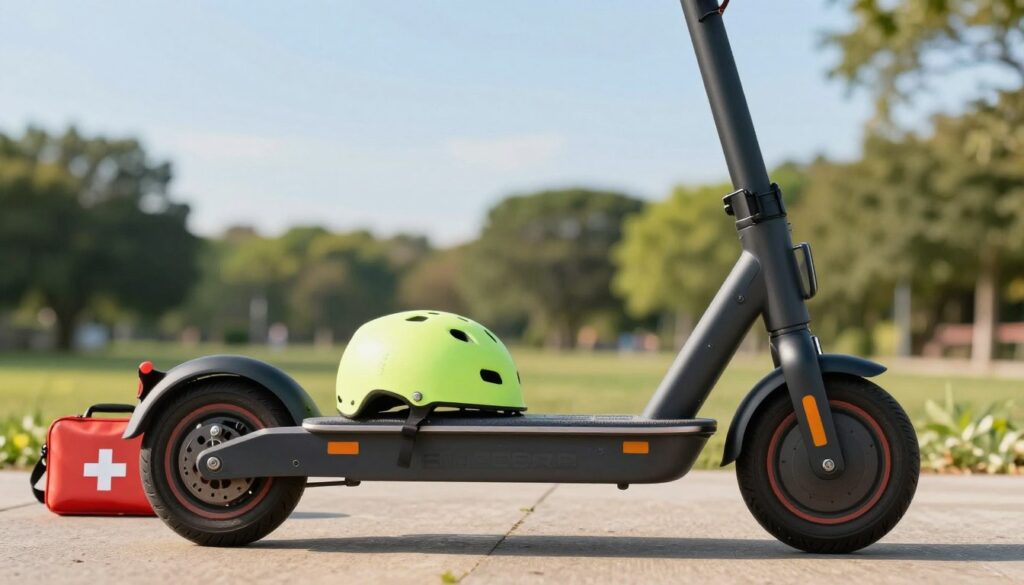
Lighting essentials: LED headlight, brake light, and visibility
Bright front LED lights help the rider see and be seen at dusk. A rear taillight and brake light show intent to drivers and pedestrians.
CycleBoard X-Quad uses a front LED headlight and integrated rear taillight/brake light. Vive Mobility models include an LED headlight and horn for daily use.
Turn signals and alerts: signaling for streets and shared paths
Turn signals matter when sharing space with bikes and cars. Integrated rear turn signals, like the X-Quad’s, make lane changes and crossings clearer.
Braking and stopping power: drum vs disc systems
Drum brakes give steady everyday feel up front. Rear hydraulic disc brakes deliver stronger stopping power at higher speeds.
Anti-theft and access control: passwords and NFC-style security
Anti-theft options range from display password locks on the X-Quad to NFC-style security on select Pride models. Choose a security system that fits where the ride will be parked.
- Checklist: lights, turn signals, brakes, and an anti-theft method.
- Tip: Match features to night visibility and street use to boost overall safety.
CycleBoard X-Quad Review: Power, Range, and Outdoor Stability
This review focuses on how the CycleBoard X-Quad balances high power with all-day outdoor usability.
The X-Quad is a performance-forward four-point ride built for longer routes and varied surfaces. It pairs strong acceleration with a chassis designed for stable handling and practical ownership.
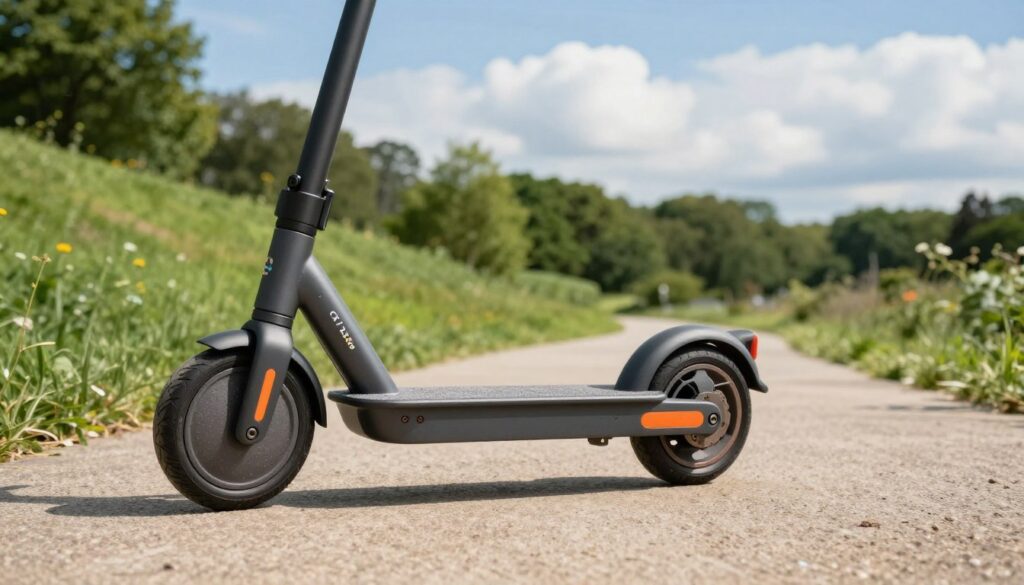
Dual rear hub motors and peak output
Power: Dual 1500W brushless, gearless rear hub motors deliver a combined 3000W peak output. The system uses 60V dual controllers and an IP67 rating for common wet conditions.
Speed modes, top speed, and control
The display gives four ride modes: 0 (park), 1 = 11 mph, 2 = 15 mph, and 3 = 27 mph, plus Reverse. A thumb throttle and mode selection let riders match speed to sidewalks, shared paths, or open areas.
Battery and range details
Battery: A removable 60V 30Ah (1800Wh) pack using LG/Samsung cells weighs about 21 lb and charges in ~8 hours. The manufacturer estimates 50+ miles under ideal conditions.
Suspension, steering, and ride comfort
Suspension: Independent front and rear with roughly 3″ travel per side absorbs bumps and keeps traction on rough streets. A lean-to-steer design offers directional control without twisting handlebars.
Brakes, lights, and practical features
Front dual mechanical/drum brakes plus rear dual 165mm hydraulic disc brakes provide strong stopping power. Lighting includes a front LED headlight and integrated rear taillight, brake light, and turn signals.
Size, weight, and capacity
The X-Quad measures about 46″ long by 26.5″ wide. It weighs ~100 lbs without the battery and ~125 lbs with battery installed. Max suggested rider weight is 350 lbs.
- Key takeaway: High power and long range suit outdoor riders who want speed and distance.
- Comfort: Suspension and lean-to-steer improve rough-surface confidence.
- Ownership: Removable battery, included toolkit, and a 30-day return policy ease first-time buying decisions.
Pride® 4-Wheel Mobility Scooters: Model Lineup and Feature Highlights
Pride® organizes its product range around clear use-cases, from ultra-portable travel models to rugged outdoor builds.
The brand frames mobility as solutions for different daily needs. Compact models like the Revo™ 2.0 and the Go Go® family emphasize feather-touch disassembly for easy trunk travel and simple storage.
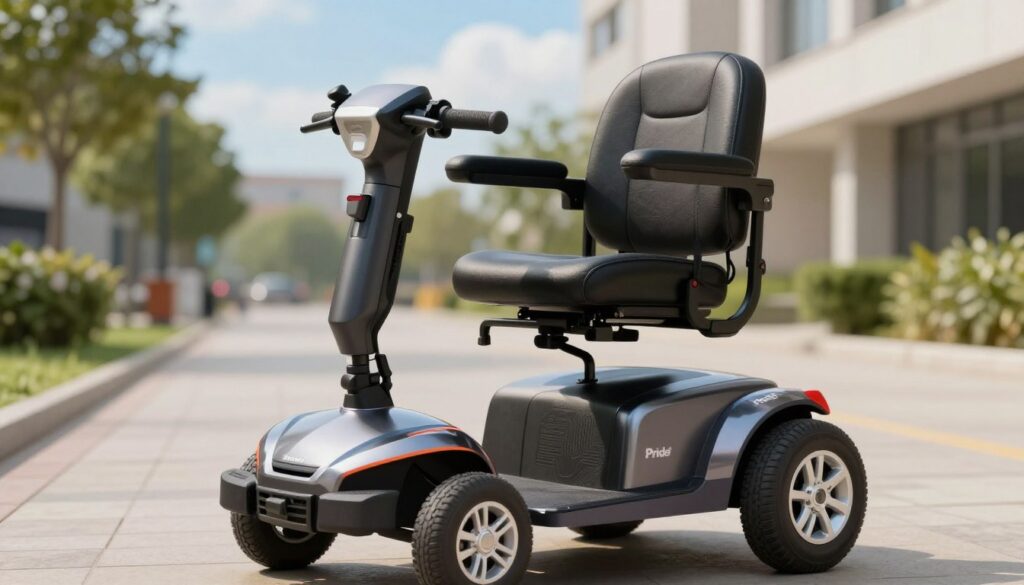
Portable options and maneuvering
Feather-touch disassembly: Revo™ 2.0 and many Go Go® models break down quickly for car loading. The Go Go® Super Portable even folds to a 12″ height without removing the seat.
Convenience and charging
EZ Turn technology helps with tight indoor turns and hallway use. Charge360 magnetic charging makes daily charging less fussy for riders who want a simpler life.
Outdoor and regulatory notes
For tougher terrain, look at PX4, Pursuit 2, and the Baja® series. These models target outdoor capacity and stability. Many Pride® units are marked “FDA Class II Medical Device*” while some explicitly note they are not medical devices. That distinction affects use and coverage.
- Tip: Match a model to your travel habits—portable for cars, PX4/Pursuit/Baja® for outdoor use.
- Price guide: MSRPs span from about $1,759 to $7,611 across the lineup.
Vive Mobility 4 Wheel Mobility Scooter Review: Comfort, Simplicity, and Everyday Use
This model focuses on practical comfort and trunk-ready portability for routine trips and short neighborhood travel.
The design uses four flat-free tires and a steady frame to give confident handling on sidewalks and mild slopes up to 6°. It is a solid choice for daily mobility needs and short errands.
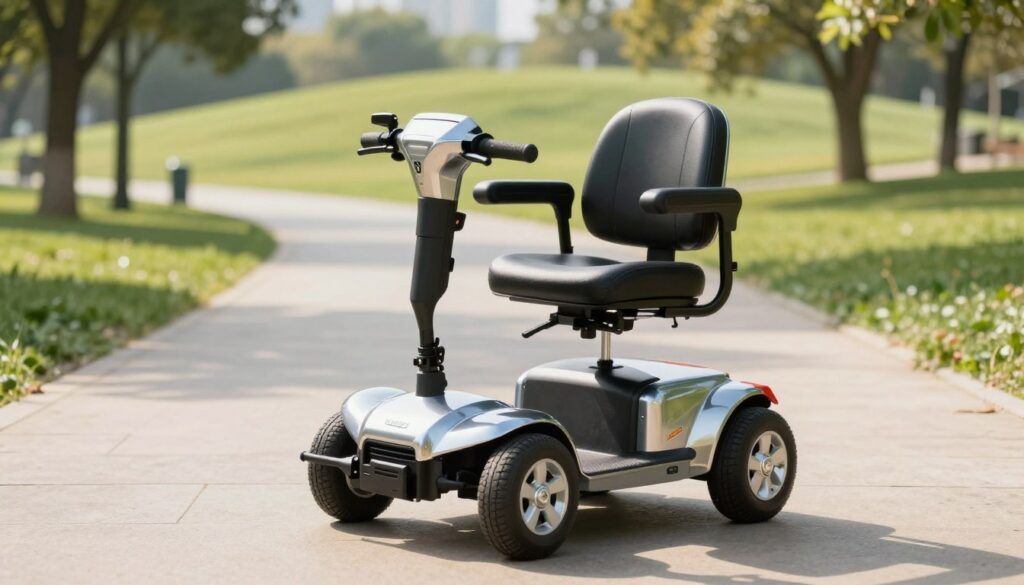
Disassembly and travel readiness
Quick breakdown: the unit disassembles into four manageable pieces that fit most trunks. That makes travel and storage efficient for users who move between homes, appointments, or visits.
Comfort and controls
The height-adjustable swivel seat adds long-ride comfort and easy transfers. A variable speed dial keeps top speed choices simple for seniors and casual riders.
Battery, charging, and accessories
Standard 12V/12Ah batteries come with an included charger and support on-board or off-board charging. This gives flexible charging time options at home or on the go.
- Practical extras: front basket, bright LED headlight, and horn for safer errand runs.
- Value: entry pricing around $674.99 with higher trims nearing $1,049.99.
- Good fit: aimed at riders who want low fuss, steady ride, and easy travel.
Portability, Storage, and Travel Readiness
Practical ownership hinges on how easy a model is to move, store, and charge between uses.
Breakdown vs foldable designs: Some units disassemble into parts for trunk travel. Vive Mobility breaks into four pieces for easy loading. Pride® Go Go® Super Portable folds down to about 12″ without removing the seat.
Those choices affect how much lifting is needed and which vehicle trunks fit the ride. A Go Go® Carbon at about 35 lbs is simple to lift. Compare that to the CycleBoard X-Quad, which is roughly 100 lbs without battery and 125 lbs with the ~21 lb pack installed.
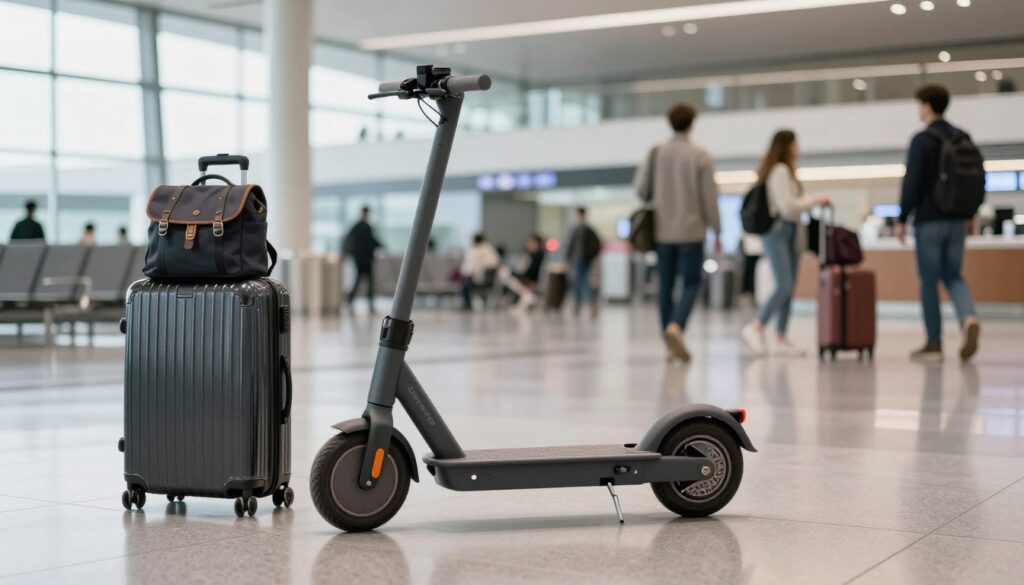
Weight considerations: Heavier, high-power builds give range and speed benefits but need more storage space and handling tools. Removing the battery for charging or carrying smaller parts makes long-term travel and use more manageable.
Where it fits: trunk, apartment, and garage setup
Measure trunk depth and doorway clearances before buying. Small closets, elevator trips, and narrow hallways change which models work best at home.
- Plan ahead: check trunk dimensions and stair access.
- Charge routine: an off-board battery lets users bring the pack indoors to charge near an outlet.
- Handling tips: use ramps, dolly straps, or two people for loads over 50 lbs to protect backs and floors.
Bottom line: Match weight and breakdown style to daily travel and storage needs to keep mobility part of a smooth routine, not a chore.
Specs That Decide the Right Model: Speed mph, Capacity, and Fit
Choosing a safe, comfortable model starts with three measurable specs: top mph, load capacity, and ergonomic fit. These numbers help match a ride to sidewalks, shared paths, or open outdoor routes.
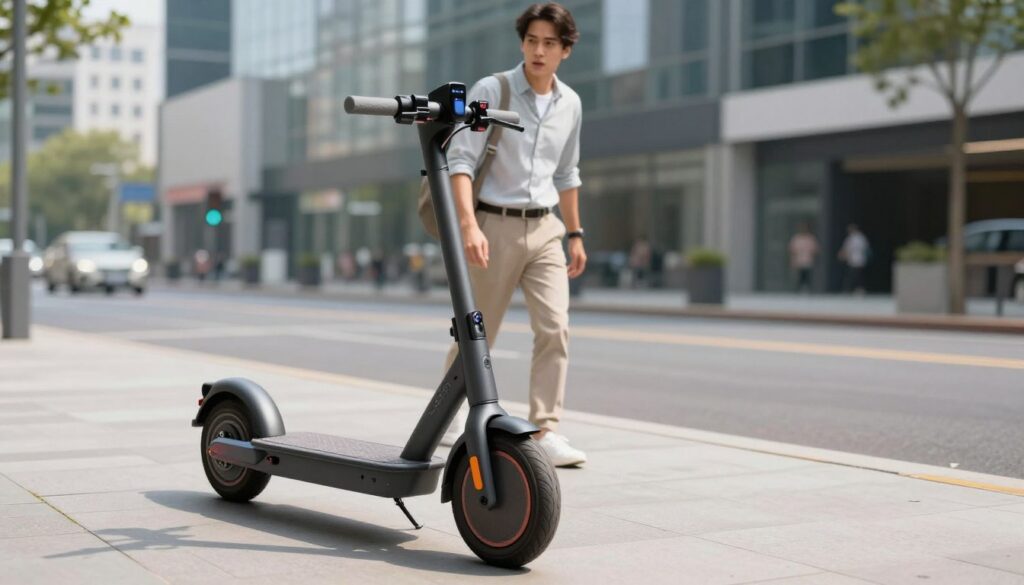
Choosing a safe top speed for the rider’s environment
Pick a top speed that fits typical routes. Low-speed models (for example, 8 mph on the Pride Victory® LX Sport) work best indoors and on crowded sidewalks.
Higher mph capability, like the CycleBoard X-Quad’s 27 mph top speed, is useful on open paths but requires stronger brakes and lights.
For guidance on safe speed planning, see a practical note on mobility speed limits at mobility scooter speed guidance.
Rider weight capacity and comfort sizing
Capacity matters beyond whether it moves—the Pride Go Go® Ultra X rates 300 lb and the X-Quad supports up to 350 lb. Higher weight affects braking, battery range, and stability.
Seat, deck, and handlebar ergonomics for control and stability
Check seat width and height, deck room, and handlebar reach. The X-Quad’s adjustable handlebar (39″–42″) and a 10″ x 27″ deck suit taller riders and lean-style control.
- Measure: seat height, handle reach, and deck standing space.
- Confirm: rated weight, stopping power, and front geometry for turning.
- Result: the right spec mix delivers stability, comfort, and confident control.
Find the Right 4-Wheel Electric Scooter and Ride With Confidence
Finding the best match starts with honest answers about how far, how often, and on what surfaces someone will ride.
Match needs to models: pick CycleBoard X-Quad for high performance and long range on mixed terrain, Vive Mobility for easy travel and trunk-ready use, or Pride® for feature-rich options and medical-grade choices.
Before buying, check lights and turn signals for visibility, brakes for confident stops, and suspension for comfort. Verify capacity, charging style, and daily handling to fit home, trunk, or apartment life.
Use these reviews and comparisons to narrow to one or two finalists, then test ride and confirm final details. For a close look at a Pride option, see the Pride Victory 10 page: Pride Victory 10.
Bottom line: choose the model that matches real routines and conditions, and ride with confidence.
FAQ
What is the typical battery range for a four-wheel mobility model on mixed terrain?
Range varies by battery capacity, rider weight, terrain, and speed. In real-world conditions, models with high-voltage lithium packs often deliver 20–50 miles per charge, while 12V systems and smaller lead-acid packs usually give shorter excursions around 8–15 miles. Hilly or rough terrain, faster speeds, and heavy riders reduce range; removable or extended battery options can increase distance for longer adventures.
How long does it take to charge the battery, and are there on-board and off-board options?
Charging time depends on battery chemistry and charger output. Lithium packs commonly charge in 4–8 hours with on-board chargers; some fast chargers cut that time. Off-board chargers let users remove the battery and charge indoors. Models with Charge360-style or magnetic connectors make daily charging easier and safer.
How important is suspension and tire choice for comfort and off-road use?
Suspension and tires greatly affect ride comfort and control. Independent suspension with decent travel smooths rough terrain and improves stability. Flat-free tires work well for urban use and low maintenance, while larger treaded tires provide extra traction on dirt or grass. For mixed surfaces, a combination of suspension and robust tires gives the best performance.
What top speed should a rider choose for safety and local use?
Choose a safe top speed based on where the unit will be used. Neighborhoods and shared paths usually call for lower speeds (under 15 mph) to enhance reaction time and pedestrian safety. For longer outdoor commutes or bike-lane use, models that reach up to 27 mph offer faster travel but require greater rider control and awareness of local regulations.
How do braking systems compare — drum versus disc — and what’s best for stopping power?
Disc brakes generally offer stronger, more consistent stopping power and better heat dissipation under repeated use, making them ideal for higher speeds and hilly routes. Drum brakes are durable and low-maintenance for casual city use. Some premium models mix regenerative braking with mechanical systems for improved control and range recovery.
What safety features should shoppers prioritize?
Key safety features include bright LED headlights, brake lights, and visible turn signals for shared-road use. Reliable braking systems, a stable chassis, and good tires matter for stopping and handling. Anti-theft options like passcodes or NFC-style security help protect the unit. Reflective trim and audible alerts (horn) also improve visibility in low light.
How do weight and transportability affect daily use and travel?
Heavier, high-capacity builds offer more range and stability but are harder to lift and store. Portable designs with feather-touch disassembly or foldable frames break into pieces for trunk travel and apartment storage. Riders should check the total disassembled weight and whether their vehicle or storage space can accommodate the parts.
What rider weight capacity and seat features should be considered?
Confirm the rated weight capacity — many outdoor-ready models support 300–350 lbs — to ensure safety and performance. Look for adjustable swivel seats, ergonomic armrests, and adequate deck room for comfort on longer rides. Proper fit improves control and reduces fatigue.
Are turn signals and LED lighting common, and do they matter for street use?
Turn signals and LED lighting are becoming more common on higher-end models. They matter a great deal when sharing roads or multi-use paths, as they improve communication with motorists and other riders. Bright, well-placed LEDs also boost visibility at dawn, dusk, and night.
Can riders upgrade batteries or add extended range packs?
Many manufacturers offer removable or extended battery options that extend range and reduce downtime. Upgrading to a higher-voltage lithium pack can increase top speed and mileage but may affect weight and charging time. Always use manufacturer-approved batteries to maintain warranty and safety standards.
How does terrain affect real-world performance and maintenance needs?
Rough terrain increases wear on tires, suspension, and brakes, and it reduces range. Frequent off-road use calls for robust tires, stronger suspension, and more frequent checks of wheel alignment, brake pads, and battery condition. Flat paved paths require less maintenance and offer the best efficiency.
What are the main differences between portable mobility models like Vive Mobility and premium options like Pride® Go Go®?
Portable models prioritize easy disassembly, lightweight frames, and simple controls for everyday errands and travel. Premium lines from Pride emphasize advanced features: EZ Turn maneuverability, Charge360 magnetic charging, stronger frames for outdoor use, and FDA Class II medical-device considerations on some models. Choice depends on whether mobility, portability, or all‑terrain performance matters most.
How should someone choose between a high-speed outdoor model and a compact daily-use unit?
Match the model to intended use. If the rider plans long-range outdoor trips, variable terrain, and higher speeds, a powerful model with robust suspension, larger tires, and extended battery is appropriate. For short, frequent errands and easy transport, a compact, disassemblable unit with flat-free tires and a 12V battery system will suit daily life better.
What maintenance routines extend battery life and overall performance?
Regular charging after use, avoiding full deep discharges, and storing batteries in moderate temperatures increase lifespan. Clean contacts, check tire pressure or condition, inspect brakes and suspension, and tighten fasteners periodically. For lithium packs, follow the manufacturer’s charging schedule and service recommendations.