200cc Scooter Buying Guide: Reviews, Pricing, and Features
 PopScooter Team
January 27, 2026 11:02 am
.
13 min read
PopScooter Team
January 27, 2026 11:02 am
.
13 min read
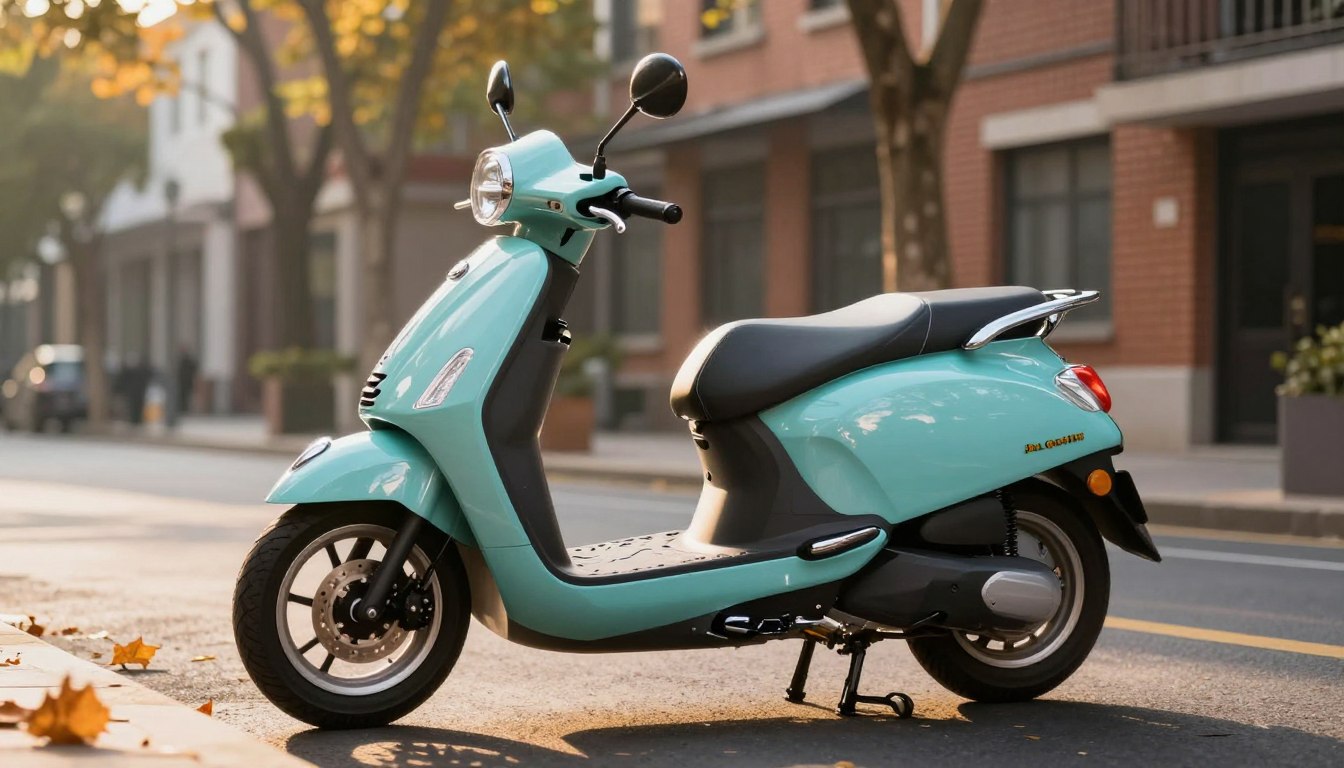
Can a mid-size ride really replace a car for daily errands and still fit your budget? This guide helps shoppers compare the 200cc class by features, commuting fit, and total ownership cost across the United States.
They will see a clear look at models like the Suzuki Burgman 200 and TANK 200-series listings such as TANK PRO 200 EFI and TANK 200 EFI Deluxe. Example promos online show prices like $1,399.95 and $1,569.95, with a listed regular price often near $1,799.95.
The guide sets expectations: advertised price varies by dealer, region, and extras. It explains what an online tag may not include and how gas, maintenance, storage, comfort, braking, and dealer support affect real costs.
This page is written with commercial intent to help readers narrow choices, understand specs, and feel confident before they buy.
Key Takeaways
- Compare real-world commuting fit, not just specs.
- Promotional pricing can be lower than the listed regular price.
- Suzuki Burgman 200 offers brand-backed commuter features.
- TANK 200-series often appears with strong promo deals.
- Consider storage, braking, and maintenance when budgeting.
- Out-the-door cost may exceed the advertised price.
Why a 200cc scooter is a smart step up for U.S. riders
For many U.S. riders, stepping up in displacement means real-world gains for everyday commuting. A modest increase in engine size gives more low- and mid-range power, which helps in merge zones and on faster suburban arterials.
More grunt reduces the need to hold wide-open throttle when passing. That translates to steadier acceleration on 35–55 mph corridors and less strain on longer trips. Riders feel more confident when merging and overtaking.
Automatic, twist-and-go riding for everyday convenience
A fully automatic transmission means no clutch lever and no shifting. Twist-and-go control lets the rider focus on traffic and lane position, which is a big plus in stop-and-go commutes.
Moped vs scooter: choosing the right type for your license and routes
States often regulate a moped differently than a scooter, so buyers should check local rules before choosing a vehicle type. Match the vehicle to daily use—short errands and neighborhood streets favor a moped, while longer commutes and faster roads justify a mid-size model.
- Better roll-on at speed limits commonly found outside city centers.
- Less frequent wide-throttle use means a calmer ride for commuters.
- Confirm licensing and road access to pick the right vehicle type.
For riders ready to upgrade for real commuting benefits, learning about classifications and practical power delivery pays off. See options and local models at moped and scooter choices for adults.
Top 200cc scooter models to compare right now
Compare three popular choices that balance power, storage, and value for city riding.
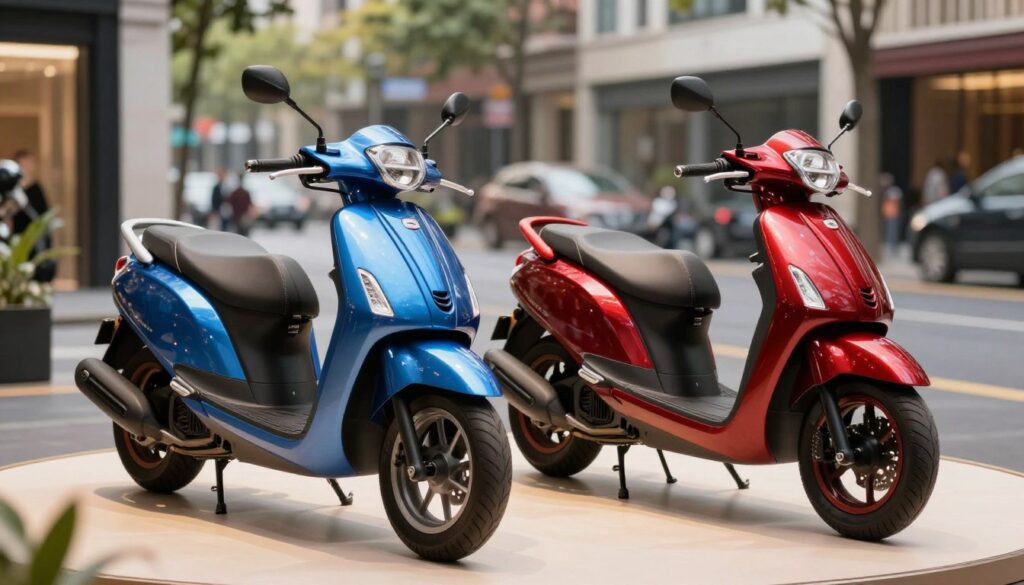
Suzuki Burgman 200 overview for commuting and city exploring
The Burgman 200 pairs a liquid-cooled, fuel-injected engine with a fully automatic CVT. It offers ABS on both discs and a smooth V-belt final drive.
Who it fits: riders seeking brand-backed refinement, roomy under-seat storage (41 L), a lighted compartment, and a handy DC power outlet for charging on the go.
TANK PRO 200 EFI with CVT, 13-inch alloy wheels, and LED lights
The TANK PRO 200 EFI is a value-oriented option. It usually lists a CVT setup, 13-inch alloy wheel fitment, digital instruments, and bright LED lights for better visibility.
Who it fits: budget-minded buyers who want modern looks, larger wheels, and basic rear trunk storage without brand-premium pricing.
TANK 200 EFI Deluxe with side boxes and a bigger rear trunk
The TANK 200 EFI Deluxe upgrades cargo with side boxes plus a larger rear trunk. Mechanicals mirror the PRO model, so ride feel stays familiar.
Who it fits: commuters who carry gear daily and favor extra storage for tools, work bags, or shopping runs.
- Quick tip: Spec sheets vary by seller—confirm trunk/boxes, wheel sizes, and included lighting before checkout.
- This guide helps match features to real routes rather than naming a single winner.
Pricing, sale deals, and what “regular price” really includes
A clear checkout number matters more than a flashy tag. Buyers should compare three figures: the manufacturer’s MSRP, the retailer’s promotional sale price, and the out-the-door total that includes mandatory fees.
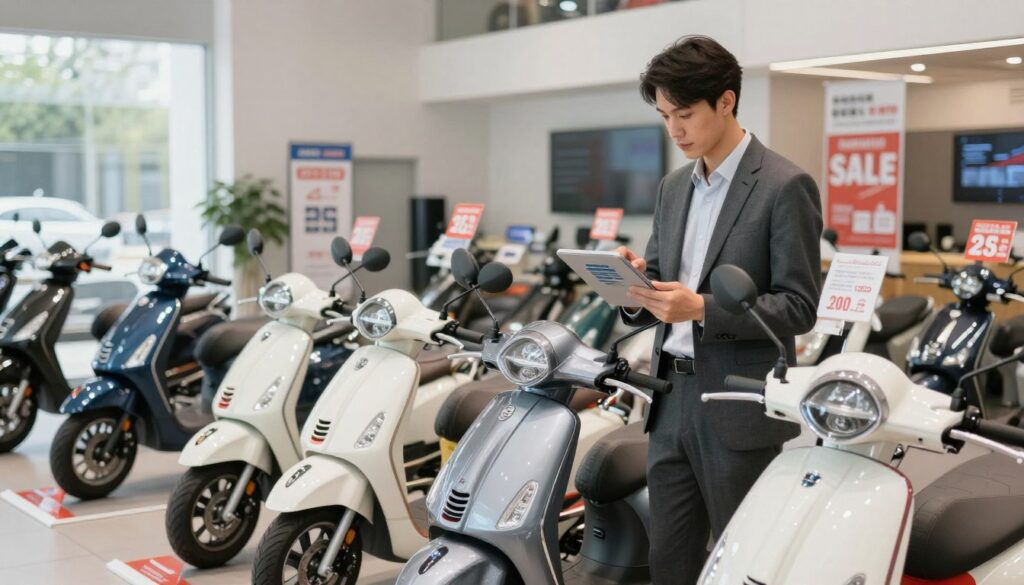
Typical ranges: MSRP vs sale price vs out-the-door
MSRP is the manufacturer’s listed amount and often excludes dealer setup, taxes, and freight. A listed regular price usually reflects that MSRP or a suggested retail value.
Sale tags—like $1,399.95 or $1,569.95 in recent promos—show retailer discounts off the $1,799.95 regular price. Those promos can be real savings but may not include add-ons.
Real sale examples and how to compare them
Red Fox Power Sports ran a “Martin Luther King Day Sale” pricing the PRO at $1,399.95 (money order $1,343.95) and the Deluxe at $1,569.95 (money order $1,507.15). Compare those figures to the listed regular price to judge the discount.
What to add: shipping, fees, taxes, and registration
Plan for extra costs before you commit. Common out-the-door add-ons include:
- shipping or destination freight
- dealer or processing fees and setup
- state sales tax, title, and registration
- optional accessories or extended warranty
Costs can shift if a purchase qualifies as a moped in one state but requires motorcycle registration in another. Verify local rules to budget correctly.
Financing and buy-now-pay-later notes
Retailers often show financing options or partnerships (for example, a buy-now-pay-later plan). Shoppers should confirm APR, term length, approval criteria, and whether promotions stack with financed deals.
Tip: Always request an itemized invoice so the final price and included services are clear before signing.
Engine and transmission features that change the ride
Real-world performance comes down to how the engine, fuel system, and transmission work together. Small choices in design change everyday comfort and control.
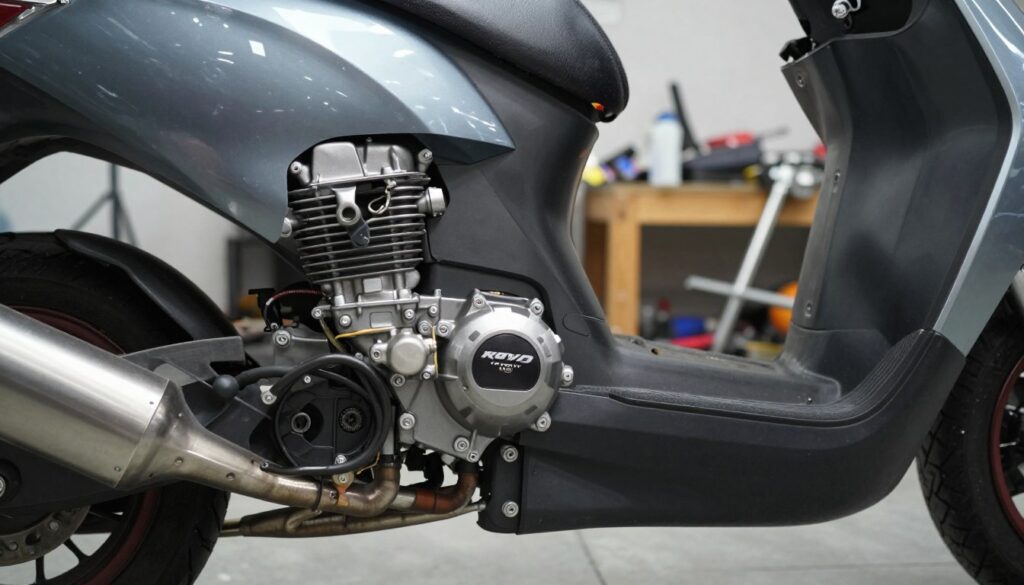
Four-stroke, single-cylinder feel for commuting
A four-stroke, single-cylinder layout gives a smooth pull from stops and strong midrange for flowing traffic. It reduces the busy feel common with smaller units and delivers usable power for merging and mild hills.
EFI vs carb: real benefits
Fuel injection makes cold starts easier and keeps fuel delivery steady across temperatures. Modern EFI systems add O2 feedback and a catalyzer-equipped exhaust for cleaner emissions and better economy. Suzuki’s setup also uses Automatic Idle Speed Control to steady idle.
CVT and V-belt final drive basics
A CVT is a fully automatic transmission that keeps the engine in an efficient range while the rider adjusts throttle. The V-belt final drive is cleaner and quieter than a chain and needs only simple inspections and occasional replacement.
Cooling and reliability in traffic
Liquid cooling with a radiator and thermostatic fan helps keep temps stable during stop-and-go. That reduces stress on components and supports consistent performance in slow urban runs.
- Quick take: Prioritize steady midrange and EFI for everyday use.
- Look for a CVT with a quiet V-belt for low maintenance.
- Liquid cooling adds long-term reliability in traffic.
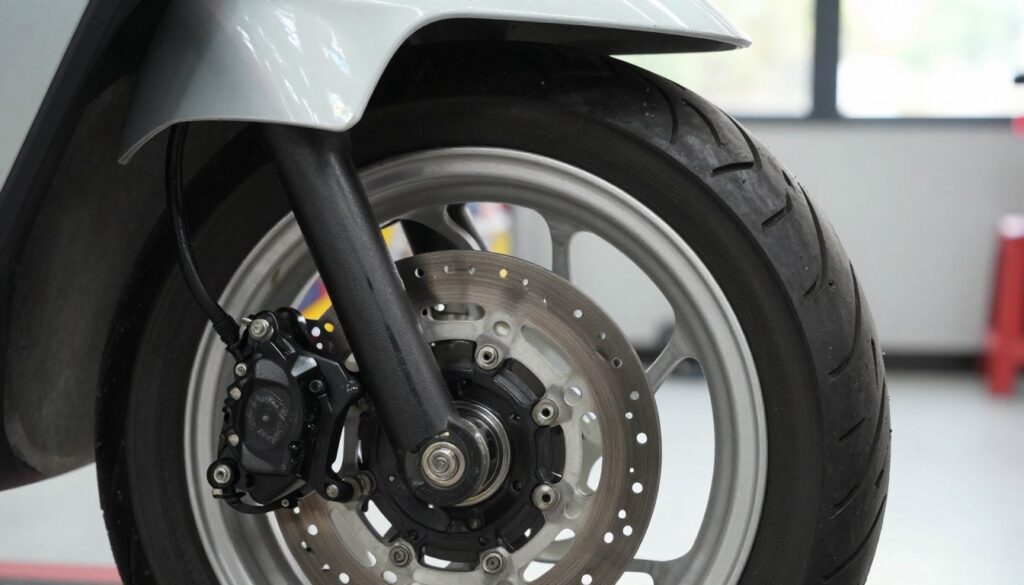
Brakes, wheels, and tires: safety and control features to prioritize
Good brakes and stable wheels are the features riders test first on a daily commute. Predictable stopping helps in traffic and during surprise slowdowns. Commuters should make braking hardware a top comparison point when shopping.
Disc brakes front and rear, plus ABS in real-world conditions
Many modern models use front and rear disc systems for stronger, more consistent stopping than older drum setups. Disc brakes offer better modulation and heat dissipation, which helps on longer runs and heavy stop-and-go use.
ABS helps keep traction under hard stops by preventing wheel lock. Suzuki notes an important caveat: ABS can improve control, but it cannot overcome physics on wet, loose, or uneven surfaces and it will not stop a skid while cornering. Buyers should compare whether ABS is standard, optional, or not offered, since that affects both safety and price.
Wheel and tire sizing for stability
A 13-inch front and 12-inch rear wheel setup hits a middle ground between tiny city wheels and larger maxi designs. The Burgman example uses 110/90-13 front and 130/70-12 rear tubeless tires, which balance agility with straight-line stability.
Tubeless tires add practical advantages: easier puncture management and safer deflation behavior. Still, proper repairs and routine inspection matter for longevity and day-to-day reliability.
- Check lever feel and progressive brake response on a test ride.
- Watch straight-line stability under moderate braking.
- Note confidence on uneven pavement and how the rear behaves during stops.
Comfort, storage, and everyday usability for commuting
Everyday usability depends on reach, storage, and convenient power for devices on the go.
The Burgman’s low 28.9-inch height gives many riders easy foot contact at stops. That short reach reduces strain when pausing at lights and makes parking maneuvers simpler.
Under-seat space holds about 41 liters, enough for a full helmet and a bag. An under-seat light helps early morning access and keeps items visible after dark.
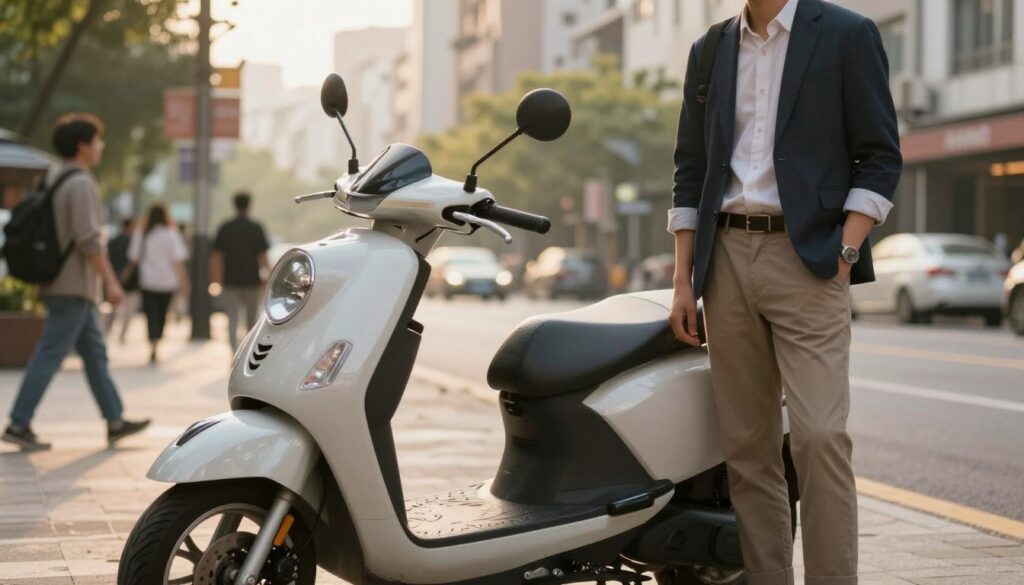
Three covered front compartments include a large center bin with a DC power outlet. Riders can keep a phone charged for navigation without digging through loose parts.
Visibility uses sculpted dual tail lights and clear instruments with speedometer, temperature, and fuel gauges. TANK listings add a rear trunk; Deluxe trims include side boxes and a bigger trunk for extra cargo.
This setup eases longer riding days: better lumbar support and roomy seating cut fatigue and improve the daily ride. Buyers coming from a moped notice the larger seat and structured storage right away.
- Practical gain: easier stops, less leg stretch, more secure gear storage.
- Safety: stronger rear visibility and useful lighting for urban traffic.
- Convenience: dash storage and power keep devices charged on commutes.
Buying online with confidence: shipping, parts, service, and warranty support
Buying online requires a quick verification of stock, shipping terms, and included accessories. Confirm whether the regular price matches listings that include trunks or side boxes so the final price is clear.
Expect U.S. freight to include crating, appointment delivery, and possible lift assistance. At delivery, inspect the crate, photograph any damage, and confirm all included items before signing.
Keep documentation for warranty claims. Brands like Suzuki offer a 12-month limited warranty and optional extended protection, while value brands rely on retailer support. Buy from sellers with easy parts and service channels to reduce downtime.
Tip: Confirm local registration rules, read return policies, and review the seller’s setup instructions. See local 200cc listings and stock at 200cc listings.
FAQ
What are the main advantages of choosing a 200cc model for U.S. riders?
A 200cc model gives riders more power for faster suburban roads and longer commutes while keeping an easy, fully automatic ride feel. It offers better passing acceleration than typical mopeds, improved highway capability at moderate speeds, and often includes modern features like EFI fuel systems, disc brakes, and larger wheels for stability.
How does EFI compare with carburetors for everyday use?
EFI (electronic fuel injection) improves cold starts, fuel economy, and emissions control compared with carburetors. It adjusts fuel delivery automatically for changing conditions, reducing the need for manual tuning and making maintenance simpler for riders who use their machine daily.
What is a CVT transmission and how does it affect the ride?
A CVT (continuously variable transmission) provides a seamless, twist-and-go experience with no manual shifting. It uses a V-belt and pulleys to keep the engine in its optimal power band, delivering smooth acceleration and easy low-speed maneuvering ideal for urban traffic and stop-and-go commutes.
What braking setup should buyers prioritize for safety?
Buyers should look for front and rear disc brakes and, when available, ABS for added control on wet or uneven roads. Disc brakes give more consistent stopping power and better heat dissipation during repeated braking on hills or heavy traffic.
How do wheel and tire sizes affect handling and ride comfort?
Larger wheel diameters and wider tires provide better stability and smoother rolling over bumps. Common good examples are 13-inch front wheels paired with slightly smaller rear wheels; this mix balances nimble steering with steady straight-line control, improving ride comfort and grip.
What fuel tank capacity and range can riders expect?
Typical fuel tanks on this class offer enough capacity for daily commuting and moderate touring, often allowing 100+ miles per fill depending on riding style and EFI tuning. Real-world range depends on traffic, speed, and load, so riders should use manufacturer figures as a baseline.
How much do new models usually cost and what should be included in the “regular price”?
Typical price ranges vary by brand and trim; MSRP reflects the base machine while the regular price often includes destination freight, basic dealer prep, and limited accessories. Buyers should factor in taxes, registration, dealer fees, and optional add-ons like luggage boxes or upgraded tires when comparing offers.
What additional fees appear on top of the sale price?
Expect freight, dealer documentation fees, sales tax, title, and registration. If shipping is required, out-the-door costs can rise further. Always request a full out-the-door quote that lists each charge so there are no surprises at delivery.
Are there financing or “buy now, pay later” options available?
Many dealers and online retailers offer financing and promotional payment plans. Terms vary by lender, credit score, and down payment. Riders should compare APR, length of term, and any prepayment penalties before signing.
What maintenance items should owners expect to service regularly?
Routine tasks include oil and filter changes, belt inspection for the CVT, brake pad and fluid checks, tire pressure and tread monitoring, and periodic valve or spark plug checks for the single-cylinder engine. EFI systems reduce some tune-up needs but still require scheduled service.
How important is cooling type for reliability in stop-and-go traffic?
Liquid cooling helps maintain steady engine temperatures in heavy urban traffic and prolonged idling, reducing thermal stress and preserving performance. Air-cooled designs can be lighter but may run hotter during dense city use.
What storage and comfort features improve daily usability?
Under-seat storage for helmets, lighted cargo space, dash compartments, and a DC power outlet for charging devices boost convenience. Low seat height and ergonomic foot placement improve reach and confidence for riders who stop frequently or park on uneven surfaces.
How do aftermarket parts and warranty support factor into online purchases?
Buyers should confirm shipping terms, local dealer service availability, and warranty transferability before purchasing online. Availability of OEM parts, accessory racks, and authorized service centers affects ownership costs and long-term reliability.
What lighting and visibility features should riders look for?
LED headlights and taillights, clear instrument illumination, and reflective bodywork increase visibility day and night. Bright, well-aimed lights and dual tail lamps improve safety in traffic and during low-light commuting.
Are there notable model differences worth comparing right now?
Riders should compare features such as EFI tuning, wheel sizes, trunk capacity, integrated side boxes, and accessory fitment. Some models emphasize touring comfort with larger rear trunks and side cases, while others focus on nimble city handling with alloy wheels and lighter curb weight.